
Greetings all you who take the time to peruse my blog. I thank you. Let me begin this by saying how I have missed creating blog entries that feel creative to me, that require me to a degree that is nourishing and satiating, rather than feel like marginal notes to my studies. Thank goodness for a few projects and Friday Fictioneers that spur me to some dedicated time spent “creating” purposively – differently from intellectual processing toward understanding. And yet…
As I emerge into a brief pause between semesters, I find myself bewildered with experience and an oddly felt “freedom” that spawn confounding questions in me. As I completed my final semester paper this week, my mind and body revved to the thought that fictions, essays and poems that participate in the structure of my desk – beckoning and ready as I researched away – can be grasped and delighted in, engaged at will, enter my cranial conversation…but this is also true of my researching – I have been consistently able to construct academic projects that involve and enable my immersion in those things that inspire and enthrall me – that feed my “what do I want to know?” urges. So where this different nuance of feeling/experience in reading?
This is the question occupying me currently (or field of questions). As I re-entered Robert Musil’s writings these past few days, while skimming and browsing an unbelievable desk laid with exquisite appetizers (Hejinian, Okri, Danto, Deleuze, Shklovsky, Creeley, Fante and so on) I recognized a feeling I can only describe as “insight.” My preferential selections do not differ much between resources for academic work and resources for some other purpose. I am driven to “know” what I am driven to know – it is continuous, related, dynamic. Any sources from any genre or field or discipline that provide a certain “something” accomplish it. What felt like “insight” was the recognition as I ranged over very different styles (Floridi, Serres, Wittgenstein, DFW, Larry Levis and so on) that what I seek consistently (and an effect that Musil invariably realizes for me) is work that I must achieve, that challenges, that invents, wrestles, requires change and adaptation, innovation and labor on my part to be ingested, understood. That forces dialogue between my micro-world of knowledge and understanding and another. Be it in the mode of expression, the language employed, the ideas, questions and concepts examined or points of view – it must be something that invigorates and surprises, invites dialogue and conversation toward meaning and understanding to occur. Writing that requires change to be engaged.
At the same time I recognize that I read differently different writings. I expect poetry, aphorisms, fragments to require percolatory time, as if the texts and spaces sprinkle my mind-lawn and will find their way to the roots in their own time. I expect logical writings, perspectives or positions to argue with me, to have asked questions beyond what I have had the knowledge to ask, therefore pushing whatever I contain toward corrections and new formulations – adaptation and growth. If writing asks that I be passive, within sentences it is set aside.
These are the questions I’m formulating and troubling in this margin –
- How are freedom and restraint – affordances and constraint related (particularly in relation to my felt experience of reading selections – and to what purposes (“academic” vs. – ?) (is there a versus? or is my criteria for reading homogenous regardless of “assignments” or artifact?)
- Related: compositions – whether related to schoolwork or blog or journal or artistic projects – are they dissimilar in any way other than forms of expression, manifestation and items? Or is all processing and expressing work similarly creative, inventive – processes toward meaning?
- Can I begin to dissolve my penchant for categories and tasks, loosen a little my instinct of organizing complexity? Do I want to? Why?
These are my offering for today – reports from the margins, the notations always accruing and collocating in my experience – given air through a shifting of immediate responsibilities…
“To accept questions consists in immersing oneself in the search for the answers that answer them. Furthermore, the questions specify the answers that they admit.”
-Humberto Maturana-

attached: a phenomenal recollective account of the theory of Autopoiesis – of creatively self-organizing systems like ourselves and our molecules that stuns me. I invite you to read and differently consider your experience of the world:
Humberto Maturana – Preface to “Tree of Knowledge”
“the pursuit of knowledge does not mean conquest, but invention, the establishment of new relations, which supplement already existing ones and can transform them, make them branch out into unexpected dimensions, rather than deny them, or discredit them as manifestations of opinion, illusion, ‘culture.'”
-Isabelle Stengers-

attached: a powerful account of “knowing” and how we conceive/relate to the acquisition of knowledge. Again, if these sorts of things interest you and you are not familiar with her work – I highly encourage you to browse this writing:
Isabelle Stengers – Do We Know How to Read Messages in the Sand?
And again, I thank you for indulging me in sharing some of my process of living
through this blog…
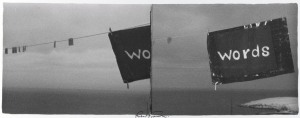




 All my Words are Silent