“The Creators Curse” – a raw deal – and everything is practice

When I stood up from the couch I thought.  I’m tired of everything being practice.  Each character sketch, each poetic fragment, each novel attempt, each theory, each relationship, each parenting moment, each breath.  All participated in as if the engagement might provide benefit, as if the pain will promote healing, as if the mistakes will prove corrective, as if fitness might improve health.  “Lifelong learning” – how nice it sounds, how endless.

But learning for what – ?  There’s just more life until… and then it’s probably simply (well, complexly) variantly continued – one situation hardly informs another – for the next now the context has changed, as well the elements, the matter, the flow.

So then I think again – perhaps it’s fear.  That lifelong learning, or anything meta- entails a splitting off – a doing WITH the observation; and thinking WITH  reflection; the subject’s objectification.  A remove.  And so it feels like practice rather than NOW.  

Earlier today (apologies – I’m really just rambling this post – no pre-write, no consideration or filtering) my son shared this with me:

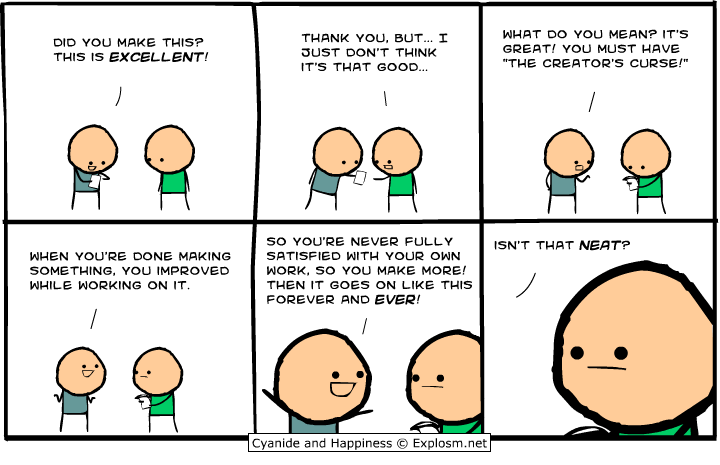
Cyanide Happiness Creators Curse


– The “Creators Curse” from Cyanide & Happiness.  In our making we extend and become in the risking required to attempt…to craft… to work… so it cannot end, for if we grow or move or change (which we will) the work will need to go farther, be finer, account for those fluctuations… ever stepping into new, fresh, dynamic, complex realities… PRACTICE IS IMPOSSIBLE.

But if we turn and try to bring the effort up to speed, in that turning, that editing, that effort, nothing stops.  Nothing stops moving into that next moment, next ream of realities, heart-beat’s context, juggling atoms and muscles and breath…  “Improvement”?  Who knows.  But different for sure.  And even if we reach and stretch toward the work we imagine versus the work we are capable of…it all changes in kind…as change.

In optimistic moments this is cause for hope.  The possibility that something might improve, benefit may come, a temporary health could be achieved.  But not achieved only altered.  And not altered only changing.  I’ve argued before that we must lose our tenses to be honest to living – everything must become verb.

But I don’t want anything to be practice anymore…rather maybe process – doing, making, saying thinking in or with … everything.

I’m very tired of the hesitation, illusory gap, the pretend-vision of seeing our seeing, or feeling our feeling; loving our loving, writing our writing, thinking our thinking our  thinking…

I want to be : living, writing, parenting, loving, doing, making, saying, thinking NOW and HERE as IS.  

“Leaning into the sharp points”

Suzanne(Beckman-Filbert)Holly-suzanne-prayingman.jpeg


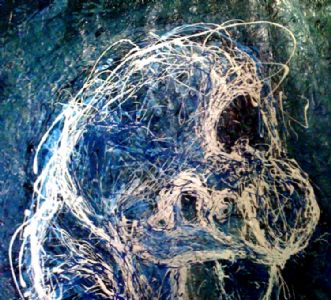
painting by Holly Suzanne

“Fear is a natural reaction to moving closer to the truth” – Pema Chodron

I modeled for the painting above.  It is propped beside the bed as I write.  A large painting, and heavy, maybe 4.5 feet long and 3.5 feet tall, loaded with layers of paint.  She called it “Praying Man,” but I wasn’t praying – the way it turned out I felt like a longshoreman, a hauler, tensed with the energy of pulling things out from the deeps.  I see why she called it that.

We’re reorganizing the house, and in that process I notice what’s gone, and discover things forgotten.  Today it was When Things Fall Apart by Pema Chodron, “heart advice for difficult times.”  I’ve depended on this one before.  It’s written with the situation in mind in which a human feels there is nowhere to escape.  Suffering floods in weights that compress one toward no option.  Chodron says that “No one ever tells us to stop running away from fear…the advice we usually get is to sweeten it up, smooth it over, take a pill, or distract ourselves…but by all means make it go away.”  “We don’t need that kind of encouragement, because dissociating from fear is what we do naturally.”  “Cheating ourselves of the present moment” according to Chodron.

Instead, she suggests, “we could step into uncharted territory and relax with the groundlessness of our situation…by inviting in what we usually avoid…adopting a fearlessly compassionate attitude toward our own pain and that of others.”  I am taking this on as the work of the “praying man.”  The longshoreman and hauler, reeling hand over hand over heart over hurt into the tumult of the pain of being.  “…getting to know fear, becoming familiar with fear, looking it right in the eye – not as a way to solve problems, but as a complete undoing of old ways of seeing, hearing, smelling, tasting and thinking…having the courage to die, the courage to die continually.”  The traditions align.  “He who saves his life will lose it.”  The terror that drives the boundaries, isolates the organism.  Protectiveness cuts the supply chain.  Security stanches generative flow.

What happens when we stay?  Nailed to the present misery.  Chodron suggests that when we move into rather than away from our life-threatening pain a kind of catharsis can occur – an acceptance that we are “precious beyond measure – wise AND foolish, rich AND poor, good AND bad…and totally unfathomable.”

2013-01-22 14.36.20

another painting by Holly Suzanne, emptied of me

The trick is to keep exploring and not bail out, even when we find out that something is not what we thought.  That’s what we’re going to discover again and again and again.  Nothing is what we thought.  I can say that with great confidence.  Emptiness is not what we thought.  Neither is mindfulness or fear.  Compassion – not what we thought.  Love.  Buddha nature.  Courage.  These are code words for things we don’t know in our minds, but any of us could experience them.  These are words that point to what life really is when we let things fall apart and let ourselves be nailed to the present moment.”

Preying Man then, hunched over and hauling it out, rhythmically breathing into the present, a turbulent pain fueled by fear…searching into what I usually avoid.  Hopefully not so much as a way to solve problems, but an undoing of native ways of seeing and hearing, smelling and tasting and thinking…along with the courage to die.

-all quotations Pema Chodron, When Things Fall Apart

Intimacy

Greetings, in an effort I am making to “make sense”… I have been encouraged to chronicle the benefits of my experiences to investigate personal meanings.  That might not make sense.  Suffice it to say that I am plunging into the world of my recent past in an attempt to discover how it has changed me.  A working title might be “Intolerable Vulnerabilities,” (a phrase lent me by my mental physician) and its subject is yet to be defined…but here are the beginnings of an intro…

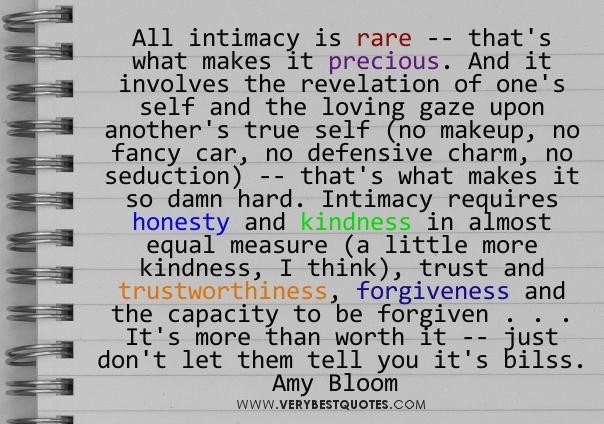
Intimacy - Amy Bloom


The hesitant beginning…

” Most all of us have been caught up in the proverbial “throes of love.”  The ecstasy and heartache of opening oneself to another, being enraptured, plagued with doubt and hope, captive to longing and the myopia of the significance of the beloved.  But perhaps less of us experience intimacy.  Intimacy may be something quite different from love.  Although usually initiated in its atmosphere, intimacy reaches beyond the experience of love and journeys toward closeness.  Intimacy is about the intertwining of lives, the multiform intricacies of barely-boundaried involvement.  What occurs when lives are meshed and melded – shaped with and around one another – physically and immaterially, actually and theoretically, imaginatively and really.  Where histories are remade and revamped together in a present.  Where hopes are remade and reshaped as a couple.  Where the unit and body that counts as an “I” extends to a “we,” and sensation, perception and thought happen always with an external mirror.

Where intimacy takes us is awesome.  I mean this in the most fearsome and incredible ways.  Human closeness is fraught with archetypal danger.  When exposed in such nearness, our lives seem at stake.   It goes to the “heart of us.”  Within the weathers of love, the wedded experience that intimacy brings seems to make us or break us – our futures and fortunes, significance and meaning rise or fall in accord with an Other.  We, in ways, “are not our own” but become something new, something larger and fresh.  Something open, extended and possible.  Something at risk, distended, and vulnerable.  Our lives shared in the hands of another.  Our minds shaped with the mind of another.  Our purposes, intentions and behavior ever effecting conjoined scenarios.  The world is different.  Intimate.  Involved.  Precious and fragile.

There are (at least) two sides to the story…a territory of doubled strength and minimal safety.  Of terrifying exposure and (possibly) multiplied protection.  Of enhanced security and absolute danger.  This is the province of love.  This is the prospect of intimacy.”

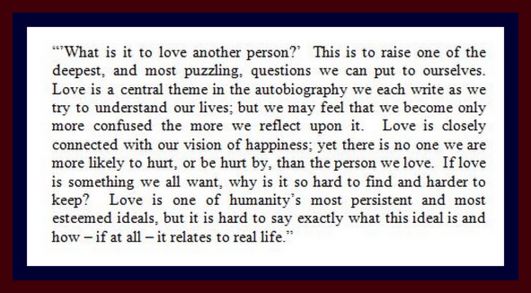
Love - John Armstrong


-John Armstrong, The Conditions of Love

In the Sea above the Sea: transitory reflections from above the Atlantic

P5151753-001

Look at things, see them exposed

in their metaphysical innocence

unsure of their existence.

When do paintings shrug off

the painter, when will this same material

become a new idea?  The evening mist crept over

the lawn, drowning the avenue, the fountain,

the house.

.

Music, the splash of oars.

Someone turns on the light, someone

doesn’t believe in dusk.

The unanswerable question drifts

past the window.

-Cees Nooteboom, Cauda

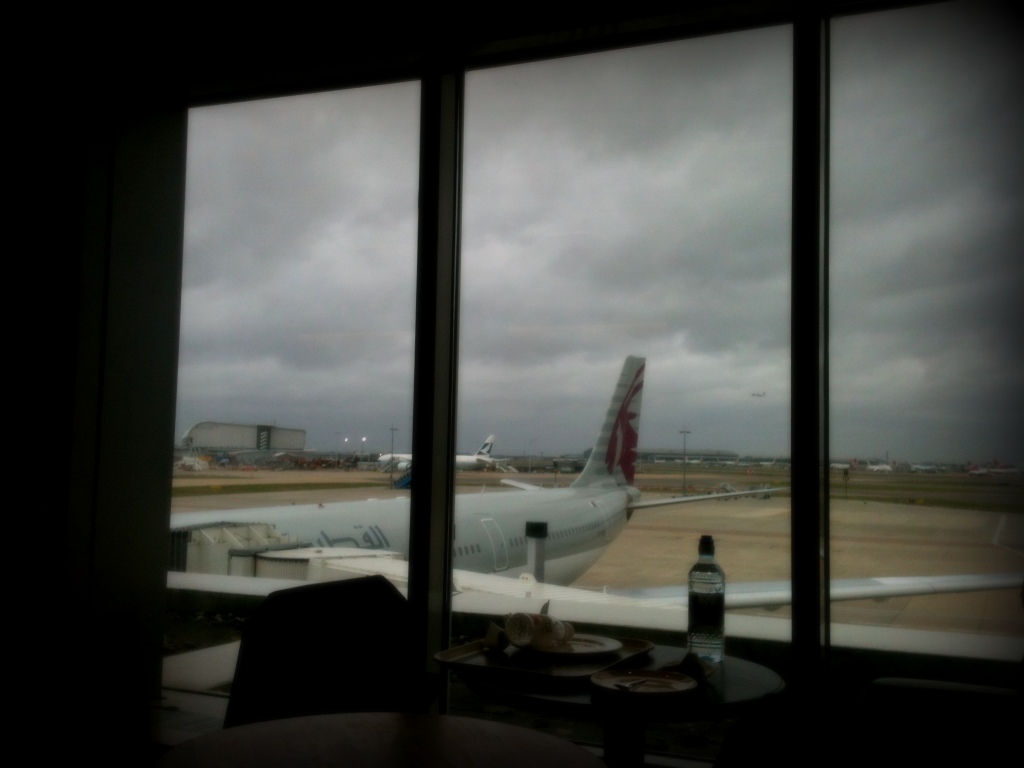
Heathrow Airport

As I make my way back over the Atlantic from the nominally United Kingdom to the (equally nominally) United States, I am considering what things most prominently infected me.  Partly “I think I wanted to get lost to see what happens next” (Deborah Levy, Things I Don’t Want to Know) and partly I wanted to know what to do – my coursework and library visitations – to anchor my lostness while providing anonymity and foreignness in which to search for peace and move through grief.

 nobody

More and more the invisible was named,

the blind man grew mightier.

How he wandered and called out to his echo!

.

which called back with the screech of gulls.

He is still searching among flags and vistas

for that same statue.

.

Sounds blow to the far side of the river.

Nobody is standing there.

.

Nothing takes shape.  Newspapers melt,

photos fade.  The stone is made of wax,

the notebook of ash, time takes itself

and repeats the appearance

.

until his life becomes a mirror

in which he disappears and appears,

but nobody looks at himself,

because nobody can see himself.

-Cees Nooteboom

IMG_0280my “self” photographed in front of Gerhard Richter’s “painting” Grey Mirror

-Tate Modern, London-

I noted how clear the signage.  Clear and direct with no soft-pedaling of consequences stated.   Mind the gap, way out        (and way in), “moving through these doors may result in death or injury” (on the Underground), smoking kills.  The ubiquity of concern for mental health – that Bibliotherapy is not just a bookseller’s or librarians metaphor of expertise – but is in fact a prescriptive cure – scripts are written by doctors for BOOKS! (hundreds a week, one library reported).  Along the same culture-historic lines, perhaps influenced by the longevity and prevalence of hundreds to thousands year-old architecture and artefacts, traditions, and tangible evidence of time and identities – the apparent insistence on QUALITY – of life, of drink, of service – of literature and art and purposes.  So while everything costs about twice as much as the USA, the options often doubled the quality.  A local pub on every corner, small grocers, fresh markets – in the miles I walked I only spotted a handful of McDonald’s, Krispy Kremes or other international chains (and only in heavily touristed areas) – aside from Starbucks.  I saw 3 gas stations.

And the bookstores!!!  Sometimes 3 or 4 in a block, flush to the gills – but hardly a bestseller, a romance, or fluff!  Amazing – perhaps the most profound difference between the USA and UK that I noticed: their stores FEATURED literary quality, and only sometimes provided mass appeal items that could be had anywhere online – in many stores 80% of the stock I encountered did not have an eBook format – the books were books meant to be books in the purpose of books – to be engaged with the body and mind and retained and gone back to – like the architecture, museums and galleries – not disposable pleasures – but necessary cultural artifacts made from the human condition and accessed repeatedly for its benefit.

Of course there are the “places”: Trafalgar Square and the National Gallery, the British Library and British Museum, the Tate, Houses of Parliament, Westminster Abbey, St. Paul’s Cathedral, Buckingham Palace, Shakespeare’s Globe, the Tower of London and on and on…walking over 15 miles a day, finding “oldest churches” in every nook and alley, colleges and universities every other block, London is a place swamped with culture and continuity, the high and the low, and great gaps to mind in between.

So with those great anchors securing me, I tried to see myself.  In the reflections of great art and architecture, thousands of years of history and culture, thousands of languages in cosmopolitan streets, thousands of unknown faces and voices, habits and practices and sayings…my “life became a mirror in which he disappears and appears,” but, of course, “nobody looks at himself, because nobody can see himself.”

What did I see?  Well by looking through others that I could see, I found “I wasn’t sure my skeletal system had found a way of walking freely in the Societal System” and the need “to find a language that is in part to do with learning how to become a subject rather than a delusion, and in part to do with unknotting the ways in which I have been put together by the Societal System in the first place” including the “many delusions of my own”…”it’s exhausting to learn how to become a subject – it’s hard enough learning how to become a writer” (Deborah Levy).

And I thought of how, like the forest and the trees – it often seems we are unable to see reality for our experiences.  So many of us semi-automatically equate our experience with reality – rather than note how small our perceptual bubble really is.  Just try using the “Powers of 10” idea – start anywhere – with your pain, your fingernail, your happiness.  Now imagine IN a power of 10 – you’re into the cells, into one strand of what’s causing you pain, into a moment eliciting joy.  10x more and you’ve gone beyond atoms and quarks – matter and energy ill-defined and inexplicable and ALWAYS dynamic.  Imagine OUT a power of 10 – you’re viewing a street full of private perceptual experiences very different from your own – and trees and birds and squirrels and buildings.  X 10 and you see miles and miles of earth – filled up with all kinds of creatures and systems, connectors and wonders and weathers and mountains and rivers – x 10! and you’re out in the galaxy of planets much larger than our own, stars much bigger than our sun, and still more galaxies to go…

Either way you go there is gargantuan forest – and our experience, our body – barely a branch…yet we evaluate so often from that individual outlook – incredibly distorting bubble of lens – with a minimal scope – not engaging the forest, absorbing the forest, wandering and listening and looking and opening – so that “the unanswerable question drifts by” and “unsure of its existence” can “become a new idea…” the beginnings of subject-ivity – a particle in relation from within and without – from mattering energy to butterflied effects…an individual instancing of human.

Be mindful.  Be curious.  Be patient.  Don’t know, and enjoy your hands.  Be generous, take refuge, find strength.  Be grateful, keep going, be glad.  Respond, don’t react.  Slow down and forgive.  Let go, accept limits, and do what you can.  Take in the good, relax, have compassion.  Feel safer, fill holes, and love.

-all chapter titles from Rick Hanson’s just one thing

It’s okay.  Be human – the extremely hard, most natural thing.

cheers!

an added and unexpected catharsis – on the night I tried British telly due to trouble falling asleep – Synechdoche, NY – a remarkable example of how complex and generative our perceptive bubble can be…and yet how barrier’d from the world outside of that bubble…forests and trees / reality and personal experiences – beautiful drops in the sea… (and perhaps my favorite movie to date)..

February 23, 2014

Abroad – Notes from the Petrie Dish

Melancholy Musings

“Meaning, if there is such a thing, involves more than what there is.  Minimally, it involves a truthful assessment of what living a finite human life adds up to.”

-Owen Flanagan, The Really Hard Problem

“I’d tell you all you want and more, if the sounds I made could be what you hear”

-David Foster Wallace-

“You are – your life, and nothing else.”

-Jean-Paul Sartre-

This slideshow requires JavaScript.

“That Spring when life was very hard and I was at war with my lot and simply couldn’t see where there was to get to…” So begins Deborah Levy’s succinct “response to George Orwell’s 1946 essay ‘Why I Write,’ entitled Things I Don’t Want To Know.  It speaks to me.  Sentences like “Smoking cheap filthy sock-tobacco under a pine tree was so much better than trying to hold it together on escalators.  There was something comforting about being literally lost when I was lost in every other way.”  And here I am in London, far from home, wandering scattered Lego streets, half of the time having an idea of where I am, where I might go.  Like life with children – the half provided that’s never lost – versus the “self:”


I am the sign, I am the letter,

I am the language that cannot be come to terms with.

I will go to my resting place

                                                and will not be born again.

I am what is scattered and cannot be gathered up.

I am small, I am silence,

                                                I am what is not found.

Charles Wright


“It occurred to him that he would disappear into a hole in a girder inside him that supported something else inside him.”

-David Foster Wallace-

– that sort of thing, left to one’s own musings.  Levy speaks of her notebooks as “always gathering evidence for something I could not fathom.”  Dan Beachy-Quick speaks of the blank page as “one version of chaos…the movement outward and the movement inward are simultaneous…that we enter writing to threaten the security of the knowledge we possess before we read it…” knowledge that isn’t reason – “but the plank that, in reason, breaks.” (from Wonderful Investigations).

As a kind of practice, as it turns out, (Beachy-Quick also says “language offers a method of experiencing death without dying” and “Life, world: we die into it.  Words kill us.  We lose the tops of our heads.  Then we open our eyes.  Then we walk out of the poem into the world.”) I recently labored over messages to those significant to me (including myself) –

what would I want to say or have said if I were to leave the living?

Beachy-Quick suggests that “poetry is birthed from such awful realizations – a fact which denies the fact of one’s own being, that says the self, even the godlike self, is not sufficient unto itself.”

Here some parts from The Letter to Myself:

“I believe the world has had enough of me, and I of it.  Life is generous: overabundant with pain, surprise, people, noise, joy, danger, grandeur, poverty, tastes and sights, sounds and smells, anguish, glory and grief and their very complex mixtures.  As are we – individual organisms – capable, unique, agentive…

      We cannot capture life.  It is ‘more than.’  As mine ends, I find myself desperately wanting to summarize and somehow represent it, but I find no words to do so.

      Aside from the brevity of the fullest portion of my lived experience … with ease what I most grieve is not seeing my children shape and become themselves.  That is the question I most toil over – have my children had enough of me? 

      In the main I have experienced myself as a person whom others accommodate, adjust to, endure.  In classes, families, and communities of practice, even in friend groups, I’ve never FITTED – conjoined smoothly – BELONGED.

      My children have never known another father, so they might find me definitive, ‘right’ only, unique and special.  But my parents have known other children, spouses other partners and lovers, friends other friendships, teachers other students, bosses other employees and so on…and none would consider me ‘best’ or ‘only,’ definitive or unique.  No one has chosen or selected me as theirs.

      I know I’m not alone in this, nor do I need to be the BEST anything, but I would have loved to have been chosen, claimed, selected and pursued – not for being the best, or special, not for characteristics or qualities, talents or things I do well – but for being me, for the am I am.

      How “uniquely me” turned out was never quite enough for others, or not the ‘right’ enoughs.  I surely don’t blame others I‘ve encountered – no one was obligated to choose me, or owed me selection, I simply was not suited to my contexts.


      I hope that my children and loved ones are able to discover and co-generate contexts in which they thrive.


      I had my moments, my ‘times’ – the births of my children, my weddings, days of writing and travel, dialogues with friends and multitudes of sensations and aesthetic and enriching experiences – I do not lack,

            but it’s a struggle my organism is tired of. 

      I want to say that in my life with my love I realized it – I knew myself as a unique person with particular qualities, capacities, failures, weaknesses and strengths.  I accomplished and risked, expressed and developed more of myself during those years than perhaps the entirety of my life until then…

      …in the end it’s only rambling, ever trying to grasp something of experience…ever unable…

      Perhaps something, but not what I mean to.  Always less, never enough… I’m sorry.  Thank you for enduring me this wonderful long.”


To speak up is not about speaking louder, it is about feeling entitled to voice a wish.  We always hesitate when we wish for something…A hesitation is not the same as a pause.  It is an attempt to defeat the wish.  But when you are ready to catch this wish and put it into language, then you can whisper but the audience will always hear you.”

-Zofia Kalinska, quoted in Deborah Levy, Things I Don’t Want to Know 

So speak up, practice, be gentle with yourself – “the story of this hesitation is the point of writing” – into and out of yourself…the activities where things con-fuse…

I wish to write.

I wish to parent.

I wish to love and be loved.

I wish to learn.

I am thankful the “I” is “what is not found,” for then we can keep searching (together), and in the searching, the interaction, perhaps begin a “truthful assessment of what a living finite human life adds up to” –

to matter and to mean.
Arrivals (cont’d, crossed over the Atlantic)

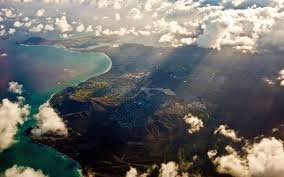
Isles from the air

Arrivals

“We may ask of our destinations, ‘Help me to feel more generous, less afraid, always curious.  Put a gap between me and my confusion; the whole of the Atlantic between me and my shame.’ Travel agents would be wiser to ask us what we hope to change about our lives rather than simply where we wish to go.”

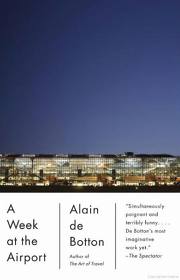
-Alain de Botton, A Week at the Airport

I must have slumbered, unattractively and fitfully, for the plane windows were open and it was very very bright in the sky.  My glasses had fallen, my head scrunched under an arm rest, legs tightly angled and restrained from the aisle by the arm rest just one seat away.  And below, there were moments of Ireland.

I finished the book, thinking de Botton’s observations might make the arrival more profound.  But Rick Hanson’s Just One Thing helped me more.  “Find beauty, take in the good, be compassionately for yourself.  Breathe out long and the intentions (little by little) will seep out around you” (a paraphrase).  As we circled London, having skewed our arrival from delay, the clouds thickened and soon we were scuttling through the wet and the grey.

I thought: ‘Experience is like this’ (of course it is, it is my experience!) – most of it a thickened ambiguity – the swirl and swoon of our passing – when the winds are right you can make something out – particles of cloud, the edge of the wing, sometimes even a reflection.  That was the moment – clouds surrounding the wing, the wing itself, and the reflection of the scumbling clouds on the wing:  world, ourselves, and occasions where we catch our perception – our experience.

And then we touched down, wet splashing the plane, 21 hours and 41 minutes (by the clock) since I’d set out on this journey.  Customs went smoothly, my luggage arrived, and I tunneled by train to my host.  Now I’m in place at my window as the city becomes squares of lights.  de Botton states it thus: “I returned to my room at three in the morning, struck by a sense of our race as a peculiar, combustible mixture of the beast and the angel.” Assessing out from myself and this view of the city, I agree.

“We forget everything: the books we read, the temples of Japan, the tombs of Luxor, the airline queues, our own foolishness.  And so we gradually return to identifying happiness with elsewhere:  twin rooms overlooking a harbor, a hilltop church boasting the remains of the Sicilian martyr St Agatha, a palm-fringed bungalow with complimentary evening buffet service.  We recover an appetite for packing, hoping and screaming.  We will need to go back and learn the important lessons of the airport all over again soon…”

It’s good to have help on the way.  Thanks to Alain de Botton, Rick Hanson, Cees Nooteboom and David Foster Wallace for “a kind of writing that could report on the world while still remaining irresponsible, subjective, and a bit peculiar” – moving me (little by little) from a here to a there.

view from hotel window

view from hotel window

15 February 2014


Over the Atlantic

I apologize in advance and beggar your patience regarding the length of the following post.  It is not often that I have over 10 hours straight of anonymity and limited distractions to read, study and write.  I spent yesterday and last night flying from Wichita to London for a week-long course examining over 10 specialty libraries there.  For the course I must keep a diary online, and while not about “library business” per se, this is about the journey…

de botton - heathrow

Over the Atlantic

I have no idea what time it is.  I have been airborne for perhaps four hours, having left Houston around 7:35 PM after an hour of mechanical fix-its, preceded by departure from Wichita at 3:36 PM earlier this same afternoon.  We seem to be flying fast enough that my electronics are scrambled and I haven’t worn a wristwatch since high school.  I’ve been lucky enough to have booked onto an half-full flight, allowing me the pleasure and benefit of a two-seated section all to myself.  Almost a work-cubby – two tray tables stacked with books and an empty seat for sundry supplies.

At all times I pursue readings that might deepen and expand both my abstract and subjective life – I’m certain that could be stated better – perhaps that challenge and enhance my lived experience.  Most honestly: that cause me to think, help me make sense, prompt change and give me pleasure.  Writings that move me, would be another way of saying it.  In the cabin I have arranged Focusing by Eugene Gendlin, Elegy Owed by Bob Hicok, Impenetrable Screen of Purest Sky and Wonderful Investigations by Dan Beachy-Quick, Light Everywhere – Cees Nooteboom, Buddha’s Brain and Just One Thing by Rick Hanson, Infinite Jest by David Foster Wallace, A Thousand Plateaus by Gilles Deleuze and Felix Guattari, and Art as Therapy with  A Week at the Airport by Alain de Botton.  Which could be explained in so many ways.

Traveling internationally, one is limited for selection – in fact it’s by far the most difficult portion of packing – which books will I need – not knowing how the movement and context will affect me?  So I choose:

  • fresh books by authors that have earned my confidence (my top choice for this trip was Leaving the Sea by Ben Marcus –  missed in the mail by a day);
  • books that I know meet my needs on departure (many my third or fourth reading); and
  • books I long to swim in but rarely have time with the insistent daily needs and benefits of home. 

Whenever I’m struggling with depression, I reach for Wallace and books of wisdom – on staying present, taking steps, coping skills, the breath and body.  Reality therapy, as it were.  Poetry helps as well, with its attention to detail and sensual triggers.  Books that remind me that I’m alive, regardless of  felt experiences or circumstance.

I will finish A Week at the Airport on this flight, I’m almost there – or maybe I won’t, saving the “Arrivals” chapter for that moment in my journey.  It is the account of de Botton’s stint as writer-in-residence at London’s Heathrow Airport (my immediate destination), and in his inimitable and typical fashion – exposing those human universals embedded in the familiar, or overlooked, or hardly spoken.  What he asks from other writers, he provides (and I quote): “I was looking for the sort of books in which a genial voice expresses emotions that the reader has long felt but never before really understood; those that convey the secret, everyday things that society at large prefers to leave unsaid; those that make one feel somehow less alone and strange.”  Maybe that is my true criteria – “those that make one feel somehow less alone and strange” – for the books I end up digesting do just that.

Here are some of the portions I have highlighted:

Departures

  • “Entry into the vast space of the departures hall heralded the opportunity, characteristic in the transport nodes of the modern world, to observe people with discretion, to forget oneself in a sea of otherness and to let the imagination loose on the limitless supply of fragmentary stories provided by the eye and ear…to sense viscerally, rather than just grasp intellectually, the vastness and diversity of humanity”
  • on the parting of lovers: “We might have been ready to offer sympathy, but in actuality there were stronger reasons to want to congratulate her for having such a powerful motive to feel sad.  We should have envied her for having located someone without whom she so firmly felt she could not survive, beyond the gate let alone in a bare student bedroom in a suburb of Rio.  If she had been able to view her situation from a sufficient distance, she might have been able to recognize this as one of the high points in her life.”  – (I know this feeling and need this distance)
  • on taking ourselves with us:  “There is a painful contrast between the enormous objective projects that we set in train, at incalculable financial and environmental cost – the construction of terminals, of runways and of wide-bodied aircraft – and the subjective psychological knots that undermine their use.  How quickly all the advantages of technological civilization are wiped out by a domestic squabble.  At the beginning of human history, as we struggled to light fires and to chisel fallen trees into rudimentary canoes, who could have predicted that long after we had managed to send men to the moon and aeroplanes to Australasia, we would still have such trouble knowing how to tolerate ourselves, forgive our loved ones, and apologize for our tantrums?”
  • on unfamiliar workspaces:  “Objectively good places to work rarely end up being so; in their faultlessness, quiet and well-equipped studies have a habit of rendering the fear of failure overwhelming.  Original thoughts are like shy animals.  We sometimes have to look the other way – towards a busy street or terminal – before they run out of their burrows.” 

Airside

  • “Despite the many achievements of aeronautical engineers over the last few decades, the period before boarding an aircraft is still statistically more likely to be the prelude to a catastrophe than a quiet day in front of the television at home.  It therefore tends to raise questions about how we might best spend the last moments before our disintegration, in what frame of mind we might wish to fall back down to earth…”
  • Or, as a “Terminal Priest” expressed to him: “The thought of death should usher us towards whatever happens to matter most to us; it should lend us the courage to pursue the way of life we value in our hearts.” 

need I go on?

Yet on I fly…listening to and “Gustavo” from the new Sun Kil Moon album Benji on repeat; performing breathing exercises while silently repeating blessings on those I love to the quivering thrum of this airborne albatross; catching glimpses of “Before Midnight” on face-sized screens where perhaps mirrors should be; and reading and reading and reading and trying to conceive…

stories imagined and rejected

in which the yachtsman drowns

in a remembered winter

and exists as a poem,

.

but the last thought is of

her, the woman who disappeared,

who everything was about, the yachtsman, the bay,

the poet.  The air it all breathed

is the loftiest fabrication, a life

possible now it’s no longer

possible.

-from Cees Nooteboom’s poem penobscot

and worrying about “how modest and static a thing a book would always be next to the chaotic, living entity that was a terminal,” our relationships, our lives.

14 February 2014

Word & Image

Words & Images 

In the game Telephone Pictionary, a group of people begin with a numbered stack of paper fragments and an idea.  The idea could be an action, a character, a concept, anything.  Each player writes their idea on the top paper scrap and slides the stack to the player next to them.  The next person depicts the words passed to them, placing the words at the bottom of the pile.  The next writes what they interpret the drawing to be, and so on, alternating write/draw until the pile goes full circle or back to the originator, the same place as the end.  Most usually the character, action, description, originating logos has changed dramatically through its person-to-person journey and return.  Yet also usually, on looking at the miniature picture book as a whole, from start to finish, you are able to find a thread or see a path and deviations leading to the end.

A journey made up of an originating construction, altered and transformed through interactions with persons full of words and images (culture and nature), sometimes simplified, sometimes extended, and coming to its end with traces of the original construction and much difference.  It’s an easy one – it’s like life, we think – but to say “life is like that” is redundant, for it is part of life, playing the game is life.  It’s why any metaphors are available, why all metaphors work at some level – metaphor-making is life, as are games, interpretations, comparisons, changing, being handled, encountering persons with all their languages and images and ideas, editing, revising, with our limited number of pages, years, days.  Yes, being an initial cluster of cells and passing through the cultures and natures of others is very like the way our life narratives come to be constructed, composed, altered, imagined and revised to their ends – their beginning places – clusters of cells.

I began in the hands of my parents and sister, formed by the words and images they surrounded and infused me with: a particular kind of Christianity, music, morals, travel, touch, a sense of gender, my name, and so much more.  I suppose they’d each have their own words and images about and for me as well.

How quickly we are passed through hand after hand full of words and images – persons, institutions, cultures, families, nations, teachers, peers, friends, enemies, lovers and so on…The language, the picture – the culture, the nature – the numbered days – and we, the originating cluster altering and morphing, editing and highlighting, adopting and dropping, blacking out images, underlining phrases – palimpsests of living artefacts by our end.

Co-created through an unknown trajectory characterized by the interplay of self (or organism) and other (or world).

A beautiful, horrible thing.

DFW

“In Infinite Jest, for instance, Wallace provides a long list of lessons and exotic facts that one acquires from hanging around a “Substance-recovery facility,” a list that goes on for four pages. You will learn, he writes:

That certain persons simply will not like you no matter what you do.

That most nonaddicted adult civilians have already absorbed and accepted this fact, often rather early on.

That no matter how smart you thought you were, you are actually way less smart than that.

A few pages later he sneaks in the line:

That no single, individual moment is in and of itself unendurable.

-Laurie Winer, https://lareviewofbooks.org/essay/choosing-not-to-be-on-david-foster-wallace

“telling a story means tracing your finger through the ashes left by the fires of experience” – alvaro enrigue

I love drawing from the world – almost anything, almost everything – ingesting, sensing, feeling, digesting (transforming, processing) into me to pass it on again.

I love the encounter of humans – frightening, fragile things – the desire and revulsion our fullness brings.

Hope.  Dread.

I hope to be loved and wanted.

I dread the opposite.

As if it were about me.

As if there were a thousand suns

And we were one of them


Time doesn’t work that way.

It’s been called an arrow

but it’s likely not –

likely wrinkled, warped and bent –

just like us

giving life to it.

Love is like this.

Like our memories.


I remember clearly what is incorrect –

if anything’s erected so.

I doubt it,

along with me and you and everything else…


just enough to believe.