Greetings, in an effort I am making to “make sense”… I have been encouraged to chronicle the benefits of my experiences to investigate personal meanings. That might not make sense. Suffice it to say that I am plunging into the world of my recent past in an attempt to discover how it has changed me. A working title might be “Intolerable Vulnerabilities,” (a phrase lent me by my mental physician) and its subject is yet to be defined…but here are the beginnings of an intro…
The hesitant beginning…
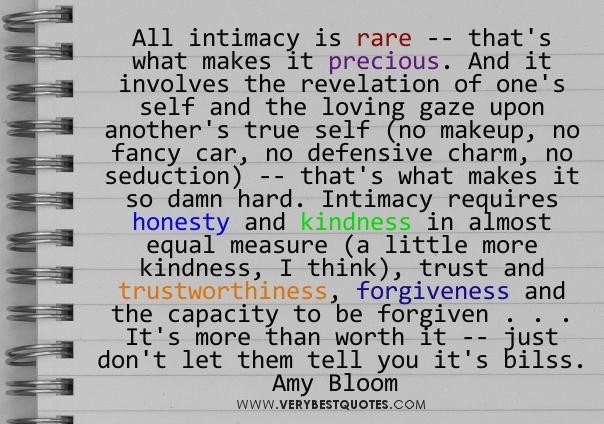
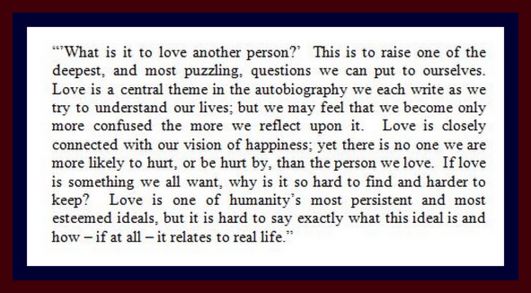
” Most all of us have been caught up in the proverbial “throes of love.” The ecstasy and heartache of opening oneself to another, being enraptured, plagued with doubt and hope, captive to longing and the myopia of the significance of the beloved. But perhaps less of us experience intimacy. Intimacy may be something quite different from love. Although usually initiated in its atmosphere, intimacy reaches beyond the experience of love and journeys toward closeness. Intimacy is about the intertwining of lives, the multiform intricacies of barely-boundaried involvement. What occurs when lives are meshed and melded – shaped with and around one another – physically and immaterially, actually and theoretically, imaginatively and really. Where histories are remade and revamped together in a present. Where hopes are remade and reshaped as a couple. Where the unit and body that counts as an “I” extends to a “we,” and sensation, perception and thought happen always with an external mirror.
Where intimacy takes us is awesome. I mean this in the most fearsome and incredible ways. Human closeness is fraught with archetypal danger. When exposed in such nearness, our lives seem at stake. It goes to the “heart of us.” Within the weathers of love, the wedded experience that intimacy brings seems to make us or break us – our futures and fortunes, significance and meaning rise or fall in accord with an Other. We, in ways, “are not our own” but become something new, something larger and fresh. Something open, extended and possible. Something at risk, distended, and vulnerable. Our lives shared in the hands of another. Our minds shaped with the mind of another. Our purposes, intentions and behavior ever effecting conjoined scenarios. The world is different. Intimate. Involved. Precious and fragile.
There are (at least) two sides to the story…a territory of doubled strength and minimal safety. Of terrifying exposure and (possibly) multiplied protection. Of enhanced security and absolute danger. This is the province of love. This is the prospect of intimacy.”
I apologize in advance and beggar your patience regarding the length of the following post. It is not often that I have over 10 hours straight of anonymity and limited distractions to read, study and write. I spent yesterday and last night flying from Wichita to London for a week-long course examining over 10 specialty libraries there. For the course I must keep a diary online, and while not about “library business” per se, this is about the journey…
Over the Atlantic
I have no idea what time it is. I have been airborne for perhaps four hours, having left Houston around 7:35 PM after an hour of mechanical fix-its, preceded by departure from Wichita at 3:36 PM earlier this same afternoon. We seem to be flying fast enough that my electronics are scrambled and I haven’t worn a wristwatch since high school. I’ve been lucky enough to have booked onto an half-full flight, allowing me the pleasure and benefit of a two-seated section all to myself. Almost a work-cubby – two tray tables stacked with books and an empty seat for sundry supplies.
At all times I pursue readings that might deepen and expand both my abstract and subjective life – I’m certain that could be stated better – perhaps that challenge and enhance my lived experience. Most honestly: that cause me to think, help me make sense, prompt change and give me pleasure. Writings that move me, would be another way of saying it. In the cabin I have arranged Focusing by Eugene Gendlin, Elegy Owed by Bob Hicok, Impenetrable Screen of Purest Sky and Wonderful Investigations by Dan Beachy-Quick, Light Everywhere – Cees Nooteboom, Buddha’s Brain and Just One Thing by Rick Hanson, Infinite Jest by David Foster Wallace, A Thousand Plateaus by Gilles Deleuze and Felix Guattari, and Art as Therapy with A Week at the Airport by Alain de Botton. Which could be explained in so many ways.
Traveling internationally, one is limited for selection – in fact it’s by far the most difficult portion of packing – which books will I need – not knowing how the movement and context will affect me? So I choose:
fresh books by authors that have earned my confidence (my top choice for this trip was Leaving the Sea by Ben Marcus – missed in the mail by a day);
books that I know meet my needs on departure (many my third or fourth reading); and
books I long to swim in but rarely have time with the insistent daily needs and benefits of home.
Whenever I’m struggling with depression, I reach for Wallace and books of wisdom – on staying present, taking steps, coping skills, the breath and body. Reality therapy, as it were. Poetry helps as well, with its attention to detail and sensual triggers. Books that remind me that I’m alive, regardless of felt experiences or circumstance.
I will finish A Week at the Airport on this flight, I’m almost there – or maybe I won’t, saving the “Arrivals” chapter for that moment in my journey. It is the account of de Botton’s stint as writer-in-residence at London’s Heathrow Airport (my immediate destination), and in his inimitable and typical fashion – exposing those human universals embedded in the familiar, or overlooked, or hardly spoken. What he asks from other writers, he provides (and I quote): “I was looking for the sort of books in which a genial voice expresses emotions that the reader has long felt but never before really understood; those that convey the secret, everyday things that society at large prefers to leave unsaid; those that make one feel somehow less alone and strange.” Maybe that is my true criteria – “those that make one feel somehow less alone and strange” – for the books I end up digesting do just that.
Here are some of the portions I have highlighted:
Departures
“Entry into the vast space of the departures hall heralded the opportunity, characteristic in the transport nodes of the modern world, to observe people with discretion, to forget oneself in a sea of otherness and to let the imagination loose on the limitless supply of fragmentary stories provided by the eye and ear…to sense viscerally, rather than just grasp intellectually, the vastness and diversity of humanity”
on the parting of lovers: “We might have been ready to offer sympathy, but in actuality there were stronger reasons to want to congratulate her for having such a powerful motive to feel sad. We should have envied her for having located someone without whom she so firmly felt she could not survive, beyond the gate let alone in a bare student bedroom in a suburb of Rio. If she had been able to view her situation from a sufficient distance, she might have been able to recognize this as one of the high points in her life.” – (I know this feeling and need this distance)
on taking ourselves with us: “There is a painful contrast between the enormous objective projects that we set in train, at incalculable financial and environmental cost – the construction of terminals, of runways and of wide-bodied aircraft – and the subjective psychological knots that undermine their use. How quickly all the advantages of technological civilization are wiped out by a domestic squabble. At the beginning of human history, as we struggled to light fires and to chisel fallen trees into rudimentary canoes, who could have predicted that long after we had managed to send men to the moon and aeroplanes to Australasia, we would still have such trouble knowing how to tolerate ourselves, forgive our loved ones, and apologize for our tantrums?”
on unfamiliar workspaces: “Objectively good places to work rarely end up being so; in their faultlessness, quiet and well-equipped studies have a habit of rendering the fear of failure overwhelming. Original thoughts are like shy animals. We sometimes have to look the other way – towards a busy street or terminal – before they run out of their burrows.”
Airside
“Despite the many achievements of aeronautical engineers over the last few decades, the period before boarding an aircraft is still statistically more likely to be the prelude to a catastrophe than a quiet day in front of the television at home. It therefore tends to raise questions about how we might best spend the last moments before our disintegration, in what frame of mind we might wish to fall back down to earth…”
Or, as a “Terminal Priest” expressed to him: “The thought of death should usher us towards whatever happens to matter most to us; it should lend us the courage to pursue the way of life we value in our hearts.”
need I go on?
Yet on I fly…listening to and “Gustavo” from the new Sun Kil Moon album Benji on repeat; performing breathing exercises while silently repeating blessings on those I love to the quivering thrum of this airborne albatross; catching glimpses of “Before Midnight” on face-sized screens where perhaps mirrors should be; and reading and reading and reading and trying to conceive…
stories imagined and rejected
in which the yachtsman drowns
in a remembered winter
and exists as a poem,
.
but the last thought is of
her, the woman who disappeared,
who everything was about, the yachtsman, the bay,
the poet. The air it all breathed
is the loftiest fabrication, a life
possible now it’s no longer
possible.
-from Cees Nooteboom’s poem penobscot
and worrying about “how modest and static a thing a book would always be next to the chaotic, living entity that was a terminal,” our relationships, our lives.
A pain. A joy. Surprise. Loss, meaning, something that crashes, crushes, alerts or in some way causes blurts or blasts to our system that create cross-connections – surge energy / electricity / pulsings between links and channels that otherwise run their own course. Unexpected. Expected. SIGNIFICANCE.
I am intrigued by what “catches” us, “moves” us, CHANGES us. As many times askance as head on. What gathers and whispers behind us. What we are confronted with. Explosive, erosive, evolutional. You could call them “shocks to the system.” Sometimes cumulative, sometimes immediate. But they effect change, and attention. Design, and process.
I’m thinking of them as prompts.
There are a few works of literature and art, throughout my life, that ALWAYS “prompt” me. A few authors. A few painters, sculptors, musicians. I do not know why this is, but it is so – some voices, some styles, some appearances and sounds unfailingly “move” me, by which I mean continuously change my orientation to the world. Often subtly, sometimes radically, but surely.
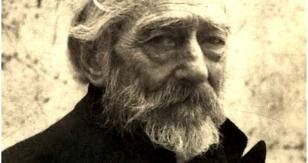
Macedonio Fernandez is one such creator.
His writings NEVER FAIL to alter me.
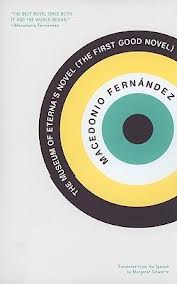
I could query my analytics to find how many times I have quoted him, referenced his “first good novel”
and today I am passing the PROMPTthat this novel is – and IS contained in it – on to you… from Fernandez himself – I have lived with it, considered it, dreamt of it… a prompt he left us that haunts and inspires me… an ultimate sort of prompting….
He heads to the room in the attic. This is where it happens, where it all occurs. Everything needed is there, at the ready. A factory for making. The tools and materials – this is where the work gets done. Such a tiny place – 53 cm of circular feedback. Yet somehow within it expands. Almost limitlessly, it seems. Whatever is needed appears, is created, invented – “on the spot” manufacturing “just in time.” Manufabulating. Manuscripting. You can almost make out all the details – electricity, wiring, elaborate connections – the inside, the outside, and back – and yet how it gets done is quite hazy.
In searching through the files on my computer for particular photos, I have been running across many files of which the names are unrecognizable to me, many dating from months and moons ago. Some of them startle me, some are encouraging, all provide record of where I’ve been, how I’m thinking, what’s at work in me at various given moments. I thought I’d share a few that seem worthy of being shared, they will arrive under the tag “Spillage” – detritus left to the side when my focus is on projects. Here’s a sample, found labelled: Action:Writing. (simply click on title link to view)
“The power of projecting one’s personality into (and so fully comprehending) the object of contemplation”
“to feel oneself into it”
“the feeling-out of other minds”
“a form of imaginative identification of self with non-self, a feeling-into”
Feeling out, feeling into, projecting one’s experience in order to absorb the experience of another. “In and out of one another’s bodies” (Maurice Bloch), “intersubjectivity” (Daniel Stern).
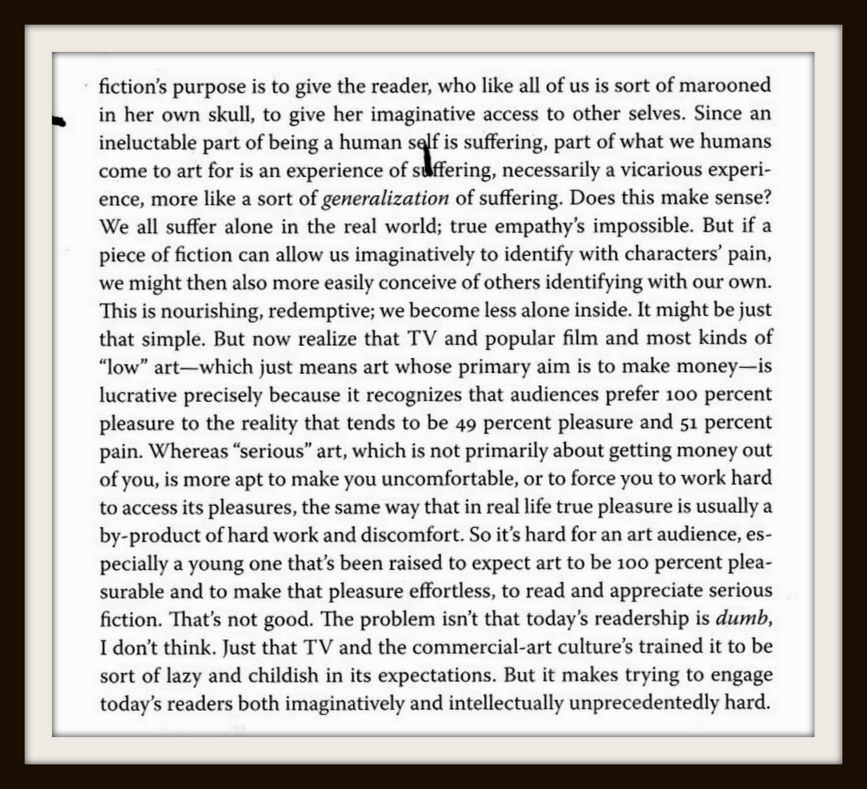
Notebooks full of conjuring, I’ve dreamt and striven to elucidate or embody, to caress and coerce language to convey or carry-like-a-message the interpersonal convergence, experiential agreement we might be signifying with the syntax and semantics of empathy.
There were moments, instants, it seemed evident, nearly obvious – as when a child ran itself across a brittle late-summer yard, lodging a prickled sticker in the pad of its heel, and hearing its friend following close behind, sensing its similar fate…a kind of “predictive apprehension” become co-mprehension as experience is multiplied, at least observably shared – at least sympathy – a feeling-with, if not –out; and –into.
Two humans losing their loved ones, or spouses enduring the same tragedy?
Experience-learning applied to replicated or duplicated occasions. Similar, perhaps, sympathic.
But “fully comprehending” journeys beyond this.
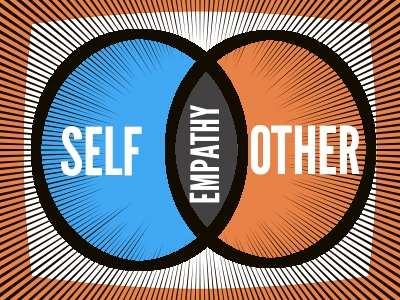
Apparently, empathy happens when one extends emotion beyond the individual body and absorbs, joins, or feels-into another – a verge of meeting, movement,
beyond into between, meshing as a sunset goes about forming itself, or the creation of fog – something like con-gene-ial requirements. Some of us, hell, all of us (and more) share genes, so this must be possible (we have a word for it after all!).
Our forms, our reach, must be flexible. We share-with, finally, down to our atoms out through our environment, galaxy, and beyond.
EXTENDED – EMBODIED – EMBEDDED
-components of empathy-
…a coordination of coordinations of actions…
(Humberto Maturana / Francisco Varela)
Perhaps empathy, a possibility of intersubjectivity, occurs when subjects extend awareness through a mutual orientation into a consensual domain…each feeling-out the other by feeling-into a shared sensual arena, learned by experience and therefore anticipated predictively…in rare occasions of empathy…simultaneously!?
In other words, based out of our shared genetic realities, generated by the kinds of experiences and “worlds” our species can have, we feel-out of our heartbreak, grief, joy, ecstasy, fear – emotive and sensual experiences – into con-sensual co-ordinated domains of those experiences occurring in some liminal, marginal space verging each; similarly to the way a coastline clearly separates and thoroughly connects sea and land, while both continue going on underneath one another.
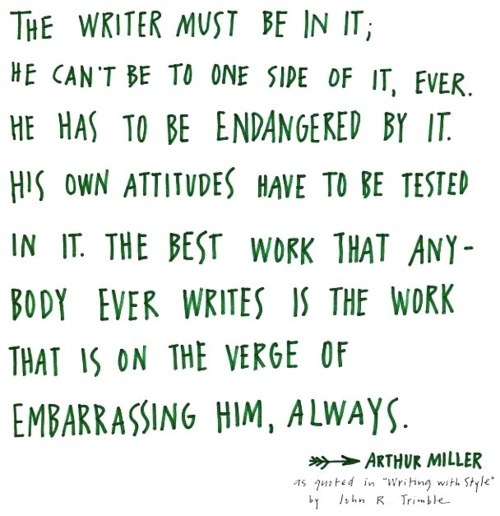
Perhaps. But I was not seeking to describe, explain, or indicate empathy in language, my desire was to enact it, evoke it…and in that I have failed…ever to try again.





 All my Words are Silent