Description: Flux. By its very nature, significant change is unsettling, disregulating and life-altering. Over the past 6-8 weeks I have lost spouse, employment, my personal and relational rhythms and schedule, the savings in my bank account depleted. I have applied for over 180 jobs, written as many cover letters, tweaked as many resumes, attempted to keep up with my coursework, and take good care of my four amazing children who abide with me. Each week in therapy (without doubt a literal life-saving engagement) the session will end with something like curiosity at just how uncertain, good, terrifying, significant, painful, frightening, moving, difficult and meaningful the week’s happenings are. I have felt I am living multiple lifetimes of experience in each 7-day period. Inherently, overwhelming are experiences that cannot be described, portrayed, understood or explicated. These are strange states, devoid of much that could be regulating or structuring, a wild gyre of hope and despair, connection and separation, exhaustion and inspiration. Strange states.
One of the things that has pestered and picqued me this past week is a growing recognition that most of the people I know – friends, peers, acquaintances, relatives – are people that can DO almost anything well, even exceptionally. Humans have such an uncanny adaptive ability to (as Kafka says) “wriggle through.” My people are the sorts of persons who find satisfaction and contentment in being well– the activity of living itself, ever specific to context, is its own contentment and satisfaction, often regardless of what they are doing (it seems).
From early on, many of us were instructed to “follow your passions,” or “use your gifts and talents,” another way, I am thinking, of saying FIND DELIGHT. Delight, it seems to me, is that tone of experience we incur when both being and doing provide utmost satisfaction and contentment for our individuated and particular “selves.” Moments such as that first eye contact that seems comprehending, recognizing between the infant you have brought into the world and love so much and yourself. Moments often termed “flow” – when your ache to express and the form of your expression seem to unite, resonate – in whatever medium you most enjoy – dancing, painting, writing, conversing, thinking, playing, sculpting, calculating, making music, serving others – whatever it is that brings you joy coupling with your own unique history and experience and way of being.
And here’s the rub: in our authentic relationships, most of us have a good sense between us of what it is that makes our “others” tick, or thrive, their core desires and wishes, delights and strengths. HOW they like to be WHO they are. My friends who love to observe and capture beautiful moments, create photographs, artefacts of world/self combined are often selling insurance, teaching classes, running cash registers. My friends with conceptual strengths and reflective panache – philosophers with ever-evolving ideas and visions of the world and how it functions – are often administering organizations, delivering mail, stocking grocery shelves. My friends who thrive in drama and play, or sport and music, or math and surfing – end up spending their days repairing roofs or selling shoes, concocting coffee or serving food, mowing lawns or teaching children. AND THEY ARE EXCEPTIONAL AT WHAT THEY DO!
The rub: When people are beingwell, it seems they do well,regardless of whether the task or activity would inherently give them delight. It is the being that delights them, and they infuse whatever they do with that wonder and wealth. The query: is there, when is there, how is there – the possibility of (remember, our lives are brief) – combining our capacities for being well with those things we most enjoy doing well and might that not result in a life characterized by delight ? Is it possible to insist on? And is one able to survive? As I search for work – I realize just how many things I am able to do well – like so many others – and that doing well at things has a certain level of satisfaction because one is being well. But what joy (remember, our lives are brief) if our lives might be characterized by being well/doing well those things that delight us (nourish our well-being)? We are social, and because of that our survival depends/inter-depends on one another – and society needs certain things of us – teachers, mail deliverers, food service, grocers, manufacturers, administrators, tax accountants, waste management, shoe repairers, and so on. We fill these positions FOR one another, for our greater good, making effort to infuse and tweak our responsibilities with as much as we are individually able to also gain some satisfaction and contentment with the ways that we be in those roles.
This question is unclear. I suppose I am wondering the experience of all of you out there – Is it possible to live a life characterized by delight? Where we are able to survive being well doing what we most enjoy doing well?I have yet to fill out the application, sit through the interview for, or see the job posting that asks me to DO WELL WHAT I BE. Perhaps that is the application of life itself. Perhaps I will never run across the posting that says – actualize your desire to write – whatever you are compelled to write – and we will make sure you are sustained and healthy. Any testimonies of conflated being and doing and surviving and thriving out there?
“Would there be this eternal seeking if the found existed?”
I’ll admit – I’m pretty proud of this one. Seems I’m getting toward some of those true hard honest realities about how it is for some of us – the terror of actual intimacy, the joy at the idea or feel of it… let me know what you think.
accidentally opened a file from the past that seemed related…
The Pleasure of Reading
In other words (than what? than which?) we all of us are readers, all of us writers.
That is a pleasure.
And all of us, always, doing both. Simultaneously.
Speaking of my textbooks (were we?) – information sciences, developmental and behavioral psychology, reference services, librarianship / and the research to the side – physics, evolutionary biology, neuro- and cognitive sciences / my pleasures – novels, poems, stories, others’ blogs, visual, aural, literary artifacts / my relational – wife, children, family, friends, society, culture – gestures and vibes and dialogues and signs / my “self” – sensations, perceptions, formulations of these, reformulations, adjustments and maneuvers.
In other words, at all times, I am reading, even if only my lack of memorable dreams, or pulses and breaths. And writing it all in actions, movements, responses, adjustments of speaking and writing and making.
It is a metaphor, obviously. Perhaps.
Roman Jakobsen purported that “all meaning is a form of translation, and multiple translation (polysemy) is the rule rather than the exception.” (I am translating his text just now into another con-text).
Wolfgang Iser’s (perhaps, anyway insofar as I am translating it here) concept of actual text (text as it is recorded by an author) and virtual text (actual text as read by a reader).
This is an aspect of the deep living pleasures of reading/writing for me.
An author/speaker/artist/scientist/mother/etc. has an urge or sensation – a possibility of action/behavior/message/idea (a virtual text) and translates it through multiple processes and levels of activity through some medium into an actual text/painting/utterance/experiment/recorded idea/sound, etc. There it is in the real world – a physical artifact in time and space – added – if only for a moment. Transforming (simultaneously) its maker into a recipient (translating a now existent text/sound/behavior/gesture/sculpture/experience for him or herself) and if any witness/participant/auditor/recipient or reader is in his or her environment they are simultaneously interacting (via translation through their own tools, language, perceptions, sensations, mood, etc) with the actual text, writing a virtual text (translating) of their own.
And it goes on. And can be done innumerable times, this process, whether using an identical actual text over and over, or simply writing/reading life as it occurs, making it occur.
Paul Ricouer: “stories are models for the redescription of the world.” Possibly. Or at least redescriptions (translations) of models for redescription.
Iser: “the relative indeterminacy of a text allows a spectrum of actualizations…literary texts initiate ‘performances’ of meaning rather than actually formulating meanings themselves…the reader receives it by composing it.”
Language, action, behavior as possibilities rather than certainties.
So that I can encounter with all I’ve encountered/experienced an actual text by psychologist Jerome Bruner translating these very quotes and contents with all he has experienced and translate it with the multiple translations of family life and being a human organism and novels and pains, poems and stories, paintings and laws, translated with data and education, emotions and animals, translating with you and a computer, internet, digits and bits, translating into…
a great pleasure of reading is writing reading
or, “a writer’s (reader’s) greatest gift to a reader (writer) is to help him become a better writer (reader)” – Jerome Bruner (parentheses mine).
In any genre. Writer becomes when the needs disappear – needs like expression or dialogue, understanding or inquiry. The need to devise layers or multiples of perspective, to experiment or experience language or thought. To love.
When these needs are expunged or exhausted, and a human puts pen or pencil to page, writing might begin.
These needs are not expunged.
Needs complexly relocate.
Maybe they find a more suitable object, event, or entity. Writer attempts to construct love via language and page. This is also dialogue. But what is needed is resonance-WITH. What is longed for are moments of positive resonance with an other of Writer’s same kind. Where resonance would be acceptance, acknowledgment, empathy. Comprehension, understanding, attunement with Writer’s barest, most authentic expressions – Writer’s openness and risk, Writer’s life-experiencing, meaning-making processes.
[NOTE: Obviously it is literature being addressed herein – not formulaic, hack, commissioned, business or “professional,” aesthetic or philosophical – domain-specific languages, entertainment or communication-purposed compositions. Rather – writing that lays bare living– which can (also obviously) partake or occur within any and all of the above forms and kinds of inscriptions]
Writer, utilizing all accessible knowledge, craft and experience divulges (as best Writer can at this instant) Writer’s lived experience. Writer loves her. Writer grieves. Writer imagines. Writer pretends. Writer co-constructs (borrowing from the everywhere that language, experience, emotion, sensation, cognition, DNA, biology, physiology, dimensions etc. comprise) trails of letters, incipient sounds, rhythms, definitions, analogies and metaphors, socio-cultural baggage, spatio-temporal perceptions, historical variety and habitudes, toward some sort of text, artifact, writing.
In other words, Writer writes.
And as Writer writes, Reader reads (they are one and the same initially) and that reading also co-constructs the divulgence and activity-experience the writing com-poses.
Posing-with = Writing. An individual, posing-with, everything-at-disposal (its affordances and limitations) through language-inscribed.
[NOTE: pose1 pōz/
1. verb
1.
present or constitute (a problem, danger, or difficulty).
“the sheer number of visitors is posing a threat to the area”
The needs remain because they’re needs. Needs oxygen, needs community, needs interaction, needs movement. Needs nutriments, needs love. Needs habits and practices, processes and conventions. Needs society, needs shelter, needs protection, needs…
As if folded-into. As if woven. As if inherent and intrinsic, automatic.
As of anything and everything, then, Writing is not solitary. “To write” is TO-WRITE-WITH the universe-encyclopedia of said individual, “writing.” Some languages verb this better than others, some will allow us to feign.
Writer will not feign, unless “to survive” necessitates “to feign.”
Writer intends to write-with, perhaps finally surpassing a former dream of being no one, no thing, instead edging toward and everything that one is, of necessity, Writing.
Say you have a product – an object of some sort – a shirt or a song, an idea or a skill – and you’d like to share it, show it, sell it, make it useful. How would you go about this? Perhaps make an image of it, a recording, describe or depict it somehow, place it with similar objects but distinguish it, express what it’s made of, from, how, where, when, how one can find or obtain it. None of these things – the image, the recording, the description, depiction, components, composition, etc. ARE the product itself – they are new and other objects – descriptive ones, administrative ones, structuring ones, among other things…potentially useful and actionable data about the resource itself.
The shirt is long-sleeved, it is stormy blue, size: large (16.5×42), it has 5 buttons made of sandalwood, it is hand-stitched and crafted from Indian muslin, and so on. Metadata. It applies to ideas, objects, events, persons, places, things, relations, sounds, senses. It is a language. It can be formal or informal, global or local, controlled or free. It allows systems and processes, machines or functions, humans or networks to utilize resources toward purposes – to identify, select, obtain, organize, comprehend, etc…
The resource is separate from all this.
Metadata and Experience
A rush of blood to the head. An uncontrollable weeping. Sudden awareness, a fear, a noticing. Tightening throat, sorrow, excitement. Vibrations on the inside, tingling along the spine, a feeling in the “gut.” Things happen. We move. We sense. We perceive. We process all this automatically, at a bodily, neuronal, cellular, physiological scale : our resources for staying alive, for being.
Enter metadata…of which the above paragraph is an example (the descriptive type). How describe, identify, narrativize (organize, administer), utilize, put to some constructed purpose all these goings-on of our felt experience (our primary resources)? Create repeatable elements, qualifications (say “the flush in response to her text was ‘love,’ ‘infatuation,’ ‘shame,’ or ‘rage’”); encode it, fit it into the system, the processes (“I wouldn’t feel such pain if things were different, if she were here…”)…signify relations.
It is stormy blue, my grief, it has long sleeves with a long reach, it covers me entire, lays upon me like a veil, like a skin between. I am clothed with absence, the buttons burn.
Metadata. The resource (capacity for grief, for attachment, for longing; the ability to love, to fear, to wish, to compose metadata, to fabricate meaning/purpose/functions and relations for physiological experience – the Resources) – are separate from their description, depiction, events, experiences, persons, relations, constructed meanings…THE RESOURCES ARE OURS.
We tend, for ease of use and efficiency, consistency, sharability, continuity and so on (“interoperability”) to create for ourselves Application Profiles – when we experience this sort of felt happening I’ll call it love, anger, shelve it here, link it to…qualify it with shame, doubt, fear, happiness (all major experience-metadata schema elements). So we create Core Elements or fields of experience and their Qualifiers, Sources, Rights, Techniques and Technicalities, and administer, structure, organize, identify and select (or reject) our felt experiences accordingly. Our constant work of labeling, cataloging, categorizing, operationalizing, conditioning, meaning-making: our data about data – our profiles of description, selection, controls, language, encoding, linking, expressing…structuring our experience.
Our Resource Description Frameworks – statements – “this, has relation to, this” “is similar to” “causes” “is result of” “makes me” “hurts…” “means…” “is author of” “has title” and so on…ME.
Resources
And then the Resources…apart from all that… our felt experiences…our capacities and abilities we label love, courage, loss, grief, ecstasy, pleasure, pain, generosity, grace, fear, anger, shame, hope…
…apart from the metadata we construct, the linkages we compose…
are OURS to utilize as we see fit, as we wish, as we choose.
Theories exist that propose a process for primary and profound attachments. That as these attachments proceed, they will inevitably expose (or reach, come up against) individual limitations. As humans intermingle with increased intimacy and time, eventually the darker reaches, safer holdings in us (traumas, repression, grave fear or terror, shame) will be engaged and something will ensue – usually either openings or closures. The following was composed as an attempt at a relational account of this…
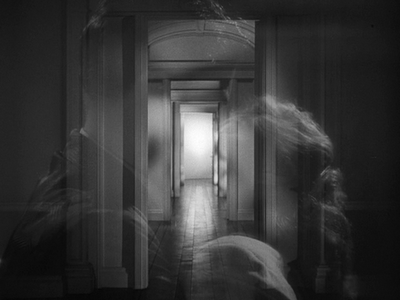
We Open Doors
We struggle. We stumble forth. We reach, we ramble, we run. We learn to walk. We tumble and waver, we stride. We overhear, we listen, we engage. We greet what we encounter, we welcome and inquire. We reciprocate. We open doors.
We gaze, we laugh, we remember and rejoinder. We wander, we wonder, we happily agree. We chide and we dispute, we recommend and reason, we exclaim. We open doors.
We step forth, step through, we open chambers. We confess. We beg, we plead, we rest and bless. We sing. We join, we sway, we dance. We kick and scream and wriggle. We resonate. We hurt and we forgive, we open doors.
We whisper while we shout, we worship and succumb. We praise and denigrate, argue, negotiate, we push and we budge. We hesitate. We wrestle with the locks, we suppress and unremember, we fabricate, we lie. We pry the doors.
We change the stories. We imagine. We concoct and recreate. We design a thread and tell a tale, we corroborate with doubt and love. We fear and we recall. We reassure. We swoon, we falter and we soothe. We open doors.
We enter dungeons. We smell the dark. We trigger mines. We panic and react. We flee aimless and return, we grasp and seek and hope. We lift the doors.
We reach the wetlands. Cross the plains. We clamber mountains holding onto rope. We knot and we undo. We disrobe and arm ourselves. We bleed. We heal. We stack the rocks. We open doors.
We attach and we press on. We scab and suffer. We get lost. We recover. We holler, we recoil, we respond. We widen cracks and we expose. We grope, we censor, we divide. We rage and we varnish, we forget. We ask and refuse the answer. We testify, profess. We strain and crawl. We collapse. We guard the doors.
We collaborate. We weave and tear and shape. We invent. We threaten cores. We gird our hearts and steel our minds, we clasp our hands. We jump and weep and fly. We grieve. We repose, we dialogue, we alchemize. We sear. We use our weight. We bolster. We open doors – they slam us.
We protect. We damage and arrange. We repair. We gossip with our notions. We theorize, we enter forests. We drown and cradle rocks, we float and we resign. We hear the latches, we peer downstairs, we take our steps and count the beats. We’re keeping time. We feel the tremors, we sense the snap, we open doors.
We break them down. We tremble. We contract. We slither, wriggle, wind. We explode, we come undone, we disappear. We hear the lock. We search the key. We gather, we conspire, we close in. We close doors. We seal, we paint, we turn. We shrink, explore, thin out. We look away, look forward, look about. We separate and margin. We barrier and bind. We open doors.
We pause, we blind, we wish. The doors shut tight on what we’ve opened.







 All my Words are Silent