
Reasons I Library, or the Book and Living (pt. 2)

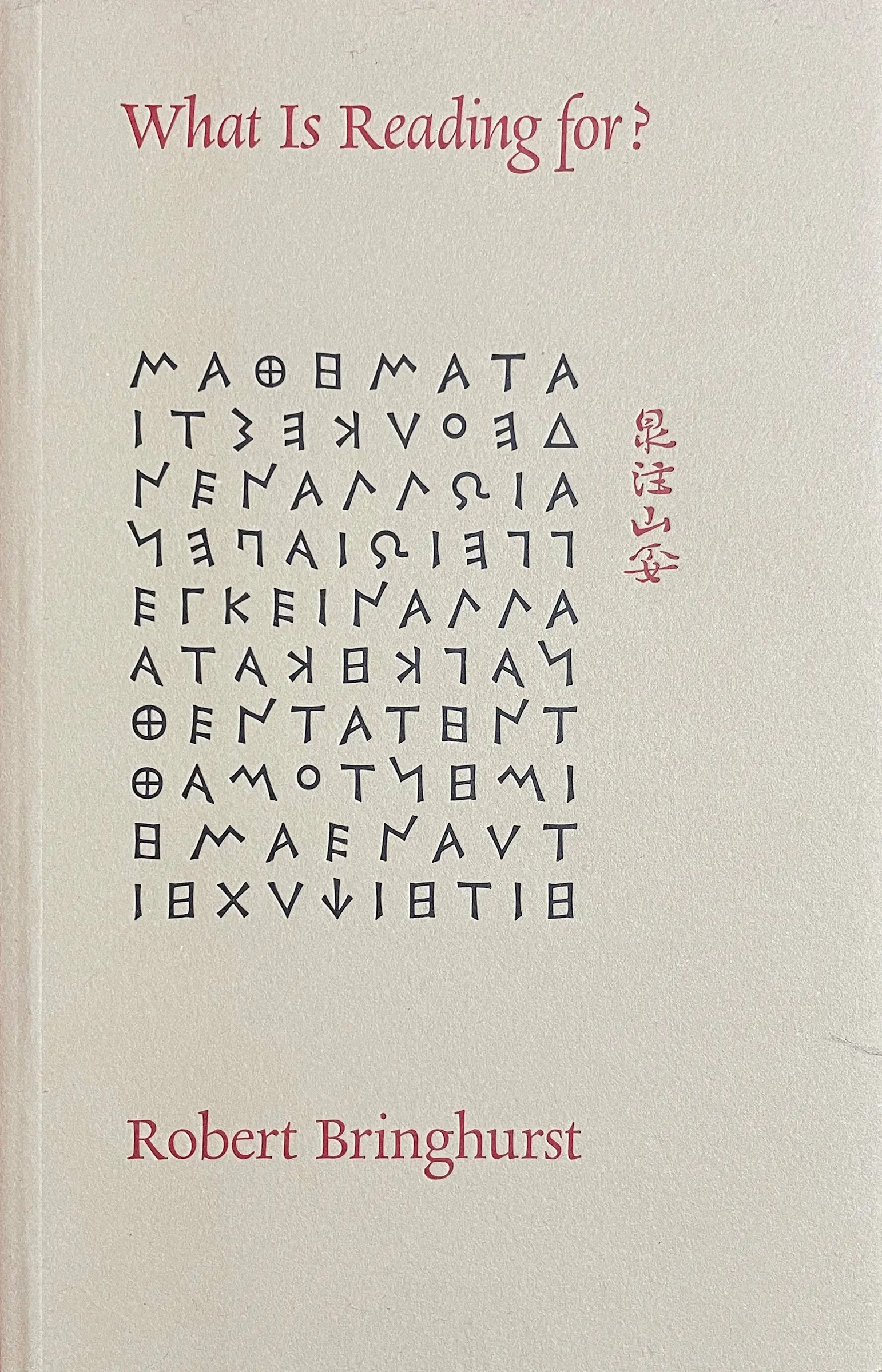
This continues readings from Robert Bringhurst’s beautiful WHAT IS READING FOR? begun in previous post.

Bringhurst runnels his way through various carriers and purposes of diverse sorts of publications and materials across history – from the more disposable to the mostly artifactual and permanent – reasons why they are preserved, and types of reading they promote and engender… from here he enters the new and ephemeral format called the “electronic book” that our culture currently and earnestly proffers us…

“The digital book is a rotation, not a revolution. It is another turn of a wheel that is turning all the time. It’s a newfangled toy and may be some fun, but it is also just the latest stage in the continuing degradation of the outward from of the book. The most perishable, and most visually disappointing, form of text yet invented is text on a screen. It’s the perfect medium for a society that believes, in its heart of hearts, in the basic futility and irrelevance of what it finds to say [italics mine]. And plenty of what we say does fit that paradigm. But because the electronic book exists, it will also get used, like the early scripts of the Neolithic accountants, for statements of lasting value. Real reading and writing take place on the margins of empires. That’s just how it is. You read the books, if you want to read them, however you can [italics added]. And we do.

“…real writing involves a lot of revision. Real reading involves a lot of re-reading, in just the same way. The text also needs to be free of distractions…discontinuous reading has a long history…That’s how we’ve always read dictionaries, atlases, recipe books, and other works of reference. It’s how we read discontinuous matter, of which there is plenty. Reading with a capital R is something else: an attempt to live up to the world in which we live, and to those ever-renewing models of the world known as books – with, if you like, a capital B [italics mine]. That kind of reading involves taking the plunge. It involves immersion – not for an hour…but for days, for weeks, and in some sense for life.

[Bringhurst now discusses beneficial aspects of coded, electronically transmittable formats of writing/s, particularly for learning and scholarship]

“Running searches for this project made me conscious of two things. First, what it was doing was not reading; it was simply light housekeeping, aimed at making my own and other people’s future reading easier, more thorough, and more comfortable. Second, what enabled me to do what I was doing was the labor of other literary housekeepers extending over more than twenty centuries, fundamentally unfazed by a good many changes in tools, techniques, and materials [the librarians, title so or not, italics mine]…from scripts to manuscript to print to electronic database, papyrus to paper to screen, the sweeping and dusting and laundering have continued as they must.

“All this housekeeping aims at a single thing: allowing reading to continue. Why? For the same reason we walk, talk, and make love. Because that’s how the species transmits itself from yesterday to tomorrow.

“It will, I guess, be clear that one of the things I think reading is not for is taking complete managerial control of the verbal environment, or of any body of text within it. Where literature is involved, that is not even what writing is for. Outside the dreary realm of purely utilitarian language, reading and writing are both ways of getting involved in, not taking control of, the great ecological fact of the matter, otherwise known as What there is to pay attention to, mirrored for us in What there is to say.

“Clearly, people take pleasure in having control, or the illusion of control. But the freedom to skip around whole continents of text like a Martian in a flying saucer, scooping up sentences here and there, is pretty much wasted on genuine readers, because those are the people who know that reading is mostly for making discoveries, learning how and what things are – and who know that to do much of that, a flying saucer is not what you need. You have to walk through the text, and for that you need good eyes, good feet, and lots of time.

“So what’s in the future? To be honest, probably starting all over from scratch, with a small and impoverished population in a badly wounded environment, recreating oral culture bit by bit, and possibly working back up to some kind of writing. But in the meantime? In the short term, it’s quite easy to say what we need for digital books to succeed for real reading.

[Here he provides 5 propositions with descriptions: 1. Free from the grid… 2. a non-radiant display… 3. high resolution… 4. good letterforms… 5. as few bells and whistles as possible]

“In other words, it would be a fine idea if the digital book functioned a lot like earlier books. But how it works matters less than how we treat it. If, to us, it is nothing but a commodity, that will mean we have forgotten how to read, and no book then will help us.”

I am hoping it is evident to see why the practice of preserving actual oral, written, and material forms of culture and our stories and languages we wish to preserve – the work of transcribers, translators, interpreters, writers, printers, craftspersons and artisans – actual things we can pass along at will, preserve ourselves (not dependent on corporate servers, access rights, power companies, or any technologies we ourselves cannot build/rebuild) i.e. – the traditional public library, religious libraries, archives, special collections, museums, and living human transmission and communication – matters so much to me. If you are librarians, or keepers of books, and realize the costs of not controlling access and availability of what they offer to any in our communities who wish to participate in via reading – please fight for the preservation of semipermanent materials.

For more on the ecology of language and material transmission (and to hear the wonder of Robert Bringhurst’s knowledge and communication and thinking) please see also: What is language for?

Thank you for your time and carrying the flames of these passions (if you share them). Much of my grief and ache comes from witnessing the “weeding,” “de-accessioning,” “optimizing,” (all synonyms for destroying in my case) many unreplaceable government documents, “compactly shelved” historical publications, and other very beautiful and impressively produced human artifacts that I still believe would have been welcome and desired by humans to preserve throughout the world.
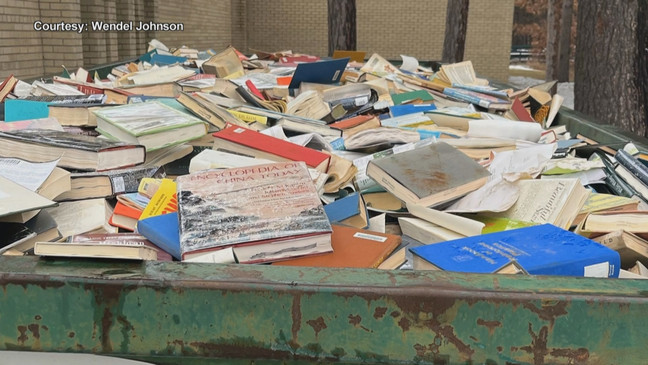
See also: The Most Amazing Books People Found in a Dumpster …

I have always imagined that Paradise will be a kind of library

– Jorge Luis Borges
Reasons I choose librarianship, or the Book and Education (pt. 1)

the knowledge of most worth, whatever it may be, is not something one has: it is something one is… The end of criticism and teaching, in any case, is not an aesthetic but an ethical and participating end: for it, ultimately, works of literature are not things to be contemplated but powers to be absorbed.

Northrop Frye, The Stubborn Structure

As the Fall semester begins, with all its anticipation, energy, trepidation, and more… so many cultural and technological changes and experimentations upon humans and their learning, directing, and doings… I find more and more that we may be entering a kind of “dark ages” for reading and writing – a time when few, specialized alchemical, spiritual, learned enclaves (monasteries mostly) preserved the materiality of human learning and culture for hundreds and hundreds of years… that otherwise would have vanished to our access.

Following are some sections of Robert Bringhurst’s wonderful small beautiful printing of an incredible talk delivered orally – “What is Reading for?” – which I fervently recommend you borrow or find for the whole river of its beautiful pathway of winding deep riches and reflection. https://scottboms.com/library/what-is-reading-for

Now some samples from Bringhurst…

“In the narrow sense, as we all know, writing and reading refer to something done only by highly organized, agricultural, and management-oriented groups of human beings: making and deciphering visible signs for this normally invisible and almost intangible but nevertheless exceedingly dangerous stuff called human language. After that kind of reading and writing gets going, it’s borrowed by people who aren’t so management-oriented: oddballs like me, who want to use it to give stories and poems and ideas and musical compositions an independent, semipermanent material existence: to let them speak for themselves, like paintings and statues.

“That kind of reading and writing is usually called artificial. It only exists where highly organized groups of humans go to a lot of expense and trouble to sustain it. But some of the things that are done with it, and some of the things it is used for, are not artificial at all. Margaret Atwood, you might remember, spoke about that crucial shift, from the writing of quartermasters and clerks, wanting to keep control of what they possess, to the writing of thinkers and listeners, wanting to keep in touch with what they’ve heard. Both kinds of writing are, of course, still with us, but it is the latter kind of writing that we associate with writers, and so with readers too…

“…If it sounds like writing loves rivers [he’s just spoken of the earliest traces we have of places we have evidence of inventions of writing, all which occurred along rivers], that’s because writing loves agriculture, and that’s because writing is, itself, an advanced form of linguistic agriculture. “Writing is planting,” it says in a poem I remember from somewhere – and reading is harvesting. Harvest time, you’ll remember used to be a time of celebration, but harvesting was work. There are actually places where humans still do it themselves, and where they remember that it leads, in turn, to more work – threshing and milling, peeling an cooking, pitting and drying – and then to still more celebration. In industrial societies, all of these crucial activities are now mechanized. I have a strong hunch that the urge to digitize books and distribute them over the internet to reading machines grows out of a similar dream: a desire to build machines that will write and edit and print and read the books for us, so we can go upstairs and watch our screens…

[here he spends a few sections tracing the evolution of the materiality of oral language to script and then to printing – to scribal cultures to typography – to preservation and dissemination methods and technologies, concluding with]: “You see what I’m getting at. Reading could have a rich and interesting future, because it does have a rich and interesting past. But if no one remembers that past, it may not mean much to the future…What I think is that a great work of literature deserves fine typography and printing, just as a great theatrical script or a great piece of music deserves a great performance. The idea, of course, is that these things can add up – and ought to add up, at least once in awhile, as a form of celebration. If reading good books is physically pleasant, people just might spend more time reading those kinds of books, and might want their friends and neighbors and children to do the same. And reading good books just might make some of them into wiser, healthier people. That, as I recall, is how education is supposed to work. It’s not necessarily supposed to raise the GNP or make everybody rich, but to make every life more likely to be a life worth living, whatever life it is…with a reasonable degree of intellectual and spiritual independence…”

[more soon to follow…]

A Brief and Derivative Hello / Interview

For (every?) New Year

Greetings all.  I realize something now.  I realize (today), I realize, sitting in the sun of a Winter in Kansas, on my porch, in a rocker, alone, a side-effect, a remnant, remainder, myself… I realize that I have long dreamt of leaving some legacy, of making some mark, of contributing to the world – the natural world – the world as made up of plants, animals, landscapes, elements, humans… the world dizzied with combinations of atoms and molecules… and yet… and yet… I realize it was all about love – all about being realized by being loved, and realizing meaning in loving – NOT leaving a literary legacy, NOT producing interesting and intriguing offspring, NOT making art or language or objects that would outlast me – NO, no, no…  Simply recognizing that I exist, existed, am existing in the world of another, and that the world exists, existed, will exist for me – by my affection and attention to its nuances, details, and differences – its specificity of my attention, attraction and resolve:  LOVE.

I found this entry in an old journal, a blue oversized Moleskine soft-covered journal, and found (years later) that it still seemed to speak for me… but as I typed and edited it I realized that it has been outdone, realized, accomplished, in the FACT of BEING LOVED and BEING ENABLED TO LOVE… and so all the hopes remain, all the purposes and visions, all the projected communications and connections… but in a context rearranged, reapportioned, reinvented – that of MEANING derived from LOVING and being LOVED.  Thanks to my vibrant partner and accomplice, inspiration and reward – for taking the grave gravity of production and transforming it into action… the pinched acuity of competition and accomplishment into offshoot, accumulation and extraneous luxury – that the hopes, dreams and ideas / ideals of a human existence might be translated into freedom, grace, and potential benefit or gift – possibility rather than necessity; offering rather than identity; potentiality rather than desperation – a giving in distinction from a grasping : so I might still possess similar hoping without the fear and trembling, without a sense of pointlessness, without a perception of failure.  LOVING – intricate maneuvers of helping and healing, intimate operations of interaction and reciprocation, finely detailed activities of acceptance and reception – the sigh, the breath, the pulse of BEING… change me.  Change and change and change me.  As a parent, a man, a partner, a person.  Thank you dear love – a wonder, a woman, an incredible human – a person: full and becoming, so generous, so tender, so affirmative and kind, so rich and creative, inventive and becoming, so new – I love you.  The world is different now.  Its meaning, its point, its aim, its occasion.

This old and rediscovered writing has distinct meaning… because you, and life, and love, and… an evolving and differentiated “I.”

Jacobsen - thought series

I am using the blue notebook with a blue pen to complement.  Why?  Because you asked.  You said “everyone wants to know.”

In other words, if it’s going to count for what matters, it has got to be specific and special – set apart, somehow more final, more complete.  I’ll use it for the whole – for photos, drawings and more – all the blue notebook in blue ink – for you.  Because apparently, “everyone wants to know.”

Mom and dad ask in their roundabout, passive-regressive surreptitiously accusatory way, as is their fashion – kindly and quiet, ever with a look of care and concern, yet secretly shouting their “what is wrong with you!?” “What is wrong with US, that you…” and on and on and blah blah blah…

My memory isn’t like that the first five years of life…that I pretend to remember.  But all is mostly smells and sounds and light from there.  Trees and grass and dirt, how brightness gleamed and glanced and filtered through, with times of wind and rain.

Not that you care… I’m fairly certain that’s not what is being asked for, not by you, by my sibling, children, or lifetime of “friends” and “family” – whoever, wherever they’ve become.

You’re the livewire – and perhaps the children – perhaps they will want to know, at some point, perhaps not.  Perhaps everyone’s already figured my story – diagnosed and prescribed me.  Perhaps.

Be that as it may, I’ve thought long and hard, reviewing what I thought I knew, how I felt I felt, what it seems I’ve seen, and so on, and decided, for you, for you, really, and maybe a little of a bit for myself (curiously) and a percentage for my kids should they ever seek to know or wonder, or have need of psychological freedom, or give a shit about who or why… I decided to use this damned blue notebook with matching pen and try to learn just what I think about it all, mostly because, as you put it, “everyone wants to know” – (and WHO might this “everyone” be?).

Should I start with the hands, the head, or the heart?  I suppose the limbs and loins will come into play as well – god knows the guts and the goiter.

I remember an opening.  A time I was touched, in the rain, and my suddenly skin, my obvious self-enclosure – as opening, margin, and veil – a fabric of me, and a screen.

I wanted to make a difference, you see.  Make something, I don’t know, construct an element everyone could hold on to.  Take in hand, heart and head.  Keep or repeat as needed.  Something like that.  I knew I wouldn’t last, none of this, none of anything.  “The center cannot hold” sort of deal.

I ought not begin there.  They’re all wound up together like knots – the head looking down, arms wrapped around, concealing and revealing the heart, the guts, the loins and moving limbs.  I can’t take a one without other, thinking and feeling about it, my actions, ideas, and sensations all.

Perhaps I’ll pretend.  (Just what you’ve all loved so well about me – to discover pretense – how I’ve molded myself to imagined desires).  I’ll pretend I’m an aged man seated on a stiff wooden chair, children / grandchildren gathered all about me – a specimen or model – something to be taken apart and examined.  I lift off my shirt and my body is read – questions asked – we all get somewhere in this way.

jacobsen - thought series1

Let’s see – here – along the shoulder – a self-portrait by Egon Schiele (self-tormented asylum brother) and a snake that is eating its tail.  “Le Ouroborous,” I  hack out – “don’t you know it?”  Sign of doctors, ingenuity, medicine and art – creation, destruction intertwined round and round.  Self-devouring while birthing its form as it alters.  The mastication and regurgitation of “I.”

A young one might say “what’s that? – the curlicues and elaborate spiel?”  Garcia Lorca I’d sigh.  Yes.  The grand leaping bugger of light.  He’s yellow and lemons, crickets and birds!  You know the stuff that sends you!  Portal moments of sight or song and ‘wham!’  all the crap pelted into your brain and body get shaken and stirred together like surrealist still life.  Incongruity making sense.  Opposites attracting, no, better – look at your aging mother and I – a juxtaposed spectrum, paradox and carnival!

They say that you wanted to know.

Yes there’s Kafka, Blanchot, Cixous and Lispector.  Jabes and Beckett now seeped in my veins.  Dostoevsky, Bakhtin, Rilke.  Gods and angels, drink and demons all carved in the skin of their names.  Nietzsche and ridiculous happiness.  Wittgenstein and the torment of words, of meanings, of none.  I’d be a working inscription, at surface.

The corridors – head, heart and hands.

Are you sure anyone wanted to know?

The sounds of piano?  Coaxing the keys in steady patterns – mimicking rain; or poems – yes, we forget Giacometti’s “Man Falling” – a perpetual stumble on the back of my hand, hoping neither knew what the other was up to.  But they did and they do – I see that now – all parts of same body, stretched with same skin.  Poems as stripped-down sculptures, some essential chants or song – just a gaze or a wisp of caress.  Droppings of blood.  Miracles that something remains after we’re through with our twisting and grasping.

Is this what you wanted?  Does it explain – anything?  I doubt it.  Hardly think so.

Read on.

Here at the ribs.  The cracked and the lumpen.  There was a time.  Times I thought maybe risking and danger – a reach at euphoria – some panicking life – might make one feel much more alive.  How do you think you all got here?  Desperate plungings into the unknown, oh dear ones, like mad scientists messing around in the lab!  The edges of cliffs, clinging to limbs, insecure at wits’ ends, going for broke.

And break we did.

But just look at you fertile seedlings, good eggs.  I never meant to be rough with you all.  To risk what is fragile in you.  Ribs, here – cave and cage for the heart.

I can still breathe you.  Charred and chortled, this was one great pleasure – to know I was breathing, in-spired.  I know you all despised it, and it caused me to smell stale and rotting, but the rush of smoke down this pipe here into the bellows of slimy flesh…that let me know I was taking it in, not an automaton or senseless machine – no, I was hearing, seeing, tasting, smelling – BEING – I could feel it in my ashen lungs.  Sometimes it hurt.  What we ingest.  But it really goes in and visibly comes out – everything – for good or ill.  I needed to know it tangibly.

Why? you ask, why?

Look at the cranium stooped and weighed down.  That sucker was a burden of liquid fire.  All curled over like that the entirety of my life – looking in, at, in.  What’s there?  How does it work?  For “whom”?  When?  Is there even a why?  Examining, dreaming, recording and imagining – listen – say it back, say it forth, combine and copulate, shake it and stir – use that heavy weight, whirr whirr chrrr and whirr.  Profile the shape of some jagged question mark, dotted where the heart must be.

And look at it now, nearly buried into the chest.  It happens.  Weather-systems, signsponge, it all will run its course.  It once was aimed upwards and outwards, into fantasies, hopes and abstractions, and for years I kept it aimed straight ahead – horizontal, seeking directions – but slowly and surely its drug down toward the heart, pulsing muscle, plug for the cords.  Everything up and away, everything out there or behind, it’s all happening here – in the mix, filtering through, circulating the circuitry of head, heart and hands – latching up or breaking down in the system.

What was it you wanted to know?  Limbs and loins, head and heart, I’m acknowledging and exposing, affording view – I’m aware description does not explain a thing – the wonderful views of science still unable to explain…

The waste gets processed below, legs running away now knobby and stiff.  But there, clinging in its corner like a core – my erratic, agitated, beating beast.  Entire web of inexplicable drives and energy, fears and misery, desires and dread – my heart.  Does this explain it?  Does this explain anything?  What anyone wanted to know?

Gasping there like the mouth of a landed fish, pulsing purplish like an aroused member – my heart.  If I poke and coax it, tear at it or wring it onto this blue notebook in blued blood – will it explain?

Here, whomever, look.  Here it lies, cheats, and steals.  Here it gives and it aches and breaks.  Here it prolongs and stops itself short.  Pulpy mass of living meat – humana – the am therefore am.  Take it, read it, test it – heal it if you wish or can.  I’m open.

Is this what you wanted?

What everyone wanted to know?

Black Blizzard

Semester’s end…High hopes

What the break of coursework implies to me – possible “extra-curricular” reading!  Hoping to weave my way through a LOT of the following…


Book Tree

Winter Reading List – 2013-14

Capture

Found Thoughts

As I snatched books and items to head to a weekend class I grabbed an old partially used notebook just in case I’d sneak a moment or two to scribble my thoughts.  I did, but I also found the following past set of jottings that I catapulted off of for what I wrote next…

They felt like found thoughts that found me again…so I thought I’d share…

Oxford NotebookFrom Old Notebooks

I get a little weary of philosophy.  It fascinates and intrigues, has its spectacular, glittering moments – like architecture, hard sciences, and fiction – but with each human activity there can be too much of a good thing.  Perhaps it’s the fantasies involved in abstraction, in the “feeling” of figuring things out, or of “making sense” (instead of sensing) – our human super-additives to experience that are also experience themselves – that I, at times, weary of.  That eminently falsifiable intuition that everything is made up.

It can be hard work to keep a worldview active.  They involve such complexities and details, layer upon layer of biological and logical, illogical and irrational, intuitive – ologies and descriptions, manipulated perceptions and interpretations re-interpreted re-interpreted without ceasing, that a being grows tired.  Can grow tired.

Those same realities, capacities, activities are also exponentially inspiring, enervating, exciting – those behaviors of creativity, imagination, and survival – and our weird confounding capacity to think we can observe our perceptions make for a very strange frenzy of energy and productivity…

…our infinitely (perhaps?!) webbed interdependence with our surround provides for mysterious and copious possibilities of activity (material)…all bewildering.  Chaos can be so generative.  Chaos – so stultifying.

What might we know?

That we are organisms within systems?  How would we know that, from within systems?

That we are dynamic organism enmeshed with other dynamic forms of matter and energy, waves and particles, movements?  Seems to be our sense of it.

So what?

Alongside and within – in order to be – there is NO way to exist detached or without: to imagine distance, objectivity without imagination capacity of fantasy, illusion, for purposes like logic, mathematics, narratives and codes – DElusion in order to play the games with delusional sincerity – effectively.  The delusions are effective, often pragmatic, evolving, so they must also be part of being with/in a myriad of dynamics…

One would hypothesize.  Or suppose.  Infer, as in fantasize.

All enabled by immersion in symbols, languages, stipulated relations…

…which is what I had set out to consider – immersion in symbols –

the wonder of it

the delusion…

…to follow…


An Example of Structuring – Priorities

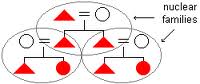
1.  Family

Nuclear Families


2.  School

Scholarly Pursuits

3.  Prioritization of Personal Pursuits

Structural Prioritization of Readings: Fall 2013

(please click on image for display)

Readings

Synchronous Display – Serendipity

The books I first encountered today – and in such intriguing titular order….

and when is additional engagement with Olafur Arnald’s work not welcome

Grenzsituationen II

Please read previous post with this in mind:

I would love for any/all to share what those “Limit Texts/Artifacts” are for you?

grenzsituationen

Please share via comment what encounters or engagements with works of art, science, philosophy, writing, music, and any other cultural artifactual form has altered from then on how you select, evaluate, engage other related artifacts from then on?

Thank you!

Grenzsituationen

Recently, I have received several queries into either how I read as much as I read, or how I find or know what to read.  As I respond to these inquiries, it has interested me how in fact, I account for my reading history.  E.L. Doctorow explained he rarely knew what he believed until he had written about it.  Dostoevsky would start authoring a given scene, assuming he understood precisely what he believed about the issue discussed in it, only to have one of his characters convince him otherwise.  Frequently it is only through the actual act of creation that we locate what we really feel and think about a subject.” (Olsen, architectures of possibility).  That, coupled with “Authors frequently say things they are unaware of; only after they have gotten the reactions of their readers do they discover what they have said” – Umberto Eco…resulted in these self-observations:

Even from persons I deem much more knowledgeable than myself I often hear “you’ve read more than anyone I know…” and I have spent many hours a day for many decades – reading.  I was raised in a fundamentalist Christian home, so the concern for truth, authority and canon were socio-culturally inculcated in me from an early age.  When I began exploring music, philosophy and literature I found this concern ruling my approach: what is deemed canonical (attested by authorities), what came first?, and what rings true?  I remember beginning with anthologies of classical poets, then ancient scriptures, Homer and so forth.  Beginning with Plato/Aristotle then forward through those who claimed their influence.  Beginning with Bach, Brahms, Beethoven and then forward and back to origins and influences.  That has been my habit in exploring cultural artifacts.  Find references.  Correspondence.  Claims.  Follow them out.  And follow those out.  And follow those.  And….so on.

As to achieving the absorption of piles of books at a time – when pushed to claim a process – I was surprised at the simple methodologies.  I have referred to “transductive reading” from time to time in these posts – the interaction and co-constitutive commentaries that work provides to work.  So I read large amounts of materials over large amounts of time (though my wife insists I read speedily) – I find I read sections / chapters / pages from a multitude of books and let them interact in me forming tissues and connections, rather than singular voices or ideas straight through.  I read for differences – turns of phrase, terminologies, rhythms, in persons approaches to subjects, rather than reading for topical content or idea-information as data.  Where a voice, approach, or technique is unique is often what particular works have to offer, I have come to think.  And, depending on genre or reason for reading – as overlaps increase as the volume of “have-read” grows – one can often browse for summarizing sections to find the nuances each thinker or creator proffers.

reading a lot

Then there’s my personal history and approach to things.  Hard-pressed to learning from youth=26 straight years of education + 17 years working in or managing retail bookstores – in an effort to be an “excellent” bookseller – implying to me I had to know something of everything a reader might desire (first hand).  Publisher’s catalogs, reviews, recommendations, lists, histories, from the development of language to its variation in forms and contents.  And always that uncanny recognition of Grenzsituationen – or “Limit Texts.”

“It might be helpful to conceive of certain texts as Limit Texts – a variety of writing disturbance that carries various elements of narrativity to their brink so the reader can never quite think of them in the same terms again.  To the brink, and then (for most readers, at least) over.  Karl Jaspers coined the word Grenzsituationen (border/limit situations) to describe existential moments accompanied by anxiety in which the human mind is forced to confront the restrictions of its existing forms – moments, in other words, that make us abandon, fleetingly, the securities of our limitedness and enter new realms of self-consciousness.  Death, for example.”

“If we carry this notion of Grenzsituationen into the literary domain, we find ourselves thinking about the sorts of books that, once you’ve taken them down from the shelf, you’ll never be able to put back up again.  They won’t leave you alone.  They will continue to work on your imagination long after you’ve read them.  Merely by being in the world, Limit Texts ask us to embrace possibility spaces, difficulty, freedom, radical skepticism.  Which writings make up the category will, naturally, vary from reader to reader, depending on what the reader has already encountered by way of innovative projects, his or her background, assumptions and so on…but the more Limit Texts one reads, the less one tends to feel the impulse to return to more conventional narrativity…”

-Lance Olsen, architectures of possibility

These situations are tattooed on my body (literally)…and include:

Samuel Beckett – Macedonio Fernandez – Paul Celan – Fyodor Dostoevsky – Ludwig Wittgenstein – Maurice Blanchot – Helene Cixous – Clarice Lispector – Franz Kafka – Fernando Pessoa – David Foster Wallace – Mikhail Bakhtin – Rainer Maria Rilke – Edmond Jabes – Federico Garcia Lorca – William Stafford – Egon Schiele – Vincent van Gogh – Johannes Brahms – Alberto Giacometti – Robert Musil – Friedrich Nietzsche – C.F. Peirce…

as you uncover these (your own personal) writers – your pantheon

of those who change your view of the possibilities of language and who you can return to again and again

without  really feeling you’ve been there before – they become coordinates – network nodes – whereby you

evaluate and expand, extend and engage new writings you are exposed to – forever altering your patience and expectations of literature or whatever cultural artifact-type you crave and are pleasured by…thus making your reading more efficient and your selections increasingly more challenging and compelling to you – as long as you continue to leap out and expose yourself to things that might be unexpected

Ben Marcus – Ronald Sukenick – Laurie Sheck – Mei-Mei Berssenbrugge – Lyn Hejinian – Denis Johnson – Laurence Sterne – William James – C.F. Peirce – Michel Serres – Bruno Latour – Jorge Luis Borges – Cervantes – Immanuel Kant –
your lists will spawn as you follow their correspondences, admirations, criticisms, references, citations,

and you develop your literary canon

more on that another time

utopia

**More than a decade on, to update my Grenzsituationen, I’d need to add:

the Philokalia – John Moriarty – St. Isaac the Syrian – George MacDonald’s Sermons – Martin Heidegger – St. John Cassian – Sayings of the Desert Fathers & Mothers – Arkadii Dragomoschenko – Elder Aimilianos – Optina Elders – Haida Myths & Songs – Jim Harrison – St. Ephrem the Syrian – I Ching – Dreamsongs from Australia – St. Theophan the Recluse – Jan Zwicky – Martin Shaw – St. John Climacus – Marguerite Duras, and more…