Transductive Conversations…cont’d (via Lance Olsen)

baby at laptop


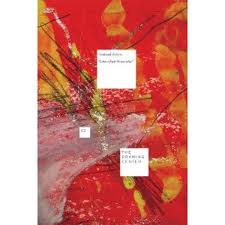
“One of the wonderful things about word processors is they transform all composition into continuous process. Β You can rearrange, rewrite, tinker, copy, cut, paste, open separate files for separate chapters or story sections or poem fragments, a window for notes, another for your outline, and still another for your list of characters and their attributes, and have them all on your screen simultaneously so you can flip among them as necessary while your web browser provides you with a dictionary, a thesaurus, a Wikipedia page, a website to aid you checking this fact or that…

(The less than wonderful thing about word processors is they make every draft look like a final draft, sloppy writing look as polished as just-published. Β Careful about being duped by the sheen, and don’t disregard the notion of trying to compose on a lined tablet unless you’ve already tried it and found it lacking; it is a method that both slows perception and increases conscientiousness).”

-Lance Olsen-

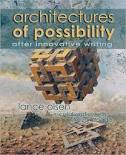
olsen


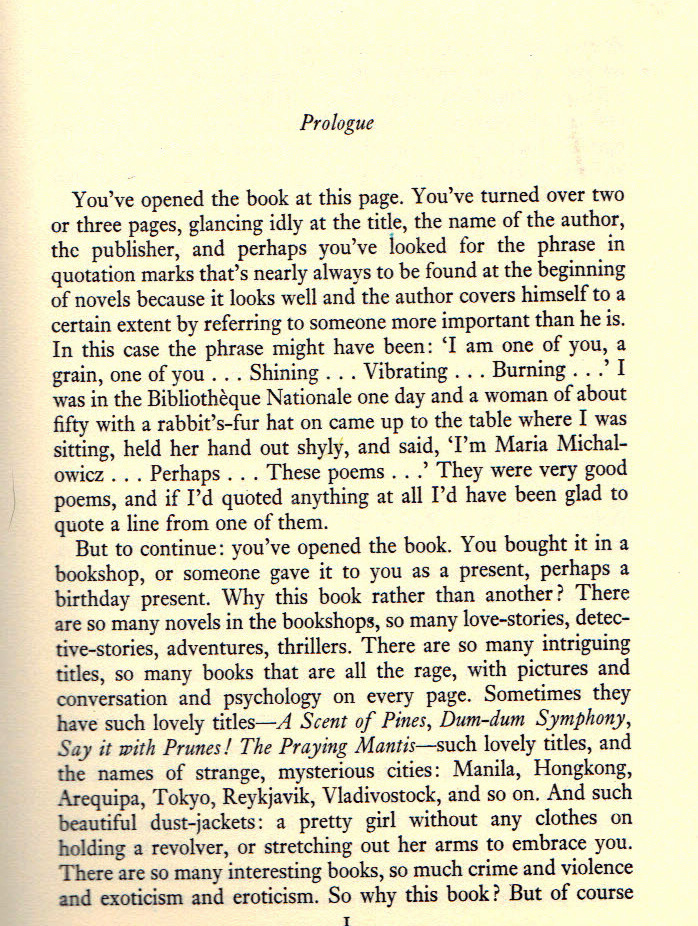
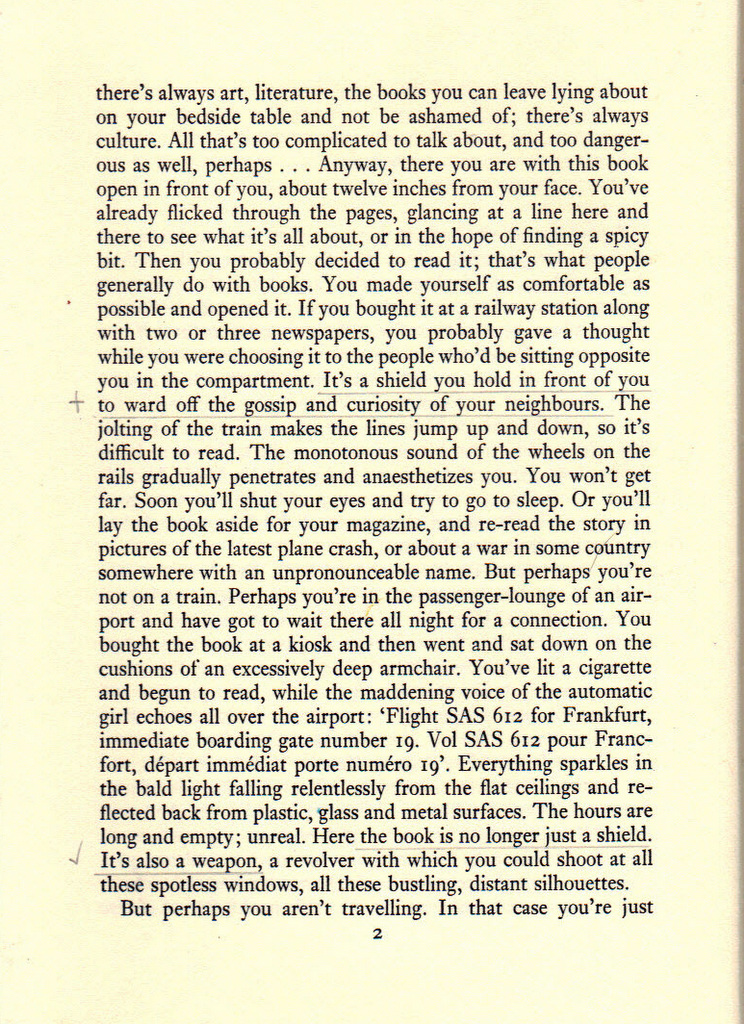
On entering the world(s) of the text: Prologue

via J.M.G. Le Clezio

Terra Amata

Terra Amata2

Terra Amata3

Terra Amata4

Sudden Soap Box: Digitization = Access (not preservation)

Unbeknownst to me – the next Blackboard discussion assignment for one of my summer classes turned out to be :

  • Is digitization the answer to preserving print materials? Β Discuss advantages and disadvantages.

The following was my response – realizing by the end that this had become an impassioned sort of soap box sermon rather (perhaps) than a reasoned response. Β Judge for yourselves and please offer replies and conversation!

Is digitization the answer to preserving printed materials? Discuss the advantages and disadvantages


In my opinion the answer is NO. Β I believe digitization is an aspect of access, not preservation. Β Digitization – the process, format and type of “storage” are all inexact and uncertain dependencies – on energy sources, tools, network connections, licensing, access, programs, softwares, interfaces, and so on down the line. Β With no real concept of the reliability, consistency or longevity of data in “cloud storage” – digital documents still need physical copies to ensure longevity. Β The only companies I really hear belaboring the issues of continuity, reliability, and potential of accurate digital preservation besides the Library of Congress and Pew are Tim Berners-Lee and the WorldWideWeb Consortium, ITC and other digital business/tech aggregates – which continually discuss the problems, scramblings and deterioration of digital data bits in ethereal storage. Β We all understand that we have books 100s even 1000s of years old, from which we can verify online copies, files, etc. Β Otherwise many “scanned” documents lose clarity, miss pages, notations, editions, etc. Β This is becoming an enormous problem when companies and institutions begin thinking that by digitizing something they are preserving it. Β They’re not.Β  They’re making it available in another format and medium, not preserving it.Β  Our computers, platforms, servers, programs, hardware and software are continually being altered and updated – formats are insecure, data continuity is insecure, e-book packages automatically deliver updates and editions without preserving previous editions/authors/etc. Β Digital access is precarious – a solar flare or atmospheric storm could wipe out or scramble data at any time (as a wise man once said).

Digitization is an answer to access not preservation. Β Berners-Lee et. al. have always been clear that the purposes and hopes of WWW and Semantic Web work was to make the world’s culture more readily communicable and sharable – not to preserve it. Β To democratize it. Β Technology progresses too quickly and outdates too quickly to be a reliable form of preservation. Β And with open access and collaborative semantic web – no digital document can be considered “authoritative” or be ensured to represent original writings or creation. Β All digital data is open to revision, alteration, damage – it passes through too many hands, servers, connections to be utilized as an authoritative source. Β (Perhaps all web citations, whether scholarly or not should be appended with some mark indicating it was retrieved from digital storage, rather than confirmed by printed document).

As access solution – digitization is wonderful. Β For “just-in-time” retrieval and sharability, open publications and global learning and information – digitization is an incredible advance in communicating globally. Β But reading a text over the phone, or broadcasting pages on TV, etc., are all notated if used in research. Β Digitization also seems to mitigate against deep reading or comprehensive research, as digital texts tend to be scanned rather than read through in their entirety, and there seems to be a tendency to retrieve “good enough” or topical articles rather than searching for the best research available to the research at hand. Β (side note, sorry).

So, in my opinion, digitization should be used for that which is was developed – a communicative medium – unstable, unreliable and ever-developing – but not an authoritative or preservational archive. Β A books average life is between 100-300 years and utilizes much less energy in being used or shared than all the electricity and energy required for digitization and access. Β Most ereaders, PCs, and other digital tools last at the outset 5-10 years and then add to the world’s waste, far less recyclable than pulped paper.

Digitization = access – global and unstable. Β Physical copies = preservation – relatively stable and verifiable (as long as enough copies are preserved to compare and contrast). Β We never considered this problem until now with the enormous weeding and disposal being done by the very places that existed to preserve these artifacts!
 

Economics of e-books & public-driven acquisitions – a query

libricide2

–Β Bibliobabble?Β –Β 

(click for full article)

The surge towards a print-less e-libraryΒ recasts academic librarians as β€œrare bookΒ engineers”

by Colin Storey

libricide3

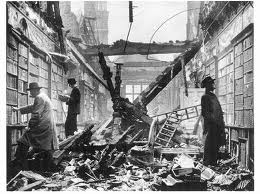
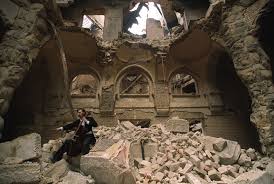
Is “just in time” preserving what will be needed for a (hopefully) long future?

How preservable and verifiable are digital bits?

Who ensures there are physical, tangible copies of information that may come in handy one day…

even if it seems passe or unnecessary in current socio-cultural perceptions?

What if cloud data gets scrambled, wears away, ebook vendors aggregate totalitarian-ly,

Where are our contingency plans for the preservation of knowledge and culture?

How will we verify digital content?

and so on….

libricide

Infinite Medium / Unlimited Meaning

“And the fact is that ordinary words don’t have just two or three but anΒ unlimited number of meanings, which is quite a scary thought; however, the more positive side of this thought is that each concept has a limitless potential for variety. Β This is a rather pleasing thought, at least for people who are curious and who are stimulated by novelty.”

– Douglas Hofstadter & Emmanuel Sander –


The Return

Within the hallowed halls of Powell’s Books in Portland, OR with a next-to-nothing budget is not an easy thing to be for book-cravers. Β But it also picques the selectional impulse somewhere thrumming in our genetic bands. Β Survival of the “fittest” given current conditions and some self-observation through excruciating choice.

What came back with me:

what did not , purely due to economic constraints, and set aside at the last possible moment (at closing):

equivalency finds for my wife:

mary frank Richter - Lines

now to prepare pictures of those immaterial experiences – the fleeting profounds – that happen as we go

to be posted soon

In addition

This slideshow requires JavaScript.

Of Objects and Artefacts

Friday Fictioneers, April 26, 2013

Copyright-Claire Fulller

I stepped up to read.Β  I.Β  Stepped up.Β  To read.Β  Probability, readiness, obligation.Β  The ambiguities.

A body, emotive, sensitive, intentional – in an environment that includes me.

In a state.Β  For an activity.Β  Motional, potentially controllable: possessions, perceptions, cognition.

A circumstance, a situation.Β  Complex phenomenon.Β  Elaborating, extending, enhancing.

Time and place replete with past, present and future.Β  Here, now.Β  Ordinary, occasional, simple things – processes.

Being, doing, sensing.Β  Thinking, feeling, seeing, saying.Β  Behaving.Β  Acting, changing, being created.Β  Existing.Β  Having identity and attributes, symbolizing.Β  Relation is all.Β  The relations of relations.

We interact.

N Filbert 2013

New Arrivals, digging in

Currently Reading

Greetings and so many thanks for those of you who take the time to investigate my works here. Β Our lives have been a bit topsy-turvy in the ekphrastic household – I’m adjusting back into another semester of Library & Information Science, Holly is busy practicing and painting and starting more graduate education in Expressive Arts Therapy, the kids are growing and struggling and succeeding and being beautiful young people in our world. Β All that to say I haven’t had the open spaces for creative composition that function effectively for creating new verbal connections – I’m sure they’re happening, I just haven’t had the time to attend very closely and note them down. Β I received a request to update my Currently Reading page, which I usually do 2 or 3 times a year, or as the books-at-hand protecting my desk/work area experience significant change. Β My “To the Library” post offered a number of new (to me) books that I’m currently intently poring through, and here are a few more titles this week:

and I’ll work on a refresher of my Currently Reading page soon!