Thinking Literac(ies)

Literacy“Ultimately we find that the cognitive consequences are more about the new meaning systems and activities that occupy our minds than they are just about the character of work with symbols…”

“Whether one form of inscription is more efficient or more easily learned than another (the asserted alphabetic advantage) may be less consequential in its cognitive consequences than if a society has developed a large bureaucracy, literary culture, philosophic tradition, technology, commerce, and educational system using whatever form(s) of inscription it has historically developed”

“The world we know, think about, and act within is saturated by and structured on the texts that travel from place to place and have some durability over the years. Β The built symbolic world on which we have elaborated new social meanings and relationships and that is the object of our thought and attention as we try to live our lives as successfully as we can within it, in that we find the consequences of literacy.”

“literacy is part of the stuff out of which a way of life is made”

-Charles Bazerman, Social Implications of Writing-

On Teaching: or, “going there, without knowing where,” with Jean-Francois Lyotard

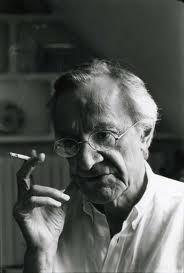
Jean-Francois Lyotard - EGS
Jean-Francois Lyotard – EGS

Endurance and the Profession – Lyotard

(replete with approximations of my own markings and highlights – N Filbert)

Current Ways I’m Thinking about Meaning/Learning

This slideshow requires JavaScript.

Sudden Soap Box: Digitization = Access (not preservation)

Unbeknownst to me – the next Blackboard discussion assignment for one of my summer classes turned out to be :

  • Is digitization the answer to preserving print materials? Β Discuss advantages and disadvantages.

The following was my response – realizing by the end that this had become an impassioned sort of soap box sermon rather (perhaps) than a reasoned response. Β Judge for yourselves and please offer replies and conversation!


Is digitization the answer to preserving printed materials? Discuss the advantages and disadvantages


In my opinion the answer is NO. Β I believe digitization is an aspect of access, not preservation. Β Digitization – the process, format and type of “storage” are all inexact and uncertain dependencies – on energy sources, tools, network connections, licensing, access, programs, softwares, interfaces, and so on down the line. Β With no real concept of the reliability, consistency or longevity of data in “cloud storage” – digital documents still need physical copies to ensure longevity. Β The only companies I really hear belaboring the issues of continuity, reliability, and potential of accurate digital preservation besides the Library of Congress and Pew are Tim Berners-Lee and the WorldWideWeb Consortium, ITC and other digital business/tech aggregates – which continually discuss the problems, scramblings and deterioration of digital data bits in ethereal storage. Β We all understand that we have books 100s even 1000s of years old, from which we can verify online copies, files, etc. Β Otherwise many “scanned” documents lose clarity, miss pages, notations, editions, etc. Β This is becoming an enormous problem when companies and institutions begin thinking that by digitizing something they are preserving it. Β They’re not.Β  They’re making it available in another format and medium, not preserving it.Β  Our computers, platforms, servers, programs, hardware and software are continually being altered and updated – formats are insecure, data continuity is insecure, e-book packages automatically deliver updates and editions without preserving previous editions/authors/etc. Β Digital access is precarious – a solar flare or atmospheric storm could wipe out or scramble data at any time (as a wise man once said).

Digitization is an answer to access not preservation. Β Berners-Lee et. al. have always been clear that the purposes and hopes of WWW and Semantic Web work was to make the world’s culture more readily communicable and sharable – not to preserve it. Β To democratize it. Β Technology progresses too quickly and outdates too quickly to be a reliable form of preservation. Β And with open access and collaborative semantic web – no digital document can be considered “authoritative” or be ensured to represent original writings or creation. Β All digital data is open to revision, alteration, damage – it passes through too many hands, servers, connections to be utilized as an authoritative source. Β (Perhaps all web citations, whether scholarly or not should be appended with some mark indicating it was retrieved from digital storage, rather than confirmed by printed document).

As access solution – digitization is wonderful. Β For “just-in-time” retrieval and sharability, open publications and global learning and information – digitization is an incredible advance in communicating globally. Β But reading a text over the phone, or broadcasting pages on TV, etc., are all notated if used in research. Β Digitization also seems to mitigate against deep reading or comprehensive research, as digital texts tend to be scanned rather than read through in their entirety, and there seems to be a tendency to retrieve “good enough” or topical articles rather than searching for the best research available to the research at hand. Β (side note, sorry).

So, in my opinion, digitization should be used for that which is was developed – a communicative medium – unstable, unreliable and ever-developing – but not an authoritative or preservational archive. Β A books average life is between 100-300 years and utilizes much less energy in being used or shared than all the electricity and energy required for digitization and access. Β Most ereaders, PCs, and other digital tools last at the outset 5-10 years and then add to the world’s waste, far less recyclable than pulped paper.

Digitization = access – global and unstable. Β Physical copies = preservation – relatively stable and verifiable (as long as enough copies are preserved to compare and contrast). Β We never considered this problem until now with the enormous weeding and disposal being done by the very places that existed to preserve these artifacts!


Here. Now.

Reading Maturana & Varela’s accounts of how we ought to go about engaging scientific activity (and life)… with integrated mindfulness/awareness and sense of our embeddedness in whatever we are observing, inquiring…

coupled with required textbook for LIS – metacognition and reflection in learning contexts:

and then this comes on…..the sound of the meaning, I guess….


New Arrivals, digging in

Plunder

Items arriving today:

This slideshow requires JavaScript.

and how I stay in school:

This slideshow requires JavaScript.

keeping on keeping on

“Write about what you want to know”

-Lance Olsen-

Using Our Woods – the Gift that Explodes 6

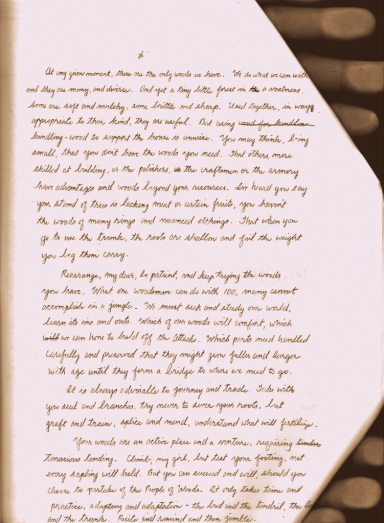
Notebook 6

and the typeset version:

6

Whose Woods are These I Think I Know

At any given moment, these are the only woods we have.Β  We do what we can with them, my dear, always many and diverse.Β  Yet just a tiny little forest in the vastness.Β  Some of our woods are soft and mulchy while some are brittle and sharp.Β  There’ll be splinters and cracks, switches and boughs.Β  But used together, in ways appropriate to their kind, they’ll be useful.Β  Like don’t use kindling-wood so support the house.Β  I know you often think, being small, that you don’t always have the woods you need.Β  That others more skilled at building, the polishers and craftspersons, or the armory whittlers have advantages and types of wood beyond your resources.Β  I’ve heard you cry that your stand of woods is lacking meat or certain fruits, you haven’t the wealth of many rings and nuanced etchings.Β  That when you rope the trunks, the roots are shallow and fail the weight you beg them carry.

Rearrange, my dear, and be patient.Β  Keep trying the woods that you have.Β  I’ve seen a woodsman create with 100 what many cannot in a jungle.Β  We must seek and study our world, evince all its ins and its outs.Β  Which of our woods will comfort, which we can hone for attacks.Β  What parts need handled carefully and preserved, that they might grow fuller and larger with age, β€˜til they form a bridge toward where you need to go.

It is greatly advisable to journey and trade.Β  Take with you fresh seeds and young branches.Β  Try never to sever your roots, but graft and train, splice and mend, understand what will fertilize.

Your woods are an active place and a venture, requiring tenacious tending.Β  Climb, my child, but test your footing, not every sapling will hold.Β  You can succeed and will, should you choose to partake with the People of Woods.Β  It only takes time and practice – adapting and adaptation – the bud and the tendril, the log and the trunk.Β  Recite and remind and then jumble.

Above all, my daughter, please play.Β  Pick-up sticks, wooden boats and chutes and ladders.Β  Kites and slingshots, barrels and monkeys, apples to apples.Β  Now is the time to throw peaches and chew the walnuts’ rind, bowl crabapples, smoke the reed and sniff the pine.Β  Some whips will leave seams you’ll never forget, some falls may even break a limb, but you will grow and know, know and grow, until you, like the tree, flourish and bloom, strip and stand bare, proud and enduring, withstanding both wind and the wave, strikes and blows, the cold and the dark, all from your stock of woods and what’s possible.

Whoever dreamt a log could roll on rivers, or bend into a wheel?Β  Who knew they’d form enormous arks – large enough to save our world?Β  The handing of a tiny reed embossed with cursive love, sharpened to a blade, signs set to warn of danger, posts to fort a home.Β  My love, impossible does not apply with your woods – all that we know is unknown where the woods come into play.

Experiment, invent, babble the brook or construct a staying dam.Β  Use our woods, love and care for them, ignite your passion, rub them together toward sparks, thatch, nest, spear.Β  The woods are waiting – and these are yours.
click here for all 6 pages –Β The Notebook