
This slideshow requires JavaScript.
Tag: fiction


FormingFictionForming
Empathy
the sounds of the shapes of what’s sounding in me….
a story or writing that seems to be growing/assembling by slow accretion…
Anticipating Leaving the Sea
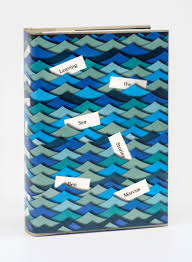
As with bated breath I anticipate the January 7 release of Ben Marcus’ newest collection of stories…I sate myself with these two complex tidbits of his alchemical languaging talents, and invite you to swim in them as well…
 Ben_Marcus_Notes from the Hospital
and

click images for full texts
Troubling Identities, cont’d: Franz Kafka’s “The Burrow”

-please click image for textual content-
8th segment
’cause I don’t have to stop. ’cause it doesn’t.

8
And now “I” am different, again. Change. Is how I would “put it.” What with the whip of atoms calling “I” ever-coupling to the Itself that the “I” calls “world,” really, when one gets down to it, in it (always), the distance is elusive (is “illusion”). And so “I” changes at the rate of the wind “I” is sharing; of the sea “I” is seeing; of the matter (volatile shivering).
It is Here. We are. Since we cannot claim a territory, we strain for modes to re-fer (de-fer?). Differ. We’re attuned to it. The rhythm of our tune is differance. There is no reason that suffices. We are in it. It.
A live.
In vocalizing, movement sounds (for humans). Or in gesture – perceptible matter (always suited to the version capable). It is always a matter of moving around, shuffling space with time. I cry, there is movement. The air and the chemical sea. I look – things displace, replace, are placed by my gaze – an interactive mechanism – part of a NEVER discontinuous train.
We touch, because sound, because cell, because particles and waves (as both) – because movement. Because “separate” is an aberrant traction (abs-traction). A practical folly.
I love you – re-cognition that borders are empty, margins erased. That “you” and “I” intersperse (wind, sea, light) molecules. Movement. Alive. I love a live.
Because live doesn’t noun an “f.” Life. Life is a period, an arbitrary stop. Imposed. But a “v” simply vibrates. We are a-live. We are the living. Even the “the” can’t contain it. It rushes the punctual, overcomes it. We are us and I love you (us).
Perhaps we need little realms to find out. To discover. Acting networks to re-member (to sew, to put back together) what’s dismembered convention. “The way it is” – what we’re impressed to “get by” (“survive”).
This, It, is NOT the survival of fittest, a live is the fittest and cannot be dismembered, “I’s” just being particled Lifes – and those not really – except in that most human of ways (itself a “not really” invented by us). It is more complex than that (call it “what’s live” or Enaction), and can’t be reduced to its “parts.”
Nor combined in a “whole” (another punctuated word). It’s not final, complete, but just changing (rates of wind, of sea of weather; of stones and planets, emotions and plants) – if we could dissect it (and we try) the variation of paces “seem” astounding…but It’s chock full of seams like two sides of paper – not different but same save the semes that are perceptible.
These semes are intended for motion: I love you. My so-called chapters and segments to “say” – we are us, there’s no other, and we’ve little idea of that.
“I” lean back, am exhausted, and rest (always moving). “I” don’t see the difference in sleep.
Experience, anyway. (parts 6 and 7 are new)
This work is a slow-grower. I think it wants to be read that way as well. Slow accretions of interaction and recursively referent. Not sure where it will continue. Click the title page to investigate. Comments are welcome.

Potent Selections from Vacation Reading
“I wondered what indeed it meant about me that I was so set against the notion of convention that I should attack it. So, I replaced the dream with the novel, stripping the stories of my dreams of any real meaning, but causing the form of them to mean everything.”
“…the gap between the subject of enunciation and the subject of enunciating not only failed to appear to me as a place of entry, but also failed to register as something I might elide. For me, there was no gap, as there is no gap for anyone.”
“…generally, people are only inclined to speak of the past with those they believe will somehow not only share some commonality, but who will also be disposed to exhibiting sympathy.”
“Is a photograph always present tense? I described them so…better, let the question be, is what is in the photograph always in the present, without a before, without an after? Of course, it is. And isn’t that actually you in the picture?”
ennuyeux
“On Ludwig Boltzman’s tombstone is carved: S=k. LogW. S is the entropy of a system, k represents Boltzman’s Constant, and W is a measure of the chaos of a system, essentially the extent to which energy is dispersed in the world. This equation meant little to me as I read of it the first time, but as I considered it I grew excited. The space between S and W is the space between the living thing in front of me and stuff hidden inside beyond my observation and comprehension. It raises the question: How many ways can the parts of a thing be rearranged before I can see a difference? How many ways can the atoms and molecules of my hand move and recombine before I realize that something is wrong? Thinking about it scared me. Certainly, I understood that natural events symbolize collapse into chaos and that events are motivated by dissolution, but the idea of such subversive and invisible change moved me. I likened it to observing the minds of others.”

ootheca
“Ezra Pound said, ‘Every word must be charged with meaning to the utmost possible degree.’ Let it be the case then. But words need no help from anyone. Bet thew ords kneeknow hellip freeum heinywon. Context, story, time, place – don’t these work like Bekins men, packing the words like so many trunks? But finally, words are not cases to be packed at all, but solid bricks (and, of course, like a brick, even a word’s atoms are not motionless).”
“We do not give the creature reality enough credit, choosing to see it sitting out there as either a construct of ours or an infinitely regressing cause for the trickery of our senses. But I claim here that the most important thing I have learned is that reality has a soul, reality is conscious of itself and of us, and further is not impressed by us or our attempts to see it. In fact, we see it all the time and don’t know it, perhaps can’t. It is like love in that way.”
-all quotes by Percival Everett
from his novel, Glyph
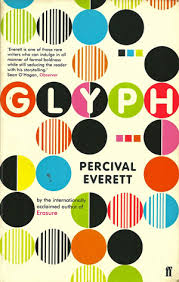
(The First Good Novel)
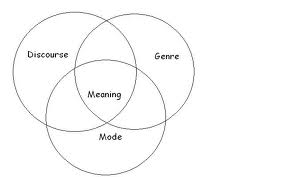
In any breaks in necessity – between semesters, breaks at work, children otherwise occupied, no “required” readings or commissioned work, etc… – with each passing season, I gradually discover what matters most to me (literarily speaking, which, for me, involves much of my lived life) – perhaps I might refer to it as my meaning-making-factory-resources (Blanchot says of Borges that he is “an essentially literary man – which means that he is always ready to understand according to the manner of comprehension that literature authorizes).” At this point in my living, over four decades along, and a large percentage of the pie devoted to reading, those voices I turn to, their messages and efforts, have become quite consistent. Each year there are new ones, new threads and concepts, theories and expressions that very significantly impact my living – but they tend to find their place as commentaries, extensions, additives and queries to what (I suppose) now forms my central “canon” of sorts.
This struck me, following my return to Bakhtin and Blanchot, and as we prepare for vacation how I immediately reached for Soulstorms by Clarice Lispector and The Museum of Eterna’s Novel (The First Good Novel) by Macedonio Fernandez. In searching for this image of Fernandez:
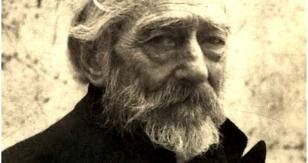 a host of Google’s “related images” arose – including Borges, Lispector, David Foster Wallace – and I got that vision of how pantheons develop and connect and gradually form a kind of woven semiotic pattern – a “worldview” or “Innenwelt” I guess – it begins to make sense what’s connected to what and whom to whom throughout time and space of world-being. Beckett, Blanchot, Dostoevsky, Pessoa, Rilke, Cixous, Kafka, Bakhtin, Jabes, these visions and verbals I return to again and again and again and again – inexhaustibly – and although my copies are nearly glutted with markings and underlinings – and they feel intimate and familiar (on the one hand) – that I also feel I am always learning them anew, freshly, with EVERY read.
These things astound me.
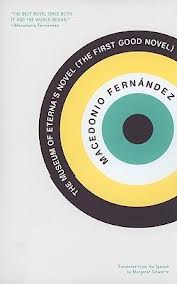
Of this particular book (which I often say is the very best novel I have ever read, repeatedly), Adam Thirlwell writes “It is a novel which does not want to begin. Or, perhaps, it is really a novel which does not want to end…The aim of Macedonio Fernandez’s novels is to convert all reality into fiction (or the other way around).” “The real subjects of this lightly playful novel are the grave ones of death and love.”
“In his novel, Fernandez tests the possibility that all philosophical questions are only meaningful in relation to human relations: that all questions of infinity are really questions about love.”
and so on.
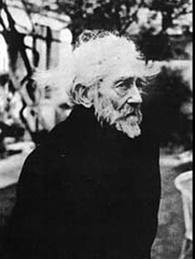
Macedonio is, for me, a hero the likes of Bakhtin, Blanchot, Beckett – those writings and writers I will never “get over,” never “get around.” Writings I can only ever “go through.”
Perhaps these writings are characterized by the question – “What is it to be real?” I recently discovered in one of those “shock of recognition” moments that although I’ve studied theology, philosophy, classical music, art and literature and now information sciences and systems theories – that none of the CONTENTS of these fields sustain my passions – it is the relationships between them – the ligaments and synchronous reverberations they emit – the MEANING-making effects of their pursuit and inquiry that is REALLY what drives me toward, into and through them. I’m not looking for truth or necessarily facts or any answers – but for PROCESSES and PRACTICES that enrich, enhance and extend my biological life in relation to the world I’m “thrown into.”
Borges wrote of Fernandez: “Macedonio is metaphysics, he is literature” and that “writing was no trouble for Macedonio Fernandez. He lived (more than any other person I have ever known) to think. Every day he abandoned himself to the vicissitudes and surprises of thoughts as a swimmer is borne along by the current of a great river.” The novel’s translator writes: “The method is madcap; the intent is desperately human.”
Perhaps that is what I’m after – to be “desperately human.”


and now we’re heading off to the wilds – to be desperately human with-world with-family – replete with above-mentioned authors and without wi-fi or internet services!
P.S. (also from current reading – The Waste Books by Georg Christoph Lichtenberg):
“Be attentive, feel nothing in vain, measure and compare: this is the whole law of philosophy.”
and
“To grow wiser means to learn to know better and better the faults to which this instrument with which we feel and judge can be subject.”
All the best!
Experience, anyway. Coupling. (section 5)
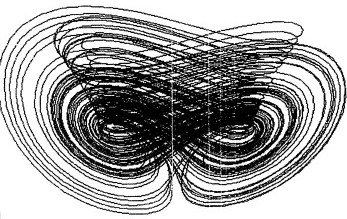
5
Couplings
We conferred, that is, we engage, experiencing contact.
We will set out, clinging, and submerge in, together. To gather, to keep hold. To track and trace in the tracing of trackings. To recognize with(-ness). To witness with-ness. As experiment – critical. Experience, anyway. “Ours.”
Between the quark and the jaguar, we leap in, already moving. Enduring much criticism: stop-motion behavior/practice. A snipping tool. We move on.
Must have been moving before we begin, different organization, as also (ever “also,” both/and) until “we” is spoken, still speaking. In other words.
If complexity allows purpose, however shallowly combined – moment-airy radiant gradient – if selection involved “choice” (in other words), so we. So-viet. Co-Be=”It.”
We continue beginning potentials. Experience. Anyway, any way at all, even those unimagined per se – potentially – given contexts (complexes before and beyond) to speak spatially (corrupted language: co-ruptured, erupting-together). “Always more than one,” our simple mantra. Breathe. Walk.
Early ones (to speak temporally, parler temporellement, another language) tout “the world knows not boundary.” Perceptual divisor, arbitrary (i.e. species-specific) and then some. Or boundary as invented in traversal, trespass, complex thoroughfare, reciprocity. Feed-forward in a sort of randomness, chaos emerging orders.
We blend thus to cognize. We merge to pattern difference. Another way of saying “no boundary” (i.e. engagement, interactivity, living, being). To couple.
Beginning again in infinite multiplicity (our limited numeracy) – were we able to count even to we.
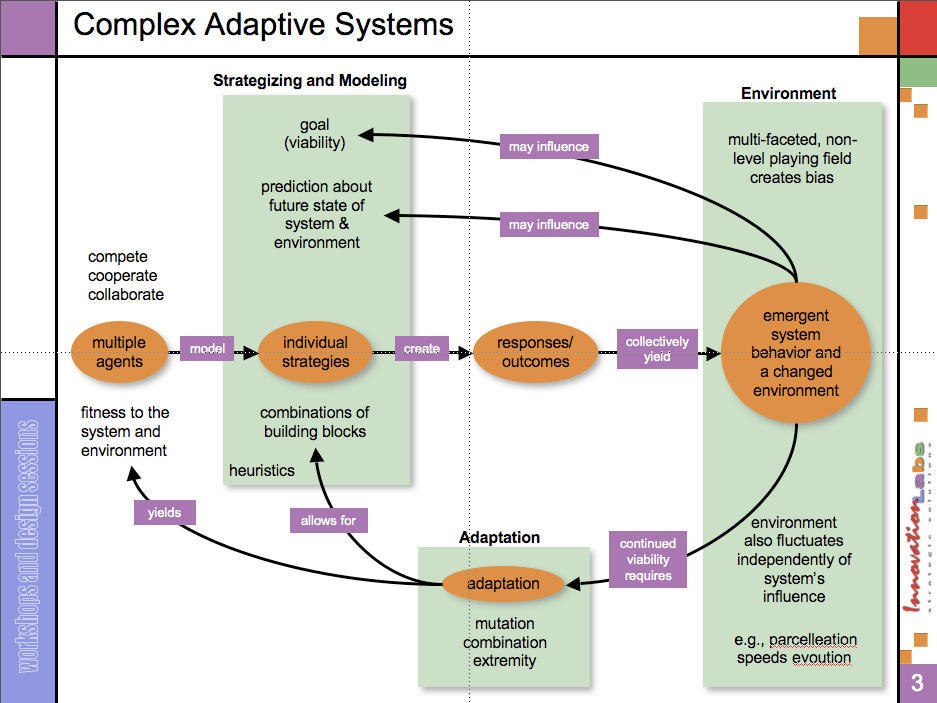 click here to read Experience, anyway. in its current entirety
 All my Words are Silent