

The books I first encountered today – and in such intriguing titular order….
and when is additional engagement with Olafur Arnald’s work not welcome
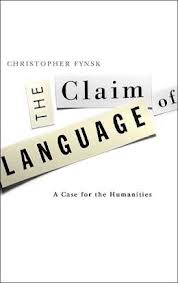 “Here, I will observe simply that fundamental research (in the humanities) diverges from much theory in that it is always seeking the limits of its language in responding to that to which it seeks to answer: those dimensions of experience and symbolic expression that summon it (as a kind of exigency for thought) and to which no concept will ever be quite adequate. Such research is impelled by its own neediness and its sense of being answerable, whereas theory, governed by the concept, proceeds with ever-expanding appropriations; fundamental research proceeds from encounter (always from a sense that something has happened to which it must answer), and it seeks encounter. In theory, there are no encounters.”
– Christopher Fynsk –
Unbeknownst to me – the next Blackboard discussion assignment for one of my summer classes turned out to be :
The following was my response – realizing by the end that this had become an impassioned sort of soap box sermon rather (perhaps) than a reasoned response. Judge for yourselves and please offer replies and conversation!
Is digitization the answer to preserving printed materials? Discuss the advantages and disadvantages
In my opinion the answer is NO. I believe digitization is an aspect of access, not preservation. Digitization – the process, format and type of “storage” are all inexact and uncertain dependencies – on energy sources, tools, network connections, licensing, access, programs, softwares, interfaces, and so on down the line. With no real concept of the reliability, consistency or longevity of data in “cloud storage” – digital documents still need physical copies to ensure longevity. The only companies I really hear belaboring the issues of continuity, reliability, and potential of accurate digital preservation besides the Library of Congress and Pew are Tim Berners-Lee and the WorldWideWeb Consortium, ITC and other digital business/tech aggregates – which continually discuss the problems, scramblings and deterioration of digital data bits in ethereal storage. We all understand that we have books 100s even 1000s of years old, from which we can verify online copies, files, etc. Otherwise many “scanned” documents lose clarity, miss pages, notations, editions, etc. This is becoming an enormous problem when companies and institutions begin thinking that by digitizing something they are preserving it. They’re not. They’re making it available in another format and medium, not preserving it. Our computers, platforms, servers, programs, hardware and software are continually being altered and updated – formats are insecure, data continuity is insecure, e-book packages automatically deliver updates and editions without preserving previous editions/authors/etc. Digital access is precarious – a solar flare or atmospheric storm could wipe out or scramble data at any time (as a wise man once said).
Digitization is an answer to access not preservation. Berners-Lee et. al. have always been clear that the purposes and hopes of WWW and Semantic Web work was to make the world’s culture more readily communicable and sharable – not to preserve it. To democratize it. Technology progresses too quickly and outdates too quickly to be a reliable form of preservation. And with open access and collaborative semantic web – no digital document can be considered “authoritative” or be ensured to represent original writings or creation. All digital data is open to revision, alteration, damage – it passes through too many hands, servers, connections to be utilized as an authoritative source. (Perhaps all web citations, whether scholarly or not should be appended with some mark indicating it was retrieved from digital storage, rather than confirmed by printed document).
As access solution – digitization is wonderful. For “just-in-time” retrieval and sharability, open publications and global learning and information – digitization is an incredible advance in communicating globally. But reading a text over the phone, or broadcasting pages on TV, etc., are all notated if used in research. Digitization also seems to mitigate against deep reading or comprehensive research, as digital texts tend to be scanned rather than read through in their entirety, and there seems to be a tendency to retrieve “good enough” or topical articles rather than searching for the best research available to the research at hand. (side note, sorry).
So, in my opinion, digitization should be used for that which is was developed – a communicative medium – unstable, unreliable and ever-developing – but not an authoritative or preservational archive. A books average life is between 100-300 years and utilizes much less energy in being used or shared than all the electricity and energy required for digitization and access. Most ereaders, PCs, and other digital tools last at the outset 5-10 years and then add to the world’s waste, far less recyclable than pulped paper.
Digitization = access – global and unstable. Physical copies = preservation – relatively stable and verifiable (as long as enough copies are preserved to compare and contrast). We never considered this problem until now with the enormous weeding and disposal being done by the very places that existed to preserve these artifacts!
I’ve recently acquired (via Inter-Library Loan! Woo-hoo!!!) a collection of writings exhibited below:
which opens with an essay by anthropologist Tim Ingold who starts it off with a remarkable movement through slugs and storms, lines-earth-eather, Kandinsky, Klee, Merleau-Ponty, and others – investigating them through a concept of “meshwork.”
“By this I mean an entanglement of interwoven lines. These lines may loop or twist around one another or weave in and out. Crucially, however, they do not connect. This is what distinguishes the meshwork from the network. The lines of the network are connectors, each given as the relation between two points, independently and in advance of any movement from one toward the other…the lines of a meshwork, by contrast, are of movement or growth. They are temporal ‘lines of becoming’…Life is a proliferation of loose ends. It can only be carried on in a world that is not fully joined up. Thus the very continuity of life – its sustainability, in current jargon – depends on the fact that nothing ever quite fits..”
-Tim Ingold, “Lines and the Eather”-
Journeying on from there through Deleuze and Guattari, mood and weather, meteorology and aesthetics he arrives at a conception of flesh as both meshwork (exhalation) and atmosphere (inhalation) – a whole-being experience of relation enabling and realizing animate life….
I’ve now been browsing numerous writings by Ingold, fascinated by the semiotic/anthropologico/ontological /scientific meshwork his production encompasses… Thankfully, he makes much of his work available full and free to us… if you’re interested – I risk the promise it will be worth your while…
and a fascinating working paper as introduction: Realities: Bringing Things to Life
Fathers Day gifts arriving early….
already ecstatic…
trusting always that these might inform…
all of us
–Edgar Morin, Seven Complex Lessons in Education for the Future–
Student Magazine of IISER Mohali
Music, Musicology, and related Matters
a photographic pilgrimage to Orthodox Christian monasteries across the continent
Meandering Through a Literary Life
Orthodox Christianity, Culture and Religion, Making the Journey of Faith
Erik Kwakkel blogging about medieval manuscripts
"That's the big what happened."
Networking the complexity community since 1999


 All my Words are Silent