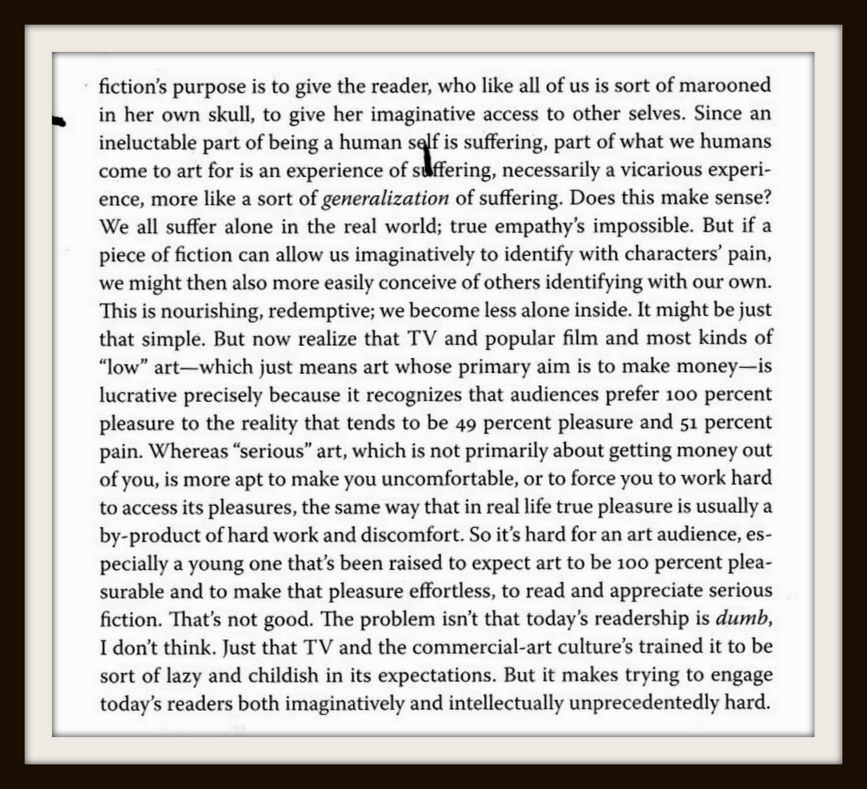
-David Foster Wallace interview

-David Foster Wallace interview
Melancholy Musings
“Meaning, if there is such a thing, involves more than what there is. Minimally, it involves a truthful assessment of what living a finite human life adds up to.”
-Owen Flanagan, The Really Hard Problem–
“I’d tell you all you want and more, if the sounds I made could be what you hear”
-David Foster Wallace-
“You are – your life, and nothing else.”
-Jean-Paul Sartre-
“That Spring when life was very hard and I was at war with my lot and simply couldn’t see where there was to get to…” So begins Deborah Levy’s succinct “response to George Orwell’s 1946 essay ‘Why I Write,’ entitled Things I Don’t Want To Know. It speaks to me. Sentences like “Smoking cheap filthy sock-tobacco under a pine tree was so much better than trying to hold it together on escalators. There was something comforting about being literally lost when I was lost in every other way.” And here I am in London, far from home, wandering scattered Lego streets, half of the time having an idea of where I am, where I might go. Like life with children – the half provided that’s never lost – versus the “self:”
I am the sign, I am the letter,
I am the language that cannot be come to terms with.
I will go to my resting place
and will not be born again.
I am what is scattered and cannot be gathered up.
I am small, I am silence,
I am what is not found.
–Charles Wright
“It occurred to him that he would disappear into a hole in a girder inside him that supported something else inside him.”
-David Foster Wallace-
– that sort of thing, left to one’s own musings. Levy speaks of her notebooks as “always gathering evidence for something I could not fathom.” Dan Beachy-Quick speaks of the blank page as “one version of chaos…the movement outward and the movement inward are simultaneous…that we enter writing to threaten the security of the knowledge we possess before we read it…” knowledge that isn’t reason – “but the plank that, in reason, breaks.” (from Wonderful Investigations).
As a kind of practice, as it turns out, (Beachy-Quick also says “language offers a method of experiencing death without dying” and “Life, world: we die into it. Words kill us. We lose the tops of our heads. Then we open our eyes. Then we walk out of the poem into the world.”) I recently labored over messages to those significant to me (including myself) –
what would I want to say or have said if I were to leave the living?
Beachy-Quick suggests that “poetry is birthed from such awful realizations – a fact which denies the fact of one’s own being, that says the self, even the godlike self, is not sufficient unto itself.”
Here some parts from The Letter to Myself:
“I believe the world has had enough of me, and I of it. Life is generous: overabundant with pain, surprise, people, noise, joy, danger, grandeur, poverty, tastes and sights, sounds and smells, anguish, glory and grief and their very complex mixtures. As are we – individual organisms – capable, unique, agentive…
We cannot capture life. It is ‘more than.’ As mine ends, I find myself desperately wanting to summarize and somehow represent it, but I find no words to do so.
Aside from the brevity of the fullest portion of my lived experience … with ease what I most grieve is not seeing my children shape and become themselves. That is the question I most toil over – have my children had enough of me?
In the main I have experienced myself as a person whom others accommodate, adjust to, endure. In classes, families, and communities of practice, even in friend groups, I’ve never FITTED – conjoined smoothly – BELONGED.
My children have never known another father, so they might find me definitive, ‘right’ only, unique and special. But my parents have known other children, spouses other partners and lovers, friends other friendships, teachers other students, bosses other employees and so on…and none would consider me ‘best’ or ‘only,’ definitive or unique. No one has chosen or selected me as theirs.
I know I’m not alone in this, nor do I need to be the BEST anything, but I would have loved to have been chosen, claimed, selected and pursued – not for being the best, or special, not for characteristics or qualities, talents or things I do well – but for being me, for the am I am.
How “uniquely me” turned out was never quite enough for others, or not the ‘right’ enoughs. I surely don’t blame others I‘ve encountered – no one was obligated to choose me, or owed me selection, I simply was not suited to my contexts.
I hope that my children and loved ones are able to discover and co-generate contexts in which they thrive.
I had my moments, my ‘times’ – the births of my children, my weddings, days of writing and travel, dialogues with friends and multitudes of sensations and aesthetic and enriching experiences – I do not lack,
but it’s a struggle my organism is tired of.
I want to say that in my life with my love I realized it – I knew myself as a unique person with particular qualities, capacities, failures, weaknesses and strengths. I accomplished and risked, expressed and developed more of myself during those years than perhaps the entirety of my life until then…
…in the end it’s only rambling, ever trying to grasp something of experience…ever unable…
Perhaps something, but not what I mean to. Always less, never enough… I’m sorry. Thank you for enduring me this wonderful long.”
“To speak up is not about speaking louder, it is about feeling entitled to voice a wish. We always hesitate when we wish for something…A hesitation is not the same as a pause. It is an attempt to defeat the wish. But when you are ready to catch this wish and put it into language, then you can whisper but the audience will always hear you.”
-Zofia Kalinska, quoted in Deborah Levy, Things I Don’t Want to Know
So speak up, practice, be gentle with yourself – “the story of this hesitation is the point of writing” – into and out of yourself…the activities where things con-fuse…
I wish to write.
I wish to parent.
I wish to love and be loved.
I wish to learn.
I am thankful the “I” is “what is not found,” for then we can keep searching (together), and in the searching, the interaction, perhaps begin a “truthful assessment of what a living finite human life adds up to” –
to matter and to mean.

Arrivals
“We may ask of our destinations, ‘Help me to feel more generous, less afraid, always curious. Put a gap between me and my confusion; the whole of the Atlantic between me and my shame.’ Travel agents would be wiser to ask us what we hope to change about our lives rather than simply where we wish to go.”
-Alain de Botton, A Week at the Airport–
I must have slumbered, unattractively and fitfully, for the plane windows were open and it was very very bright in the sky. My glasses had fallen, my head scrunched under an arm rest, legs tightly angled and restrained from the aisle by the arm rest just one seat away. And below, there were moments of Ireland.
I finished the book, thinking de Botton’s observations might make the arrival more profound. But Rick Hanson’s Just One Thing helped me more. “Find beauty, take in the good, be compassionately for yourself. Breathe out long and the intentions (little by little) will seep out around you” (a paraphrase). As we circled London, having skewed our arrival from delay, the clouds thickened and soon we were scuttling through the wet and the grey.
I thought: ‘Experience is like this’ (of course it is, it is my experience!) – most of it a thickened ambiguity – the swirl and swoon of our passing – when the winds are right you can make something out – particles of cloud, the edge of the wing, sometimes even a reflection. That was the moment – clouds surrounding the wing, the wing itself, and the reflection of the scumbling clouds on the wing: world, ourselves, and occasions where we catch our perception – our experience.
And then we touched down, wet splashing the plane, 21 hours and 41 minutes (by the clock) since I’d set out on this journey. Customs went smoothly, my luggage arrived, and I tunneled by train to my host. Now I’m in place at my window as the city becomes squares of lights. de Botton states it thus: “I returned to my room at three in the morning, struck by a sense of our race as a peculiar, combustible mixture of the beast and the angel.” Assessing out from myself and this view of the city, I agree.
“We forget everything: the books we read, the temples of Japan, the tombs of Luxor, the airline queues, our own foolishness. And so we gradually return to identifying happiness with elsewhere: twin rooms overlooking a harbor, a hilltop church boasting the remains of the Sicilian martyr St Agatha, a palm-fringed bungalow with complimentary evening buffet service. We recover an appetite for packing, hoping and screaming. We will need to go back and learn the important lessons of the airport all over again soon…”
It’s good to have help on the way. Thanks to Alain de Botton, Rick Hanson, Cees Nooteboom and David Foster Wallace for “a kind of writing that could report on the world while still remaining irresponsible, subjective, and a bit peculiar” – moving me (little by little) from a here to a there.


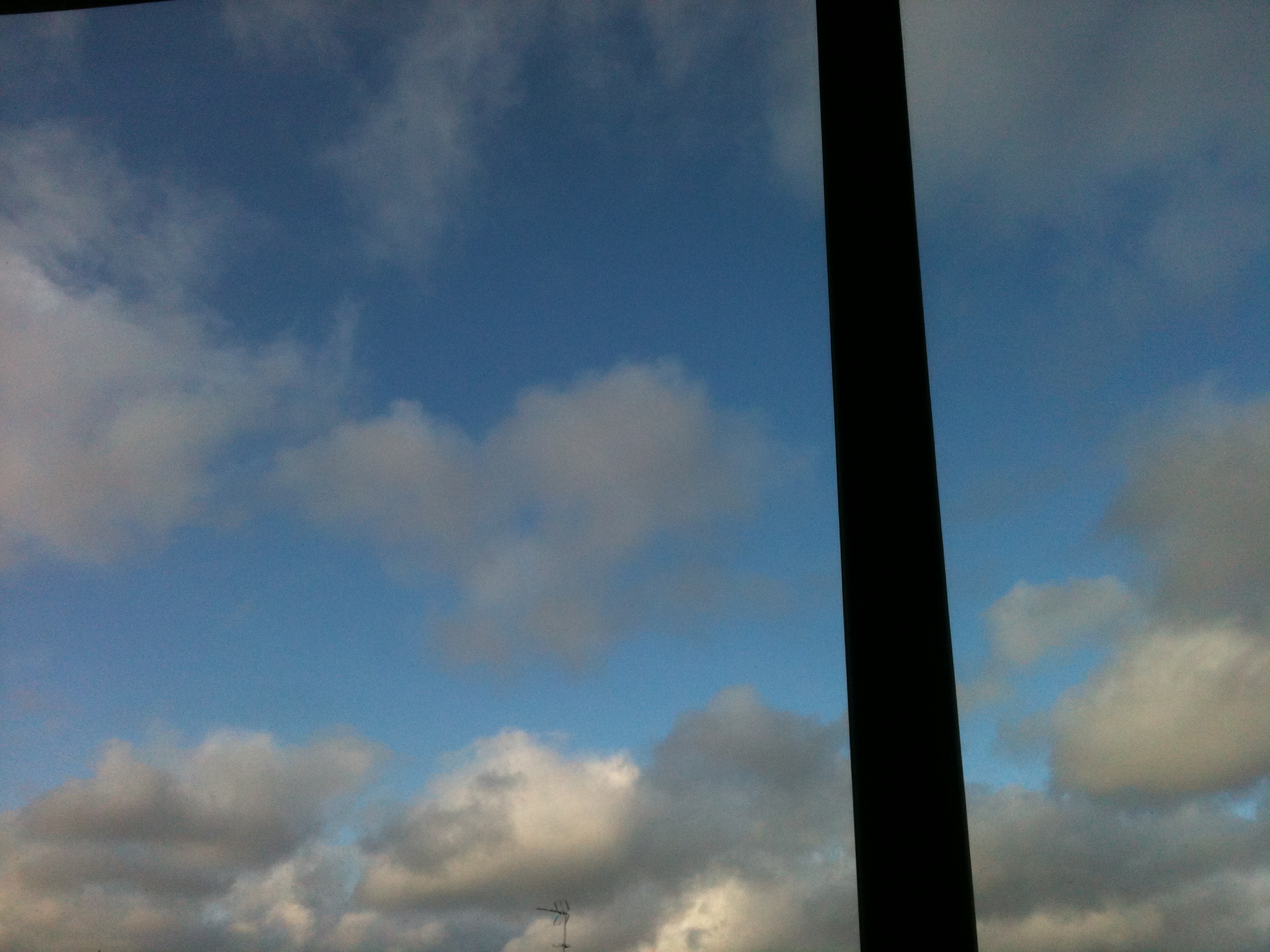
view from hotel window
15 February 2014
I apologize in advance and beggar your patience regarding the length of the following post. It is not often that I have over 10 hours straight of anonymity and limited distractions to read, study and write. I spent yesterday and last night flying from Wichita to London for a week-long course examining over 10 specialty libraries there. For the course I must keep a diary online, and while not about “library business” per se, this is about the journey…

Over the Atlantic
I have no idea what time it is. I have been airborne for perhaps four hours, having left Houston around 7:35 PM after an hour of mechanical fix-its, preceded by departure from Wichita at 3:36 PM earlier this same afternoon. We seem to be flying fast enough that my electronics are scrambled and I haven’t worn a wristwatch since high school. I’ve been lucky enough to have booked onto an half-full flight, allowing me the pleasure and benefit of a two-seated section all to myself. Almost a work-cubby – two tray tables stacked with books and an empty seat for sundry supplies.
At all times I pursue readings that might deepen and expand both my abstract and subjective life – I’m certain that could be stated better – perhaps that challenge and enhance my lived experience. Most honestly: that cause me to think, help me make sense, prompt change and give me pleasure. Writings that move me, would be another way of saying it. In the cabin I have arranged Focusing by Eugene Gendlin, Elegy Owed by Bob Hicok, Impenetrable Screen of Purest Sky and Wonderful Investigations by Dan Beachy-Quick, Light Everywhere – Cees Nooteboom, Buddha’s Brain and Just One Thing by Rick Hanson, Infinite Jest by David Foster Wallace, A Thousand Plateaus by Gilles Deleuze and Felix Guattari, and Art as Therapy with A Week at the Airport by Alain de Botton. Which could be explained in so many ways.
Traveling internationally, one is limited for selection – in fact it’s by far the most difficult portion of packing – which books will I need – not knowing how the movement and context will affect me? So I choose:
Whenever I’m struggling with depression, I reach for Wallace and books of wisdom – on staying present, taking steps, coping skills, the breath and body. Reality therapy, as it were. Poetry helps as well, with its attention to detail and sensual triggers. Books that remind me that I’m alive, regardless of felt experiences or circumstance.
I will finish A Week at the Airport on this flight, I’m almost there – or maybe I won’t, saving the “Arrivals” chapter for that moment in my journey. It is the account of de Botton’s stint as writer-in-residence at London’s Heathrow Airport (my immediate destination), and in his inimitable and typical fashion – exposing those human universals embedded in the familiar, or overlooked, or hardly spoken. What he asks from other writers, he provides (and I quote): “I was looking for the sort of books in which a genial voice expresses emotions that the reader has long felt but never before really understood; those that convey the secret, everyday things that society at large prefers to leave unsaid; those that make one feel somehow less alone and strange.” Maybe that is my true criteria – “those that make one feel somehow less alone and strange” – for the books I end up digesting do just that.
Here are some of the portions I have highlighted:
Departures
Airside
need I go on?
Yet on I fly…listening to and “Gustavo” from the new Sun Kil Moon album Benji on repeat; performing breathing exercises while silently repeating blessings on those I love to the quivering thrum of this airborne albatross; catching glimpses of “Before Midnight” on face-sized screens where perhaps mirrors should be; and reading and reading and reading and trying to conceive…
stories imagined and rejected
in which the yachtsman drowns
in a remembered winter
and exists as a poem,
.
but the last thought is of
her, the woman who disappeared,
who everything was about, the yachtsman, the bay,
the poet. The air it all breathed
is the loftiest fabrication, a life
possible now it’s no longer
possible.
-from Cees Nooteboom’s poem penobscot
and worrying about “how modest and static a thing a book would always be next to the chaotic, living entity that was a terminal,” our relationships, our lives.
14 February 2014
Words & Images
In the game Telephone Pictionary, a group of people begin with a numbered stack of paper fragments and an idea. The idea could be an action, a character, a concept, anything. Each player writes their idea on the top paper scrap and slides the stack to the player next to them. The next person depicts the words passed to them, placing the words at the bottom of the pile. The next writes what they interpret the drawing to be, and so on, alternating write/draw until the pile goes full circle or back to the originator, the same place as the end. Most usually the character, action, description, originating logos has changed dramatically through its person-to-person journey and return. Yet also usually, on looking at the miniature picture book as a whole, from start to finish, you are able to find a thread or see a path and deviations leading to the end.
A journey made up of an originating construction, altered and transformed through interactions with persons full of words and images (culture and nature), sometimes simplified, sometimes extended, and coming to its end with traces of the original construction and much difference. It’s an easy one – it’s like life, we think – but to say “life is like that” is redundant, for it is part of life, playing the game is life. It’s why any metaphors are available, why all metaphors work at some level – metaphor-making is life, as are games, interpretations, comparisons, changing, being handled, encountering persons with all their languages and images and ideas, editing, revising, with our limited number of pages, years, days. Yes, being an initial cluster of cells and passing through the cultures and natures of others is very like the way our life narratives come to be constructed, composed, altered, imagined and revised to their ends – their beginning places – clusters of cells.
I began in the hands of my parents and sister, formed by the words and images they surrounded and infused me with: a particular kind of Christianity, music, morals, travel, touch, a sense of gender, my name, and so much more. I suppose they’d each have their own words and images about and for me as well.
How quickly we are passed through hand after hand full of words and images – persons, institutions, cultures, families, nations, teachers, peers, friends, enemies, lovers and so on…The language, the picture – the culture, the nature – the numbered days – and we, the originating cluster altering and morphing, editing and highlighting, adopting and dropping, blacking out images, underlining phrases – palimpsests of living artefacts by our end.
Co-created through an unknown trajectory characterized by the interplay of self (or organism) and other (or world).
A beautiful, horrible thing.
“In Infinite Jest, for instance, Wallace provides a long list of lessons and exotic facts that one acquires from hanging around a “Substance-recovery facility,” a list that goes on for four pages. You will learn, he writes:
That certain persons simply will not like you no matter what you do.
That most nonaddicted adult civilians have already absorbed and accepted this fact, often rather early on.
That no matter how smart you thought you were, you are actually way less smart than that.
A few pages later he sneaks in the line:
That no single, individual moment is in and of itself unendurable.”
-Laurie Winer, https://lareviewofbooks.org/essay/choosing-not-to-be-on-david-foster-wallace
Please take the time to watch the video.
and an extra from the new release…
the last 4 minutes are so beautiful
What “prompts” us?
A pain. A joy. Surprise. Loss, meaning, something that crashes, crushes, alerts or in some way causes blurts or blasts to our system that create cross-connections – surge energy / electricity / pulsings between links and channels that otherwise run their own course. Unexpected. Expected. SIGNIFICANCE.
I am intrigued by what “catches” us, “moves” us, CHANGES us. As many times askance as head on. What gathers and whispers behind us. What we are confronted with. Explosive, erosive, evolutional. You could call them “shocks to the system.” Sometimes cumulative, sometimes immediate. But they effect change, and attention. Design, and process.
I’m thinking of them as prompts.
There are a few works of literature and art, throughout my life, that ALWAYS “prompt” me. A few authors. A few painters, sculptors, musicians. I do not know why this is, but it is so – some voices, some styles, some appearances and sounds unfailingly “move” me, by which I mean continuously change my orientation to the world. Often subtly, sometimes radically, but surely.
Macedonio Fernandez is one such creator.
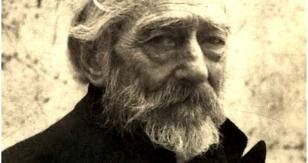 His writings NEVER FAIL to alter me.
I could query my analytics to find how many times I have quoted him, referenced his “first good novel”
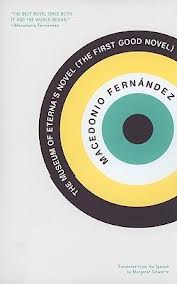
and today I am passing the PROMPT that this novel is – and IS contained in it – on to you… from Fernandez himself – I have lived with it, considered it, dreamt of it… a prompt he left us that haunts and inspires me… an ultimate sort of prompting….
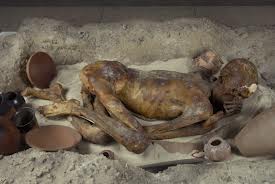
– Paul Celan
Student Magazine of IISER Mohali
Music, Musicology, and related Matters
a photographic pilgrimage to Orthodox Christian monasteries across the continent
Meandering Through a Literary Life
Orthodox Christianity, Culture and Religion, Making the Journey of Faith
Erik Kwakkel blogging about medieval manuscripts
"That's the big what happened."
Networking the complexity community since 1999
 All my Words are Silent