Wanted to plug a new Youtube channel I’m following…

Wanted to plug a new Youtube channel I’m following…
I am currently reading Samuel Beckett: Anatomy of a Literary Revolution by Pascale Casanova, introduced by Terry Eagleton
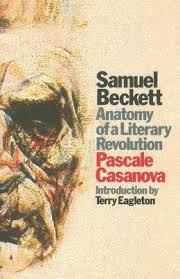
Beckett has always been a favorite of mine – for economy, humor, profundity, examination and exploration. The following exemplify elements of this – quotations from simply the Introduction (by Eagleton) of this study…
“His work, in short, presents us with the scandal of a literature which no longer depends on a philosophy of the subject”
“every sentence of his writing keeps faith with our sense of powerlessness”
“nothing is quite as real as nothing”
“sublimity includes that which is barely visible as well as the immense and immeasurable, since both are equally ungraspable”
“there is no more truly historical phenomenon in art than form – which is quite as much saturated in social signification as so-called content”
Beckett presents “questions addressed by texts to themselves, queries about their own procedures and conditions of possibility”
“clear-eyed attempts at an exact formulation of the inarticulable…the extreme scrupulousness with which it sculpts the void”
“writing itself becomes for Beckett the very signifier of the failure which so gripped his imagination”
“places the very impediment to writing at the center of his writing, transforming the question of failure into the very form of his art, telling incessantly of the failure to tell”
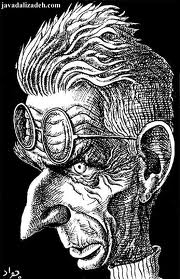
Thanks Samuel.
I have recently had the good fortune of correspondence with a tremendous thinker of whose work I have greatly admired and utilized continuously. At some point he queried me as to my central concern or research interest which I pondered over a number of days. About a year ago I recognized that filtering through all of my curiosities and fascinations (passionate inquiries) – in the end they were all about ways that meaning might be made for humans. Thus I figured semiosis or semiotics was my central field of concern. How we forge meaning in our surrounds. As I’ve pursued library and information science I have attuned to the eagerness with which we as a species produce, hoard and waste information. We’ve produced veritable clouds of data/information/knowledge and now it seems as if we swoon and drown in it. For meaning, this cosmos of affordances must be utilized, integrated, incorporated. As technologies explode and become increasingly symbiotic or synergistic with our own bodies and purposes, I have found that my responsive concern is one of remembering that the nexus or filament-combining locus for humans is the body. No meaning can be had without the physical processes on which our being relies. Every think I can think rests on the chemistry and material flows that comprise my organism. It seems that even while we seek to develop intelligent robots and machines, ubiquitous data-recording and instinct-responsive computing, work with data sets increasingly monumental and robust, that a strong percentage of the human populace has the idea that the stigmergy and emergence of virtual social realities construct meaning, promise, potentiality. I am not denying the fascinating quality of our rhizomic replications of our actual interconnectedness, overlap and interdependent influence, but I am committed to the fact that meaning only arises as relations are incorporated. The translation and transformation of continuous relational events whether electronic and virtual or face-to-face and co-present into MEANING only occurs organismically, physically, presently in the knotting of convergences through our embodied existence. Emotion, sensation, cognition, movement all ALWAYS play a part in the construction of meaning. These are my thinkings/feelings.
In keeping with that, serendipitously my wife and I happened to view “The Perfect Sense” – a movie pursued to listen to Max Richter‘s incredible soundtrack in action – but resulting in a sort of visual commentary on my above thoughts. We recommend it! And would love to hear what you think!
My maker-wheels or whatever complex machinery sometimes con-fuses to generate documents of creative writing are apparently on the fritz. In lieu of some relatively originary textual flow (idiosyncratic dip into the semiotic waters of the resource of language) I forward along a poem that stands out to me from this weeks’ readings, and a plea that interest-piqued readers immerse themselves in a particular book regarding our co-creation and involvement with the rest of the world and one another…
First, the poem – from Bob Hicok‘s “Elegy Owed” – a fine collection:
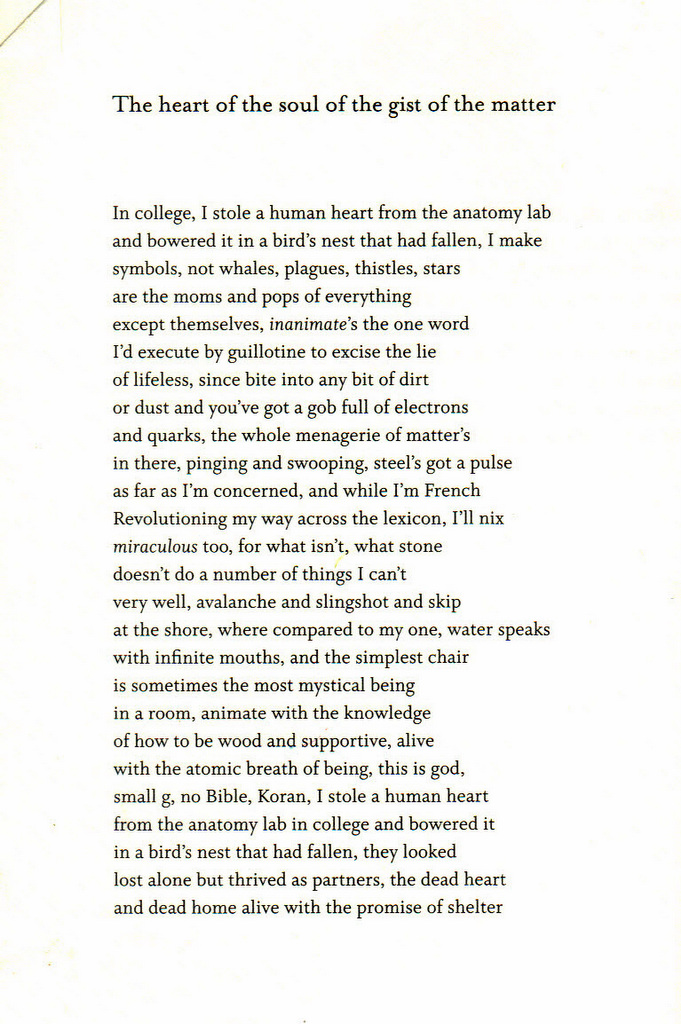
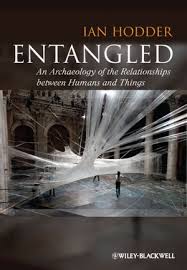
and second a plug for a compelling study by Ian Hodder – “Entangled: An Archaeology of the relationships between humans and things”
 “Ultimately we find that the cognitive consequences are more about the new meaning systems and activities that occupy our minds than they are just about the character of work with symbols…”
“Whether one form of inscription is more efficient or more easily learned than another (the asserted alphabetic advantage) may be less consequential in its cognitive consequences than if a society has developed a large bureaucracy, literary culture, philosophic tradition, technology, commerce, and educational system using whatever form(s) of inscription it has historically developed”
“The world we know, think about, and act within is saturated by and structured on the texts that travel from place to place and have some durability over the years. The built symbolic world on which we have elaborated new social meanings and relationships and that is the object of our thought and attention as we try to live our lives as successfully as we can within it, in that we find the consequences of literacy.”
-Charles Bazerman, Social Implications of Writing-
Student Magazine of IISER Mohali
Music, Musicology, and related Matters
a photographic pilgrimage to Orthodox Christian monasteries across the continent
Meandering Through a Literary Life
Orthodox Christianity, Culture and Religion, Making the Journey of Faith
Erik Kwakkel blogging about medieval manuscripts
"That's the big what happened."
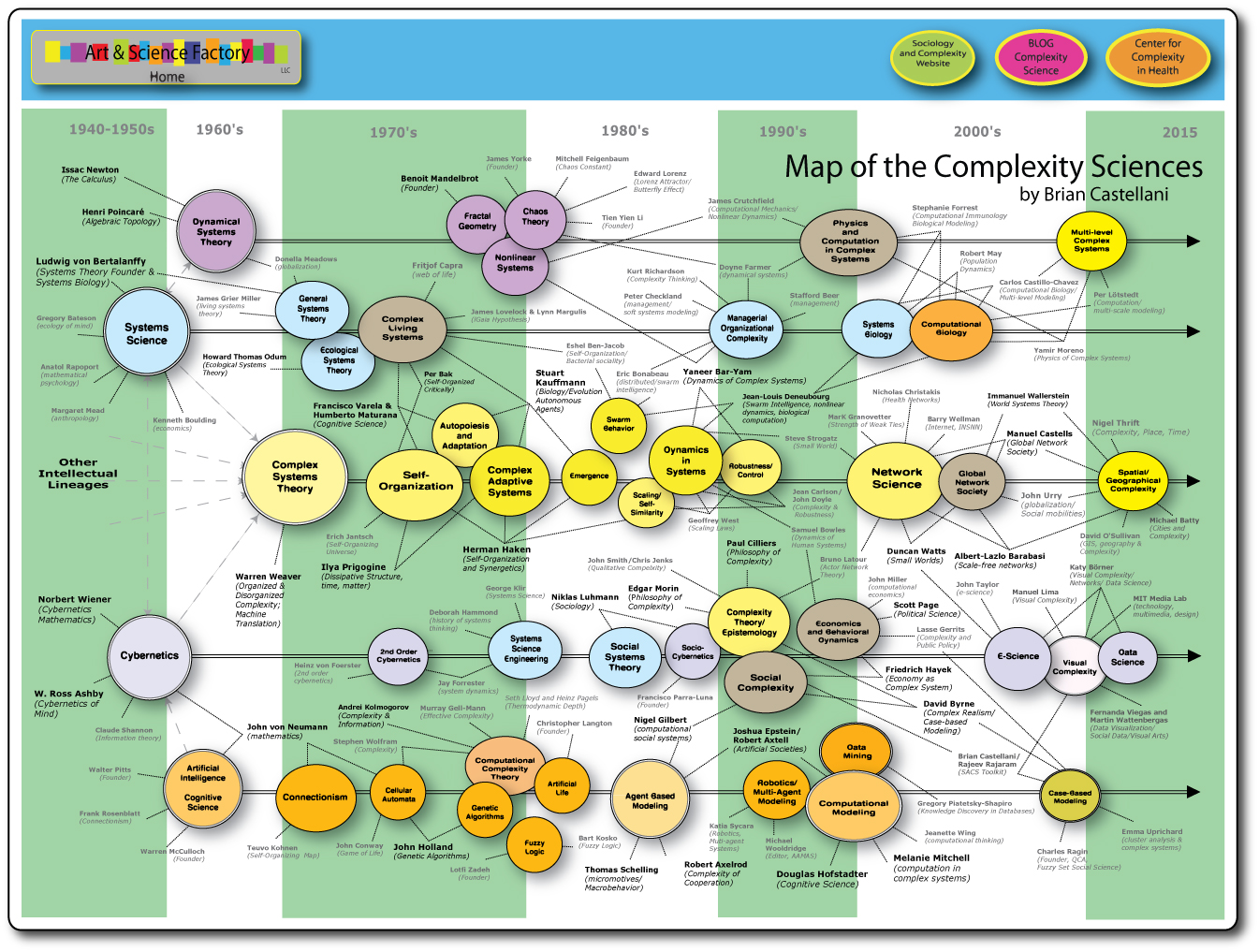
Networking the complexity community since 1999

 All my Words are Silent