Weekend classes in Library & Information Science =
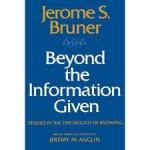


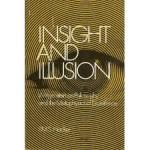
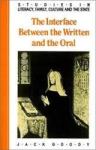
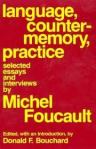
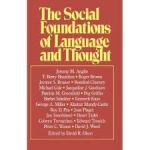


here’s a glorious sample to browse the “information”: Language & Representation, David Blair
with the music of:

Weekend classes in Library & Information Science =
here’s a glorious sample to browse the “information”: Language & Representation, David Blair
with the music of:
How many do you know? How many do you “love”?


“…We know we can never be anything but parallel
And proximate in our relations, but we are linked up
Anyway in the sun’s equation, the house from which
It steals forth on occasion, pretending, isn’t
It funny, to pass unnoticed, until the deeply shelving
Darker pastures project their own reflection
And are caught in history,
Transfixed, like caves against the sky
Or rotting spars sketched in phosphorous, for what we did.”
-John Ashbery, from The Sun-
feel free to join – the water’s fine!
Items arriving today:
and how I stay in school:
keeping on keeping on
“Write about what you want to know”
-Lance Olsen-
“To understand how language works, what pitfalls it conceals, what its possibilities are is to understand a central aspect of the complicated business of living the life of a human being”
S. I. Hayakawa
“Thinking is a truceless act. / How it holds the injured yets and thens inside it, so many layers of barter /
and resist. You who are all swerve, / Distance and blindfold when I try to find you – “
Laurie Sheck
“The world of art and culture is a vast commons, one that is salted through with zones of utter commerce yet remains splendidly immune to any overall commodification. The closest resemblance is to the commons of a language: altered by every contributor, expanded by even the most passive user. That a language is a commons doesn’t mean that the community owns it; rather it belongs between people, possessed by no one, not even by society as a whole”
Jonathan Lethem
Another year. The title of this post comes from Helene Cixous’ introduction to Clarice Lispector’s The Stream of Life, both books being part of the tight reliable necessities of each of my own repeated beginnings. No matter how I try otherwise, when the first of a calendrical year comes around with its socio-cultural aura-like atmospheric influence of the idea of new beginnings…I find myself tracking to the shelves for these few cellular texts like the body seeks to breathe. This has been my inalterable habit for so many years now, that I can not avoid recommending them (with the highest deepest forms of loving attachment), to all of you.
“evoking the incommunicable realms of the spirit,
where dream becomes thought,
where trace becomes existence…
I write you because I do not understand myself…
it is always a question of beginnings.”
“And for many years I have been writing,
borne by writing,
this book that book;
and now, suddenly, I sense it:
among all these books is the book I haven’t written;
haven’t ceased not to write.”
and additionally, today:
“What I mean is, if you have ink in your blood it’s hard to get it out of your hands…
Our reputation for excellence is unexcelled, in every part of the world.
And will be maintained until the destruction of our art in some other art which is just as good but which,
I am happy to say, has not yet been invented.”
“Samuel Beckett: Try again. Fail again. Fail better…
to conceive of writing as a possibility space where everything can and should be considered, attempted, and troubled.”
May your 2013 be filled with incredible texts and integral growth and development!
Writing for children, like talking to them, is full of mysteries. I have a child, a six-year-old, and I assure you that I approach her with a copy of Mr. Empson’s Seven Types of Ambiguity held firmly in my right hand. If I ask her which of two types of cereal she prefers for breakfast, I invariably find upon presenting the bowl that I have misread my instructions — that it was the other kind she wanted. In the same way it is quite conceivable to me that I may have written the wrong book — some other book was what was wanted. One does the best one can. I must point out that television has affected the situation enormously. My pictures don’t move. What’s wrong with them? I went into this with Michael di Capua, my editor at Farrar, Straus & Giroux, who incidentally improved the book out of all recognition, and he told me sadly that no, he couldn’t make the pictures move. I asked my child once what her mother was doing, at a particular moment, and she replied that mother was “watching a book.” The difficulty is to manage a book worth watching. The problem, as I say, is full of mysteries, but mysteries are not to be avoided. Rather they are a locus of hope, they enrich and complicate. That is why we have them. That is perhaps one of the reasons why we have children.
In the midst of busy, sometimes harried, rhythm-bashing holidays, Holly and I find our first day of quiet self-direction, spending a full day of her sketching, submitting images, reading… and myself completing an essay and Ida’s blank notebook and polishing on some poems…and, probably most nourishing of all (for me)…input. Here are the sumptuous nuggets I’ve been sampling today:



Student Magazine of IISER Mohali
Music, Musicology, and related Matters
a photographic pilgrimage to Orthodox Christian monasteries across the continent
Meandering Through a Literary Life
Orthodox Christianity, Culture and Religion, Making the Journey of Faith
Erik Kwakkel blogging about medieval manuscripts
"That's the big what happened."
Networking the complexity community since 1999
 All my Words are Silent