On Love

I will be up front with you:  this post is a failure.  If I were able to comprehend, understand or express what it is I have been struggling with myself to grasp and communicate – I would also have the expressive powers to irresistibly beckon my love.

Like many poets and artists, I am not a stranger to great expressions of love.  Tales of romance, of idealism, of sacrifice and charity.  Of endurance, persistence, obstacles and joy.  Of passion, beauty, devotion and charm.  Many of us spend the bulk of our lives searching it, attempting to become both loving and lovable, generous and worthy.

What I have wrestled with this past week is how I might convince all of you who have an interest in its meaning, its practice, its enjoyment and its pain that a book I have spent much time reading and reflecting over the past two weeks is worth your full attention.  It is entitled The Conditions of Love: the philosophy of intimacy and is written by John Armstrong.
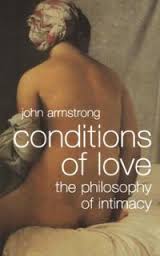
Armstrong - Conditions of Love

For a while now I have been making effort at examining the “intolerable vulnerabilities” that intimacy evokes in us.  Armstrong addresses these in a deep variety of ways, such as “love craves closeness, and closeness always brings us face to face with something other than we expected.”  Upon meditating my way through his profound expository book, I have added “incalculable equation” to my sense of love.  “Most people are, it goes without saying, sometimes pathetic and sometimes quite competent…reciprocity requires us to hold in mind a complex image of our own nature.”  My felt sense upon concluding his words (and those of so many others he includes ever so skillfully) – was a strange sense that love combines the profound gravity of grief and the profound levity of hope.  

It is instructive to understand what Armstrong intends by a philosophical account of intimacy:  “One of the things which philosophy can do is to try to flesh out, with as much precision as the case allows, just what is at stake in the concepts we use.”  And he performs this so deftly.  “Hence the more subtle our thinking about love, the more intelligently we discriminate ideals from reality, the more interesting our autobiography becomes.”  His is the thinking of the ‘pandoxist.’  “A pandoxist doesn’t locate all the important insights and truths about life in a single system, but tries to seize upon the multitude of truths and insights which are located in many distinct – and often antagonistic – positions…most great systems of thought are founded upon lasting insights…but we generally don’t need to be completely consistent in our thinking…we are attempting to enrich our repertoire of ideas…thoughts which will be helpful at different times and in different situations.”  The Conditions of Love satisfies this expertly.

The book has been written.  I cannot possibly improve on it, and, although I’d dream of trying – what I most desire is that more humans will engage it toward the extension and enrichment of their lives and the relations they involve .  With that in mind I will simply copy some of my underscored passages from Armstrong’s writing – hopefully to successfully convince you that it could benefit you, too.

“The suggestion that love is deep carries the implication that it emerges from deep within us and that it reaches something deep within us.  It carries with it an image of the personality as layered.”

“Love isn’t a single thing but a complex of different concerns gives rise to a vision of some of the problems of love.  When we try to love we are not actually trying to undertake a single endeavour; rather, we are trying to do a whole range of different, and sometimes not very compatible, things simultaneously.”

“We need love, we have an inbuilt need to love and be loved, yet the two sexes have divergent evolutionary and genetic notions of how love works.  The unhappiness of love is the fault of the evolution of the species…which undertakes to show how extremely complex emotions and thoughts are enacted in material processes.”

“to show that love is natural is not in fact to show anything very important…what is given by nature is not necessarily good, and what is achieved by artifice is not necessarily worthless…the experience of love is open to change, but only in some ways.”

“Compatibility is an achievement of love, not a precondition for love…there is no such thing as perfect compatibility, therefore all loving relationships must accomodate some degree of incompatibility.”

“Perhaps the most fundamental fact of human experience is that the experience of being oneself differs radically from the experience we have of others…no other person can complete us…this is something we have to do for ourselves, even if we are lucky enough to find another person who is helpful and supportive and whose character tends to bring out the best in us.”

“friendship is a species of love…there is something about their mode of being, about the texture of their inner life, which seems familiar…it is when we discover, or suspect, some intimate correspondence between our own secret self and that of the other that we begin to move from liking to loving.”

“the very needs which take us into love play a role in the souring of love.”

“love involves a reorientation of our concerns.  We are in the habit of being immensely preoccupied by what immediately concerns our own well-being…yet caring for something, or someone, other than oneself can be immensely liberating.”

“the irony is that the more we invest in love, the harder it can be to love successfully.  To love another person often requires that we have further and independent sources of satisfaction and security in our lives.”

“of course it can be disturbing, even terrifying, to admit insufficiency to ourselves.  ‘Why do I need another person? Because I cannot be happy on my own?’  For some people at least, that is too painful an admission.  We sometimes avoid our need for love because it casts us in a vulnerable role…It suggests how deep the need for love goes in us, how hard it sometimes is for us to recognize what it is we are looking for, and how hard it is going to be for someone else to satisfy those needs.”

“infatuation – can be driven not just by a mistake about the other person (thinking they are nicer than they really are) but by a mistake about oneself (wanting to be other than one is)…in infatuation, we use another person as a prop in a fantasy about ourselves.”

“many persons imagine that it is the quality of current feeling that matters; in fact, current feeling is no guide for behaviour under multiple strains and stresses.  What infatuation does is to consecrate the present feeling and protect it from serious investigation.  Imagination paints a charming view of the future, conveniently adapted to the demands of our current situation.”

“Cupid is the name of whatever it is in us which, without our consent or recognition, provokes the intense longing for attachment which we call falling in love…the fear of love as irrational is not simply the fear that love is in its genesis outside of our control, but that it is not amenable to reason once it is up and running.”

“the forces which make us long for another person to love – loneliness, the need for warmth and tenderness – can be so great that we behave as if we were starving…desperation overrides discrimination…the process of falling in love may be governed not by the intelligent sense of what is good for us but by unconscious forces which cause us to get attached to someone with whom we can – like an addict – repeat a self-harming pleasure – ‘this person is for me’ may be, ironically, true and yet true only in that we have identified a potential source of our preferred misery…a relationship does not start the day two people meet; it starts in the childhood of each partner.  for it is long before they meet that the template of their relationship is established.  We learn to love as children.  Or, more accurately, we learn a style of relating which governs our adult behaviour when it comes to love.”

“much depends on the way in which we find in them someone with whom we can continue the unfinished business of childhood…there is something about this person which coheres with an earlier pattern…Falling in love, then, is a result of two thing coming together: the longings which we have and the workings of our imagination.”

“Our sense of who another person really is is massively inflected by our own concerns…what it is to understand a person – involves having a clear conception of what that person’s real needs and qualities are – a conception which can be radically at variance with the self-image of that person.”

“Love alone can’t make another adult intelligent, generous, courageous, persistent and sociable – unless they are very close to possessing these qualities in the first place…it is axiomatic that people can be wrong about what is good for them; that is, they can be wrong about what will make them happy.  This is one of the key reasons why there is so much unhappiness in the world.”

“To love is to interpret another person with charity…of course we habitually go beyond the facts when we find fault with or condemn another…Anger and resentment are frequently founded upon what we suppose another person has intended, rather than on what we actually know about their motives.  Charity, therefore, need not ascribe benign motives, but keeps open the possibility that one doesn’t know what really goes on in another’s heart of hearts…to step aside is human…a charitable interpretation seeks out good qualities underneath evident failings and inadequacies – and take a sympathetic view of those failings..requiring a complex image of our own nature.”

“Most accounts of existence place love at the centre of life.  We live in order to grow in love – that is the meaning and purpose of each individual life.”

“Love requires the integration of all our powers: we have to be sensual, but also understanding; we need to be able to relax with our beloved, but must equally exercise self-control; we have to mix spontaneity with foresight; passionate, devouring sexual desire has to be tempered with respect…”

“What is wrong with capitalism is not so much that it fosters an unjust distribution of wealth but rather that it damages the personalities of all those who live within it, cutting each individual off from the realization of the true nature, giving rise to internal – as well as external – obstacles to love…If we have to devote our best energies, almost all of our time, to making a living, and if in doing so we have to become competitive, or ruthless, we don’t have much of ourselves left over for love.  We can only love on the margins of our lives and with the residue of our capacities…Love, which stands as the natural goal of living, is massively subordinated to the pursuit of the means of living.”

“the reality, here, is that we invest the people we encounter – particularly those we get close to – with characteristics which are not really their own but which derive from our own earlier relationships…construction and transference is an unconscious process – one which we are not only unaware of but which we positively resist becoming aware of.”

“Love, then, can never be the coming together of two perfectly compatible creatures.  We are not like jigsaw pieces which can, if only we find the correct piece, lock together in perfect accord.  It is as if each person actually belongs to several jigsaws at once and hence fits perfectly into none.”

“Much of the resulting pain of adult life can be traced back to the ways in which the child deals with ambivalence…it is impossible to have a loving relationship which does not involve negative aspects…because a perfectly right partner will still evoke fears and anxieties in us, will still – because of connections back to the roots of love and fear in childhood – become an object of envy or jealousy, will still be the privileged object of our aggression and disappointment…”

“Sex is direct, whereas love is diffuse.  Sometimes we need love to be made obvious – and sex is one of the most powerful ways in which this can happen…the troubling fact is that two positions are correct: we are inherently jealous and sexual desire is distinct from love.  To accept both claims is to admit a degree of incoherence in human nature…this is an invitation to be more imaginative about dignity.”

“Recuperation is essential to the survival of love because it is inevitable that love will come up against serious difficulties…the point is that even within a good relationship there are continual sources of hurt and disappointment which have to be overcome if love is to survive…their overcoming is actually the growth and development of loving…it is, therefore, extremely important that we work with a vision of love which sees problems not as the end of love, not as a sign that love is over, but as the ground upon which love operates.

“This is the internal tragedy of love.  If love is successful, if our love is returned and develops into a relationship, the person we are with must turn out to be other than we imagined them to be…security can put us off our guard…the notion of maturity is humanity’s attempt to retain an optimistic picture of love in the face of disappointment and difficulty.”

“Maturity is our name for the hopeful strategy which is open to us when faced with something which is both an object of high value (a source of happiness) and, at the same time, threatening, difficult, disturbing..the very things which draw us into love and enable us to invest so highly in another person, to wish to bind our lives together, themselves give rise to disillusionment, frustration, disappointment, and evoke some of our deepest fears and most primitive defences.  What we mean by maturity is a change of perspective.”

“In this book I have tried to argue two things…Firstly, the need to love and be loved is deeply placed in human nature – we long to be understood, to be close to another person, to matter in another’s life…the factors which draw us into love also constitute the roots of love’s difficulties.  We long to be understood, but it is often awkward to have another see too much of one’s inner troubles…we do not go through life with a coherent set of desires, and anyone who charms us in one frame of mind may be annoying or threatening in another.  Secondly, love is an achievement, it is something we create, individually, not something which we just find…and yet it cannot be forced simply by effort…it is dependent on many other achievements – kindness of interpretations, sympathy and understanding, a sense of our own needs, and terrible vulnerability…each requires patient cultivation – we have to take whatever fragile presence each has in our lives and build upon that…in order to unlock our passions, recognize our need for another, and see our present loneliness…”

and so on – i simply took a quote or two from each chapter – hopefully you can imagine the depth of the whole…and will enjoy it for yourselves….!

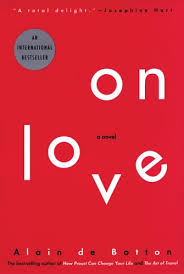
see also:de Botton - On Love
http://www.youtube.com/watch?v=uDGGAC10mtc


The Intolerable Vulnerability of beginnings…

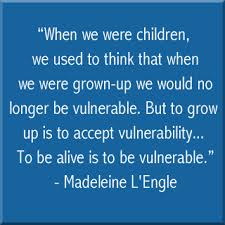
I am desperately vulnerable to being unable to move beyond beginnings….as witnessed by the following attempts…Lengle - VulnerabilityINTOLERABLE VULNERABILITIES

I.

When we begin – anything – we begin with.  We start out already always somewhere as some onesome thing.  Some entity or element among others.  There are no, is no, such thing as a ‘fresh start,’ as a living organism.

From our particular inceptions we are loaded and formed with genetic baggage – our cells and context shaped by conditions far beyond and external to ourselves.  And nary a freedom is advanced.  Sure we participate in the shaping and construction and continuance of us, but we are never extricated, abstracted, or independent from an environment, a shared and shaping surround – it’s the contingency for existing: Other(s).

A world not formed by us.  A plural existence, NEVER a solitary, isolated or uniform one.

Many find these ever-initiating constraints intolerable.  That one is unable EVER, to start from scratch, re-invent, re-formulate, or create ex nihilo.  Nothing, absence, void, simply – is not.

Therefore, ever existing in the already-established, already formulating, already-begun, we come together and transform.

Cells and genes, energy, matter and air conscribe to carry on in ripples and subject/objects of being.  Including, colluding us – we, you, me, I.

Wholly integrated (smoothly or with great difficulty) into the ongoing flux and flow of languages, practices, thoughts and behaviors of a very large and intricate, complex and dynamic world – we arise – conditioned, constrained and subject to our sort of organization – make-up, culture, circumstance, arrangement, perception, emotion, body, reason, available resources, types, renditions of being A being in this possible world.  A world, impossibly, that is just this way.

And the task is (always has) already begun – how will/does this particular, unique combination and configuration of elementary particles (a living, bounded, active, exchanging system/organism) adapt, effect, adjust, infect, evolve with its environment?

An environment of people, places, activities and things ALWAYS ALREADY begun, and also always already NOT-YET…awaiting, accepting, adapting, adjusting with US.

Our configurations, energy, activities and behaviors.  Nothing the same with us.  Nothing without.

Incalculable.

You, me, we make all the difference – along with EVERYthing else.

Some call this a paradox.  If you did not begin, it would make no difference.  If you do, it makes all difference.  Both, always, true.

Nothing is the same with you.  Nothing would be the same without you.

The world is a situation = both / and / more.  A complex and indiscernible system that just seems to work this way.  Call it “Butterfly Effect,” “Creation” or “Evolution,” “Chaos,” “Order,” “Life” – it all makes NO difference AND ALL the difference to actual experience.

And it is so.

Thus we begin – embedded, embodied, and extended – in an environment always long established, ongoing and begun: constrained, constructed, collaborated, and free.

I begin.  I beg – “let me start over”, fully incorporated, already begun – I: in.

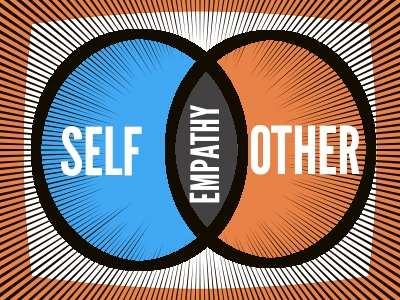
Empathy…Intersubjectivity…efforts…

empathy

Empathy: A Way, but not My Way

O.E.D. – Empathy / einfuhlung

  • “The power of projecting one’s personality into (and so fully comprehending) the object of contemplation”
  • “to feel oneself into it”
  • “the feeling-out of other minds”
  • “a form of imaginative identification of self with non-self, a feeling-into”


Feeling out, feeling into, projecting one’s experience in order to absorb the experience of another.  “In and out of one another’s bodies” (Maurice Bloch), “intersubjectivity” (Daniel Stern).

Notebooks full of conjuring, I’ve dreamt and striven to elucidate or embody, to caress and coerce language to convey or carry-like-a-message the interpersonal convergence, experiential agreement we might be signifying with the syntax and semantics of empathy.

There were moments, instants, it seemed evident, nearly obvious – as when a child ran itself across a brittle late-summer yard, lodging a prickled sticker in the pad of its heel, and hearing its friend following close behind, sensing its similar fate…a kind of “predictive apprehension” become co-mprehension as experience is multiplied, at least observably shared – at least sympathy – a feeling-with, if not –out; and –into.

Two humans losing their loved ones, or spouses enduring the same tragedy?

Experience-learning applied to replicated or duplicated occasions.  Similar, perhaps, sympathic.

But “fully comprehending” journeys beyond this.

Apparently, empathy happens when one extends emotion beyond the individual body and absorbs, joins, or feels-into another – a verge of meeting, movement,

beyond into between, meshing as a sunset goes about forming itself, or the creation of fog – something like con-gene-ial requirements.  Some of us, hell, all of us (and more) share genes, so this must be possible (we have a word for it after all!).

Our forms, our reach, must be flexible.  We share-with, finally, down to our atoms out through our environment, galaxy, and beyond.

EXTENDED – EMBODIED – EMBEDDED

-components of empathy-


…a coordination of coordinations of actions…

(Humberto Maturana / Francisco Varela)


            Perhaps empathy, a possibility of intersubjectivity, occurs when subjects extend awareness through a mutual orientation into a consensual domain…each feeling-out the other by feeling-into a shared sensual arena, learned by experience and therefore anticipated predictively…in rare occasions of empathy…simultaneously!?

In other words, based out of our shared genetic realities, generated by the kinds of experiences and “worlds” our species can have, we feel-out of our heartbreak, grief, joy, ecstasy, fear – emotive and sensual experiences – into con-sensual co-ordinated domains of those experiences occurring in some liminal, marginal space verging each; similarly to the way a coastline clearly separates and thoroughly connects sea and land, while both continue going on underneath one another.

Perhaps.  But I was not seeking to describe, explain, or indicate empathy in language, my desire was to enact it, evoke it…and in that I have failed…ever to try again.

Immunity (Writing from Everywhere)

perhaps you will be able to play this WHILE you read the linked entry below (as it was written)

Immunity (Writings from Everywhere)

A Division of Subjects

Simple HouseI am looking at my wife’s face for significance.  Scrutinizing her as if MY meaning might come from there.  The eyes and motion of my children, our puppies, the touching between them.  I gaze, ravenously, melancholy, nostalgically, as if some sort of synching provided reason.

Observing, begging input for desired effect.

Words on a page in front of me.  The sounds of the heat switching on and swishing (or swooshing) through an anatomy of ducts.  Rememory.  Fashioning bodied memories forward toward anticipated satisfaction of imagined desires.

Re-membering an already unknown future.  As if to place it onto a pleasure/pain balance and put myself at risk for emotion.  As if I am wanting to feel.  Pleasure OR pain, satiation OR loss, grief or elation.  Simply.  To feel.  And to be able to tell.  To evaluate, process and produce.  Perceive, procure and proceed.

Attend, assemble and assess.  All componented in threes, a perspectival point of either/ors.

In other words – seeking options of experience through this-or-that, barely realizing the gargantuan disturbance of the field in which bi-polars conjoin – the third, the invested participant – “observer.”

I search her eyes – peering her into double bind by my own delimitations.  Reflecting the kids play and laughter – deflecting – by framing-problems that lens my limited views of want and need.

Ravenous, melancholy, natural look of desire for pleasure and dread of pain – dualizing a multi-more intricate kaleidoscope of possible probables.

The implicit intricacies + the avoidance and/or discounting of “one’s own role” (the responsibility, culpability, of our ever-presentness we ever effort to escape) – being participatory.  Being.

And what of the lens?  If I expand the prism, rotate the glass – distort, blur, focus.  How expansive, elastic, extensive are my tools?  How effectual the how I look, the what I look for, the why?

I continue examining her face, and his and his, and his and hers.  Listen for their sounds, their movements, borrowing moods from the connections I make, perceive, feel…asking now to fill out my arrival…more aware of many roles that depend on distant stories…now arising…participant…into now

as it happens, it occurs…

simple house drawings

BE.  HOME.  NOW.

HAPPY HOLIDAYS

2013-2014

On Perturbations (Transformations)

Maturana-Varela - co-relations

I learned today that I am an “operationally closed system.”

Essentially – a living multicellular organism with no “inside” or “outside” (as far as that system or the environment is concerned) – a set of dynamically and reciprocally interconnected cells with remarkably complex, diverse, and plastic (transformable, adaptable) abilities interacting continually to fluctuations, pressures (or lack thereof), movements (perturbations) of a molecular milieu.  That what you interpret (are “perturbed” by) as my “behavior” (you observers, you) is “a view of the dance of my internal relations” – part of “the dynamics of interactions of this organism in its environment” (and vice-versa).

Each of us, adapting, CONSTANTLY, “modified by every experience” in our efforts to maintain “effective correlation, compatibility” between our “selves” (organismic structural possibilities) and our environment (that which we are structurally coupled to…momentarily).  Always effecting, always effected by.  A thoroughfare of thorough-going perturbations/ transformations…i.e., ALIVE.

I’m sorry if “I” offend and/or disturb (as I am bound to) in my attempts and efforts to maintain compatibility (to SURVIVE!) with/IN my environment – I realize that every action, vibration, movement I express or perform = a perturbance for you, which will (sometimes) resonate, but unfailingly structurally couple us, if we are to live-on… yes, I’m talking to you – squirrel, leaf, fly, spouse, air particle, plant, piano, atmosphere…  Down to our electrons and quarks we effect.  And that effect is on entire systems, without observable (or measurable) end.

In other words – respons-ability.

This began to dawn on me as I was considering (perhaps unwarranted) my hopes, desires, expectations.  As realities (perceived/ interpreted) perturbed these (my situational, contextual constraints and affordances)…I “thought/felt” (who knows which – synapses) that many of my most (felt/thought) agitating (interpreted) perturbances (transformations) are ANTICIPATED more than encountered/lived-through.  In other words – I’m experiencing my anticipations – my internal dynamics – as perturbations – NOT my organisms’ “environment.”

In other words – my “operationally closed system” anticipates change as potential threat or danger – when actually I would (most likely) – am operationally equipped to – maintain my structural inter-relations compatibly with the ongoing interactivities / relations of my environment.

Our kind of being is fantastically diverse and adaptable (with unimaginable flexibility and complexity) to vast fluctuations / perturbations / transformations – we are plastic to our cells.  It takes a LOT to “disintegrate” us, in our “ongoing structural drift” (that which transforms and develops and differentiates us moment-to-moment as the organism we are).

Our cellular behavior:  a sensory surface, a motor surface and a system of coordination dynamically related in never-ending change (until disintegration).  And ALL in co-relation.  No movement, sensation, quiver, thought, emotion, pulse or charge that is not CO-RELATION with activities and molecules making up our “milieu” (the middle, the surround – BOTH/AND).

Maturana-Varela - co-relations

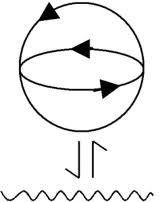
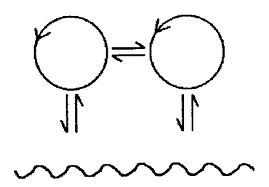
The swirling circle is me with my organismic operational closure always moving and changing in relation to its components – equally effecting and effected by – you / air / “matter” / “energy” (the wavy line) as reciprocal “perturbations.”

it’s complicated…

sensational…

ecstatic…

Reality (for the likes of moi): “I” might be much  more “naturally” compatible with an enormous diversity of environments and situations (others) than I internally coordinate myself to be (at least biologically, operationally, cognitively speaking).  Ahem.  Alas.  My organismic systemic co-relations often get the best of me.

apologies nearest and dearest…

Maturana-Varela - Realitydiagrams and conceptual perturbations compliments of:


Anticipating Leaving the Sea

Marcus - Leaving the Sea


As with bated breath I anticipate the January 7 release of Ben Marcus’ newest collection of stories…I sate myself with these two complex tidbits of his alchemical languaging talents, and invite you to swim in them as well…

Marcus - Notes from Hospital imageBen_Marcus_Notes from the Hospital

and

Marcus - Dark Arts image

Marcus - Dark Arts excerpt

click images for full texts

8th segment

’cause I don’t have to stop.  ’cause it doesn’t.

experience anyway cover

8

            And now “I” am different, again.  Change.  Is how I would “put it.”  What with the whip of atoms calling “I” ever-coupling to the Itself that the “I” calls “world,” really, when one gets down to it, in it (always), the distance is elusive (is “illusion”).  And so “I” changes at the rate of the wind “I” is sharing; of the sea “I” is seeing; of the matter (volatile shivering).

It is Here.  We are.  Since we cannot claim a territory, we strain for modes to re-fer (de-fer?).  Differ.  We’re attuned to it.  The rhythm of our tune is differance.  There is no reason that suffices.  We are in it.  It.

A live.

In vocalizing, movement sounds (for humans).  Or in gesture – perceptible matter (always suited to the version capable).  It is always a matter of moving around, shuffling space with time.  I cry, there is movement.  The air and the chemical sea.  I look – things displace, replace, are placed by my gaze – an interactive mechanism – part of a NEVER discontinuous train.

We touch, because sound, because cell, because particles and waves (as both) – because movement.  Because “separate” is an aberrant traction (abs-traction).  A practical folly.

I love you – re-cognition that borders are empty, margins erased.  That “you” and “I” intersperse (wind, sea, light) molecules.  Movement.  Alive.  I love a live.

Because live doesn’t noun an “f.”  Life.  Life is a period, an arbitrary stop.  Imposed.  But a “v” simply vibrates.  We are a-live.  We are the living.  Even the “the” can’t contain it.  It rushes the punctual, overcomes it.  We are us and I love you (us).

Perhaps we need little realms to find out.  To discover.  Acting networks to re-member (to sew, to put back together) what’s dismembered convention.  “The way it is” – what we’re impressed to “get by” (“survive”).

This, It, is NOT the survival of fittest, a live is the fittest and cannot be dismembered, “I’s” just being particled Lifes – and those not really – except in that most human of ways (itself a “not really” invented by us).  It is more complex than that (call it “what’s live” or Enaction), and can’t be reduced to its “parts.”

Nor combined in a “whole” (another punctuated word).  It’s not final, complete, but just changing (rates of wind, of sea of weather; of stones and planets, emotions and plants) – if we could dissect it (and we try) the variation of paces “seem” astounding…but It’s chock full of seams like two sides of paper – not different but same save the semes that are perceptible.

These semes are intended for motion:  I love you.  My so-called chapters and segments to “say” – we are us, there’s no other, and we’ve little idea of that.

“I” lean back, am exhausted, and rest (always moving).  “I” don’t see the difference in sleep.

Experience, anyway. (parts 6 and 7 are new)

This work is a slow-grower.  I think it wants to be read that way as well.  Slow accretions of interaction and recursively referent.  Not sure where it will continue.  Click the title page to investigate.  Comments are welcome.

experience anyway cover

As relates to…


bakhtin2

I have wanted to share (for years) the significance and import of Mikhail Bakhtin‘s manner of thinking, writing in the formation of my own worldview and understanding of the confounding irritations of working in language and the interactional miracles of the medium.  C.S. Peirce and Bakhtin strike me as two composers with whom I do not encounter a brilliantly organized thought or true-ringing arrangement of letters that they are not echoed in.  I discover re-presentations and simulacra of their models, but rarely extensions, corrections, or improvements.

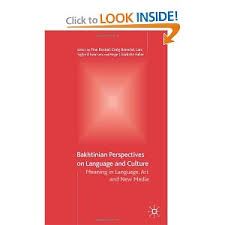
With that in mind, I have been poring through a multi-authored volume entitled Bakhtinian perspectives on language and culture: meaning in language, art, and new media edited by Bostad, Brandist, Evensen and Faber.  Note-taking, underlining, cross-referencing, formulating, and it has occurred to me that these texts are SO mesh-marked with mnemonic traces for me, that I should simply provide interested readers access to all I can link.  Setting out to locate a Pdf of the introduction and chapter 2: “Rhetoric, the Dialogical Principle and the Fantastic in Bakhtin’s Thought” I came across the entire collection available online – and so I offer it here.  If you begin, and the perspective captivates you – read on – to the chapters that carry concepts you are passionate about.  If not, never ye mind!  I am happy that texts like this can be available – not easily “stumbled upon” in contemporary bookstores and libraries (unfortunately).

To life:

Bakhtinian Perspectives


par example:  “Language is to be experienced as an interaction of signs neither neutral nor innocent: the word bears the burden of the contexts through which it has passed.  And every speaker or listener bears the consequences of signs put into circulation, of signs he perceives and answers, of signs he picks up and makes use of for his own ends.  One cannot stifle the traces stored in them.  One has to face the cultural experience a whole language underwent in its history.  Speaking this language and listening to it one unwittingly responds to this experience – the ‘word that lies on the border between one’s own and the other,’ the ‘word that is actually half someone else’s.’  The one meaning cannot maintain itself in the face of the many meanings.  B’s concept irritatingly links the atomizing intrusion of the many meanings into the one (an act that atomises this meaning) with the idea that meaning ‘explodes’ in the contact of two different meanings.  In other words: splitting up and differentiation, accumulation and trace must be thought of as occuring in the word simultaneously…Because meaning is always a recourse to another meaning and a project for creating new meaning, it doesn not achieve a decisive, definite presence.”

And so forth….!!!!