What exactly is it about the arbitrary changing of numbers, parceling of time, divisions and subdivisions of existent moments, that prompts and wriggles us to consider change – feel obligated or massaged toward it – dream of it? I can say that in all my dizzying thoughts about it – how society and culture (Petrie-dish like) inundate and stimulate individuated personal alterations – I cannot figure out why crossword-puzzle-like taxonomies and designations of life-fragments labeled by stick-systems of reference, mathematical calculations and so forth stimulate (simulate?) desires, wishes, regrets, metamorphic movements in the human gang…
Be that as it may, today is the first day of the first month of the year containing 0-1-2-3 (my wife comments what a delightful play that must be for numerologists), and while my beloved is out signing up at the Y and beginning self-care with new devotion, I am denuding my desk, dusting and polishing its surface, taking revised stock of the pounds of books that weight its surface, reorganizing, selecting, making hard choices about what is necessary for me TODAY with some forward thinking. The numbers have changed. The game must be different, no?
In the process, I open a drawer I apparently haven’t for a very long time, coming across a miniature moleskine notebook, first entry dated January 2003! A decade ago, how interesting! I leaf through…and here are some of the things that capture my attention:
a quote from my son Aidan (he would have been 5 at the time) on being unable to remember something: “it’s in my brain, I just can’t find the right aisle.”
and Steinbeck: “its inhabitants, as the man once said, ‘whore, pimps, gamblers and sons of bitches,’ by which he meant everybody. Had the man looked through another peephole he might have said ‘saints and angels and martyrs and holy men,’ and he would have meant the same thing.”
Cixous: “it is this hunger for flesh and for tears, our appetite for living, that, at the tip of forsaken fingers, makes a pencil grow.”
Handke: “in any case, I experienced moments of extreme speechlessness and needed to formulate them – the motive that has led men to write from time immemorial.”
“Books should not flatter our sense of self. They should investigate it. I read another person in order to get better at interrogating my own unexamined narrative” – Richard Powers
The last entry reads like this…”We used to always pick models or icons we wanted to be like: have what they had, whole persona and possessions – WHO would I want to be? … When does it hit you that you only want to be you with some other life?”
Wonder where I was…a kind of number-flipping query…
DONALD BARTHELME, WINNER OF THE 1972 CHILDREN’S LITERATURE AWARD
FOR THE SLIGHTLY IRREGULAR FIRE ENGINE
Writing for children, like talking to them, is full of mysteries. I have a child, a six-year-old, and I assure you that I approach her with a copy of Mr. Empson’s Seven Types of Ambiguity held firmly in my right hand. If I ask her which of two types of cereal she prefers for breakfast, I invariably find upon presenting the bowl that I have misread my instructions — that it was the other kind she wanted. In the same way it is quite conceivable to me that I may have written the wrong book — some other book was what was wanted. One does the best one can. I must point out that television has affected the situation enormously. My pictures don’t move. What’s wrong with them? I went into this with Michael di Capua, my editor at Farrar, Straus & Giroux, who incidentally improved the book out of all recognition, and he told me sadly that no, he couldn’t make the pictures move. I asked my child once what her mother was doing, at a particular moment, and she replied that mother was “watching a book.” The difficulty is to manage a book worth watching. The problem, as I say, is full of mysteries, but mysteries are not to be avoided. Rather they are a locus of hope, they enrich and complicate. That is why we have them. That is perhaps one of the reasons why we have children.
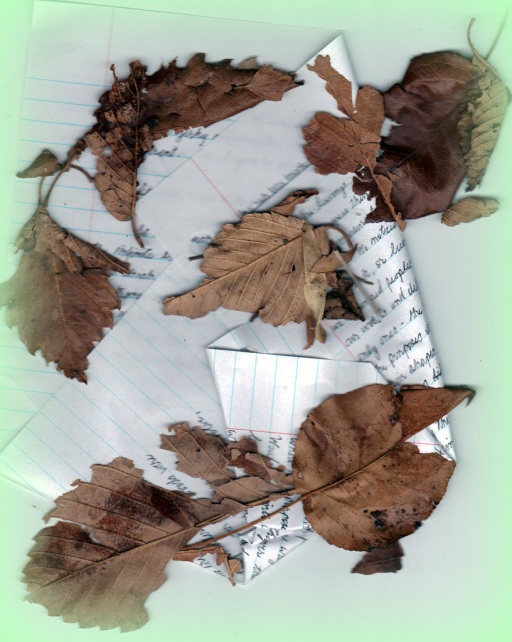
Here is page 4 of the Notebook from my daughter, which was a loose piece of notebook paper inserted into the stapled set. Here is what’s become of it thusfar:
Page 4
and the typewritten text
4
In Which Is Inserted a Loose Leaf
Becoming aware of the change. My little one, as we let (or made) our woods carry us far, we discovered beings everywhere – and all using woods. Having named our woods and defining ourselves by their usage – we had thought ourselves the only ones – the People of the Woods – and were surprised and astonished at the purposes others would put them to, at the sounds they were able to emit, at their shapes. Even the structures they built could seem odd, and their burning came from strange fires.
Everywhere we ventured we found the woods relating to life. Its giving and taking. Beings used them for weapons and tools, they used them for shelter and warmth. As our knowledge of woods grew enormous – the kinds and environments, uses and names – the Mysteries of the Trees began to grow.
In places they were pulped to a gum and let dry, then marked with a rock or hot iron. Other places they were chopped into boards and large planes and smeared with designs from animal blood. It came to seem the whole world was made of beings and woods, each defining themselves by particular use. Battles were waged over woods, clans and families splitting apart, even lovers argued over true uses of woods – what they purposed, how they worked, why they mattered, which ones, what was proper to do with your woods. Little one, woods came into conflict, everywhere. People fought over which woods were best, or which had more power or weight, which cores were pure and which garbage, what woods should serve for what.
We wanted our woods to do everything. To solve and evolve, to stand and retain. But our woods continued to change as we lived them. Some grew smooth and slipped from our hands. Some hardened like rock and got to heavy to carry. Some simply crumbled to dust. As their variety grew, so our experiences – we encountered moments when we could not find the woods that we needed. It distressed us and we cast about in clumsy silences and jerky motions. We grew hungry for new woods that were different. We began to play with the roots and the seeds, combining and grafting or trying new soils.
In times like these, there was speech of The Leavings, of infinite limits of life. The old among us would point out the woods where we no longer dwelt or visited, had let rot or decay, and would question our strange new graftings. The woods were always changing, dear child, there are always new things to learn.
It is time, then, to speak of these Leavings…draw near…it is our custom to address them in whispers and cold…
the Notebook as it is filled as of now, can be read here:
I am telling you a simple story. A simple story of simple things and full of details. I will be telling it the rest of my life.
Details.
detail – Anselm Kiefer
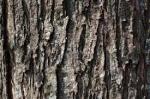
tree bark
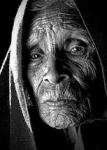
age and character
Take time.
It takes time to develop the details, these simple stories. Bear with me.
This year I stopped smoking. I began “vaping” e-cigarettes on Father’s Day, a reciprocal gift from my family, ostensibly FOR my family: my health – their comfort and security.
I had thought of my habit as an addiction and pleasure – it’s satisfactions including (but not limited to) the occupation of my body and sense so my mind might generate more freely – an item in the hand and oral fixative, the beautiful tedium of packing and rolling, the scents of tobaccos and sweet crackling of flame to thin paper, the distinctive clink of a Zippo. And there was the intake – that onrush of Other-air against the back of the throat, the lung’s recognition that breath is substantial – has meaning and purpose. A matter of routine, comfort, psychophysiology and control. Among other things. Fine insofar as it goes. Pieces of detail. Replacement sufficed.
Last week I contracted a version of the flu [please be patient – the process goes roughly as follows: details accumulate but require time to coalesce and organize toward a meaning – our lives as cabinets of curiosities]. Out of character for me – this was the real deal – an incapacitating sick. Associated with it was the scent and flavor, the electric verve of the nicotine-drop-oils that crackle and pop when my ecig works its vaporous magic. Compounding the problem (if illness is a “problem” per se – perhaps more appropriately “discomfort”) – my comfort no good to me.
In early October, due to an oversight in my timing (hang on – gather ingredients, let them simmer and stew, the feast is ahead), I depleted my store of these essential oils without backup, amidst a time of unusual stress. As a stop-gap measure and to avoid hurt or offense (a grouchiness and malaise isolating those around me) I purchased a package of “all-natural” tobacco cigarettes to get me by until my liquids were refilled. The cigarette had changed – no, it was I who now found it insufficient and distasteful – acrid and smelly – inconvenient and inferior to my system. So I squirreled them away – in case of emergency.
Emergency! (well, hardly, but still): slowly recovering from flu, sore and exhausted, wife away on a ten-day journey to faraway climes, two naughty puppies causing trouble, and tending and taxiing four active, hungry children, one of them herself quite ill – at day two without nicotine (happy pill / support / community / God / alcohol / touch / solitude / nature / music / food – whatever one’s personal representation/manifestation of “comfort” might be)…details…
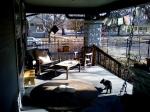
while my daughter lay napping, the others at school, in a moment of relative quiet…I ferreted out one of those “Natural American Cigarettes,” by now all dried up and crispy, months opened and old, and slipped out to the porch…
Voila!
Except not, really.
Not a sudden revelation – but an accumulation of details taking particular shape.
Not an enlightenment – but light swollen and fractured to specific degrees.
Not momentous insight – but a lens crafted and ground, melted and curved to a singular clarity.
Bic schicks. A flame. A crackle. I inhale. Nothing special to the taste, nothing tremendous for throat or lung. Just a smoky draft of air – as from the belchings of a campfire in the mountains, or a compound conflagration of a family reunion bonfire in the late of night (but it isn’t!) when the kids are down and the adults unwind (but I’m not)…
A detail I’d overlooked about smoking (amassed over more than two decades – stay with me now) was precisely that. Looking things over. Smoking drove me outside and it stopped me. For the length of a cancer stick’s burn in this anti-smoking campaign of a culture, I would be isolated from friends and family, house or home, commerce or eatery, and would be situated somewhere where all there was to do was look over and listen. My hands and mouth, neck and torso occupied – eyes and ears thus freed, for a few minutes, to simply wander and attend. Caught by details.
Like these:
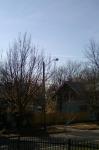
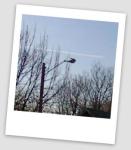
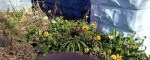
a Jetstream, held in a pale sky, contrasted by solid starkly swaying Winter branches, juxtaposed with the sturdy steel of a streetlight. And the dirtying yellow of late Autumn’s surprise bloomings held in some final tangled stubborn greens among deceasing leaves and grasses. Cracking boards, peeling paints and muted hues of dust in sunlight’s shadows – a vibrant puppy, warm and dark – our lives – amassing details – collating and collecting.
[Cigarettes are unnecessary for this] (a mere detail).
When my wife/partner/spouse/friend/coworking companion and lover is away, a part of me gets excited – when the children are busy with school or their moms – it portends to offer me a kind of working solitude – a something I’m forever whining about – idealizing, anticipating, “requiring,” in its absence. A chance to be temporally isolated with my brain, my body, and language – to think (ostensibly) without limit, read or write to my little heart’s content, to create or conspire with no active consciousnesses to account for but mine – no schedules to sync, no dinners to heed, the only limitations my own (and those sweet blasted puppies – a significant detail!), but still: abnormally free to dig and delve, explore and enjoinder, experiment and invoke reveries without feeling selfish…
but, the details, amassed in this way, exposed something quite different…
Jetstream, streetlamp, sky and tree. Angle of roof, discolored paint, fragmenting light – the nature of materials.
I’m at a loss for what to search or explore, discover, uncover…from what vantage point or perspective? Me? – in relation to – Me? Set out from an entire illusive fabrication? An emptiness without basis?
A point as a map is a nowhere unless there’s something surrounding. Unless there’s another point…somewhere. Me pushing through (the details profess) is a movement nowhere, without reference to something or someone outside, different, Other.
My wife is my primary referent (and “wife” is too small, as grand as it is). My person, my artist, my human. The being attached to me – not really mine at all, but for her purposings toward me. Our children, our puppies, our things. Habitat. “Econiche.” World. What I “relate” to equals me, enables me, crafts me into someONE, someWHERE, doing someTHINGS…which otherwise would NOT be…
Co-dependence? Inter-dependence? I like IN. IN-dependence – in depending, attaching, choosing and evaluating ourselves in our Others – we ARE.
Jetstream, streetlamp, color and line
background, foreground, texture, time
space and matter, energy, form
Details.
The details accrue and accrue, and with time…combine, reformulate, convene – which can feel new and curious and true, but simply go on gathering more, detailing to no end, as they relate, interact, recombine – can feel revelatory, enlightening, even profound – perhaps they all are – but they all are and ongoing…
amass and revise, amass and renew, accumulation and attention, awareness and incremental adjustments of relation…
Without Life in Relation (both the active reality, and the her that makes, with me, an us), I have little where or whom to set out from or toward
“Any work of art depends upon a complex series of interdependences”
“tear a mystery to tatters and you have tatters, not mystery”
“What is magical about the object is that it at once invites and resists interpretation. Its artistic worth is measurable by the degree to which it remains, after interpretation, vital – no interpretation or cardiopulminary push-pull can exhaust or empty it”
“The combinatory agility of words, the exponential generation of meaning once they’re allowed to go to bed together, allows the writer to surprise himself, makes art possible, reveals how much of Being we haven’t yet encountered.”
“Art is a true account of the activity of mind”
“The aim of meditating about the world is finally to change the world”
and so forth.
Please understand me, if you maintain a blog, take photos, love your children, think about your self or the world you live in, dialogue with books or pictures or animals or people or movements…
Came across this article…seems to jibe with many blog discussions/posts floating about out there just now…thought I’d like to share it. It’s a bit dated in places, but the overall concept seems worth your ruminations….
Introduction:
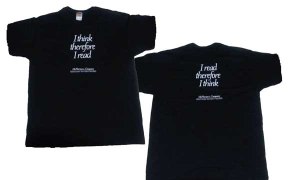
Why Books?
LIBRARIES 2000
Libraries 2000, a seminar to re-examine the function and future
development of libraries in Alberta, was held in 1983. A committee
consisting of representatives of Alberta Culture, the Alberta Library
Board, the Alberta Library Trustees Association, the Library Association
of Alberta and the Learning Resources Council of the Alberta
Teachers Association was set up to look into ways of following
up on the suggestions arising out of the seminar. This is the second
booklet commissioned as a result of these discussions.
Public libraries have long attempted to fulfil many functions and
roles in our society. As financial and human resources have become
harder to obtain, librarians and library trustees have had to give
more attention to examining these roles and assessing their relative
worth. In recent years, there has been increasing discussion of the
public library as an information provider, but less discussion of the
more traditional view of library service.
Sam Neill is a professor at the School of Library and Information
Science at the University of Western Ontario, London, Ontario.
This booklet is based on a speech delivered at the Ontario Library
Association Conference, Ottawa, 1984, entitled “The Role of a
Traditional Library in an Age Bludgeoned by Information.” The
opinions and ideas expressed are those of the author and do not
necessarily represent the view of Albe11a Culture, or the Alberta
Library Board. The assistance of the Alberta Library Board in editing
and printing this booklet is gratefully acknowledged .
dove-tailing ever-so-nicely with another book I stumbled across in the library (which also contains a fine consideration of David Foster Wallace in one of the chapters), and considers, I think, the same sorts of issues of humaneness and being alive meaninfully:
“I am someone who tries to write, who right now more and more seems to need to write, daily; and who hopes less that the products of that need are lucrative or even liked than simply received, read, seen…why I’m starting to think most people who somehow must write must write. The need to indite, inscribe – be its fulfillment exhilerating or palliative or, as is more usual, neither – springs from the doubly-bound panic felt by most persons who spend a lot of time up in their own personal heads. On one side – the side a philosopher’d call ‘radically skeptical’ or ‘solipsistic’ – there’s the feeling that one’s head is, in some sense, the whole world, when the imagination becomes not just a more congenial but a realer environment than the big Exterior of life on earth…The need to get words & voices not only out – outside the sixteen-inch diameter of bone that both births & imprisons them – but also down, trusting them neither to the insusbstantial country of the mind nor to the transient venue of cords & air & ear – a necessary affirmation of an outside, some Exterior one’s written record can not only communicate with but inhabit…the textual urge, the emotional urgency of text as both sign and thing. The other side of the prenominate 2-bind – … – is why people who write need to do so as a mode of communication. It’s what an abstractor like Laing calls ‘ontological insecurity’ – why we sign our stuff, impose it on friends, mail it out in brown manila trying to get it printed. “I EXIST” is the signal that throbs under most voluntary writing – & all good writing…
what must the world be like if language is even to be possible?”
“A way of connecting, on relatively safe middle ground, with another human being”
“that ‘neutral middle ground on which to make a deep connection with another human being’… was what fiction was for. ‘A way out of loneliness’…”
Jonathan Franzen, on David Foster Wallace
“If the novel were able ‘to give the reader, who like all of us is sort of marooned in her own skull, to give her imaginative access to other selves,’ it opens the potential that she might, as a result, feel ‘less alone inside’”
Kathleen Fitzpatrick, on David Foster Wallace
My son and I arguing about the nature of things – is there anything we can agree on? mutually believe? are we similar? – in what began as an attempt (on my part) to soothe obvious hurt and confusion (on his part). He kept pointing to (referencing) his mirror, his bedside table, in an effort at agreement, at a meeting-point that might be solid, be reliable, be “correct,” or “true.” Some relatively stable collection of roving and vibrating molecules we might sharingly recognize, might hold, attend, or unite around – together.
Throughout my life I’ve attempted to comprehend – to make a symbol for myself – what works of art, particular pieces of music, specific phrases or pages of literature, momentary glimpses of nature, dollops of emotional experience DO. How they work. Why they “feel” – move us, take an occasional effect we might call “profound.” Why, even if they shatter us, cause us to weep, provoke in us the enormous courage required to change, we also somehow still feel safe, often empowered, somewhere beyond “okay” (ecstatic? – out of ourselves?)?
Although often evoking experiences I’d describe as most completely, totalizingly personal, I always felt their effectiveness, their possibilities of success and individuated power, came precisely because they were not (personal). That what intimacy they provided – what outlet or spillage, what expression they represented or evinced – was contextually impersonal, through matter and energy uniquely organized, mediated.
In other words, we could throw all of ourselves into, at, toward or away from them (works of art, formal arrangements of world) without the danger or threat, anxiety or fear, of influence. We wouldn’t hurt, harm, embarrass, shame, offend or be misunderstood by a cornflower, a collective of strokes of paint, a recording of sound waves, moving molecules. No direct hits of miscommunication, misinterpretation. Perfect, variable, flexible presentations of world, of other, that we might release ourselves in relation to, without fear.
Existent things, moments, that genuinely represent otherness from ourselves but without direct exposure, without a being’s inquiry, possible scrutiny, judgment or evaluation. Interpretation. Many-sided, borrowed perhaps, but mediated via only one person – me. I could not fail, fall short, be inadequate to, or otherwise mess up a novel, poem, composition or film, and if I experienced myself as any of those things – it was my own judgment, assessment. Mediated.
After years of such exposure, why do I still choose sides, entrench myself in arguments of logic, when I mean to comfort, soften and heal? Alone, later, I sat and asked myself over and over – IF I have changed, grown, matured in any fashion in my 42 years of life, IF I have learned anything to the point of conscious belief, what might it be? – what might I say that I know?
I don’t know.
What I scribbled into the margin of my journal was simply that my fundamental belief about the world and life in it was that – at the core of things – “Everything is essentially messy.” By which I (at least partially) meant (intended) was incomplete, mobile and complex.
Nothing “fixed.” Staid, finished, whole.
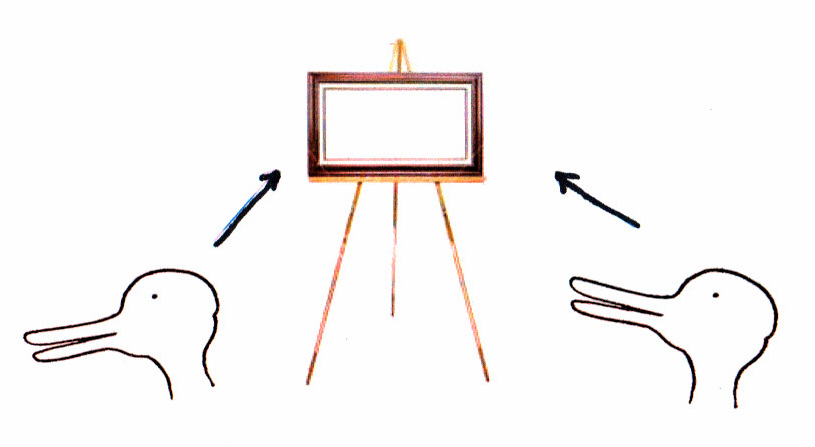
Throughout years of journaling, as I’ve grown to understand how deeply I desire “intimacy” (which I suppose I would describe as “shared personhood” or “met experience”? Co-events?) I have repeatedly diagramed what seems to me an only possible means between humans:
Using Wittgenstein’s duck-rabbits to represent whatever we happen to perceive ourselves as, and “Art” on an easel representing anything as a mediated format outside of our “selves” (themselves, I surmise, also likely a constructed medium for experiencing world), to or in which multiple human persons might invest all they experience themselves to be, without necessary personal organism-survival fears, and, possibly, perhaps, occasionally MEET via that medium in toto (or as nearly as possible): experience intimacy, mutuality. No longer isolated as a being, alone, but finding a common, a sharing-realm, co-perceiving, co-experiencing.
If it be so, that, in fact, as human organisms, all of our entity-type experience is, truly, mediated – through various organizations of mobile and voluble matter and energy – never identifiable as a stasis or final form, if we might begin to see it (us) as such – might we become able to experience direct, person-to-person (experientially) intimacy? Co-being? This is where I have turned effort (driven by desire) with my wife, my children. What if we became safe mediums for one another to experience through?
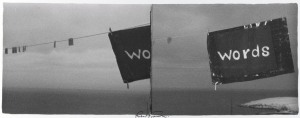

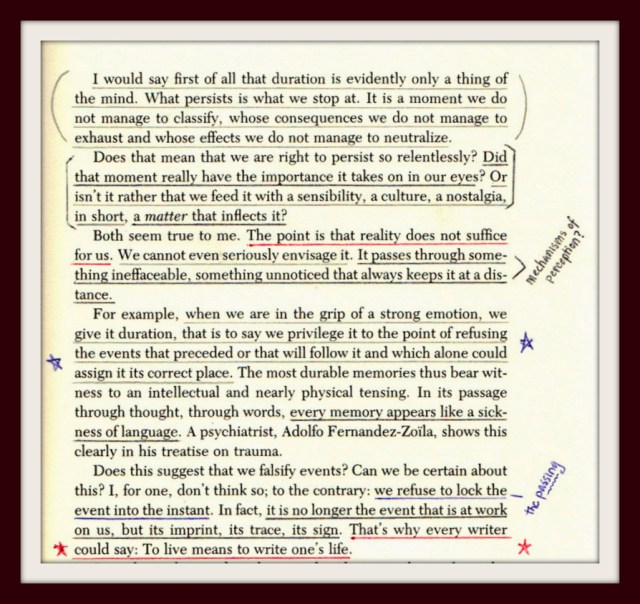


 All my Words are Silent