currently absorbing…
This slideshow requires JavaScript.

What I’m buried in this week or this moment
currently absorbing…
It is very difficult to know what the “right” memory might be. Everything is actually: how it felt, how it seemed, what happened, in fact ALL of it is WHAT HAPPENS, and continues changing with each instant.
So I’m stuck selecting, revising, innovating, adapting – re-membering – we call it. The continuous process of limitedly attending to our experiences from as many angles and aspects as we are made of, and assembling them according to each moment’s need, or, our felt need to make new senses of being ongoingly alive.
However, not “stuck,” but rather tremendously active, pulsing, vibrating, jittering and triggering – “flowing” it seems to some – adjusting, adapting, regulating, surviving – ever re-membering my present. WHAT HAPPENS.

“Emerson thought the mind’s nature was volcanic…A rock falls into the eye and becomes molten in the mind and memory cools it back into the rock first seen. It alters when it reemerges, but one cannot tell the difference. It looks the same but we are imagining it. Memory is igneous more than ingenious, igneous, and like granite, intrusive, heaved up within oneself, the whole range of one’s life, mountains’ forbidding height looming over the plains where one lives, mountains formed by the life already lived, but toward which one is always walking, one’s own past ahead of him, seeking the improbable path already forged, this path back through oneself, this path we call the present tense shifts and the path is lost, path from which the walker emerges only to turn around and see the peaks pulled up by his feet, and the snowy pass, and alpine heights, where those stranded sometime must feed on themselves to survive, where sometimes, through the icy crust, the crocus blooms.”
– Dan Beachy-Quick-

Grief.
I suspect this is an emotion with which we are all familiar. It connects to longing and sorrow like Siamese siblings sharing bodies.
Evidently I am able to conjure it at a moment’s notice, on a whim.
How we initiate suffering. Designate and signify it.
While what we have collectively learned about our world, its fluidity of matter and energy, its processes – subatomic to galaxian – would seem to infer that
Metabolizing Change
“Grief,” “longing,” “sorrow” and the like seem often to highlight where triggered survival mechanisms (boundaries, maintenance of balance or stability, and bias toward perceiving dangers or threats) ratchet and crackle, kink and stumble in the flow of change.
I would like to open to the inferences. Soothe and calm survival mechanisms, more effectively metabolize connectivities and change. Participate in life’s process from smaller and larger perspectives of mechanics and meaning, measures and movements.
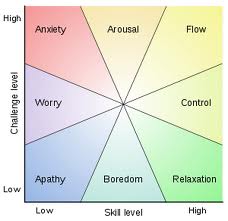
ideas stimulated by Rick Hanson, in – 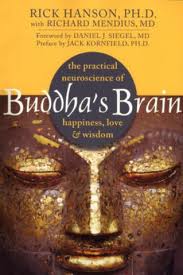
“Nothing’s like anything else in the long run.
Nothing you write down is ever as true as you think it was.”
-Charles Wright, “Lost Souls”-
Rememory is just a thing we do when we “need” it – or, for reasons that aren’t really rational at all – we seem to feel we do. In other words, our experience (what our organism, our little assemblage of cells, lives through) works in us like nutrients that our neuronally connected organs (even smaller collectives of cellular functional troupes) select predictively – as probable perhapses – to aid our survival in each moment.
That it’s always subject to change, often flatly incoherent, or dreadfully inappropriate to any given situation proffers no guilt or dishonor – could we really expect accurate predictions of unforeseen and total novelty with infinite contingencies each next moment is?
We do the best with what we have. After all, we’re not even able to use our tools intentionally – they work on automatic algorithms we are not aware of unless there is a problem. Scientists might use machines and fabricated contraptions or instruments to measure and calculate “experiences/experiments” – something semi-controlled, devised and arranged in a lab. We, on the other hand (scientists included), do not have access to our controls (of which there really aren’t any – just meticulously interconnected and recursively interactive meshworks) – our controls (or rather, effects) result in their humming along.
Ah, rememory, refraction – there whenever we need it (or think/feel we do, or hadn’t even sensed it) – and never to the point but that we make it so – experiencing piecemeal fragments the system spits out in relation to itself and its environment, and puzzling them together as if encountered in the world – using them like stencils or frames through which to assess our surrounds.
What a tricky treat! Phantasms of deconstructed digestions floating a stream, plucked willy-nilly by impulsory triggers and collaged onto a canvas called Perception. Howdy-do! When 80% of the show is our relation to ourselves, it’s no wonder we feel criticized! (for a sensory example – here’s a breakdown of what influences what we see….):
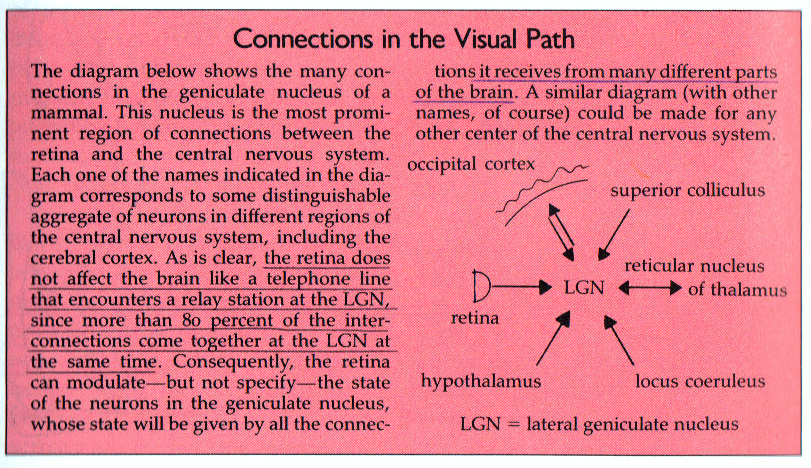
– from Maturana and Varela, The Tree of Knowledge
Each of us with our 80/20 view on the realms between – the worlds we share – it’s no wonder we’re ill at ease arguing agreements. I’d have to ask my sons to calculate the potentials, but even from my 80+20 it’s infinitesimal – our shot at “sharing a moment” as we say.
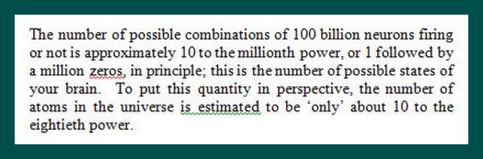
-from Rick Hanson, Buddha’s Brain–
Perhaps to some Turing machine, or deep-distance galaxy view we’d look like a calibrated system, but the contingencies and unknown variables all changing with each changing change surpass even the weather…
So go on rememoring and adapting your stories, just keep in mind the bric-a-brac you’re rummaging in and it’s exponentially altering situation and experiencing states (by the millisecond), and consider offering those with and around you something in the neighborhood of 80% benefit of your doubt (your self-generated POV)!?
“I give you mine [dreams] for the same reason,
To summon the spirits up and set the body to music.”
-Charles Wright, Lost Souls-
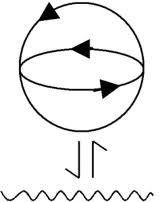
I learned today that I am an “operationally closed system.”
Essentially – a living multicellular organism with no “inside” or “outside” (as far as that system or the environment is concerned) – a set of dynamically and reciprocally interconnected cells with remarkably complex, diverse, and plastic (transformable, adaptable) abilities interacting continually to fluctuations, pressures (or lack thereof), movements (perturbations) of a molecular milieu. That what you interpret (are “perturbed” by) as my “behavior” (you observers, you) is “a view of the dance of my internal relations” – part of “the dynamics of interactions of this organism in its environment” (and vice-versa).
Each of us, adapting, CONSTANTLY, “modified by every experience” in our efforts to maintain “effective correlation, compatibility” between our “selves” (organismic structural possibilities) and our environment (that which we are structurally coupled to…momentarily). Always effecting, always effected by. A thoroughfare of thorough-going perturbations/ transformations…i.e., ALIVE.
I’m sorry if “I” offend and/or disturb (as I am bound to) in my attempts and efforts to maintain compatibility (to SURVIVE!) with/IN my environment – I realize that every action, vibration, movement I express or perform = a perturbance for you, which will (sometimes) resonate, but unfailingly structurally couple us, if we are to live-on… yes, I’m talking to you – squirrel, leaf, fly, spouse, air particle, plant, piano, atmosphere… Down to our electrons and quarks we effect. And that effect is on entire systems, without observable (or measurable) end.
In other words – respons-ability.
This began to dawn on me as I was considering (perhaps unwarranted) my hopes, desires, expectations. As realities (perceived/ interpreted) perturbed these (my situational, contextual constraints and affordances)…I “thought/felt” (who knows which – synapses) that many of my most (felt/thought) agitating (interpreted) perturbances (transformations) are ANTICIPATED more than encountered/lived-through. In other words – I’m experiencing my anticipations – my internal dynamics – as perturbations – NOT my organisms’ “environment.”
In other words – my “operationally closed system” anticipates change as potential threat or danger – when actually I would (most likely) – am operationally equipped to – maintain my structural inter-relations compatibly with the ongoing interactivities / relations of my environment.
Our kind of being is fantastically diverse and adaptable (with unimaginable flexibility and complexity) to vast fluctuations / perturbations / transformations – we are plastic to our cells. It takes a LOT to “disintegrate” us, in our “ongoing structural drift” (that which transforms and develops and differentiates us moment-to-moment as the organism we are).
Our cellular behavior: a sensory surface, a motor surface and a system of coordination dynamically related in never-ending change (until disintegration). And ALL in co-relation. No movement, sensation, quiver, thought, emotion, pulse or charge that is not CO-RELATION with activities and molecules making up our “milieu” (the middle, the surround – BOTH/AND).
The swirling circle is me with my organismic operational closure always moving and changing in relation to its components – equally effecting and effected by – you / air / “matter” / “energy” (the wavy line) as reciprocal “perturbations.”
it’s complicated…
sensational…
ecstatic…
Reality (for the likes of moi): “I” might be much more “naturally” compatible with an enormous diversity of environments and situations (others) than I internally coordinate myself to be (at least biologically, operationally, cognitively speaking). Ahem. Alas. My organismic systemic co-relations often get the best of me.
apologies nearest and dearest…
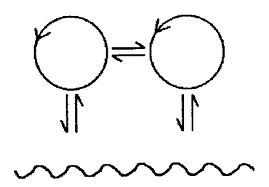 diagrams and conceptual perturbations compliments of:



“Every reading act is an event, or a transaction involving a particular reader and a particular pattern of signs, a text, and occurring at a particular time in a particular context…the reader and the text are two aspects of a total dynamic situation”

(click to read full article)
“Writing is always an event in time, occurring at a particular moment in the writer’s biography, in particular circumstances, under particular external as well as internal pressures…the writer is always transacting with a personal, social and cultural environment”
-Louise Rosenblatt

“the more than us in us that is at that moment irreducible to meaning or satisfaction”
“our repeated baffling by the trauma of a Real”
-Peter Schwenger-
“the ordinary is not ordinary; it is extra-ordinary, uncanny”
(read online for free!)
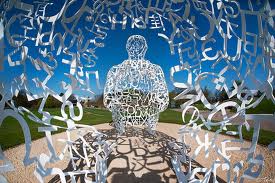
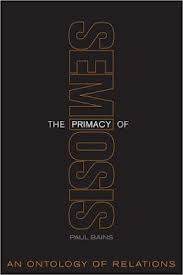
“What hope do I have of attaining the thing that I push away?
My hope lies in the materiality of language, in the fact that words are things too…A name ceases to be the ephemeral passing of nonexistence and becomes a concrete ball, a solid mass of existence; language, abandoning the sense, the meaning which was all it wanted to be, tries to become senseless”
-Paul Bains-
Student Magazine of IISER Mohali
Music, Musicology, and related Matters
a photographic pilgrimage to Orthodox Christian monasteries across the continent
Meandering Through a Literary Life
Orthodox Christianity, Culture and Religion, Making the Journey of Faith
Erik Kwakkel blogging about medieval manuscripts
"That's the big what happened."
Networking the complexity community since 1999

 All my Words are Silent