“In our day-to-day use of the English language we possess a perfect record of the language’s evolution; when we hear ourselves speak we listen to the voices of all those many millions who have come before us, who have, in their own use of the language, constructed ours, as we continue to construct it.
Whether or not we’re able to decipher this record is another matter altogether.”
Instigating a “family-tree” of sorts betwixt what I will call thinkers of relational ontology, I am providing another text to explore – this one from Erin Manning – the introduction from her book Relationscapes: Movement, Art, Philosophy.
You can see the heritage (or ontogeny) is vast – to trace it more completely investigate The Four Ages of Understanding by John Deely, A Thousand Plateausby Gilles Deleuze and Felix Guattari, or The Primacy of Semiosisby Paul Bains (among others). Bakhtin, Whitehead, William James, Nietzsche and others give testimony to this sense of the entanglement and fluidity of being, the emergence and always co- or inter- of existing. The “relational nexus of experience,” as Manning has it here. The incipient potential of each pre-moment and then following “instant,” the elasticity of the almost, the threshold ALWAYS of expression-in-the-making and all of its co-constituents from throughout time and space and anything else we have segregated arbitrarily. Without further ado – What Moves as a Body Returns as a Movement of Thought, Events of Relation – Concepts in the Makingby Erin Manning:
feel free to click image or title to read – (it’s a much shorter text than the last) – but no less engaging, creative, and provocative…
I have been fascinated by and greatly enjoying the discussions and promulgations of some very astute bloggers considerations of the possibilities of and potential candidates for a “Theory of Everything.” See, for prime examples, the tremendous thought-work of MultiSense Realism and Anacephalaeosis. Hoping to further conversation, I humbly post a couple of intriguing considerations of TOEs by two others of my thinking-hero-eschelon… and hope for responses from those above-mentioned and anyone else with thoughts on the matter (or process, as it may be)…!
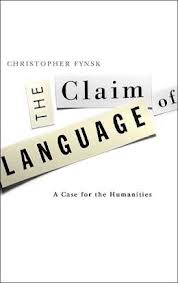
“Here, I will observe simply that fundamental research (in the humanities) diverges from much theory in that it is always seeking the limits of its language in responding to that to which it seeks to answer: those dimensions of experience and symbolic expression that summon it (as a kind of exigency for thought) and to which no concept will ever be quite adequate. Such research is impelled by its own neediness and its sense of being answerable, whereas theory, governed by the concept, proceeds with ever-expanding appropriations; fundamental research proceeds from encounter (always from a sense that something has happened to which it must answer), and it seeks encounter. In theory, there are no encounters.”
I’ve recently acquired (via Inter-Library Loan! Woo-hoo!!!) a collection of writings exhibited below:
Vital Beauty: Reclaiming Aesthetics in the Tangle of Technology and Nature
which opens with an essay by anthropologist Tim Ingold who starts it off with a remarkable movement through slugs and storms, lines-earth-eather, Kandinsky, Klee, Merleau-Ponty, and others – investigating them through a concept of “meshwork.”
“By this I mean an entanglement of interwoven lines. These lines may loop or twist around one another or weave in and out. Crucially, however, they do not connect. This is what distinguishes the meshwork from the network. The lines of the network are connectors, each given as the relation between two points, independently and in advance of any movement from one toward the other…the lines of a meshwork, by contrast, are of movement or growth. They are temporal ‘lines of becoming’…Life is a proliferation of loose ends. It can only be carried on in a world that is not fully joined up. Thus the very continuity of life – its sustainability, in current jargon – depends on the fact that nothing ever quite fits..”
-Tim Ingold, “Lines and the Eather”-
Journeying on from there through Deleuze and Guattari, mood and weather, meteorology and aesthetics he arrives at a conception of flesh as both meshwork (exhalation) and atmosphere (inhalation) – a whole-being experience of relation enabling and realizing animate life….
I’ve now been browsing numerous writings by Ingold, fascinated by the semiotic/anthropologico/ontological /scientific meshwork his production encompasses… Thankfully, he makes much of his work available full and free to us… if you’re interested – I risk the promise it will be worth your while…
Greetings all – thanks to the continuous hard work of Lisa Thatcher et. al., the experimental literary-aesthetic new magazine Henry is live! I’m excited about this project, not only because Thatcher’s own work and interests are so astute and lively, but the principle of the thing and the open energy of the legacy of Henry Miller. I invite you all to check it out (helps if you are able to read French), and you will also find a piece of creative writing by myself within. Thanks Lisa & co., thanks Henry for verve and example, thanks writers and readers – it manifests!
In considering progress. In thinking reflexively. In pondering what humans are as well as what we are able to produce. Gilbert Simondon, like Gilles Deleuze and Felix Guattari, John Deely, Mikhail Bakhtin, Paul Thibault and many other profound scientists and thinkers, continually examine “human progress” within a conceived totality of systems. This enables us to reflect, question and surmise. To be conscious. To conceive. The following article, only recently published, provides I think an intriguing overview of such networked and systemic thinking…




 All my Words are Silent