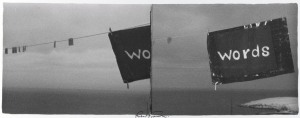
In the Sea above the Sea: transitory reflections from above the Atlantic

P5151753-001

Look at things, see them exposed

in their metaphysical innocence

unsure of their existence.

When do paintings shrug off

the painter, when will this same material

become a new idea?  The evening mist crept over

the lawn, drowning the avenue, the fountain,

the house.

.

Music, the splash of oars.

Someone turns on the light, someone

doesn’t believe in dusk.

The unanswerable question drifts

past the window.

-Cees Nooteboom, Cauda
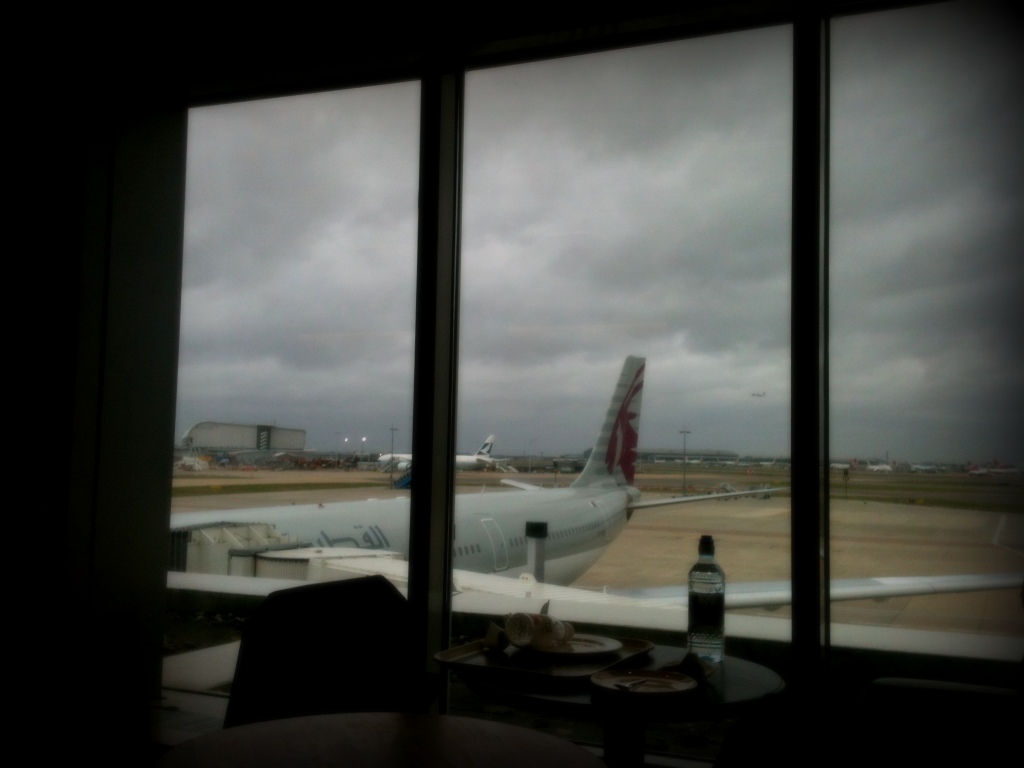
Heathrow Airport

As I make my way back over the Atlantic from the nominally United Kingdom to the (equally nominally) United States, I am considering what things most prominently infected me.  Partly “I think I wanted to get lost to see what happens next” (Deborah Levy, Things I Don’t Want to Know) and partly I wanted to know what to do – my coursework and library visitations – to anchor my lostness while providing anonymity and foreignness in which to search for peace and move through grief.

 nobody

More and more the invisible was named,

the blind man grew mightier.

How he wandered and called out to his echo!

.

which called back with the screech of gulls.

He is still searching among flags and vistas

for that same statue.

.

Sounds blow to the far side of the river.

Nobody is standing there.

.

Nothing takes shape.  Newspapers melt,

photos fade.  The stone is made of wax,

the notebook of ash, time takes itself

and repeats the appearance

.

until his life becomes a mirror

in which he disappears and appears,

but nobody looks at himself,

because nobody can see himself.

-Cees Nooteboom

IMG_0280my “self” photographed in front of Gerhard Richter’s “painting” Grey Mirror

-Tate Modern, London-

I noted how clear the signage.  Clear and direct with no soft-pedaling of consequences stated.   Mind the gap, way out        (and way in), “moving through these doors may result in death or injury” (on the Underground), smoking kills.  The ubiquity of concern for mental health – that Bibliotherapy is not just a bookseller’s or librarians metaphor of expertise – but is in fact a prescriptive cure – scripts are written by doctors for BOOKS! (hundreds a week, one library reported).  Along the same culture-historic lines, perhaps influenced by the longevity and prevalence of hundreds to thousands year-old architecture and artefacts, traditions, and tangible evidence of time and identities – the apparent insistence on QUALITY – of life, of drink, of service – of literature and art and purposes.  So while everything costs about twice as much as the USA, the options often doubled the quality.  A local pub on every corner, small grocers, fresh markets – in the miles I walked I only spotted a handful of McDonald’s, Krispy Kremes or other international chains (and only in heavily touristed areas) – aside from Starbucks.  I saw 3 gas stations.

And the bookstores!!!  Sometimes 3 or 4 in a block, flush to the gills – but hardly a bestseller, a romance, or fluff!  Amazing – perhaps the most profound difference between the USA and UK that I noticed: their stores FEATURED literary quality, and only sometimes provided mass appeal items that could be had anywhere online – in many stores 80% of the stock I encountered did not have an eBook format – the books were books meant to be books in the purpose of books – to be engaged with the body and mind and retained and gone back to – like the architecture, museums and galleries – not disposable pleasures – but necessary cultural artifacts made from the human condition and accessed repeatedly for its benefit.

Of course there are the “places”: Trafalgar Square and the National Gallery, the British Library and British Museum, the Tate, Houses of Parliament, Westminster Abbey, St. Paul’s Cathedral, Buckingham Palace, Shakespeare’s Globe, the Tower of London and on and on…walking over 15 miles a day, finding “oldest churches” in every nook and alley, colleges and universities every other block, London is a place swamped with culture and continuity, the high and the low, and great gaps to mind in between.

So with those great anchors securing me, I tried to see myself.  In the reflections of great art and architecture, thousands of years of history and culture, thousands of languages in cosmopolitan streets, thousands of unknown faces and voices, habits and practices and sayings…my “life became a mirror in which he disappears and appears,” but, of course, “nobody looks at himself, because nobody can see himself.”

What did I see?  Well by looking through others that I could see, I found “I wasn’t sure my skeletal system had found a way of walking freely in the Societal System” and the need “to find a language that is in part to do with learning how to become a subject rather than a delusion, and in part to do with unknotting the ways in which I have been put together by the Societal System in the first place” including the “many delusions of my own”…”it’s exhausting to learn how to become a subject – it’s hard enough learning how to become a writer” (Deborah Levy).

And I thought of how, like the forest and the trees – it often seems we are unable to see reality for our experiences.  So many of us semi-automatically equate our experience with reality – rather than note how small our perceptual bubble really is.  Just try using the “Powers of 10” idea – start anywhere – with your pain, your fingernail, your happiness.  Now imagine IN a power of 10 – you’re into the cells, into one strand of what’s causing you pain, into a moment eliciting joy.  10x more and you’ve gone beyond atoms and quarks – matter and energy ill-defined and inexplicable and ALWAYS dynamic.  Imagine OUT a power of 10 – you’re viewing a street full of private perceptual experiences very different from your own – and trees and birds and squirrels and buildings.  X 10 and you see miles and miles of earth – filled up with all kinds of creatures and systems, connectors and wonders and weathers and mountains and rivers – x 10! and you’re out in the galaxy of planets much larger than our own, stars much bigger than our sun, and still more galaxies to go…

Either way you go there is gargantuan forest – and our experience, our body – barely a branch…yet we evaluate so often from that individual outlook – incredibly distorting bubble of lens – with a minimal scope – not engaging the forest, absorbing the forest, wandering and listening and looking and opening – so that “the unanswerable question drifts by” and “unsure of its existence” can “become a new idea…” the beginnings of subject-ivity – a particle in relation from within and without – from mattering energy to butterflied effects…an individual instancing of human.

Be mindful.  Be curious.  Be patient.  Don’t know, and enjoy your hands.  Be generous, take refuge, find strength.  Be grateful, keep going, be glad.  Respond, don’t react.  Slow down and forgive.  Let go, accept limits, and do what you can.  Take in the good, relax, have compassion.  Feel safer, fill holes, and love.

-all chapter titles from Rick Hanson’s just one thing

It’s okay.  Be human – the extremely hard, most natural thing.

cheers!

an added and unexpected catharsis – on the night I tried British telly due to trouble falling asleep – Synechdoche, NY – a remarkable example of how complex and generative our perceptive bubble can be…and yet how barrier’d from the world outside of that bubble…forests and trees / reality and personal experiences – beautiful drops in the sea… (and perhaps my favorite movie to date)..

February 23, 2014
“telling a story means tracing your finger through the ashes left by the fires of experience” – alvaro enrigue

I love drawing from the world – almost anything, almost everything – ingesting, sensing, feeling, digesting (transforming, processing) into me to pass it on again.

I love the encounter of humans – frightening, fragile things – the desire and revulsion our fullness brings.

Hope.  Dread.

I hope to be loved and wanted.

I dread the opposite.

As if it were about me.

As if there were a thousand suns

And we were one of them


Time doesn’t work that way.

It’s been called an arrow

but it’s likely not –

likely wrinkled, warped and bent –

just like us

giving life to it.

Love is like this.

Like our memories.


I remember clearly what is incorrect –

if anything’s erected so.

I doubt it,

along with me and you and everything else…


just enough to believe.

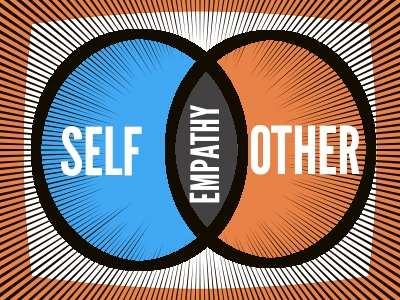
Empathy…Intersubjectivity…efforts…

empathy

Empathy: A Way, but not My Way

O.E.D. – Empathy / einfuhlung

  • “The power of projecting one’s personality into (and so fully comprehending) the object of contemplation”
  • “to feel oneself into it”
  • “the feeling-out of other minds”
  • “a form of imaginative identification of self with non-self, a feeling-into”


Feeling out, feeling into, projecting one’s experience in order to absorb the experience of another.  “In and out of one another’s bodies” (Maurice Bloch), “intersubjectivity” (Daniel Stern).

Notebooks full of conjuring, I’ve dreamt and striven to elucidate or embody, to caress and coerce language to convey or carry-like-a-message the interpersonal convergence, experiential agreement we might be signifying with the syntax and semantics of empathy.

There were moments, instants, it seemed evident, nearly obvious – as when a child ran itself across a brittle late-summer yard, lodging a prickled sticker in the pad of its heel, and hearing its friend following close behind, sensing its similar fate…a kind of “predictive apprehension” become co-mprehension as experience is multiplied, at least observably shared – at least sympathy – a feeling-with, if not –out; and –into.

Two humans losing their loved ones, or spouses enduring the same tragedy?

Experience-learning applied to replicated or duplicated occasions.  Similar, perhaps, sympathic.

But “fully comprehending” journeys beyond this.

Apparently, empathy happens when one extends emotion beyond the individual body and absorbs, joins, or feels-into another – a verge of meeting, movement,

beyond into between, meshing as a sunset goes about forming itself, or the creation of fog – something like con-gene-ial requirements.  Some of us, hell, all of us (and more) share genes, so this must be possible (we have a word for it after all!).

Our forms, our reach, must be flexible.  We share-with, finally, down to our atoms out through our environment, galaxy, and beyond.

EXTENDED – EMBODIED – EMBEDDED

-components of empathy-


…a coordination of coordinations of actions…

(Humberto Maturana / Francisco Varela)


            Perhaps empathy, a possibility of intersubjectivity, occurs when subjects extend awareness through a mutual orientation into a consensual domain…each feeling-out the other by feeling-into a shared sensual arena, learned by experience and therefore anticipated predictively…in rare occasions of empathy…simultaneously!?

In other words, based out of our shared genetic realities, generated by the kinds of experiences and “worlds” our species can have, we feel-out of our heartbreak, grief, joy, ecstasy, fear – emotive and sensual experiences – into con-sensual co-ordinated domains of those experiences occurring in some liminal, marginal space verging each; similarly to the way a coastline clearly separates and thoroughly connects sea and land, while both continue going on underneath one another.

Perhaps.  But I was not seeking to describe, explain, or indicate empathy in language, my desire was to enact it, evoke it…and in that I have failed…ever to try again.

Art of the Occurrence of Meaning


Interconnection

Art of the Occurrence of Meaning


    I consider that I work strenuously to come to terms with (understand, be aware or conscious of, perceive and interpret) what it is I value, care about, intend, hope or purpose. 

            I am prodoundly interested in what is often referred to as “theory of mind” (TOM) – “that which hovers somewhere on the boundary between the explicit and the implicit, the conscious and the subconscious, the objective and subjective” – Maurice Bloch.  And semiosis – what I understand to be the process and activity of utilizing available resources, situations, internal and external sensations to construct moments of meaning (“worlding” you could call it – co-here-ing in an embedded context).  The seamless combination of culture/person-ality, internal/external, embodied/extended, conscious/subconscious – or selective/regulative – processes that occur in real-life human experiences. 


            Perhaps this is “Anthropology” as Maurice Bloch would have it: 


“Anthropology, at least as I conceive it, presents the immense merit of uniting knowledge about human beings – that is constructed from the top down, by general theory, which in the case of cognitive psychology is supported by rigorous and controlled experiments – with knowledge of particular men and women that is constructed from the bottom up, based on the observation of people as they live their lives” 


some commensurate multi-disciplinary examination of human life.  I hear myself saying to myself… 


[ASIDE: from high school through college when I envisioned being a great poet, I always wanted to be what I termed the “Master of Grey” – one able to plumb and express the indeterminate and indistinct – those liminal mixed and ambiguous realities of experience – exemplified by rain or fog or shadow – the betweens, the margins, the shades…] 


       Anyway, I hear myself saying to myself when I listen to myself speaking to myself (so very many variations of selves), that as much as I am fascinated and intrigued by the processes of the world (geological, biological, neurological, sociological and so forth) and the apparatuses and hows of human meaning-making (electro-neuro-biological, socio-cultural, etc…), I am yet more interested in the occurrences of human  meaning experiences. 


            The “occurrence of meaning” seems to me the experience of all those elements and processes indiscretely conjoined and con-fused – wholes of which parts can’t be specified – signifieds/signifiers/significants indiscriminate: our PRESENT. 


            This is where art arises for me.  Art and action, for art is action.  Art seems to me – or processes of human making – an attempt at conjoining/confusing/commingling and co-relating of the many modes and motions, nodes and notions, processes and practices, influences confluencing the convergences we term experience. 


            Artistic acts are those where subject/object, conscious/subconscious, selective/regulative, internal/external, intentional/accidental distinctions in human processes do not apply – and these convergences, these realities of human living are sometimes actualized or embodied/externalized.  Perhaps, in my way of thinking. 


            Modalities and genres, fields and spheres, behaviors, cognition and domains – social and personal intertwingled, the perceived and imperceptible carrying on simultaneously – CONverged – and that verge – that edge, rim, margin of activity – that liminal, boundary-zone open border-space is the essential – 


            a human way of mediately presenting occurrences of meaning, in their variety and multiplicity.  Perhaps. 


Or so I am thinking. 


Answerability in the body of the world. 


The meaning event seen in its total matrix.


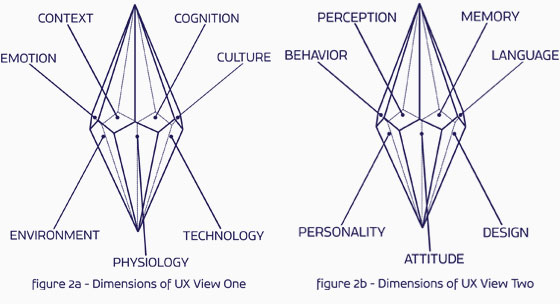
dimensions of experience Interconnection


thanks to UX/dimensions for image and dimension labelings

Remembering What Happens

It is very difficult to know what the “right” memory might be.  Everything is actually:  how it felt, how it seemed, what happened, in fact ALL of it is WHAT HAPPENS, and continues changing with each instant.

So I’m stuck selecting, revising, innovating, adapting – re-membering – we call it.  The continuous process of limitedly attending to our experiences from as many angles and aspects as we are made of, and assembling them according to each moment’s need, or, our felt need to make new senses of being ongoingly alive.

However, not “stuck,” but rather tremendously active, pulsing, vibrating, jittering and triggering – “flowing” it seems to some – adjusting, adapting, regulating, surviving – ever re-membering my present.  WHAT HAPPENS.

beachy-quick

“Emerson thought the mind’s nature was volcanic…A rock falls into the eye and becomes molten in the mind and memory cools it back into the rock first seen.  It alters when it reemerges, but one cannot tell the difference.  It looks the same but we are imagining it.  Memory is igneous more than ingenious, igneous, and like granite, intrusive, heaved up within oneself, the whole range of one’s life, mountains’ forbidding height looming over the plains where one lives, mountains formed by the life already lived, but toward which one is always walking, one’s own past ahead of him, seeking the improbable path already forged, this path back through oneself, this path we call the present tense shifts and the path is lost, path from which the walker emerges only to turn around and see the peaks pulled up by his feet, and the snowy pass, and alpine heights, where those stranded sometime must feed on themselves to survive, where sometimes, through the icy crust, the crocus blooms.”

– Dan Beachy-Quick-

Immunity (Writing from Everywhere)

perhaps you will be able to play this WHILE you read the linked entry below (as it was written)

Immunity (Writings from Everywhere)

Mechanics and Meaning

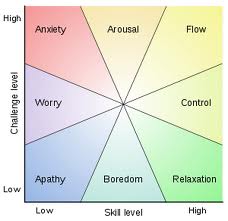
Flow2

Grief.

I suspect this is an emotion with which we are all familiar.  It connects to longing and sorrow like Siamese siblings sharing bodies.

Evidently I am able to conjure it at a moment’s notice, on a whim.

How we initiate suffering.  Designate and signify it.

  • Creating separations and distinctions in order to perceive
  • Attempting to maintain stability, regularity, balance and order
  • Envisioning opportunities and instinctively avoiding threats (real or imagined)

While what we have collectively learned about our world, its fluidity of matter and energy, its processes – subatomic to galaxian – would seem to infer that

  • Everything is connected
  • Everything keeps changing
  • Opportunities routinely lose their luster or remain unfulfilled and most true threats are inescapable (aging, death, loss, etc.)

Metabolizing Change

“Grief,” “longing,” “sorrow” and the like seem often to highlight where triggered survival mechanisms (boundaries, maintenance of balance or stability, and bias toward perceiving dangers or threats) ratchet and crackle, kink and stumble in the flow of change.

I would like to open to the inferences.  Soothe and calm survival mechanisms, more effectively metabolize connectivities and change.  Participate in life’s process from smaller and larger perspectives of mechanics and meaning, measures and movements.

Flow

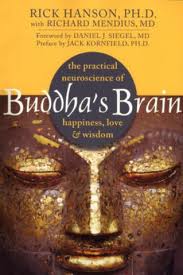
ideas stimulated by Rick Hanson, in – Hanson - Buddha's Brain

2014

To all we hope will come…

and all we do not know…

language

“Language is always focaled…

…it must be so since a word is a gigantic system of situation-changes

and other words”

-Eugene Gendlin-

A Division of Subjects

Simple HouseI am looking at my wife’s face for significance.  Scrutinizing her as if MY meaning might come from there.  The eyes and motion of my children, our puppies, the touching between them.  I gaze, ravenously, melancholy, nostalgically, as if some sort of synching provided reason.

Observing, begging input for desired effect.

Words on a page in front of me.  The sounds of the heat switching on and swishing (or swooshing) through an anatomy of ducts.  Rememory.  Fashioning bodied memories forward toward anticipated satisfaction of imagined desires.

Re-membering an already unknown future.  As if to place it onto a pleasure/pain balance and put myself at risk for emotion.  As if I am wanting to feel.  Pleasure OR pain, satiation OR loss, grief or elation.  Simply.  To feel.  And to be able to tell.  To evaluate, process and produce.  Perceive, procure and proceed.

Attend, assemble and assess.  All componented in threes, a perspectival point of either/ors.

In other words – seeking options of experience through this-or-that, barely realizing the gargantuan disturbance of the field in which bi-polars conjoin – the third, the invested participant – “observer.”

I search her eyes – peering her into double bind by my own delimitations.  Reflecting the kids play and laughter – deflecting – by framing-problems that lens my limited views of want and need.

Ravenous, melancholy, natural look of desire for pleasure and dread of pain – dualizing a multi-more intricate kaleidoscope of possible probables.

The implicit intricacies + the avoidance and/or discounting of “one’s own role” (the responsibility, culpability, of our ever-presentness we ever effort to escape) – being participatory.  Being.

And what of the lens?  If I expand the prism, rotate the glass – distort, blur, focus.  How expansive, elastic, extensive are my tools?  How effectual the how I look, the what I look for, the why?

I continue examining her face, and his and his, and his and hers.  Listen for their sounds, their movements, borrowing moods from the connections I make, perceive, feel…asking now to fill out my arrival…more aware of many roles that depend on distant stories…now arising…participant…into now

as it happens, it occurs…

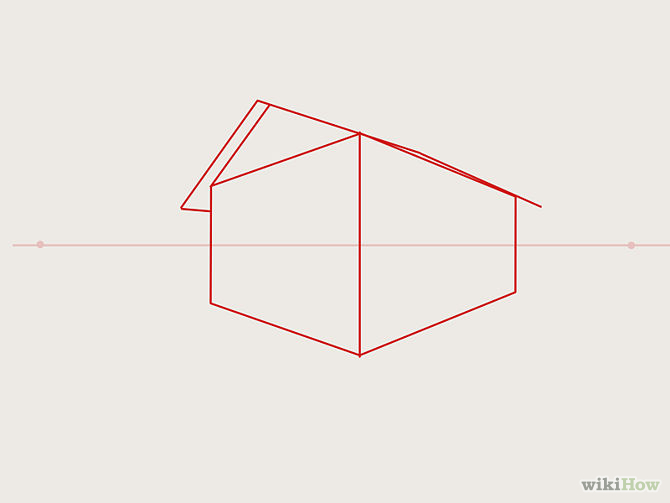
simple house drawings

BE.  HOME.  NOW.

HAPPY HOLIDAYS

2013-2014

“To touch in the between of words”

Screen Shot 2013-09-24 at 2.48.04 AM


Fiery, Luminous, Scary – Erin Manning

The above is a snapshot from a participatory art project entitled “Folds to Infinity” – you can further investigate here.  The verbal link is to an article by Erin Manning that reflects on some possible interactions and responses participatory art and movement enable or frustrate.  As I read this article, with its focus on space-time relations such as event-spaces, materials, sound, rooms, fields etc., I could not help but be curious about the shared space-time relational field of texts, pages, pixels, blogsites and wonder about the more-than that authors/designers/readers/viewers compose – co-create – in these pages we invent each day.  The will toward participation that affects any work’s unfolding.  The design of our syntax and placement of images, types of terms and content of pictures all go toward constraining our viewer/reader participations towards meanings prefigured in our compositions.  And yet, I would wager that the majority of us hope for our creations to be participated-with, engaged, even co-created with the sensing minds of those these spaces open up.  “Spacetimes of relation are never neutral.  They are fiery, luminous, scary.”  I am hoping for ways and words and ways with words that allow, perhaps even create, spacetimes of relation that facilitate the more-than possibilities each engagement with them have potential of.

erin and others certainly activate the seeming “folds to infinity” of the matter in my cranium.