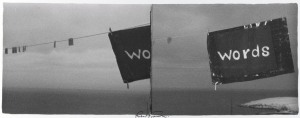
A Real-ization?

A Real-ization(?)

“…And here begins my despair as a writer”

Jorge Luis Borges, “The Aleph


I should say, “began.”  And not “as a writer,” per se, or even primarily, no, I should more accurately portray the experience “…and so began, and ever continues to begin, my despair as a human.”

For experiences, no matter where or when, in full matter of where and when, are multitude that begin such despair.  They are occurrences of a process we call variously “knowing,” “comprehending,” “understanding” – encounters with unlimited and unnecessary contents we might describe as “revelatory,” “visionary,” or “true.”  We describe their feeling and fumble with content.

For they seem to circumscribe an everything – as contained and opening out – well-metaphored by the scientifically religious Big Bang, an un-caused cause or some like.  Experiences we couch in the babbles of mystery: synchronicity, omniscience, omnivorous, omnipotent and omnipresent.  We feel them like an orb or spiral, a series of looping waves without succession.

A.k.a “convergence,” simultaneity and emergence coming together at now and here.

I write “as a human” because I cannot be anything else.  And a human, as a living being, is characterized by limitations and potentials.  Although kinds of things never exhaust their potentials (as far as we know) – thereby always altering what might constitute affordances and constraints lists – nevertheless, in order to be unique (or anything at all – “what –so-ever”) humans must be limited, those limitations providing the very contexts for exploring potentials and potency.

One such environment or niche is the operation of our living processes in space and through time.  I.e. a simultaneous occurrence of everything cannot be processed, cannot be shared, as such.  It must needs be dissected and dismembered via many spaces and over time in order to be perceived by such an animal as we – re-membered and imaged-in (imagined) according to our nature (our processes and practices in our environments).

This is why moments we might re(in)fer to as “transcendent” or “wholistic” perhaps “encapsulating” or “converging” – compressing and expanding (synonymously) some happening that seems “total” generate despair for our kind or species.

I am unable to deny what comes to experience, but with labels and descriptions (interpretation) must take care.  One often turns to symbols or metaphors: icons that serve to absorb a variegated but comprehensible share of human experiences.  Accrued via descriptions and depictions over time, these symbols resonate and traverse times and boundaries in order to gather experiences of a kind.  Take for example the term “hunger,” or a drawing of an eye.  Mirrors, or a resolving I-IV-V progression.  These activities of reference and participation, renewal and recognition, present and re-present for us experiences that seem to extend or equal (again, synonymously) us.

Despair comes in the desired specificity each individual of the species wishes to convey (form of convergence – communicate meaning for our kind can be spotted by our use of the prefix co-).  That experience (in itself necessarily co-), in order to have meaning(humanly speaking) must be shared – we find that telling/singing/dancing/painting/acting/writing/ filming/making/working/sculpting/creating/crafting or any combination of them all and the human-specific processes this entails are unable to re-present such “totalizing” experiences, except at certain angles, perspectives, fragments, over time.

Yet, were it otherwise, we would have no need of any of our abilities – for we would know.  The relations, practices, potentials and processes depend on this inability (limitation) to be.  For us to be, as humans, what and whom, where and when, we are.

Unity would undo this.  In fact, we have no evidence that ANY living entity “shares alike” – reciprocates perfect understanding or replication (or reproduction, ex-ist-ing) exactly…down beyond our cells…there is difference, mis-matching, variation.  In fact, all the co-operations that provide con-vergence and co-mmunity, me-and-ing (meaning) depend on the disjunctions we strive to come over or through in order to express, be understood, known, “as one.”

So, though never “of the same mind,” perspective, or feeling, even when we experience me-and-ing together (gathered) – – this is also how we are.

Perhaps then, less despair than real-ization?
 

Arriving today + Reflections

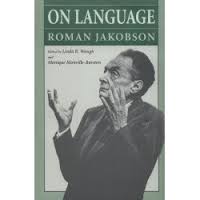
Jakobson - On Language

…and wonderings about language as a tool and an abstract medium.  Wondering if in the endless bewilderment of experience – of living – rife with woundings and joys – we move to shared media, providing communally devised realms in which to re-vision, simultaneously creating new life, wherewith and wherein to investigate and inquire, to dig and dig and…

Language as constructed or agreed-upon and functional (tool) medium.

Then there’s this full of resonances and also contributing to the reflections – required text of a current course:

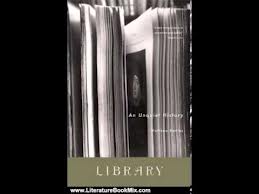
Library: An Unquiet History by Matthew Battles

…and I quote:

“As the reader gropes the stacks – lifting books and testing their heft, appraising the fall of letterforms on the title page, scrutinizing marks left by other readers – the more elusive knowledge itself becomes.  All that remains unknown seems to beckon from among the covers, between the lines.  In the library, the reader is wakened from the dream of communion with a single book, startled into a recognition of the word’s materiality by the sheer number of bound volumes; by the sound of pages turning, covers rubbing; by the rank smell of books gathered together in vast numbers…the physicality of the book is strongest in libraries, where the accumulated weight of written words seems to exert a gravity all its own.”

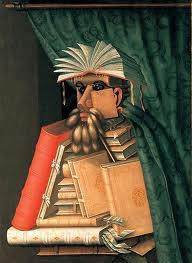
“So the library is a body, too, the pages of books pressed together like organs in the darkness…[in libraries] I can fool myself that the universe is composed of infinite variations of a single element – the book – that I, too, am made of books, like the person in Giuseppe Arcimboldo‘s painting The Librarian

Archimboldo - the Librarian

“…a person made of books; his is not a single book but a whole library”

“I have the distinct impression that the millions of volumes may indeed contain the entirety of human experience: that they make not a model for but a model of the universe.”

“…texts, fabrics to be shredded and woven together in new combinations and patterns…”

“everything in the world exists to end up in a book” (Stephane Mallarme)

“With their leaves of fiber, their inks of copperas and soot, and their words – books are an amalgam of [Roger Bacon‘s] three classes of substance capable of magic: the herbal, the mineral, and the verbal”

“For any question, the library offers no hope of a definitive answer…unlimited and cyclical”

“Together they tell us stories that they could not tell alone”

library pic

“In many places, the volumes are thick with dust, pocked with the holes left by insects,

which are almost as hungry for books as I

-all quotes except where noted – Matthew Battles Library: An Unquiet History

And somehow I can’t help but think the interface and interstice of languaging matter in this way – a way that provides comfort and the slightest skin of distance from the raw inside of skin – inseparable recursions – but mediated immediately – kind of like magic; a LOT like alchemy; always experience – but less abrasive or intrusive than “direct.”  Perhaps paint, light, cameras and brushes, clay, etc – any art that borrows matter outside the body – similarly provides a soluble, gentled, media through which to live forward…

…in other words…are our preferences for embodiment a part of what define us as artists in the societal mesh?  The media through which we most naturally express or experience or embody indicative?  Textuality as embodiment for the writer; clay, stone, marble, etc. for the sculptor; movement for the dancer; oil, pigment, brush, etc. for the painter; lines for the draughtsman and so on…


Found Object/Subject: Self-Portrait

Inundated in end-of-semester bewilderment and projects….I riffle through book stacks and this catches my eye again…
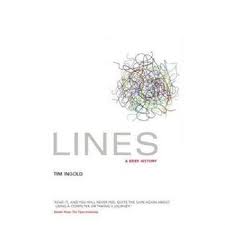
lines - ingold


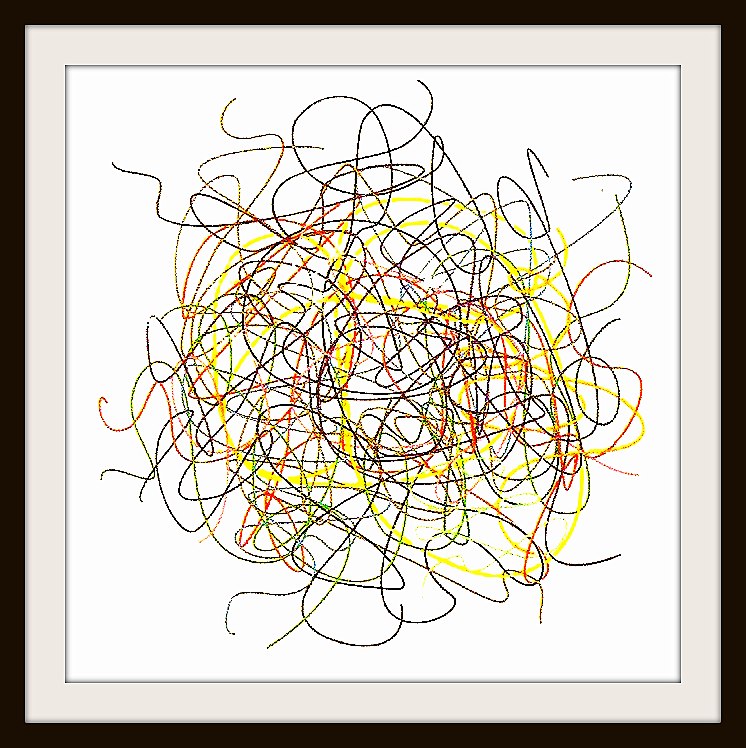
and I quickly recognize myself in the mirror:

Self-Portrait of Mind – July 2013

lines

The big TOE

theory of everything

I have been fascinated by and greatly enjoying the discussions and promulgations of some very astute bloggers considerations of the possibilities of and potential candidates for a “Theory of Everything.”  See, for prime examples, the tremendous thought-work of MultiSense Realism and Anacephalaeosis.  Hoping to further conversation, I humbly post a couple of intriguing considerations of TOEs by two others of my thinking-hero-eschelon… and hope for responses from those above-mentioned and anyone else with thoughts on the matter (or process, as it may be)…!

From the Concept of System to the Paradigm of Complexity – Edgar Morin

and

Do We Know How to Read Messages in the Sand? – Isabelle Stengers

Summertime

In our realm, Summer busies – schedules, rituals and rhythms deconstruct and a verve of freedom and compulsion arises in our children.  And there are vacations and visitors and spontaneous events.  The weather withers me, people are drawn to the outside, in all – Summer discomforts me.

And yet…this week expect the visits of my wife’s twin, her aunt, and a long-time friend and his family, AND we’ll celebrate these dear twins birthday with wild national hoopla (July 4 – precious to me because she entered the world, but I’m happy to have help in the celebrating at this level!).

What gathers and whispers…or shouts and plays…runs and claps…talks and snuggles…HOME…those precious to us, invaluable, incalculable,

Yesterday eve we were enjoying a particularly (abnormal) gentle, cool Kansas Summer eve on our porch and listening to the music of Keith Kenniff – placed here as a celebration of Summer’s affordances – dislocated time, gatherings, visitations and travels – favorites – family, friends, nests…

Keith Kenniff - Branches

Keith Kenniff – Branches

When I speak of “Relations” – this is what I have in mind

the scales, the leaps, the constraints, affordances, limitations and opportunities of being alive…

…the modes and formats, forms and patterns, processes and movements…

the interdependencies

Jay Lemke
Jay Lemke

I can’t really add anything (currently) to this man’s work – without a doubt a hero of mine – thinking, being, creating…

if you have the interest and time…

I attest that this is brilliant…

and opens and opens and opens….

Feeling and Meaning – Jay Lemke


Experience, anyway. diverted toward Empty, the space of life.

Experience, anyway.

(click above if you missed the start)

2 pages in…the new fiction meets a message….

Empty, the space of life

“My relation to others is staggered all the way to the infinite;

from the bottom up, never horizontally, the distance from here to there…

…What you call ‘distance’ is but the time of breathing in, of breathing out.

All the oxygen man needs is in his lungs.

Empty, the space of life.”

-Edmond Jabes, from A Foreigner Carrying in the Crook of His Arm a Tiny Book

perhaps a title change, but certainly a deepening of the layers…

anyway, Experience, anyway. goes on into the encounters…

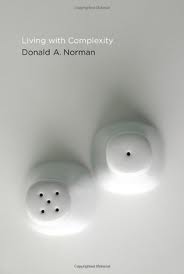
Needing Complexity, Craving Simplicity

from Donald Norman’s immensely readable Living with Complexity (2011)

Norman - Complexity


(click pic for chapter 1)

Grenzsituationen II

Please read previous post with this in mind:

I would love for any/all to share what those “Limit Texts/Artifacts” are for you?

grenzsituationen

Please share via comment what encounters or engagements with works of art, science, philosophy, writing, music, and any other cultural artifactual form has altered from then on how you select, evaluate, engage other related artifacts from then on?

Thank you!

Sudden Soap Box: Digitization = Access (not preservation)

Unbeknownst to me – the next Blackboard discussion assignment for one of my summer classes turned out to be :

  • Is digitization the answer to preserving print materials?  Discuss advantages and disadvantages.

The following was my response – realizing by the end that this had become an impassioned sort of soap box sermon rather (perhaps) than a reasoned response.  Judge for yourselves and please offer replies and conversation!


Is digitization the answer to preserving printed materials? Discuss the advantages and disadvantages


In my opinion the answer is NO.  I believe digitization is an aspect of access, not preservation.  Digitization – the process, format and type of “storage” are all inexact and uncertain dependencies – on energy sources, tools, network connections, licensing, access, programs, softwares, interfaces, and so on down the line.  With no real concept of the reliability, consistency or longevity of data in “cloud storage” – digital documents still need physical copies to ensure longevity.  The only companies I really hear belaboring the issues of continuity, reliability, and potential of accurate digital preservation besides the Library of Congress and Pew are Tim Berners-Lee and the WorldWideWeb Consortium, ITC and other digital business/tech aggregates – which continually discuss the problems, scramblings and deterioration of digital data bits in ethereal storage.  We all understand that we have books 100s even 1000s of years old, from which we can verify online copies, files, etc.  Otherwise many “scanned” documents lose clarity, miss pages, notations, editions, etc.  This is becoming an enormous problem when companies and institutions begin thinking that by digitizing something they are preserving it.  They’re not.  They’re making it available in another format and medium, not preserving it.  Our computers, platforms, servers, programs, hardware and software are continually being altered and updated – formats are insecure, data continuity is insecure, e-book packages automatically deliver updates and editions without preserving previous editions/authors/etc.  Digital access is precarious – a solar flare or atmospheric storm could wipe out or scramble data at any time (as a wise man once said).

Digitization is an answer to access not preservation.  Berners-Lee et. al. have always been clear that the purposes and hopes of WWW and Semantic Web work was to make the world’s culture more readily communicable and sharable – not to preserve it.  To democratize it.  Technology progresses too quickly and outdates too quickly to be a reliable form of preservation.  And with open access and collaborative semantic web – no digital document can be considered “authoritative” or be ensured to represent original writings or creation.  All digital data is open to revision, alteration, damage – it passes through too many hands, servers, connections to be utilized as an authoritative source.  (Perhaps all web citations, whether scholarly or not should be appended with some mark indicating it was retrieved from digital storage, rather than confirmed by printed document).

As access solution – digitization is wonderful.  For “just-in-time” retrieval and sharability, open publications and global learning and information – digitization is an incredible advance in communicating globally.  But reading a text over the phone, or broadcasting pages on TV, etc., are all notated if used in research.  Digitization also seems to mitigate against deep reading or comprehensive research, as digital texts tend to be scanned rather than read through in their entirety, and there seems to be a tendency to retrieve “good enough” or topical articles rather than searching for the best research available to the research at hand.  (side note, sorry).

So, in my opinion, digitization should be used for that which is was developed – a communicative medium – unstable, unreliable and ever-developing – but not an authoritative or preservational archive.  A books average life is between 100-300 years and utilizes much less energy in being used or shared than all the electricity and energy required for digitization and access.  Most ereaders, PCs, and other digital tools last at the outset 5-10 years and then add to the world’s waste, far less recyclable than pulped paper.

Digitization = access – global and unstable.  Physical copies = preservation – relatively stable and verifiable (as long as enough copies are preserved to compare and contrast).  We never considered this problem until now with the enormous weeding and disposal being done by the very places that existed to preserve these artifacts!