Endurance and the Profession – Lyotard
(replete with approximations of my own markings and highlights – N Filbert)

All the wow I come across in the world of languaging assembled – heroic efforts discovered as they come to be unconcealed for me
(replete with approximations of my own markings and highlights – N Filbert)
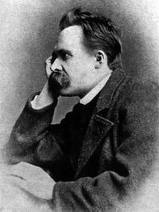
“Nietzsche is the most sarcastic son of a bitch ever to set foot on this
earth. Just say that; then write whatever else you want, like he would.” —
— So my friend Werner Timmermann tells me, with a gleam in his eye.
He helped with my translation of Thus Spake Zarathustra, a four-year-long
labor of love, so he knows what he is talking about. Zarathustra (1885)
was Nietzsche’s magnum opus; everything before it was preparation,
everything after it expatiation and elucidation.
But, for some, the question remains: Why Nietzsche? Friedrich
Nietzsche (1844-1900) was quite simply one of the most original and
influential philosophers who ever lived; in addition, his writing style was
brilliant, epigrammatic, idiosyncratic [“It is my ambition to say in ten
sentences what everyone else says in a book — what everyone else does
not say in a book.”] The language dances, prances, whirls and twirls; it
ranges from ghetto-verbalizations and vulgarizations to high art, from
lyricism to sardonicism, from satyr-play to passion play. No one really
writes like Nietzsche, though the number of his stylistic apes and
imitators is legion (especially in the ranks of academe).
-from the introduction 2004 translation of Ecce Homo & The Antichrist
sympatico-ally discovered via Time’s Flow Stemmed (take a look!)
because I have been wanting to share the subtlety and nuance of Elena Tonra & band “Daughter,” and after a day on repeat words became…
mobius, ever,
turning ribbon gyre
.
under foot, a soaker hose
immersing.
a sprinkler fountain
saturates
.
entrailing
an emanation –
tangled collisions –
of stars. of light.
.
and here, supine
undone
amiss
absorbed
in aimless ache
.
while there, ever,
slight twist in the band,
an error,
a mark-miss,
.
and bypass.
N Filbert 2013
Please read previous post with this in mind:

Please share via comment what encounters or engagements with works of art, science, philosophy, writing, music, and any other cultural artifactual form has altered from then on how you select, evaluate, engage other related artifacts from then on?

“One of the wonderful things about word processors is they transform all composition into continuous process. You can rearrange, rewrite, tinker, copy, cut, paste, open separate files for separate chapters or story sections or poem fragments, a window for notes, another for your outline, and still another for your list of characters and their attributes, and have them all on your screen simultaneously so you can flip among them as necessary while your web browser provides you with a dictionary, a thesaurus, a Wikipedia page, a website to aid you checking this fact or that…
(The less than wonderful thing about word processors is they make every draft look like a final draft, sloppy writing look as polished as just-published. Careful about being duped by the sheen, and don’t disregard the notion of trying to compose on a lined tablet unless you’ve already tried it and found it lacking; it is a method that both slows perception and increases conscientiousness).”
-Lance Olsen-
via J.M.G. Le Clezio

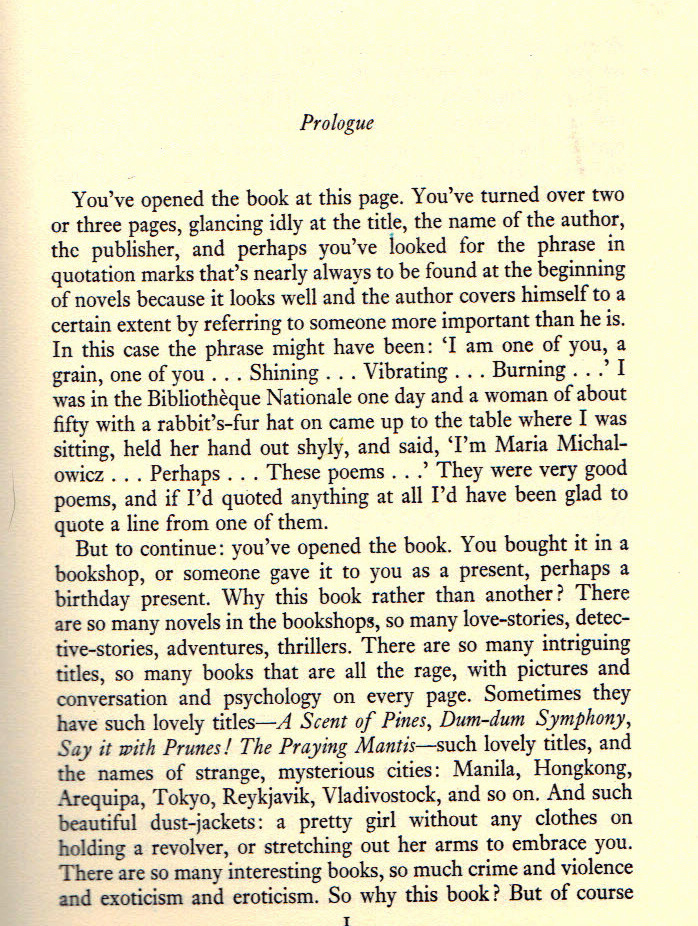
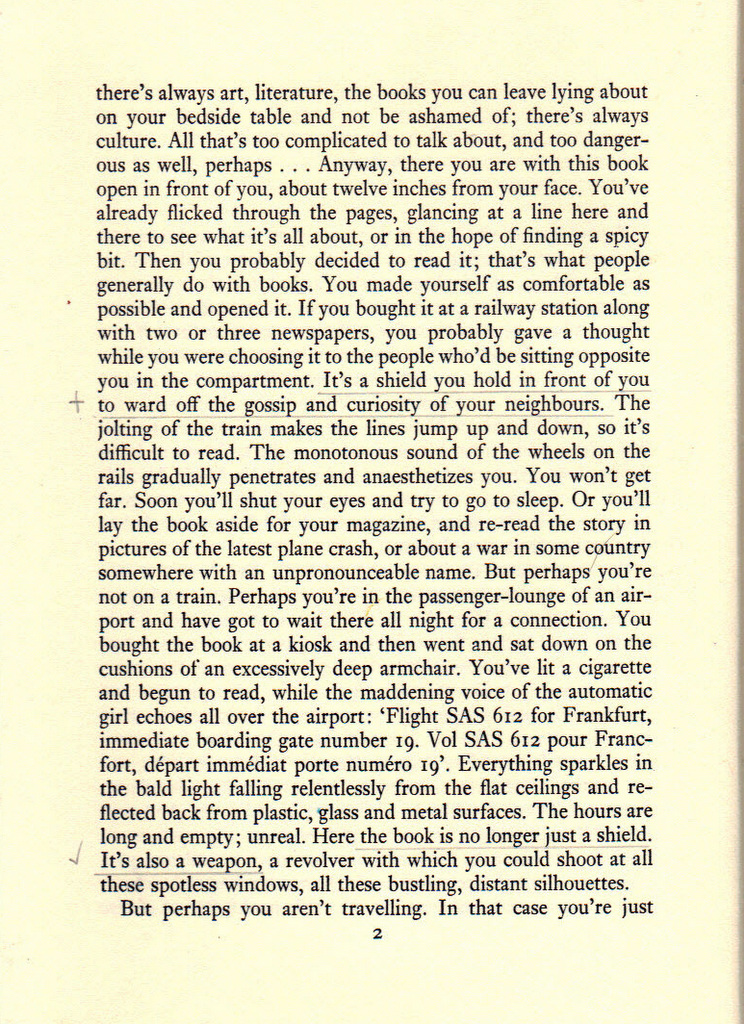

I personally attempt to read every writing I am able to obtain by my favorites. Some of my blog entries may therefore be redundant, as redundancy is a way that I am able to sense patterns and make connections and thereby forge what I experience as meaning. The following is one of the summary writings (nah, that’s not quite right – even with redundancies and retellings I rarely find a summary-type writing by my favorites – there’s always difference – and that is what snags me!)… Okay, for your interaction, pleasure, and engagement, without further ado…
by Jay Lemke (1995)
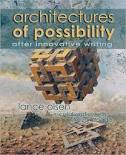
I’ve recently acquired (via Inter-Library Loan! Woo-hoo!!!) a collection of writings exhibited below:
which opens with an essay by anthropologist Tim Ingold who starts it off with a remarkable movement through slugs and storms, lines-earth-eather, Kandinsky, Klee, Merleau-Ponty, and others – investigating them through a concept of “meshwork.”
“By this I mean an entanglement of interwoven lines. These lines may loop or twist around one another or weave in and out. Crucially, however, they do not connect. This is what distinguishes the meshwork from the network. The lines of the network are connectors, each given as the relation between two points, independently and in advance of any movement from one toward the other…the lines of a meshwork, by contrast, are of movement or growth. They are temporal ‘lines of becoming’…Life is a proliferation of loose ends. It can only be carried on in a world that is not fully joined up. Thus the very continuity of life – its sustainability, in current jargon – depends on the fact that nothing ever quite fits..”
-Tim Ingold, “Lines and the Eather”-
Journeying on from there through Deleuze and Guattari, mood and weather, meteorology and aesthetics he arrives at a conception of flesh as both meshwork (exhalation) and atmosphere (inhalation) – a whole-being experience of relation enabling and realizing animate life….
I’ve now been browsing numerous writings by Ingold, fascinated by the semiotic/anthropologico/ontological /scientific meshwork his production encompasses… Thankfully, he makes much of his work available full and free to us… if you’re interested – I risk the promise it will be worth your while…
and a fascinating working paper as introduction: Realities: Bringing Things to Life
language. but brilliant. necessary? applause.
–Edgar Morin, Seven Complex Lessons in Education for the Future–
Student Magazine of IISER Mohali
Music, Musicology, and related Matters
a photographic pilgrimage to Orthodox Christian monasteries across the continent
Meandering Through a Literary Life
Orthodox Christianity, Culture and Religion, Making the Journey of Faith
Erik Kwakkel blogging about medieval manuscripts
"That's the big what happened."
Networking the complexity community since 1999
 All my Words are Silent