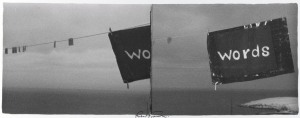
Imagine: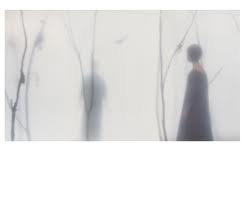
The Novel:
“Vaguely we knew each other, also almost ourselves, among other things”
N Filbert 2012

Imagine:
The Novel:
“Vaguely we knew each other, also almost ourselves, among other things”
N Filbert 2012
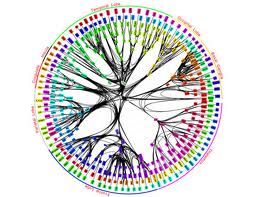
Regulating Relationships
From most points of view, life is a system. Enormous and elaborate interlacing activities keep it going on. Biology, physics, religion, mathematics and logic; semiotics, psychology, aesthetics and history; chemistry and health, poetry and politics, philosophy and fame – all intricate reverberant systems of night (and possibly?!) infinite interconnections – visible and invisible, conscious and unconscious.
I feel it all the time. I’m “affected.”
Hubbub over sports, havoc of war, hullabaloo of cosmology and genetics. Tentacles of memory, omens from the past, illnesses and love. My own aches and pains. Allergies, anxiety, pleasure and joy. Tastes, values. All of/in these indecipherably interlocking worlds of living things, views, theories, events and conundrums. Words, images, feelings. Wires, energy, matter. Signals, symbols.
I feel it. I’m “affected.” Always.
All ways.
An hypothetically infinite ganglia or swarm of influences and infections — a finite and mortal middle-aged male inhabiting a very small space made of receptors, pores, nerves, cells and liquids: constantly thrumming, sloshing, snap-crackling, emoting and perceiving a cosmos of effects/affects.
This is why I keep saying: I get it, I’m totally “a/effected.”
The situation is perhaps similar to a paramecium channeling a bolt of lightning. Most likely the little sucker survives in some fashion – but what the – ?
How do we manage?
No wonder we blitz out, dull, “veg,” “pass out,” sleep. Drugs, fantastical entertainments, thrills, spills and crack-ups…anything to direct/divert the universe-sized charges incessantly overwhelming us.
Something struck me today. In our growing history of surviving, perhaps even thriving, how have humans as a species often overcome overwhelming difficulties? Well sure, all of the ways mentioned above: escape, denial, “tuning out,” apathy, ignorance, fantasy, insanity or violence, danger and so on, but when we are perceived (perceive ourselves) to “advance” “progress” or “grow” – what is the method? (When we can interpret one apart from “accident” or “effect”?)
Have we not repeatedly immersed ourselves in our reality (“the way things are”) and used them to our benefit rather than detriment? Technology, science, arts and beliefs – the seeking of the facts, turning them to our interests or needs, finding fulfillment and challenge – furtherance – survival.
What snapped in me today (I’ve had years of “managing” my “e/affectedness” thorugh alcohol, isolation or the dependence of my children) is this: if our inquiries and theories by and large agree/propose that “life” is one phenomenal, inescapable and gargantuan set of layered and inter/intra-relational systems, then “relating/relationships,” their process(es) and effects are precisely where the work, the living, the surviving (perhaps thriving) emphases ought to be engaged.
That balancing, recharging, nourishing, coping, diversion and awareness might be best figured out right where it happens – in systems of relationships. That where we are “affected” and what “effected” by is precisely where our greatest opportunity to “effect” must be. Our process of relating, our relationships with/in the cosmos of possibilities, is our living. What we know or think seems to tell us – our attention, our “solutions,” our being belongs there: in relationship.


Thank you Holly (my wife), Scott (my dearest friend), children (all of you, my charges) – and others – you truly regulate me in this world.
Action: Writing
Woven in the circles of making, I felt and I thought, I wrote (I thought) “What is called writing?”
An action, a process, a braiding of becoming.
In that way it is like breathing, sensing, walking.
Also not.
I wouldn’t, for instance, “do it anyway” – wasn’t born with the instinct of muscle and nerve to be verbal, textual. I needed other people for that, and the whole history of the world, and the tiny stories of my community and location. All those things, all those “others” – elements and entities NOT me trained me to language. Taught me to “mean’ something with a sound or a gesture, out of an enormity of possible sounds and motions, infinite and miniscule in their variety. So that I utter and behave as a Kansas boy raised in the 1970s in the United States of America; I can say “what” about forty different ways, but not like someone from Tokyo, Moscow or Bangladesh.
Clearly I went along with it, became, developed my own versions of signification and cadence, intonation and grammar. Working well enough when among the great pool of English-speakers who read literature, philosophy, poetry or know something about parenting, divorces, theology or art.
Outside of that I suspect I’m a foreigner. A penguin squawking and waddling about.
Given the breathing, perceiving, pulsing, walking thing, I can usually find my way among other humans anywhere, but not without a strangeness and suspicious curiosity about the way I do it, and why.
Likewise.
Words written are things. Objects to collage, cut and paste, assemble/dissemble, rearrange.
That’s what I love to do. I like very much listening to their silences, their potential precision and fluid spillage and wash. I love finding shapes there and rhythms. After all, music isn’t about the melody, but all of its sounds and silences together. But writing isn’t music, it’s writing.
Stories aren’t histories, expressions or truths – they’re words. Lists aren’t tasks performed or groceries, notes aren’t emotions or commands – they’re words. A painting of a mountain isn’t a mountain. It’s a painting.
So my blog, my work, my play, my joy my grief my desire and delight is this puzzling and fiddling about with this (for all practical finite purposes and aptitude) infinite galaxy of lettered objects.
What it might “mean” or “say,” “express” “communicate” or “intend” and so on – I guess that’s up to you – making your own creative use of my arrangements from your very own culture of sounding signing and gesturing.
A happy medium, as far as I’m concerned.
 N Filbert 2012
“Coincidences depend not so much on desire as on the density of existence”
-Arkadii Dragomoshchenko-
“The full meaning of the adage Humanum est errare, we have never woken up to”
-Charles Sanders Peirce-
“Act your heart. There’s nothing else”
“The world is where we fling it”
–Theodore Roethke-
“To live in the world but outside of existing conceptions of it”
–Wallace Stevens-
“Action painting – action writing – the process is the same, with emphasis less on the finished product than on the author’s process of creation”
-Jerome Klinkowitz-
a personal p.s.: I love the poetic world of Mr. Scott Krieger, and the music of Mark Kozelek (ahhhh)
“The poet feels abundantly the poetry of everything”
-Wallace Stevens-
(for Scott)

COME IF YOU CAN!
(we’ll also have copies of our book “Paper Dolls: A Series in Painting and Poetry” available there)
and for good measure…something I’ve thought about writing:

Stringing Forward: Driven by Confusing Desire
“In the beginning was the Word.” It’s plausible, but it doesn’t sit right with me. Still I return to this phrase with remarkable regularity, as if it were gospel, as if my life revolved on it.
Yet I think there must be something beyond it. Perhaps breathing, or wriggling, some pulse or shimmer? Of course we wouldn’t have a word for it or be able to address it in any way before the coming of language…but watch a baby in its crib.
It squirms, breathes, flails, even instinctually utters interjective noises – perhaps of pain or hunger, fear or glee – can’t know for sure until its incorporated into our codes and systems, but I’ve no doubt they’re there before they speak.
Take reptiles or cockroaches. I buy the idea that they predate us, and their communicative activity (if there is any) certainly isn’t verbal, or “logocentric.”
Perhaps Scripture would have been more accurate to say “In the beginning was movement” or “In the beginning was act.” I don’t know. Whatever it would state would be a word, now. There’s a conundrum for me: once language, is there anything prior except it’s name or description? Maybe “beginning” means source, and word-acquisition is totalizing to human experience? We can’t go beyond our alphabets (Alpha, Omega) – and even if we feel a beyond to be there (verbal or no) we logo-lize it? Our “non-verbals” “immaterial” “void” “absence” “infinite” “time” “space” “god” “love” language and so forth?
We do have a word for it, after all: pre-verbal.
It does seem that (for humans anyway) awareness begins with communication, interaction. And any system of recognition and difference must qualify as “language.” Maybe “Language is constitutive to our experience” might have been a truer statement, though the original does have quite a ring to it.
Why do I fiddle with it anyway, what this compulsion to know? “Beginnings” (a word) or “words” (a word)? That I can’t verbalize. Which is perhaps the origin of my desperate and agitating quest: desire and confusion? And how come having words for it doesn’t help me understand?
“In the beginning was the Word.”
Well it certainly was the beginning of something! (a word)
“He who knows not language serves idols…
he who could see his language would see his god”
-Philippe Sollers-
Mapping the Landscape
Some say that everything happens for a reason. What could/would that reason be? Even for the statement itself? (This is not rhetorical). Others say: “Who says?” “Who they?” (I’m sure they have their “reasons”).
None I can decipher.
Maybe truth is horizontal, “as the culminating reinterpretation of our predecessor’s reinterpretation of their predecessor’s reinterpretations…this tradition does not ask how representations are related to non-representations, but how representations can be seen as hanging together.” As in a map or chart. Relative, relational. I could see that. But, like zealous learners in their youth, dependent on a belief in cause and effect, or attempts to substantiate or materialize emotions – no map is large or long enough.
There’s always a horizon, at which limit no vision is of use, the beyond imperceptible.
So we take the reinterpretations and test them, thereby reinterpreting…what more can we do? Walk the maps they give you at birth, try them against each step, each new landscape or trail. “That’s where Foster’s barn used to be.” “There once was a great old tree here signaling the upcoming swerve in the road.” “This land used to be glacial, giant sheets of ice.” “Where you’re standing was once a mountain.” And so on.
“It is the difference between regarding truth, goodness and beauty as eternal objects which we try to locate and reveal, and regarding them as artifacts whose fundamental design we often have to alter.”
Go smaller, tighten your horizon. Analyze your own skin. This freckle, that wart, this scar, that mole. My son was identifiable by his long blonde hair blowing in Kansas wind – last week – now he runs in a pack of crew-cut kindergartners indistinguishable from a distance, but for his red coat. My voice changed. Eyesight. Posture and laugh. The contents of my “mind.”
It’s a long erratic affair – his unreasonable search for certainty.
Take up a dictionary or go online and pick any word – then add “etymology.” Where did your term “come from”? What’s it mean – then, now? How many common uses, nuances, ironies? Multiply that by users plus gestures plus intonation plus context = what certainty have you got? What’s the reason for that? Why?
In other words, explanations are no reason. They’re either well-informed observations, careful descriptions or wishful hypotheses (in which case they even cease to explain anything but may fuel observations – of imagination or psychology, sociology, philosophy – so-called ‘human sciences.’)
Look, I’m just trying to get the lay of the land here. From my vantage point it’s extremely varied and multi-layered. Everywhere I dig or fly, seek or describe, the horizon recedes as I advance. I leave marks along the way, but they seem different when I come back around, sometimes they’ve vanished altogether like the old cottonwood or Foster’s barn.
Within/without my horizontal globe is ever limited by me, so I “take your word for it” – perhaps there’s something beyond it…I’ll tell you when I get there. Perhaps I’ll send a map. (Perhaps we are a map, floating in a sea of them?)
(quotations from Jacques Derrida and Richard Rorty, in that order)
Simple Complexities
Defining Ekphrasis: Interaction of Forms
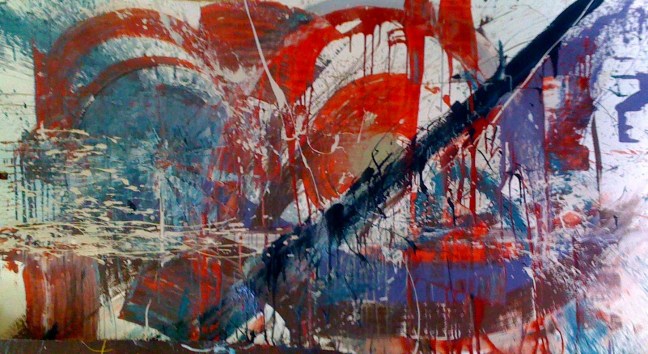
Simply put, I wanted to paint with you. Not, as it happens, to slather you in viscous pigment and wipe and wriggle you across canvas (though that has surely crossed my mind) but to be making painting with you.
I would make a mark, a swipe, some stroke of shape and color, and then you. You’d place a line or blot or smear in relation to mine (in the same field, plane) thereby activating, diminishing, interpreting what I laid down. And so on. I come back with a gesture, holding my own or joining yours, perhaps redirecting, covering over or utilizing yours and you’d follow again, asserting your body, your motion, your mind via substance or tool…corresponding.
And so on. Soon there’s amalgamation we both envision – sometimes at cross-purposes heightening the compositional tension, sometimes converging – like our naked bodies wrestling toward union in our marriage bed.
What felt like a strong lead turns out to be structure, some underlying hue; what seemed a mere blurring or drip comes to rule the panel, arranging the entire frame or texturing what layers in the making.
A conversation of gestures then, a simple process of filling a firmly boundaried, relatively small space, with our selves…both of us, together. Turns out you slashing black across my purplish squee-gee’d sphere compounded with white violated my intent, which, according to you created a necessary balance. I set to scratching, scraping and sanding back your last move which you promptly flooded with magenta ink. It was beautiful, how it salved the wounds yet witnessed the blood, so I applied a bandage to hold it, perpendicular lines of blue.
More then, and more, tangle and flow, react and respond, follow and lead until we begin to lose track of who’s who, morphing into a four-armed, four-eyed, twenty-fingered being speaking out of both sides of our mouth from the four sides of our brain.
We pause for rest, our interactions having swollen our private territory, momentarily complete – further argument would muddy; extending ecstasy blot out the lines and distinctions – compromising the differences necessary for content’s form, for joining. I see what I’ve done, where I’ve been, who I am woven with all of you and yours into something neither of us could have created on our own.
Our marriage, our art, our selves.
WOW! From Edmond Jabes, kicking off morning and work…

“The gap between prose and poetry, between rose and rosebush, he had said, ‘is a variable space reserved for the deepening of one and the same love.”
“The book is a promise of writing…the words…are perpetual fulfillment. Behind them, eternity. Before them, the distressing and increasing weakness of the infinite.”
“The place of language is language.”
“We read only our own reading.”
“The book is a ‘You’ that temporarily makes us an ‘I.’ But the book is also something else. It is an ‘It’ that embraces the I/You, dialogue being always in three voices.”
Edmond Jabes, A Foreigner Carrying in the Crook of His Arm a Tiny Book
Student Magazine of IISER Mohali
Music, Musicology, and related Matters
a photographic pilgrimage to Orthodox Christian monasteries across the continent
Meandering Through a Literary Life
Orthodox Christianity, Culture and Religion, Making the Journey of Faith
Erik Kwakkel blogging about medieval manuscripts
"That's the big what happened."
Networking the complexity community since 1999
 All my Words are Silent