Mood Construction

because I have been wanting to share the subtlety and nuance of Elena Tonra & band “Daughter,” and after a day on repeat words became…

mobius, ever,

turning ribbon gyre

.

under foot, a soaker hose

immersing.

a sprinkler fountain

saturates

.

entrailing

an emanation –

tangled collisions –

of stars.  of light.

.

and here, supine

undone

amiss

absorbed

in aimless ache

.

while there, ever,

slight twist in the band,

an error,

a mark-miss,

.

and bypass.

N Filbert 2013

Welcome!

Because…yeah.

Piera Cicchetti's avatarMDPI Magazine

The MDPI Magazine highlights a selection of papers from MDPI peer reviewed, open-access journals, chosen for their wide interest to researchers and others interested in the life sciences and related fields. The Magazine will also include interviews and guest commentaries, and aims to support the maintenance of a broad outlook for investigators, and to stimulate both rigorous and imaginative thinking, perhaps inspiring fruitful new research ideas or approaches. Readers are likewise highly encouraged to share their particular perspectives in order to stimulate useful scientific exchanges.

I hope that you enjoy the content, and welcome your comments on our highlighted articles and any feedback or suggestions for the MDPI Magazine.

Yours sincerely,

Piera Cicchetti, Ph.D.
Editor-in-Chief
MDPI Magazine
E-mail: cicchetti@mdpi.com

View original post

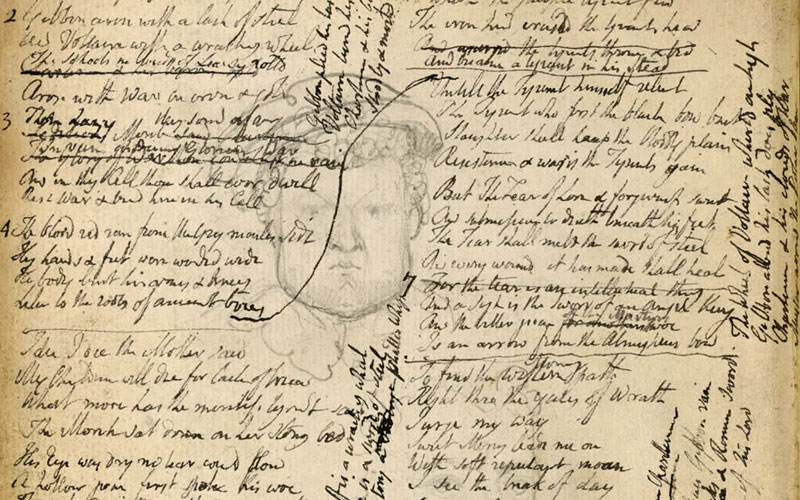
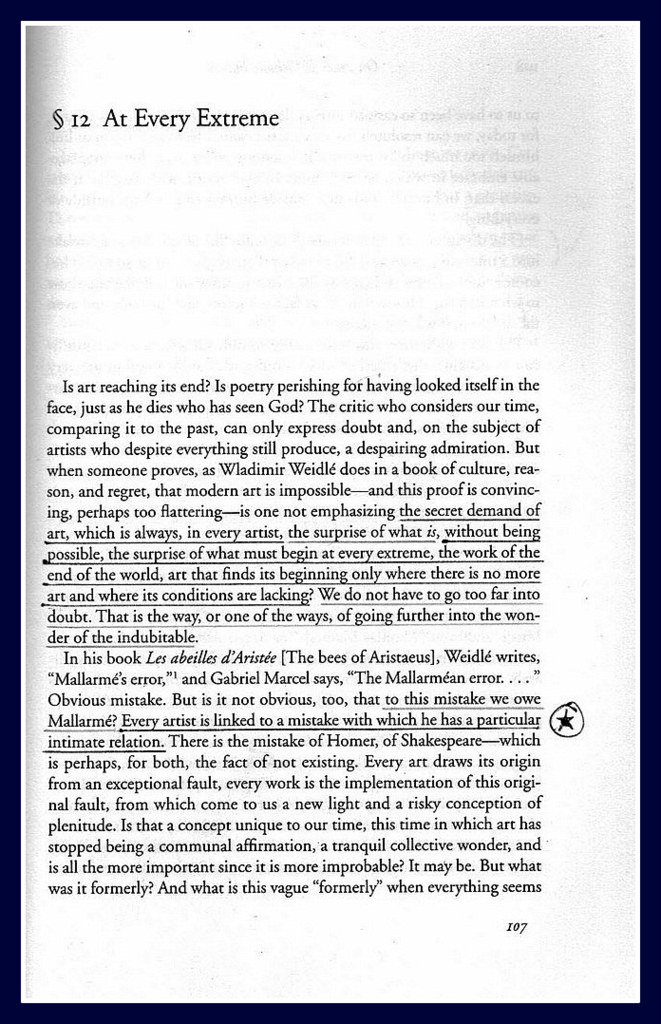
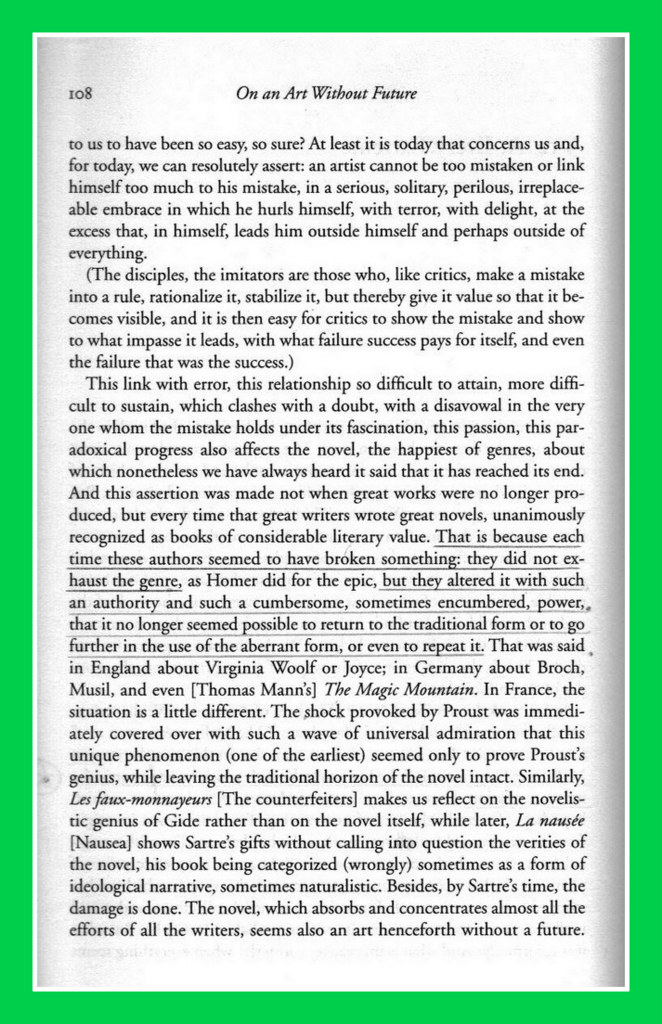
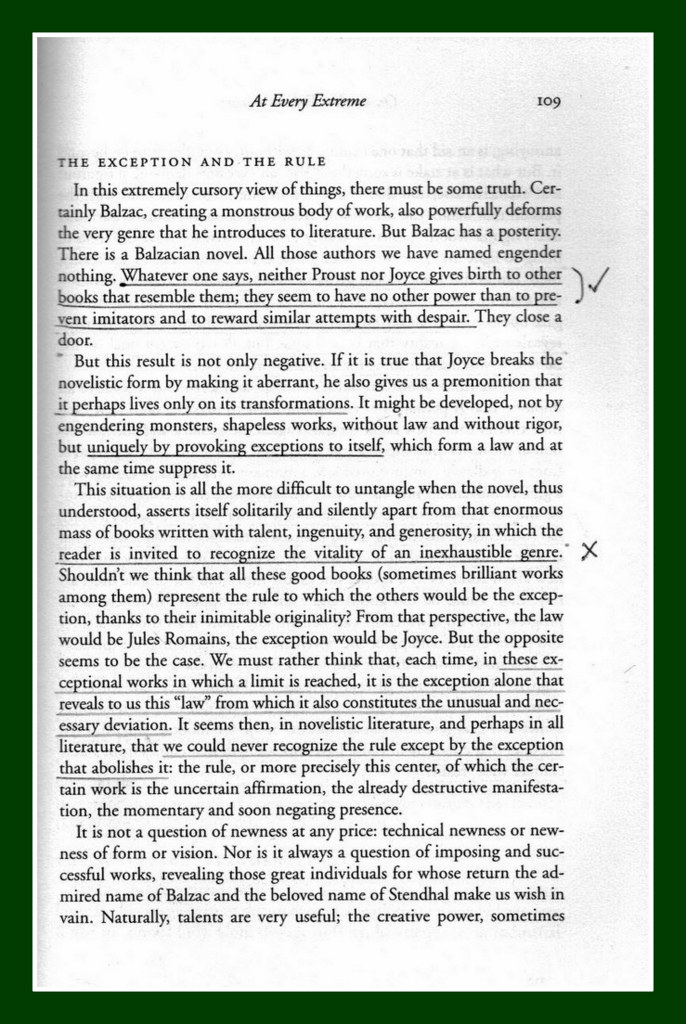
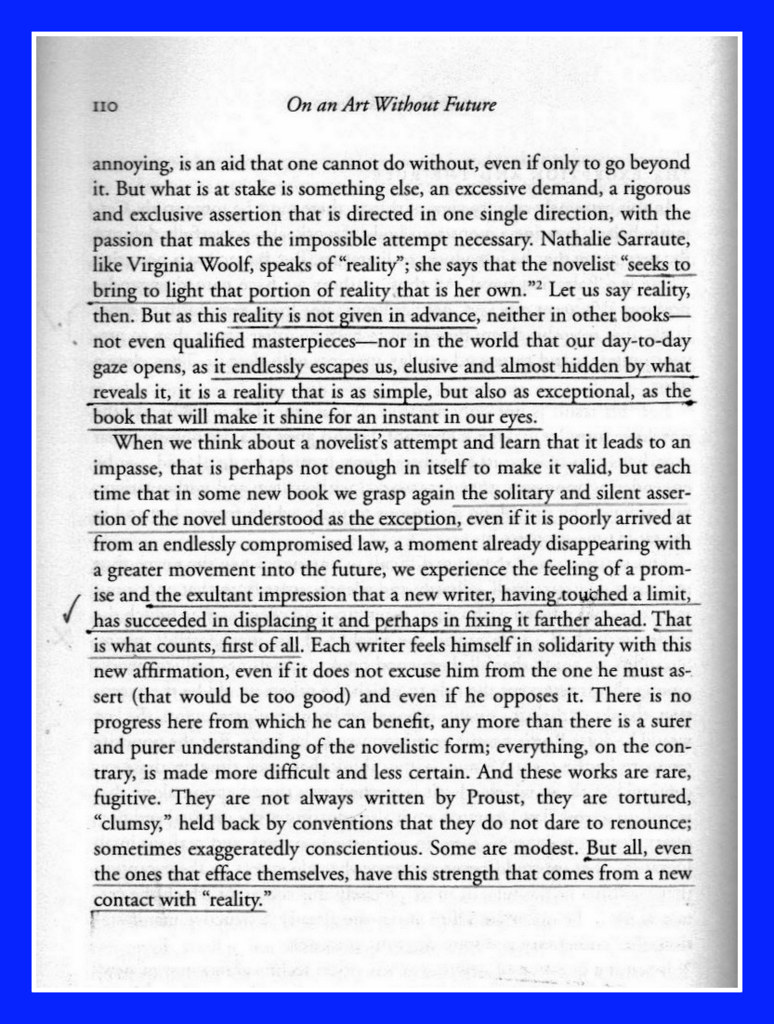
ART IS A MISTAKE

writing-britain-blake-lge

Blanchot Extremes-001Blanchot Extremes2-001Blanchot Extremes3-001Blanchot Extremes4-001

-Maurice Blanchot, from The Book to Come-

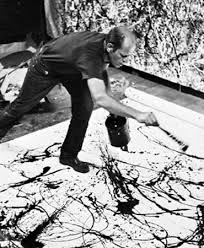
Pollack

MAKE THEM!

June 23, 2013 – 3:44 pm – if you had the coordinates you could Google Map it.

What I was composing the other day in my head, or wherever daydreaming occurs: filling up that gap between inside or outside, idea and actual, etcetera.  They told me not to worry about losing it – that it would return, re-emerge.  I lost it.  The idea, sensation, form, content – everything.  Well, not everything, exactly, I guess, because how could I conjure that there was something, some experience, some initiative or other, had I truthfully lost it?  Okay, maybe they’re right, and “everything” is a question of access.

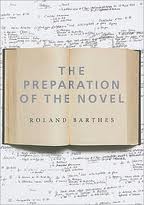
In any case, well, no – in present case or tense or whatever now-situation might be (“Weather”? – see Roland Barthes, The Preparation of the Novel, or Tim Ingold’s essay in Vital Beauty) I am not experiencing “access” to something some part or parts of me (some connectivities) believe or invent a past tense for – a disjunction/abstraction/detachment from.  A difference.

I am believing that I felt differently about something at some other time, that language was forming out of me relating to that affect, and that I had the potential capacity to express all that semiotically – or, in a way that it might make sense, be shared, exist.

Now I’m languaging nothing.  Or, not exactly nothing, more like a different something that in fact is the semiosis of another inexpressible or inaccessible possible something.  Which means, potentially, anyone could find it, discover/uncover/invent/compose/co-construct (co- probably redundant to con- but then I’m not Russian, at least not currently) that initiative and perhaps I’d re-cognize or re-member whatever realigned threads rewove into this particular weaving (what is “now”).

Etcetera.  This is how it goes down for me (current context taken mostly for granted).


Writing’s Toxin

Barthes - Novel

“Is it possible to make a Narrative (a Novel) out of the Present?  How to reconcile – dialecticize – the distance implied by the enunciation of writing and the proximity, the transportation of the present experienced as it happens?  (The present is what adheres, as if your eyes were glued to a mirror).  Present: to have your eyes glued to the page; how to write at length, fluently (in a fluent, flowing, fluid manner) with one eye on the page and the other on ‘what’s happening to me?'”

“The novelistic ‘drive’ (the love of the material) is not directed toward my past.  It’s not that I don’t like my past; it’s rather that I don’t like the past (perhaps because it rends the heart), and my resistance takes the form of the mist i spoke of – a kind of general resistance to rehearsing, to narrating what will never happen again (the dreaming, the cruising, the life of the past).  The affective link is with the present, my present, in its affective, relational, intellectual dimensions = the material I’m hoping for (cf. ‘to depict whom I love’).”

“This is actually to go back to that simple and ultimately uncompromising idea that ‘literature’ (because, when it comes down to it, my project is ‘literary’) is always made out of ‘life.’  My problem is that I don’t think I can access my past life; it’s in the mist, meaning that its intensity (without which there is no writing) is weak.  What is intense is the life of the present, structurally mixed (there’s my basic idea) with the desire to write it.  The ‘Preparation’ of the Novel therefore refers to the capturing of this parallel text, the text of ‘contemporary,’ concomitant life.”

“Now, although at first glance making a novel out of present life looks difficult to me, it would be wrong to say that you can’t make writing out of the Present.  You can write the Present by noting it – as it ‘happens’ upon you or under you (under your eyes, your ears) – In this way, we at last come in sight of the double problem, the key to which organizes the Novel – on the one hand, Notation, the practice of ‘noting’: notatio.  On what level is it situated?  The level of ‘reality’ (what to choose), the level of the ‘saying’ (what’s the form, what’s the product of Notatio)?  What does this practice involve in terms of meaning, time, the instant, the act of saying?  Notatio instantly appears at the problematic intersection between a river of language, of uninterrupted language – life, both a continuous, ongoing, sequenced text and a layered text, a histology of cut-up texts, a palimpsest – and a sacred gesture: to mark life (to isolate: sacrifice, scapegoat, etc.)”
“On the other hand, how to pass from Notation, and so from the Note, to the Novel, from the discontinuous to the flowing (to the continuous, the smooth)?  For me, the problem is psychostructural because it involves making the transition from the fragment to the nonfragment, which involves changing my relationship to writing, which involves my relationship to enunciation, which is to say the subject that I am: fragmented subject (=a certain relationship) or effusive subject (a different relationship)…a Novel-Fragment…”

Grenzsituationen II

Please read previous post with this in mind:

I would love for any/all to share what those “Limit Texts/Artifacts” are for you?

grenzsituationen

Please share via comment what encounters or engagements with works of art, science, philosophy, writing, music, and any other cultural artifactual form has altered from then on how you select, evaluate, engage other related artifacts from then on?

Thank you!

Grenzsituationen

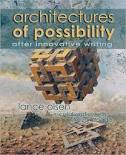
Recently, I have received several queries into either how I read as much as I read, or how I find or know what to read.  As I respond to these inquiries, it has interested me how in fact, I account for my reading history.  E.L. Doctorow explained he rarely knew what he believed until he had written about it.  Dostoevsky would start authoring a given scene, assuming he understood precisely what he believed about the issue discussed in it, only to have one of his characters convince him otherwise.  Frequently it is only through the actual act of creation that we locate what we really feel and think about a subject.” (Olsen, architectures of possibility).  That, coupled with “Authors frequently say things they are unaware of; only after they have gotten the reactions of their readers do they discover what they have said” – Umberto Eco…resulted in these self-observations:

Even from persons I deem much more knowledgeable than myself I often hear “you’ve read more than anyone I know…” and I have spent many hours a day for many decades – reading.  I was raised in a fundamentalist Christian home, so the concern for truth, authority and canon were socio-culturally inculcated in me from an early age.  When I began exploring music, philosophy and literature I found this concern ruling my approach: what is deemed canonical (attested by authorities), what came first?, and what rings true?  I remember beginning with anthologies of classical poets, then ancient scriptures, Homer and so forth.  Beginning with Plato/Aristotle then forward through those who claimed their influence.  Beginning with Bach, Brahms, Beethoven and then forward and back to origins and influences.  That has been my habit in exploring cultural artifacts.  Find references.  Correspondence.  Claims.  Follow them out.  And follow those out.  And follow those.  And….so on.

As to achieving the absorption of piles of books at a time – when pushed to claim a process – I was surprised at the simple methodologies.  I have referred to “transductive reading” from time to time in these posts – the interaction and co-constitutive commentaries that work provides to work.  So I read large amounts of materials over large amounts of time (though my wife insists I read speedily) – I find I read sections / chapters / pages from a multitude of books and let them interact in me forming tissues and connections, rather than singular voices or ideas straight through.  I read for differences – turns of phrase, terminologies, rhythms, in persons approaches to subjects, rather than reading for topical content or idea-information as data.  Where a voice, approach, or technique is unique is often what particular works have to offer, I have come to think.  And, depending on genre or reason for reading – as overlaps increase as the volume of “have-read” grows – one can often browse for summarizing sections to find the nuances each thinker or creator proffers.

reading a lot

Then there’s my personal history and approach to things.  Hard-pressed to learning from youth=26 straight years of education + 17 years working in or managing retail bookstores – in an effort to be an “excellent” bookseller – implying to me I had to know something of everything a reader might desire (first hand).  Publisher’s catalogs, reviews, recommendations, lists, histories, from the development of language to its variation in forms and contents.  And always that uncanny recognition of Grenzsituationen – or “Limit Texts.”

“It might be helpful to conceive of certain texts as Limit Texts – a variety of writing disturbance that carries various elements of narrativity to their brink so the reader can never quite think of them in the same terms again.  To the brink, and then (for most readers, at least) over.  Karl Jaspers coined the word Grenzsituationen (border/limit situations) to describe existential moments accompanied by anxiety in which the human mind is forced to confront the restrictions of its existing forms – moments, in other words, that make us abandon, fleetingly, the securities of our limitedness and enter new realms of self-consciousness.  Death, for example.”

“If we carry this notion of Grenzsituationen into the literary domain, we find ourselves thinking about the sorts of books that, once you’ve taken them down from the shelf, you’ll never be able to put back up again.  They won’t leave you alone.  They will continue to work on your imagination long after you’ve read them.  Merely by being in the world, Limit Texts ask us to embrace possibility spaces, difficulty, freedom, radical skepticism.  Which writings make up the category will, naturally, vary from reader to reader, depending on what the reader has already encountered by way of innovative projects, his or her background, assumptions and so on…but the more Limit Texts one reads, the less one tends to feel the impulse to return to more conventional narrativity…”

-Lance Olsen, architectures of possibility
These situations are tattooed on my body (literally)…and include:

Samuel Beckett – Macedonio Fernandez – Paul Celan – Fyodor Dostoevsky – Ludwig Wittgenstein – Maurice Blanchot – Helene Cixous – Clarice Lispector – Franz Kafka – Fernando Pessoa – David Foster Wallace – Mikhail Bakhtin – Rainer Maria Rilke – Edmond Jabes – Federico Garcia Lorca – William Stafford – Egon Schiele – Vincent van Gogh – Johannes Brahms – Alberto Giacometti – Robert Musil – Friedrich Nietzsche – C.F. Peirce…

as you uncover these (your own personal) writers – your pantheon

of those who change your view of the possibilities of language and who you can return to again and again

without  really feeling you’ve been there before – they become coordinates – network nodes – whereby you

evaluate and expand, extend and engage new writings you are exposed to – forever altering your patience and expectations of literature or whatever cultural artifact-type you crave and are pleasured by…thus making your reading more efficient and your selections increasingly more challenging and compelling to you – as long as you continue to leap out and expose yourself to things that might be unexpected

Ben Marcus – Ronald Sukenick – Laurie Sheck – Mei-Mei Berssenbrugge – Lyn Hejinian – Denis Johnson – Laurence Sterne – William James – C.F. Peirce – Michel Serres – Bruno Latour – Jorge Luis Borges – Cervantes – Immanuel Kant –

your lists will spawn as you follow their correspondences, admirations, criticisms, references, citations,

and you develop your literary canon

more on that another time
utopia

**More than a decade on, to update my Grenzsituationen, I’d need to add:

the Philokalia – John Moriarty – St. Isaac the Syrian – George MacDonald’s Sermons – Martin Heidegger – St. John Cassian – Sayings of the Desert Fathers & Mothers – Arkadii Dragomoschenko – Elder Aimilianos – Optina Elders – Haida Myths & Songs – Jim Harrison – St. Ephrem the Syrian – I Ching – Dreamsongs from Australia – St. Theophan the Recluse – Jan Zwicky – Martin Shaw – St. John Climacus – Marguerite Duras, and more…
Transductive Conversations…cont’d (via Lance Olsen)

baby at laptop


“One of the wonderful things about word processors is they transform all composition into continuous process.  You can rearrange, rewrite, tinker, copy, cut, paste, open separate files for separate chapters or story sections or poem fragments, a window for notes, another for your outline, and still another for your list of characters and their attributes, and have them all on your screen simultaneously so you can flip among them as necessary while your web browser provides you with a dictionary, a thesaurus, a Wikipedia page, a website to aid you checking this fact or that…

(The less than wonderful thing about word processors is they make every draft look like a final draft, sloppy writing look as polished as just-published.  Careful about being duped by the sheen, and don’t disregard the notion of trying to compose on a lined tablet unless you’ve already tried it and found it lacking; it is a method that both slows perception and increases conscientiousness).”

-Lance Olsen-

olsen


for Friday Fictioneers – 21 June 2013

copyright -Managua Gunn

As long as nobody moves.  Scenario accomplished.  Sky filled with blues.  Reflected in waters, reassembled by lines – manufactured / emergent.  The breath would come.  Optionally.  A reality could be structured with less than this.  Hold still.  In the beginning – world.  Populous, variegated, intricate with potential.  A setting of pebbles and mimes.  Activities at the ready.  Engine set to whirl.  As long as nobody moves.  Nobody says.  Nobody breathes.  Still-pointed swirl.  Anticipation.  The drawing of the sneeze.  A trickling toward itch.  Hummingbird-eyelid.  A sudden rush of wind.  Transgress.

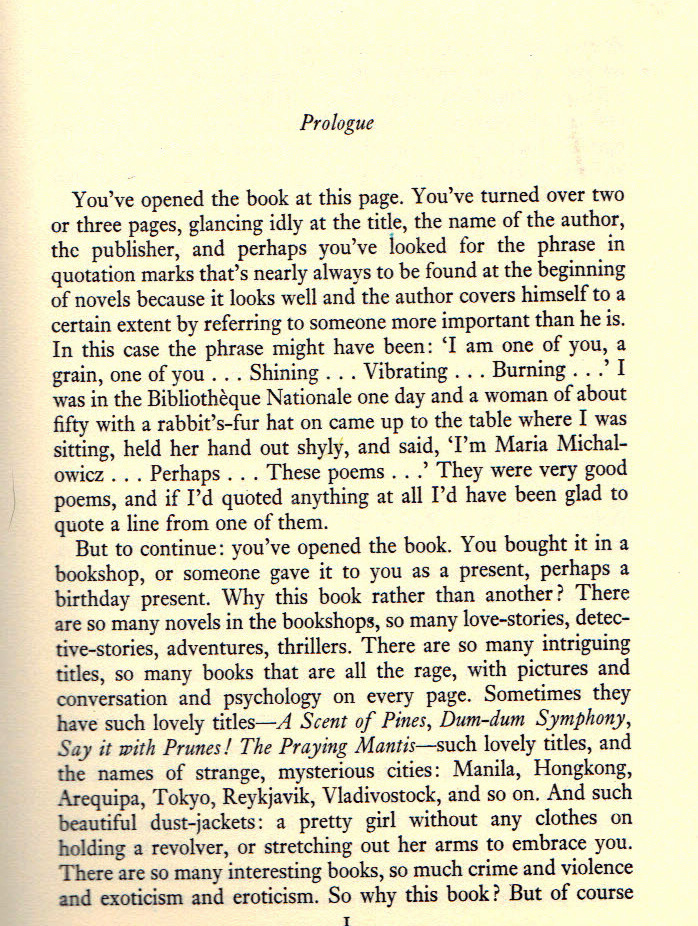
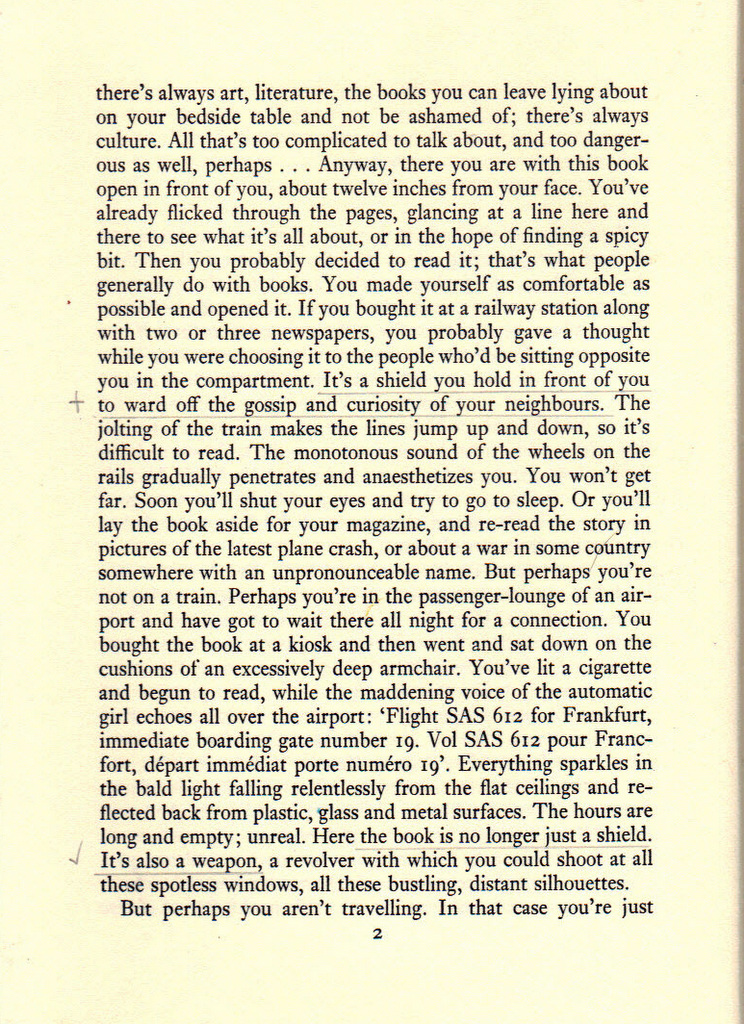
On entering the world(s) of the text: Prologue

via J.M.G. Le Clezio

Terra Amata

Terra Amata2

Terra Amata3

Terra Amata4