Weekend classes in Library & Information Science =
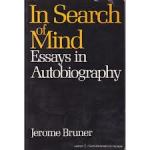
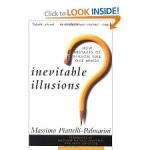
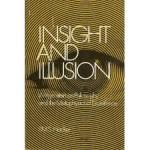
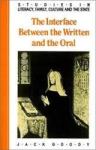
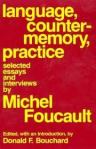
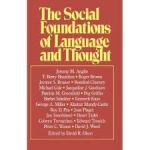
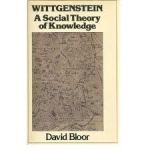
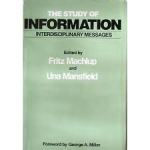
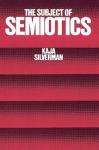
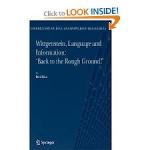
here’s a glorious sample to browse the “information”: Language & Representation, David Blair
with the music of:

Weekend classes in Library & Information Science =
here’s a glorious sample to browse the “information”: Language & Representation, David Blair
with the music of:
feel free to join – the water’s fine!
Items arriving today:
and how I stay in school:
keeping on keeping on
“Write about what you want to know”
-Lance Olsen-
Writing for children, like talking to them, is full of mysteries. I have a child, a six-year-old, and I assure you that I approach her with a copy of Mr. Empson’s Seven Types of Ambiguity held firmly in my right hand. If I ask her which of two types of cereal she prefers for breakfast, I invariably find upon presenting the bowl that I have misread my instructions — that it was the other kind she wanted. In the same way it is quite conceivable to me that I may have written the wrong book — some other book was what was wanted. One does the best one can. I must point out that television has affected the situation enormously. My pictures don’t move. What’s wrong with them? I went into this with Michael di Capua, my editor at Farrar, Straus & Giroux, who incidentally improved the book out of all recognition, and he told me sadly that no, he couldn’t make the pictures move. I asked my child once what her mother was doing, at a particular moment, and she replied that mother was “watching a book.” The difficulty is to manage a book worth watching. The problem, as I say, is full of mysteries, but mysteries are not to be avoided. Rather they are a locus of hope, they enrich and complicate. That is why we have them. That is perhaps one of the reasons why we have children.
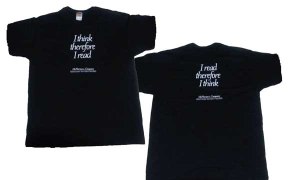
Came across this article…seems to jibe with many blog discussions/posts floating about out there just now…thought I’d like to share it. It’s a bit dated in places, but the overall concept seems worth your ruminations….
Introduction:
Why Books?
LIBRARIES 2000
Libraries 2000, a seminar to re-examine the function and future
development of libraries in Alberta, was held in 1983. A committee
consisting of representatives of Alberta Culture, the Alberta Library
Board, the Alberta Library Trustees Association, the Library Association
of Alberta and the Learning Resources Council of the Alberta
Teachers Association was set up to look into ways of following
up on the suggestions arising out of the seminar. This is the second
booklet commissioned as a result of these discussions.
Public libraries have long attempted to fulfil many functions and
roles in our society. As financial and human resources have become
harder to obtain, librarians and library trustees have had to give
more attention to examining these roles and assessing their relative
worth. In recent years, there has been increasing discussion of the
public library as an information provider, but less discussion of the
more traditional view of library service.
Sam Neill is a professor at the School of Library and Information
Science at the University of Western Ontario, London, Ontario.
This booklet is based on a speech delivered at the Ontario Library
Association Conference, Ottawa, 1984, entitled “The Role of a
Traditional Library in an Age Bludgeoned by Information.” The
opinions and ideas expressed are those of the author and do not
necessarily represent the view of Albe11a Culture, or the Alberta
Library Board. The assistance of the Alberta Library Board in editing
and printing this booklet is gratefully acknowledged .
(click for full article, please)
dove-tailing ever-so-nicely with another book I stumbled across in the library (which also contains a fine consideration of David Foster Wallace in one of the chapters), and considers, I think, the same sorts of issues of humaneness and being alive meaninfully:
“Language discovers what one might know, which in turn is always less than what language might say.
We encounter some limitations of this relationship early, as children. Anything with limits can be imagined (correctly or incorrectly) as an object, by analogy with other objects – balls and rivers. Children objectify language when they render it their plaything, in jokes, puns, and riddles, or in glossolaliac chants and rhymes.
They discover the words are not equal to the world, that a blur of displacement, a type of parallax, exists in the relation between things (events, ideas, objects) and the words for them – a displacement producing a gap.
Because we have language we find ourselves in a special and peculiar relationship to the objects, events, and situations which constitute what we imagine of the world.
Language generates its own characteristics in the human psychological and spiritual conditions.
Indeed, it nearly is our psychological condition.
This psychology is generated by the struggle between language and that which it claims to depict or express, by our overwhelming experience of the vastness and uncertainty of the world, and by what often seems to be the inadequacy of the imagination that longs to know it –
Language is one of the principal forms our curiosity takes.
It makes us restless.
As Francis Ponge puts it, ‘Man is a curious body whose center of gravity is not in himself.’
Instead that center of gravity seems to be located in language, by virtue of which we negotiate our mentalities and the world; off-balance, heavy at the mouth, we are pulled forward.
Language itself is never in a state of rest.
Its syntax can be as complex as thought. And the experience of using it, which includes the experience of understanding it, either as speech or as writing, is inevitably active – both intellectually and emotionally.
The ‘rage to know’ is one expression of the restlessness engendered by language. ‘As long as man keeps hearing words / He’s sure that there’s a meaning somewhere,’ as Mephistopheles points out in Goethe’s Faust…”
–Lyn Hejinian, The Language of Inquiry–
– a sampling of the results…
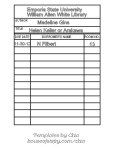

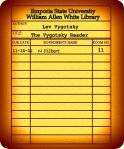

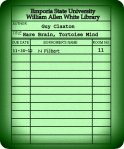

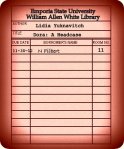


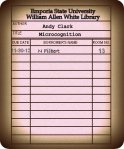
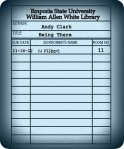

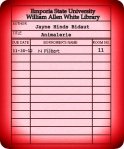


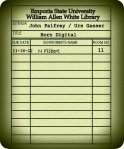

As if all-knowing, the superhero librarians throughout the US and through the mighty workings of our very own ESU William Allen White library and staff – (particularly those involved in the Inter-library Loan department) delivered to my door as birthday extras the following!!:
WHAT A DAY! THANKS UNIVERSE AND ALL ITS PARTS!
Music, Musicology, and related Matters
a photographic pilgrimage to Orthodox Christian monasteries across the continent
Meandering Through a Literary Life
Orthodox Christianity, Culture and Religion, Making the Journey of Faith
Erik Kwakkel blogging about medieval manuscripts
"That's the big what happened."
Networking the complexity community since 1999

 All my Words are Silent