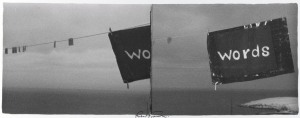

Reasons why a novel, memoir, or longer work may never be “FORTHCOMING!” from me: whenever I begin to write I get absorbed in the activity of writing. I seem unable (after all these years) to force myself to craft characters or plots or descriptions… The characters are LANGUAGE, the plot is made by LANGUAGE, and the LANGUAGE only seeks to inscribe itself…
Tag: communication
Communication : Calibration

Perhaps we join in a wooded area, wander about, espying for foxes and deer, or bunnies.
Maybe we just use our eyes.
Sometimes we use the term-containers – words of our languages – bring varieties of ourselves, our experiences, our learning, our responses to syllables and sounds, and craft new spaces whereby the potentials echo.
I raise my hand, you respond in kind. A nod, a wave, a shake.
Perhaps the fuzzy boundaries of ourselves engage – we hug, we kiss, we make sounds one to another…
Both leaping over the log. Both scrambling the scaffold.
Gazes infiltrating one another on the river, on the Van Gogh, on the sculpted heap.
“You heard that too?”
Footfalls.
Whispers.
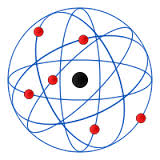
Suppose we take up space. Suppose we are compositions of compositions that make a kind of interactive boundary – both for ourselves and that which surrounds us. The same, but different. Suppose all that spins around me gives me a sort of “area.” Suppose I lend the air, the water, the sound and ground a similar sort of “area” by my own buzzing, my own movements. Call me color. I am “blue.” But when I engage you in my blustering – you, “yellow” – we don’t end up making stripes…
WE, are “green.”
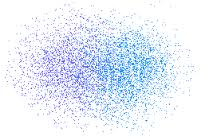 I breathe…my compositions of compositions exchange and interchange – some re-inhaled, some new and distinct, some left to re-compose. I enter you. I lend a boundary. I find I do not dissolve. And yet, exchange.
Our voices, carried by term-containers, expand, swell, contract, until there is a blend of meanings, intentions.
Maybe we only inflect.
Our fuzzy, buzzing boundaries.
Engage, exchange, co-constitute.
You move. You lend me form. I respond. I interact in kind.
Fuzz, buzz, calibrate.
You said. I replied. I summarized. You disagreed. Partially. Edit, recompose.
If “I” am a composition. I am composed of compositions – recognizable. Body. Organs. Veins. Plasma. Neurons. Molecules. Clusters. DNA. Synapses. Atoms….
You, composition of compositions…a composition within compositions : surround, situation, “space” (is there such thing?). Space, time – any emptied space to occupy? No. Displacement, exchange. Calibrate.
Table. A/C. Drink glass. Water. Music. Each element, action, “happening” altering, vibrating, co-creating the rest…
Calibrating BEING.
OCCURRING.
THIS.


Co-composing…compositions made of compositions made of…within compositions of compositions…making…
We calibrate.
I enter you. We correlate. Calibrate. Collaborate. Co-create.
I recede.
You, though different, remain.
How intimate it can be…and yet.
We lend and are lent. Gift and are gifted.
Our fuzzy, buzzing borders.
Ever-exchanging. Ever-engaging.
We climb. We calibrate.
We dance, we speak, we respond, we laugh, we play, we swim…
We dream, we sleep, we breathe…
WE CALIBRATE…
…and become.
This is mysterious to me. Mysterious and wonderful. How I tend to think I “know” I am made of the same miniscule moving structures as you, as air, as mountain, as stream… And yet I retain a form… maintain an autopoietic and dynamic interchange and existence (for a time) as a cognizable (humanly) and dynamic “organism” or form of life. Like a language, a rock, a helix, an artwork, an idea. That I “know” these elemental spaces composed of tinier spaces making up larger spaces are all active, are full, are constantly coming and going, interacting and recombining, becoming and altering, editing and con-forming… and yet we identify, recognize, perceive…and do it again – come together, and calibrate…
Action. Language. Presence. Exchange.
Remain. Begin. Engender. Preserve.
BECOME.
Each of it: action, communication, gesture, touch, sense, perception, behavior, belief,
OPPORTUNITY and ENACTMENT of CALIBRATION…
COMMUNICATION
hello.
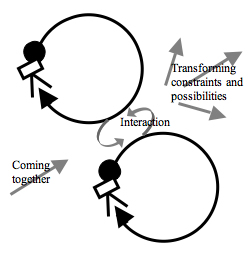
To be continued…
“Yet if language gives no words for what happens…it nevertheless gives itself”
-Christopher Fynsk-
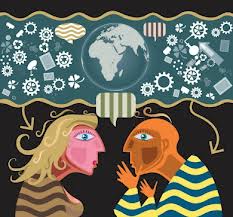
“Communication is the awareness of a chain of meaning of which every speaker and interpreter is part”
-Renate Lachmann-
“Two voices is the minimum for life, the minimum for existence”
-Mikhail Bakhtin-
ReWritten / ReWriting
accidentally opened a file from the past that seemed related…

The Pleasure of Reading
In other words (than what? than which?) we all of us are readers, all of us writers.
That is a pleasure.
And all of us, always, doing both. Simultaneously.
Speaking of my textbooks (were we?) – information sciences, developmental and behavioral psychology, reference services, librarianship / and the research to the side – physics, evolutionary biology, neuro- and cognitive sciences / my pleasures – novels, poems, stories, others’ blogs, visual, aural, literary artifacts / my relational – wife, children, family, friends, society, culture – gestures and vibes and dialogues and signs / my “self” – sensations, perceptions, formulations of these, reformulations, adjustments and maneuvers.
In other words, at all times, I am reading, even if only my lack of memorable dreams, or pulses and breaths. And writing it all in actions, movements, responses, adjustments of speaking and writing and making.
It is a metaphor, obviously. Perhaps.
Roman Jakobsen purported that “all meaning is a form of translation, and multiple translation (polysemy) is the rule rather than the exception.” (I am translating his text just now into another con-text).
Wolfgang Iser’s (perhaps, anyway insofar as I am translating it here) concept of actual text (text as it is recorded by an author) and virtual text (actual text as read by a reader).
This is an aspect of the deep living pleasures of reading/writing for me.
An author/speaker/artist/scientist/mother/etc. has an urge or sensation – a possibility of action/behavior/message/idea (a virtual text) and translates it through multiple processes and levels of activity through some medium into an actual text/painting/utterance/experiment/recorded idea/sound, etc. There it is in the real world – a physical artifact in time and space – added – if only for a moment. Transforming (simultaneously) its maker into a recipient (translating a now existent text/sound/behavior/gesture/sculpture/experience for him or herself) and if any witness/participant/auditor/recipient or reader is in his or her environment they are simultaneously interacting (via translation through their own tools, language, perceptions, sensations, mood, etc) with the actual text, writing a virtual text (translating) of their own.
And it goes on. And can be done innumerable times, this process, whether using an identical actual text over and over, or simply writing/reading life as it occurs, making it occur.
Paul Ricouer: “stories are models for the redescription of the world.” Possibly. Or at least redescriptions (translations) of models for redescription.
Iser: “the relative indeterminacy of a text allows a spectrum of actualizations…literary texts initiate ‘performances’ of meaning rather than actually formulating meanings themselves…the reader receives it by composing it.”
Language, action, behavior as possibilities rather than certainties.
So that I can encounter with all I’ve encountered/experienced an actual text by psychologist Jerome Bruner translating these very quotes and contents with all he has experienced and translate it with the multiple translations of family life and being a human organism and novels and pains, poems and stories, paintings and laws, translated with data and education, emotions and animals, translating with you and a computer, internet, digits and bits, translating into…
a great pleasure of reading is writing reading
or, “a writer’s (reader’s) greatest gift to a reader (writer) is to help him become a better writer (reader)” – Jerome Bruner (parentheses mine).
literary texts as “epiphanies of the ordinary”
-James Joyce-
On how I miss my therapist.
Please take the time to watch the video.
Our 80/20 Vision and Rememory
“Nothing’s like anything else in the long run.
Nothing you write down is ever as true as you think it was.”
-Charles Wright, “Lost Souls”-
Rememory is just a thing we do when we “need” it – or, for reasons that aren’t really rational at all – we seem to feel we do. In other words, our experience (what our organism, our little assemblage of cells, lives through) works in us like nutrients that our neuronally connected organs (even smaller collectives of cellular functional troupes) select predictively – as probable perhapses – to aid our survival in each moment.
That it’s always subject to change, often flatly incoherent, or dreadfully inappropriate to any given situation proffers no guilt or dishonor – could we really expect accurate predictions of unforeseen and total novelty with infinite contingencies each next moment is?
We do the best with what we have. After all, we’re not even able to use our tools intentionally – they work on automatic algorithms we are not aware of unless there is a problem. Scientists might use machines and fabricated contraptions or instruments to measure and calculate “experiences/experiments” – something semi-controlled, devised and arranged in a lab. We, on the other hand (scientists included), do not have access to our controls (of which there really aren’t any – just meticulously interconnected and recursively interactive meshworks) – our controls (or rather, effects) result in their humming along.
Ah, rememory, refraction – there whenever we need it (or think/feel we do, or hadn’t even sensed it) – and never to the point but that we make it so – experiencing piecemeal fragments the system spits out in relation to itself and its environment, and puzzling them together as if encountered in the world – using them like stencils or frames through which to assess our surrounds.
What a tricky treat! Phantasms of deconstructed digestions floating a stream, plucked willy-nilly by impulsory triggers and collaged onto a canvas called Perception. Howdy-do! When 80% of the show is our relation to ourselves, it’s no wonder we feel criticized! (for a sensory example – here’s a breakdown of what influences what we see….):
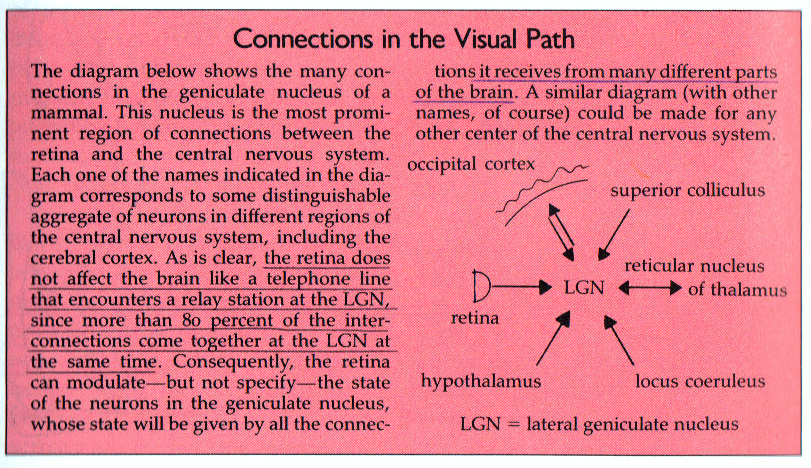
– from Maturana and Varela, The Tree of Knowledge
Each of us with our 80/20 view on the realms between – the worlds we share – it’s no wonder we’re ill at ease arguing agreements. I’d have to ask my sons to calculate the potentials, but even from my 80+20 it’s infinitesimal – our shot at “sharing a moment” as we say.
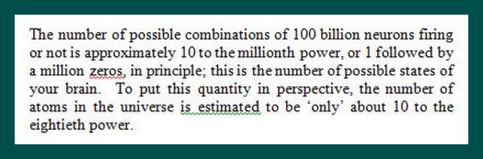
-from Rick Hanson, Buddha’s Brain–
Perhaps to some Turing machine, or deep-distance galaxy view we’d look like a calibrated system, but the contingencies and unknown variables all changing with each changing change surpass even the weather…
So go on rememoring and adapting your stories, just keep in mind the bric-a-brac you’re rummaging in and it’s exponentially altering situation and experiencing states (by the millisecond), and consider offering those with and around you something in the neighborhood of 80% benefit of your doubt (your self-generated POV)!?
“I give you mine [dreams] for the same reason,
To summon the spirits up and set the body to music.”
-Charles Wright, Lost Souls-
“To touch in the between of words”

Fiery, Luminous, Scary – Erin Manning
The above is a snapshot from a participatory art project entitled “Folds to Infinity” – you can further investigate here. The verbal link is to an article by Erin Manning that reflects on some possible interactions and responses participatory art and movement enable or frustrate. As I read this article, with its focus on space-time relations such as event-spaces, materials, sound, rooms, fields etc., I could not help but be curious about the shared space-time relational field of texts, pages, pixels, blogsites and wonder about the more-than that authors/designers/readers/viewers compose – co-create – in these pages we invent each day. The will toward participation that affects any work’s unfolding. The design of our syntax and placement of images, types of terms and content of pictures all go toward constraining our viewer/reader participations towards meanings prefigured in our compositions. And yet, I would wager that the majority of us hope for our creations to be participated-with, engaged, even co-created with the sensing minds of those these spaces open up. “Spacetimes of relation are never neutral. They are fiery, luminous, scary.” I am hoping for ways and words and ways with words that allow, perhaps even create, spacetimes of relation that facilitate the more-than possibilities each engagement with them have potential of.
erin and others certainly activate the seeming “folds to infinity” of the matter in my cranium.
On Rage, a poem

Rage
“ …that dog
barking at nothing
because every time he’s barked at nothing,
nothing’s gone wrong and why not keep it that way?”
– Bob Hicok, “One of those things we say…”
Blaze searing eye-corner
fierce rupture
a hazard of blades
we two, entangled –
emotion dug deep and flung far –
architectonic
like the causes of weather
complexity systems
large beyond measure
on any scale
insinuated within
spaces we intimately share
archaic wounds – a butterfly’s wing –
tempest stress to tumultuous effect
(deep dug, far flung)
we two, engangled
emotive amygdalas in action
safe love, a hazard of blades
 All my Words are Silent