Composition

shadow composition

Approach the page with no idea.  No secondness of reality or facts.

See what the words will do.  Like spontaneous sex with your lover.

What happens next.  If you’re lucky.

What words will come?

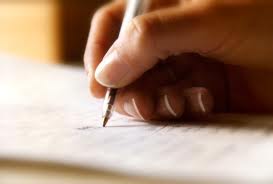
Look closely.  Draw the pen near the paper.  Remember, you’ve no idea, like what I’m writing.  Language finding synonyms making thoughts.  Perception in the body.

Something already in the clear, or on it.  Never clear.  Do you see it?

Don’t let the first mark frighten you, it is already done, everything coming after you can edit: crossing out, crossing over.

See the line?  To chase or avoid, either way, impossible to capture or erase.

Look again – do you see it?  Hover but don’t inscribe, what is it waiting there?

I’m not being mischievous or rhetorical, facetious or mystical.  I want you to see what is always already there, predividing your canvas, filtering the open before you engage.  What you cast out around you, the shadow of your general ‘self.’

See it there gathered at point of pen, shading back toward your physical hand and pooling around it?  The absence of your presence forming incorporeality.

You are visiting here.  Your shadow is the record.  What you make out you make up.  But it’s never the first word or the beginning line.  Reality comes before you and spreads out, interfering and refracting the light you wish to use.

At times a bulky blot, at others barely discerned, evidence nonetheless that you are, in fact, tracing.  Operating in a kind of cloud of substance, adding lines and loops, particles, threads.

They say art (and representation) began in shadows, with shadows – recognition of other and presence and beyond.  Likely a myth that is true.

For starters, notice the outline, letting it outline itself/yourself, the visible ghost informing your are

Now, since you’ve already overshadowed what’s next, begun what’s begun, press down and press forward, press on…
Vicente Carducho, tabula rasa. engraving, 1633

Writers Resources

Chekhov in his letters to his brother wrote: ‘Start writing from the second page.'”

“He was more blunt in conversations: ‘Tear out the first half of your story; you’ll only have to change a few things in the beginning of the second half and the story will be perfectly clear.'”

“The unity of a composition is not based on whether it has a beginning, a middle and an end, but whether it creates a unique interrelation between its parts.”

“The concept of unity (the whole) is historically changing.”

Aristotle wrote in Poetics (Chapter 8):

Unity of plot does not, as some people think, consist in the unity of the hero.  For infinitely various are the incidents in one man’s life which cannot be reduced to unity; and so, too, there are many actions of one man out of which we cannot make one action.'”

[all quotations from Bowstring by Viktor Shklovsky]

Making Words

Action: Writing


Woven in the circles of making, I felt and I thought, I wrote (I thought) “What is called writing?”

An action, a process, a braiding of becoming.

In that way it is like breathing, sensing, walking.

Also not.


I wouldn’t, for instance, “do it anyway” – wasn’t born with the instinct of muscle and nerve to be verbal, textual.  I needed other people for that, and the whole history of the world, and the tiny stories of my community and location.  All those things, all those “others” – elements and entities NOT me trained me to language.  Taught me to “mean’ something with a sound or a gesture, out of an enormity of possible sounds and motions, infinite and miniscule in their variety.  So that I utter and behave as a Kansas boy raised in the 1970s in the United States of America; I can say “what” about forty different ways, but not like someone from Tokyo, Moscow or Bangladesh.

Clearly I went along with it, became, developed my own versions of signification and cadence, intonation and grammar.  Working well enough when among the great pool of English-speakers who read literature, philosophy, poetry or know something about parenting, divorces, theology or art.

Outside of that I suspect I’m a foreigner.  A penguin squawking and waddling about.

Given the breathing, perceiving, pulsing, walking thing, I can usually find my way among other humans anywhere, but not without a strangeness and suspicious curiosity about the way I do it, and why.

Likewise.

Words written are things.  Objects to collage, cut and paste, assemble/dissemble, rearrange.

That’s what I love to do.  I like very much listening to their silences, their potential precision and fluid spillage and wash.  I love finding shapes there and rhythms.  After all, music isn’t about the melody, but all of its sounds and silences together.  But writing isn’t music, it’s writing.

Stories aren’t histories, expressions or truths – they’re words.  Lists aren’t tasks performed or groceries, notes aren’t emotions or commands – they’re words.  A painting of a mountain isn’t a mountain.  It’s a painting.

So my blog, my work, my play, my joy my grief my desire and delight is this puzzling and fiddling about with this (for all practical finite purposes and aptitude) infinite galaxy of lettered objects.

What it might “mean” or “say,” “express” “communicate” or “intend” and so on – I guess that’s up to you – making your own creative use of my arrangements from your very own culture of sounding signing and gesturing.

A happy medium, as far as I’m concerned.

N Filbert 2012