Interstices – continuing in between

more sections arriving from the Beginnings and the Second

– 3 –

Message being – she looked at me, incredulously.

– “What and/or Who – are you?” she requests.

I don’t know.  No one knows, I said, half-joking, persisting, prolonging, staying alive.

Longing = staying alive.  Longing = I’m still alive.  And I look at her, longer.  Which means: if only I knew.  The interstice (according to me).  We converge.  A gaze.  I must go.

That’s what I wanted.  The choice.  The decision.  A godlike thing for a fragile, finite boy.  The both of them: god – a fragile, finite boy.

No one owns.

When I returned, I could have said “My love, I am not present with you now.  I am in a future predicted by a possible past.  I am afraid.  I am not here.”

She might have responded: “I see and hear and understand that you are not here with me.  I too will retreat, remove, go away, until you return to me – here, to here.”

I babble on.

But I don’t say “Hello, my love.  I am not present.”  No, what I speak instead is a muddled report of my feelings and fears, my ideas – my present experiencing – a gummy wad of future and past, uninformed by where I am (with you) or who I am with (you) or when (now).  Constructed instead by where I believe I have been (past), where I think we are heading (future), and how I feel about that (afraid).

She recoils.

“I’m going away now” she says.  Which is not where I am.  Not with me.

But I meant.  I meant to say (once I figure out where I actually am): “Hello love.  I am afraid.  I am past and future.  I am absent.”

To which she replies: “Good to know.  Tell me when you arrive, here.  With me.”

Here now.  Or, Nietzschean-ly now/here, is that, and “exactly” : unlocatable.  Nowhere.  NOW + HERE…present.  It can only be lived, not thought.  Thought is too slow.  Lags ahead, leaps behind.

Oh you, I might have said.  And she may have recognized me.  Perhaps.  Now.  Here.  Presently – in the nowhere – the between – the “Interstice.”  Where what occurs, occurs.

“Hello.  I love you.”

– 4 –

Finite, fragile boy.  The fragility and finitude are true, I suppose, but not unquestioned.  However they withstand (the questioning).  They withstand the questioning.  Because I don’t know, and it is not wisdom, this cloud of unknowing, it is finitude, and I am fragile, not only because it’s true.

I am fragile because not all the branches hold.  When climbing.

– “What is it we are speaking of?” she asks (she – the you – asks me – the I).

Past and future, I might have answered.  The unknowing.  But did not.  Instead said – “unreliable.”  Rises, passes away.  Novel-to-familiar.  First one thing then another, desire fades.  I am not stimulus.  Enough.  For no reason.

I, illogical.

You, burdened.  And thus you sigh.  (She sighs her burden, a question).

And I retort.  “No.”  Or, “don’t go.”  But you might, because I have gone (or didn’t arrive, not HERE, not NOW, but somewhere else made of cobbled up pasts and unpredictable aheads).

“I love you.”

But how can that be?

It can’t.  Yet it is.

Perhaps.

I don’t know.  But it is not wisdom.

Interstitial

part two of a rambling….

visual fields

– 2 –

            Suffice it to say, I’m not much into “proofs” – in language or tone.  Suspect I can’t believe them.

I won’t be able to prove there’s an interstice – I know that.  Won’t even attempt “within reason.”  Suggest.

There’s no “let me explain” to this.

– “Explain what?” she inquires, “exactly?”

The point, I would say, exactly, or nearly precise – that there isn’t.  I don’t know.  But it seems we converge – in some tiny remarkable space within time (or vice-versa) – we’re dis-missed.  Or not missed – how to say it?  There’s a meeting.  It seems.  In a margin, or more.

Our hallways (think architecture?) overlap?  I don’t know.  I’m just saying, in hopes to be, to look at you longer.  Longer.  It’s a fight against death, that small word.  Simply, longer.  With you.

Am I clear?  Making sense?  I don’t know.

– “Clear as mud, what you’re saying” she says, “near ‘exactly’.”

I don’t know.  It’s unwise.

And I hum when the words sound just so.

– “Just so, how, exactly?” she asks.

Interaction.  Locution.  Between.  (I am thinking).

“Interstitial,” I say.  Interstitially?  I wonder.  How could I know.  It’s all susceptible to the mark.  The mark of the question.  I think about changing my name.  Did before.  I like titles.  It was “Mark” for the question, the sign, and its music.  I would be Mark, Remarking.  The one with the curlicue brand, like the Zorro but curved to a point, on everything : ?   “My point, exactly,” I tell her (she stays) – leaving my mark.  (If she’ll stay, I’ll rescind…anything).

It’s okay.  I’m familiar.  Not that you’re worried.  There’s no worries, it’s all temporarily temporary – both state and enaction.  It’s just so (so it seems).  “Just-So Stories,” he wrote, long ago, relatively – they’re alike and akin, episodic.  We describe.

Neither here and/nor there.  Interstitial.  In-between.  What I wanted to tell her, to say.  And I would have, had I known.

– “Known what, exactly?” she’d once said, and I’d stopped, for the meanings were lost, non-existent.  Just so.

“That’s just how it is” I had said.  And don’t know, was surmising.  The world hypothetical and inspired (I’d thought, at the time) – simply possible.  I was wrong (perhaps).  But she stayed (temporarily).  The words lose their meanings.

I hum.  To myself.

I write: “This is what I wanted to do.”

All that’s required is a ‘trigger’…a rule.

We

NANOWRIMO Reminds: Any Excuse to Write

THE INTERSTICE

I told her that I would have told her, had I known.

-“Known what, exactly?” she said, “Really!?” she said.

Yes, I said, yes, I would have explained what I felt to be true – about the “interstice” – what I felt I understood, I would have said.

As usual, the sighs, the diverted glances, the “I-don’t-knows.”

It’s okay.  I’m pretty used to it, not that it still doesn’t hurt, or squash some deep part of me – annihilate, erase – but familiarity breeds, and it’s not contempt, at least not for me.  More like resolve, or, well, accustom, I don’t know.

Still I would have conversed about the interstice.  Or its plural.  No one can know what we’re talking about (in my opinion) – that’s why we talk (in my opinion).  But I like to look at her.  Very much.  So sometimes I keep talking so that I can look at her longer.

Thus I would have explained – tried to – about the Interstice…had I known, I tell her.

-“Known what, exactly?” she asks, “Really?!”

It’s okay.  I’m used to it – exasperation.  It’s a sort of fatigue that settles on my interlocutors – my family, my friends, my lovers – as I triple/quadruple/unendingly (exponentially?) second-(meaningless term in this accounting)-guess whatever it is (emotion, idea, memory, event) I attempt to convey.

I don’t trust a thing as long as it’s questionable, and I’ve yet to discover something unquestionable.  I like inventing titles though.

She’s looking at me – softly, sadly, gently and quiet.  Sometimes she strokes my hair with her hands and lets me rest my head (the physical part) in her lap.  It kind of helps.  But the rest doesn’t rest.

It’s okay, for the most part, I’m used to it.  It’s “me” as they say, as it were – what I’m used to.  It doesn’t matter, or does in unquantifiable ways, but I keep at it.  Anyway.  I can’t seem to help it.  Well, some things do – like vodka, sex, sleep – but only temporarily.

Things are only temporarily.

That’s the sort of idea that keeps me alive.  Temporarily.  And second-(exponentially)-guessing.

She’s still there.  Here.  Though.  Hence the interstice.

I try to explain.

As if “interstice” possessed meaning – definition beyond the moment activated or utilized.  As if it indicated.  “Meant” – a convergence-point (limitless above and below and abroad) of conventions of time and of space – a realm that felt (seemed) shared.  Held in common.  Nothing is “held” – or that temporarily.  It seems.  I don’t know.  It’s certainly questionable – is it – “certainly”?

I don’t know.  Which I thought, or I think, is the entry to wisdom, but even that – I don’t know.

She’s still here.  And I question – who is it?  Who is still here?  And what for and/or why?  And where is this trembling “here”?  I can wonder, after all.

-“Wonder what, exactly?” she queries.

I don’t know.  I’m a human.  Some odd conundrum of pieces and parts that cohere, correspond or reciprocate in hold-together activities for awhile…call it “organism,” there’s that, it would seem, but seem only, digging in it is hard to convince – a location, identity, consistency, avocation or being.  It’s just so – apparently – temporarily.

Exasperating.  You see?  You dig?  What I mean?  That’s what we’re after (I think) – what it means.  But what that means is uncertain, I think or surmise.  We don’t know, it would seem, we’re uncertain.

We ask.

Let me describe this – the interstice…

“Not another word.”

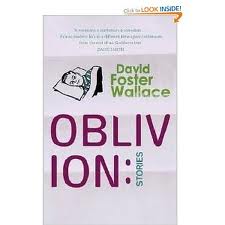
“You already know the difference between the size and speed of everything that flashes through you and the tiny inadequate bit of it you can ever let anyone know…this is what it’s like. That it’s what makes room for the universes inside you, all the endless in-bent fractals of connection and symphonies of different voices, the infinities you can never show another soul. And you think it makes you a fraud, the tiny fraction anyone else ever sees? Of course you’re a fraud, of course what people see is never you.” – DFW.

I don’t know what to tell you. If this piece by DFW doesn’t resonate and “work” on you, well, ok. Perhaps he’s not for you.  Please give it a read, again, if you have…

DFW - Oblivion

click for link to “Good Old Neon” by David Foster Wallace

Neuroses : or, why not begin again….?

Neuroses: or, Dynamite Walls Contain Us

– a self-help novel (what great novel isn’t?) –

            They said he, well, those who knew him said.  Really it should be “they” – not “ him.”  Inclusive.  “They” (neurobiologists) say neuroses can increasingly be viewed and investigated as ancient and useful survival strategies for our race.  Perhaps misapplied.  (Fragment, consider revising).

How does one decide between active and passive?  Betwixt present, future, past when creating, recounting or telling stories?  You’d think future, past, present, accordingly.  But there’s the aversion.  Aversion to active and present because it’s “suggested” : by programs – institutional and academic, technical and authoritative – software, hardware, “officiated.”  Machinated and conventional.  In stead, he’s drawn (attracted to, magnetized, compelled) toward past and passive – the un-recommended and untoward.  Why?  “They” – the humans.  The neurotics.  The ones that qualify.  Can qualify.  Will, do qualify.  Neuroses = something humans can (be/do/are).

The “they.”  Contained by equal and opposite neuroses: when this is evident, maybe we (or it) is called: “love.”  The balance of tension.  The incorporate.  I don’t like the rules.  I am predisposed.  (Fragment, reconsider).  I’m aware of my predisposition.  Therefore.

She.  He.  They.  Dynamite walls…contain us.  Or not.  (Fragments, reconsider).  The sentence/sentencing tells you – active, passive, future.

I want to tell a story in this way:  sometimes it happened; sometimes it happens; sometimes it keeps happening;  sometimes it might happen; sometimes it will.  Pause, breathe.  You are human – you never can tell.  There will always (perhaps) be too many contingencies, contexts, effects, probabilities, possibilities, variables.

A friend addresses the “four fundamentals of metaphysics” (oxymoron) – the Known-Known; the Known-Unknown; the Unknown-Known, and the Unknown-Unknown.  Makes sense.  Doesn’t.  Think about it:  we are possible, we are already, we have…

She was like, he said.  I said.  The 4th-grader wrote exactly what the adult said “in his head.”  Who could I be?  Perhaps the “he” – to contradict the known – (of the 4th grader).  She/it/he was correct.  I/you/we – were/are/will-be – exposed…via empathy, familiarity – the all that’s strange and true.

We are.  We were.  I am.  She is.  She will have been was.  As I.  As you, as we, will be, have been, was.

And LOVE.  And BE.  And.  And.  And.  This will ALWAYS be a NOVEL (i.e. some timeless combination of the known and unknown – what is, was, could be – living realities unknown as realities).

The she, the he, the they.  The you, the I, the us.  Love.  Hope.  Despair.  Being.  (Fragments – consider revising).

  • Dynamic walls contain us –

And how dynamic those walls!  Which shows the self-helping nature of understanding : knowledge comprehended and integrated…assists.  Assists insofar as efforts are being made at (or toward) making sense.  In other words – when each “individual” comes to realize that the containers are dynamic and uncertain (i.e. active and inter-, ex-changing permeable moment-to-moment[1] – altering apparent boundaries) – it will help “make sense of” why an individual’s “identity” is experienced as so very fluid and variable and shifty.

“Just the facts ma’am.”  Precisely.  (Perhaps).

In fact, no one knows the facts any more than we understand the properties or structures of fluids…of water…[2]  [There’s no footnote there – just a fascination by the conventional procedure of indicating a foot[3] by an elevated marking].  Public agreements – methods for maneuvering a world in concord, together – a gathering-space – endlessly intriguing).

I gesture.  You acknowledge.  (Fragments, reconsider – some conventional-mutual agreements {keep writing “arguments” where “agreements” supposedly goes}, commands/suggestions/authorizings).  I look longer.  Then am hooked.  You ARE curious, novel, strange, fascinating, unique.  AND familiar, recognizable, similar, probable, regular/regulated, assimilable, banal.  Strange AND familiar, novel AND banal, fascinating AND tiresome, conventional AND innovative – all at one go (when I pay attention).  I love you.  I am tired, not tired.

And so it is – the story goes – a familiar plot made interesting via details of circumstance and style.  The story goes (fragment, considered).

I am drawn to you.  BY you, in relation to.  Dynamite walls created interactively, actively, intertwined.  Intermingled and intertwined – intermingling (via gaze, touch, sound and sense) intertwining (via molecules, atoms, particles and waves, genes, movement) particles thereof, actions of particles of particles of = Intertwingled (-ing).  So to “speak.”

Traditionally (convention + repetition over time and selection (“history”)) “neuroses” have been publicly agreed to be “pathologies” – that is “disease-words,” irregularity-actions, abnormality-beliefs.  No longer!  NOW (perhaps?) the disease-describing (INscribing) words are themselves mutual banalities (thank you social sciences, relativism, anthropology + archaeology coupled to psychology/art/philosophy/biology/chemistry/medicine and…

“Inter-“ is useful for this – disciplinary/-mingled/-twingled/-spersed.

As the story goes: actively, passively, possibly.

She + He + It.  Sheheit…excrement with a Southern drawl.  The allure of things.  (Fragment reconsidered).  The taboo and grotesque, the extreme and revolting – and we’re right back to the banal.

Everyday.  The other, (the one eminently important to me, the neurotic) expressed emotion, attachment, attraction and bondedness toward (with) me.

A story began (in this case – BEGINS)

I -too-experienced (felt, dealt, smelt) interest toward / investment in – “her” strangeness (uniqueness and novelty, surprise and specificity) and familiarity (comfort, belonging, accord, comprehensibility) – THEREFORE – neuroses in reaction (alchemy, chemistry, biology, engineering, imagination) – RELATION – “love.”

Successful (“effective”?) interaction – an experience some call “power”(ful) [syn. compatibility, attraction, lust, desire, intimacy, connectivity – convergence – (relationship)].  WORDS.

We have yet to surmise, investigate, explore, hypothesize LANGUAGE ITSELF (i.e. modes or methods of conventional [publicly, mutually agreed] interactive, SHARED expression/impression tactics, activities, gestures, contexts and contents).

Now I stop (writing) in order to read (engage recognition + innovation – “learn”).

Sex is central.  Sex and perspective (in other words, “desire” and “belief”).

Easy to dub it all doublespeak, excepting that it’s the somewhat singular communicative way we humans go about storying our experiences…via dialogue, convention and sensation (conversation) – through one mediated path or another.

[1] -10 to the 10th power

[2] Footnote

[3]note
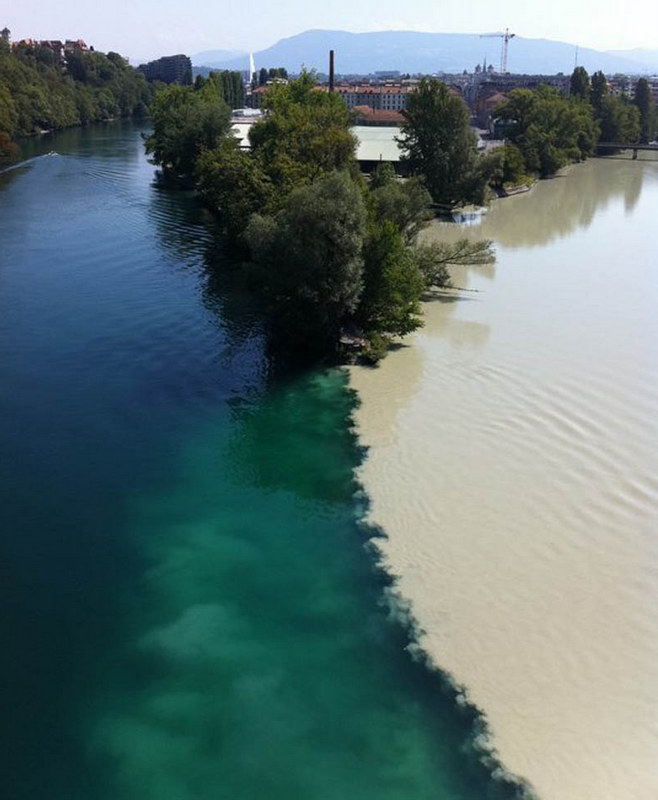
“The Conflux of Floods” : an Imagined Interview

two-rivers-colliding-geneva-switzerland-rhone-and-arve-rivers_2

            In a recently daydreamt interview (I realize these may be narcissistic, but they have occurred all through my life, and come to function as ways to take account of myself) – in which I had composed writings that earned critical acclaim AND garnered popular and commercial success (crazy, right?!) – I was being astutely questioned (after all, I am both interviewer and interviewee – it’s a daydream), and pressured to account for both the critical acclaim and the mass consumption of the tangled materials of my celebrated novelistic-poetic-essaying (some multi-genred hodge-podge and hurly-burly’d collaging of human inscription).   [Which is also, obviously, occurring in this everyday attempt at its retelling].  For better or worse.

By any account, each time I endeavored to formulate an answer to reckon for the apparent realities under fantasized questioning, I was foiled – ultimately unable to appropriately language ANYthing I strove to express – for the fundamental reason that the shared social convention of language – the available (or known) English nouns, verbs, structures, phrases, vocabulary, ontologies, etymologies, forms, content and context seemed false to my meaning as soon as I spoke them.

I would begin to assay a response, and each available term (even though utilizing an extensive and deft, adept English vocabulary) – each word I was choosing – would seemingly cancel itself.  I was caught in pregnant pauses – an author seeking a term – and the accessible signs and sounds of an encyclopedic dictionary all clanged untrue – inaccurate, incomplete and implausible – incorrect!

The interview proceeded (notably un-entertainingly and un-interestingly) with solid and well-considered queries posed from the history of human making, reflection and inquiry…followed by prolonged silences as I contemplated what might be honest, authentic replies…resulting in the beginnings of obsessive-compulsive, over-thought, manically scrutinized hesitations – cancelled out and undone, revised and corrected, taken back or erased as soon as they were spoken.  Simultaneously to becoming aware of their possible interpretations – conventionalized meanings gassing the atmosphere – the breath and air of their saying and hearing.

For example:  “Well, I think that authors…how could I speak for others…it seems to me…no that’s not right,” or, “It is my intuition, sense of things…my felt experience… no, that’s not quite it.”  “As the mind processes the body’s…wait…what is not body about the mind?  Our language presents a splitting of the two that was never there…I mean…no, no, this is inadequate…” and so on.  Nothing being said.

“Ever try.  Ever fail.  No matter.

Try again.  Fail again.  Fail better.”

-Samuel Beckett-

            The failure of the interview eventually came around to the following… a couple responses that might represent something almost accurate, maybe.  May communicate a touch of something authentic, honest.  It has stuck with me for a few days, and yet I can’t quite be sure…

A question arose concerning what I might have done, or be doing if I had fathered less children, were not bound to sustaining a family, and so on… I reflected awhile… and soon realized that I am unable to imagine my life without offspring.  Nearly half of my existence has been lived as a father, and I cannot think of experiences or expressions that they do not co-create in some way.  If any of it were taken back – the struggles and fears, broken marriages, anxiety, joys and determination to survive, regular interactions with their development, activities, quizzings and personalities… I only feel impoverished.

The illusional interview concluded with a large catch-all question, something along the lines of: “Your writings have profoundly moved some readers, yet you consistently express discontent – revising, beginning again, evading – even disappointment in your faltering, hesitant works.  Can you talk about this experience?  How do you account for your dissatisfaction in light of your readers reported satisfaction?”

My reply:  “The only way I can think to address this right now is in terms of a conflux of flood waters.  I, the writing one, have a flood of experience that I wish to understand, interact with, relate to somehow, attempt to comprehend.  I utilize the methods, marks and systems that we, as a species over time, have collaborated and devised with which to communicate – with ourselves, with others – and I attempt, attempt, attempt to forge some accord between the vast swarming flood that my life-experience ever is – as an organism embedded in world – and the means and methods we have for making sense of, imagining, and transcribing such total experiential flow.”

“The resulting expression is always more-than, distinct and different-from the felt experience I have of the flood (as the medium borrows from far beyond my own individual abilities or thoughts, capacities – an enormous fund of expressions, vocabulary and species-deep conventionalized experiences I could not possibly evince on my own) AS WELL AS less-than, deficient, incapable and variant from (not equal to) the ubiquity of my experienced flood.  I am left simultaneously hoping the conventions of language will prove adequate, and despairing they never will be.  What results from this tangle is a writing – a text, document, artifact – of my individual attempts to process the flood of my human experience in conventionalized signs.”

“From the other side of the markings comes the flood of each individual reader’s human experience.  As they (or we, I’m describing my reading experiences) engage the verbal expressions the writer selects to represent or elicit their own flood, the reader’s flood rushes through, around, with, into these written expressions.  When what is deciphered via these conventional funds of language feels apropos, accurate or apt to the reader’s experiential living flood – we are moved, feel met, acknowledged and represented, almost comprehended and understood, and we may feel that this collection, order, expression of language we have discovered in reading actually writes us, so to speak.  Which is why you may hear readers say such things as “I couldn’t have said this better…” or “I can’t imagine this expressed any other way…let me read it to you” (the thrust of quotation).  The section of text, general outlook, sound, rhythm or content of the artifact feels almost miraculously adequate and accurate to our own flood of experience.  Of course, often it does not – in which cases we revise or repurpose our readings toward knowledge or entertainment, something partial or other than full-flood experiencing, holistic (as nearly as possible) communication.”

“We know, as readers, no Other’s experience can be identical to our own, but in lucky moments it feels so.  Feels possible that our experience of the living flood is shared, understood, that our individuality, solipsism is not a locked room, or impassable barrier.  This is the “magic,” if you will, of human social conventions as mediums for individual experiences: they enable or facilitate our joinings, our cooperation, solidarity, convergence.”

“So neither the writer nor the reader are responsible for authoring profound writings, or rather BOTH are: multiple floods of experience crash through the arranged signs and symbols, separated by time and space and differences, but still possible violent confluences – depending on both, or all.  Living experiencings rushing the sign-sets enabling some felt sympathy, intimacy, accord between the floodings and the expressions: conflux.”

“Otherwise it simply doesn’t ring true – might be appreciated for its artistry or ingenuity, ideas, craft, imagination – but NOT an occasion for profound felt accord, convergence, a totalizing feel of representation/expression.”

“Floods in conflux: right now this seems to me the opportunity that care and attention, effort and awareness of our socially species-al co-creating mediums of communication (art, music, technologies, labors, habitudes, languages, modes of inquiry, etc…) allow for, offer us, in moments of fortunate concord.”

“Does that answer your question in any way?”

Tape ends.


a little more…

Intro Farewell

Xopher Alexander Porches

Progress

Introduction - Farewell


Work in Progress

Intro Farewell

a little something I’ll be working on through the Fall… believing, against all odds that there really IS a book in me somewhere….

Revisiting “I”-dentity

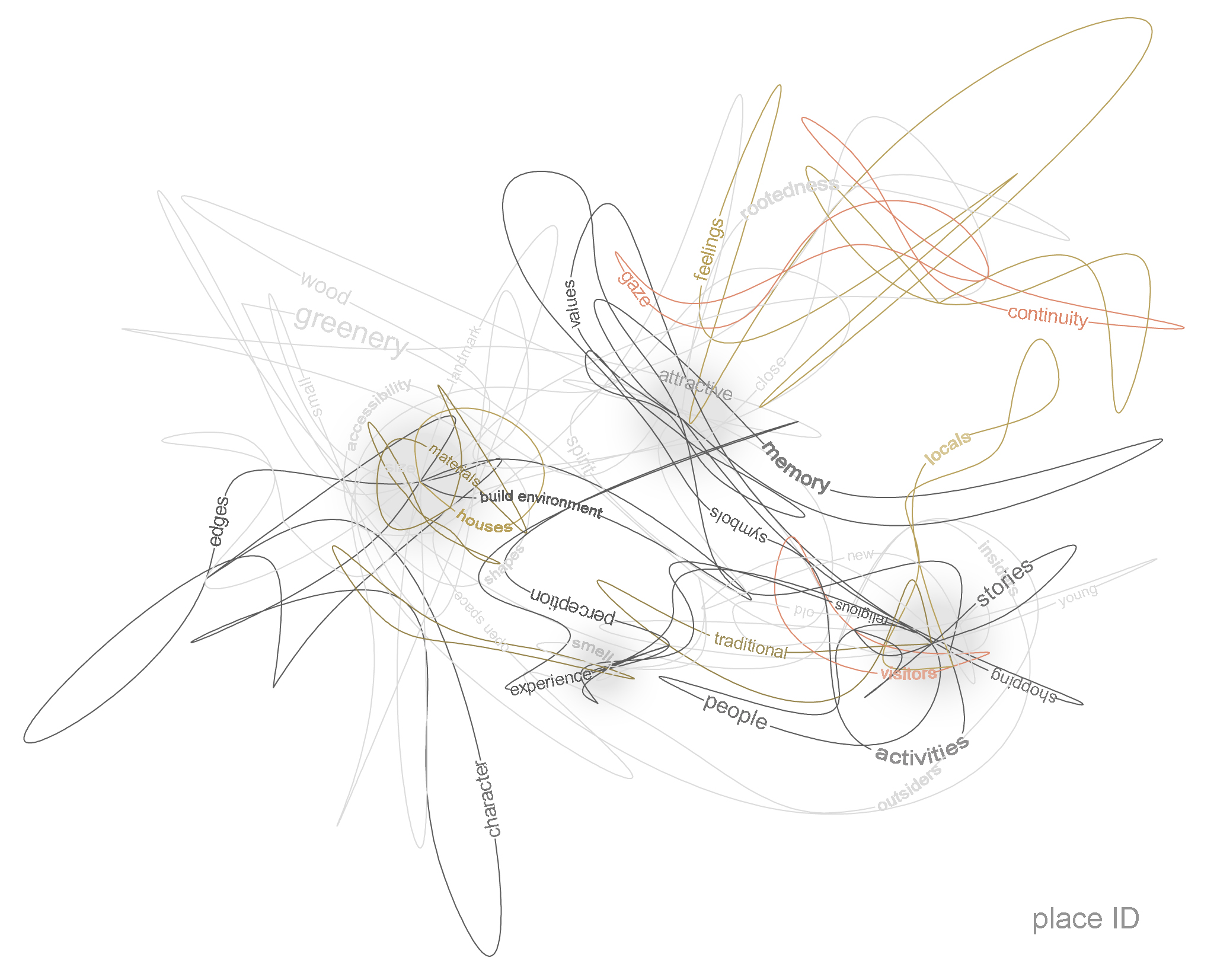
01-diagram-complexity-of-place-ID1

“I”-dentity: and/or “I” is a product of the Other and the Us


I wouldn’t know how to tell you my story, though life knows I try and have tried (as if someone cared).


What is it to you?  And “I”?  Is “we”?  When the parts are estranged, differentiated – unknown and uncertain?  If the question of being is YouMe + We?


My approach to myself as an Other and Us.


Thinking in time with the seasons – their perceptible growth and decay.  Their relations.


For all the world in the sheer ice of January the wheat crop is dead… but it rises late in the Spring.

The drizzling, chill fog is burned off by the Summer.


I succumb to grief, and then joy, but grief will come again (and then joy…and then grief… and then)…


Fall and its gradual dying: discoloration, departure.  What we experience as lengthening quiet.


I thought it was over (this “I”), again and again.  But it always turns out it is ready to bloom and express, given certain conditions (the “I” and what blooms, as well as conditions – differing every time).


Not quite fallow – apparently.  The seeds and resources are there (that’s the HUMAN) – called out by consortial action.


So “I” is the product of the Other and the Us.  Always more than one and all their relations.  Sea, land and sky, our cells and their content-rich contexts.


I’ve been abandoned and resumed without loss each mysterious gain.  I’ve betrayed and discovered new friends.  We don’t remember where to categorize pain: is it “bad” is it “good” – but then simply it is just like we and the other and the us.


“I” dent.  I am in-formed while in-forming.  When I move, lie or make, I am changed.


It’s not fault of an-other, an outside, an “external,” nor “me” in my body, my space and my time, but the “we” is the cause – the “us” in relation: all is com-pound, com-plex, and co-herent (“co-here-in-it”?).  Here together we change and are changed.  And thus love.


And our fear.  And we forecast by memory.


“I” am not “I” as “I” was.  Nor like the “I” “I” will be.  Which “I” cannot predict for all its co-dependence.  Which we labeled “dis-ease” and no wonder – it makes us uneasy being out of control.


Yet we’re only an “I” in a context.  A context of other and us.


When the “other”s keep changing (be coyote or mountain, NY or SF, literature, germ, snail or partner) the “I” also shifts and adapts, becomes “else,” becomes novel, strikes a balance with all that is “us.”


So give credit where credit is due (or a “cause”): whatever your “I” equals a me + a you – and is describable in manifold ways – as a god or the weather, a child or a feather, and is probably always ALL AND.


So no “OR.”  Choice is an additive move.


TV news brought us the phrase “and now this.”  Exponentialed via World-Wide-Web, and most probably true (or maybe it’s real).  Connections incalculable, meshwork beyond comprehension, impossible untangling deciphers…now this and now this and now this = “I” (and “you” and “us” and “we” and “world”).


Terms are confusing.


We Are.  Con-fused beyond knowing.


There is no other way (then/than) To Be.


“I” as a product of Other and Us.

Siegel - Neurobiology of We