Waking…?

Greetings all, I apologize for not filling daily posts with content (or…anything) of late.  I feel the loss myself as this serves as my creative outlet currently, and I feel it when I don’t create, purposefully.  Anyway, I’m trying to orchestrate some time in the next week to compose something.  For now…the music that I’m hoping will help me awake…pull me up out of a sea of academic work…

The Nothingness of Symbols

a drowning.  a submersion.  a baptism (immersion)

I am drinking the arbitrary nothingness of symbols.

I am writing.

Writing is both a cry and a response.

Intuition / rationalization.

Nurtured and natural.

In the realm of symbols, I am safely between.  In the place of no safety.  The nowhere realm – a world of now here.

Where I am drowning.  Delirious.  Drunken on these symbols, arbitrary and well-developed, representative and unnecessary (?) signs.

I am alive.

Combining intellect to emotion to situation and its social constituents…I am writing, uttering, verbalizing –

– and, by chance, perhaps, you are here.

I am side-swiped.  Side-tracked.

In other words,

I set out to circumlocute on this very “subject” / “topic” / “matter”…yesterday…

resulting in a nothing of the kind.

Drowning in a limitation of symbols –

“composition,” we call it,

“For it is in the nature of language, as I have already noted briefly, that it is governed by the principle of ‘duality of functioning’,..to be more specific, the distinctive features of the sound system that constitute a language are determined by the limited set of phonemes employed in constructing the next unit up, morphemes.  And morphology is determined by the uses to which morphemes are put in forming lexemes or words.  Words, in their turn, are formally describable by the functions they perform in sentences.  Sentences, in turn, achieve their significance from the discourse in which they are embedded.  Discourse is governed by the communicative intentions of the speakers.  The communicative intentions of speakers, of course, are governed by the transactional requirements of the culture.  And along the way, there are further determinants of form that operate in this same way…”

-Jerome Bruner-

That sickness, that plenitude, those realistic illusions – as if one were totally absorbed in the unrealities of the human way of being-in-the-world.

“the world is not what we thought it was”

-Jim Harrison-

There will be a day my sons will die.

Hopefully I will be gone.

My spouse will die.

Hopefully I will be gone.

There is a word for things that hold too much (e.g. “things that can hold no more”)

Things at, or beyond, capacity.

There are 26 letters in the English alphabet.  They are drunk, drowned, saturate.

And still there are fresh occurrences.

There are also #s, codes, algorithms, symbols…

I like the idea of doing something that matters, of being someone that matters, of my strange happenstance of existing as an organism having some effect, making some verifiable difference in a larger web of existing things

liking the idea certainly doesn’t make it so

and yet, perhaps,

My intention had been to talk about the wonder…

…that out of 26 letters…

this many years (generations, eons)

and variety

had even occurred.

Was all.

that meaning, is interesting, is cool

that, to (lil’ ol’) me…

it’s amazing…!

in 26 letters

#s, symbols, diagrams

we keep constructing…
Live Models

Notes on Fiction and Philosophy

(complete text linked)

Brian Evenson

I thickly recommend you print and mark up the entire essay, but to tantalize your imaginative mental taste buds, here’s a representative nuggety excerpt:

“Good fiction, I would argue, always poses problems – ethical, linguistic, epistemological, ontological – and writers and readers, I believe, should be willing to draw on everything around them to pose tentative answers to those problems and, by way of them, pose problems of their own.  For innovative writers, I believe, philosophy is always best an errant affair, a personal and intense wandering, a series of tools that one can employ, move beyond, come back to; it is our ability as writers to stay curious, to borrow, to bricoler, and to adapt and move on that keeps us from becoming stale.”

Possible Fictions: Fragments from the Book of the Living

-Christina Milletti, from Innovative Fiction and the Poetics of Power

“It’s always a question of beginnings”

Another year.  The title of this post comes from Helene Cixous’ introduction to Clarice Lispector’s The Stream of Life, both books being part of the tight reliable necessities of each of my own repeated beginnings.  No matter how I try otherwise, when the first of a calendrical year comes around with its socio-cultural aura-like atmospheric influence of the idea of new beginnings…I find myself tracking to the shelves for these few cellular texts like the body seeks to breathe.  This has been my inalterable habit for so many years now, that I can not avoid recommending them (with the highest deepest forms of  loving attachment), to all of you.

“evoking the incommunicable realms of the spirit,

where dream becomes thought,

where trace becomes existence…

I write you because I do not understand myself…

it is always a question of beginnings.”

“And for many years I have been writing,

borne by writing,

this book that book;

and now, suddenly, I sense it:

among all these books is the book I haven’t written;

haven’t ceased not to write.”

and additionally, today:

“What I mean is, if you have ink in your blood it’s hard to get it out of your hands…

Our reputation for excellence is unexcelled, in every part of the world.

And will be maintained until the destruction of our art in some other art which is just as good but which,

I am happy to say, has not yet been invented.”

“Samuel Beckett: Try again.  Fail again.  Fail better…

to conceive of writing as a possibility space where everything can and should be considered, attempted, and troubled.”

May your 2013 be filled with incredible texts and integral growth and development!

Architectures of Possibility

“Writing is a manner of reading.  It is a mode of engaging with other texts in the world, which itself is a kind of text.  And reading is a manner of writing, interpretation, meaning-making.  Which is to say that writing and reading are variants of the same activity.  Existence comes to us in bright, disconnected splinters of experience.  We narrativize those splinters so our lives feel as if they make sense – as if they possess things like beginnings, muddles, ends, and reasons.  The word narrative is ultimately derived, through the Latin narrare, from the Proto-Indo-European root gno-, which comes into our language as the verb to know.  At some profoundly deep stratum, we conceptualize narrative as a means of understanding, of creating cosmos out of chaos.”

“Yet in many cultural loci these days we are asked to read and write easier, more naively, less rigorously.  We are asked to understand by not taking the time and energy to understand.  One difference between art and entertainment has to do with the speed of perception.  Art deliberately slows and complicates reading, hearing, and/or viewing so that we are challenged to re-think and re-feel form and experience.  Entertainment deliberately accelerates and simplifies them so we don’t have to think about or feel very much of anything at all except, maybe, the adrenalin rush before spectacle.”

-Lance Olsen-

“Literature is the question minus the answer.”

-Roland Barthes-

Writing the Prompts

All that Remains (inspired by Josh Kramer, for Simon H. Lilly)

In the silence that becomes now, it was undeniably clear – there had been things we considered precious.  Recalling faces, moments, landscapes.  Evenings.  Not like nights or day, but poignant equilibria.  These felt like memories, or nostalgia, even tinged with griefs or longings, but mother said the past lacks such power – that we were feeling presently.  Simon says.  Says “grasping after full resonances” by losing them, turning them to language, participant only always in passing.  Says “left side.”  “Right side.”  “Simon says.”  I, at least remember.  Forgetting, and then the buckled alarm.  The tacking it on at the end.  Too lately.  But not quite.  So that all that remained was the grasping.

please feel free to create responses with this music – visual or verbal or otherwise

Continuation of the Gift that Explodes: In Which is Entered the Rich Thicket of Woods

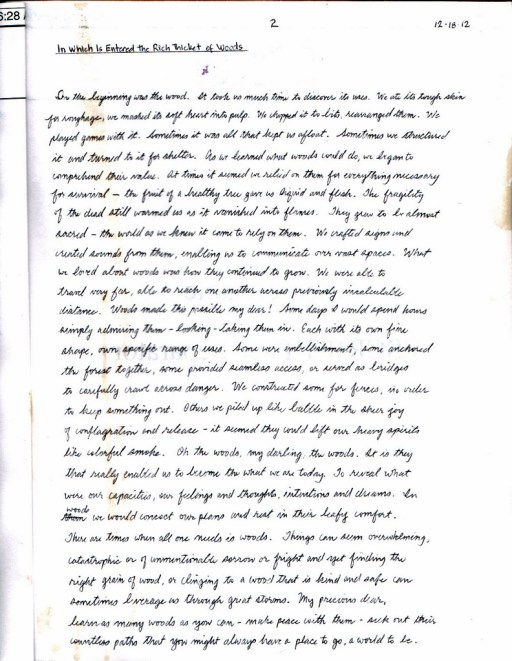
Here is page two of the blank notebook from my daughter as it fills:

Notebook

and here it’s typeset form:

2

In Which is Entered the Rich Thicket of Woods


In the beginning was the wood.  It took us much time to discover its uses.  We ate its tough skin for roughage, we mashed its soft heart into pulp.  We chopped it to bits, we rearranged them.  We played games with it.  Sometimes it was all that kept us afloat.  Sometimes we structured them carefully and turned to them for shelter.  As we learned what woods could do, we began to comprehend their value.  At times we relied on them for everything necessary to survive – the fruit of a tree gave us sweet liquid and meaty flesh.  The fragility of the dead still warmed us as it disintegrated in the flames.  They grew to be almost sacred – the world as we knew it came to rely on them.  We crafted them into signs and created many sounds from them – enabling us to communicate over vast spaces.  We were capable of traveling quite far, able to reach one another over distances before considered impassable.  Woods made this possible my dear!  Some days I might spend hours simply admiring them – looking them over – taking them in.  Each with its own fine shape, and own specific range of uses.  Some were embellishments, some anchored the whole forest together, some provided seamless access or served as bridges to crawl carefully across great dangers.  We constructed some for fences and walls – they helped us keep the unwanted out.  Others we piled up like babble in the sheer joy of conflagration and release – it seemed they could life our heavy spirits like colorful smoke.  Oh the woods, my darling, the woods!  It is they that really enabled us to become what we are today.  To reveal our capacities, our feelings and thoughts, intentions and dreams.  In woods we could concoct our plans and rest in their leafy comfort.  There are times when all one needs is woods.  Things can seem overwhelming, catastrophic or of unmentionable sorrow or fright, and yet finding the right type of wood, or clinging to a wood that is kind and safe and strong can sometimes leverage us through great storms.  My precious dear, learn as many woods as you can – make peace with them – seek out their countless paths that you might always have a place to go, a world to be.


Very Inspiring

In the space of three weeks I have received 3 nominations for the “Very Inspiring Blogger” award here on WordPress.  I’m a little bit wordless.  It feels in me that inspiration works like a system of waterfalls.  Someone kicks the rock out of the way and the water flows, tumbles over one fall dislodging more obstructions, flowing on, saturate and soothing…on…  “When it rains…”  I am very thankful for these nominations / recommendations / kudos.  It is very inspiring to be considered inspiring.  Thank you: The Rag Tree, The Writer Site, and Words That Flow Like Water.  So, essentially, the award bounces right back at you – for its bestowal is so inspiring in itself.  To view my 7 things and the bloggers I nominate in kind, please visit my initial response: https://manoftheword.com/2012/11/23/reasons-for-thanks-inspiration/

Please take a look at my current blog roll as well – through these other bloggers I have come to follow many new blogs that promise to be quite inspiring, but don’t feel I’ve followed them long enough to contribute awards.  I would like to point out a few bloggers who have newly inspired me by their contribution of comments to my posts:

Simon H Lilly

R. L. Culpeper

Elena Caravela – an explosion of creativity I have followed consistently

Mari Sanchez Cayuso – her tangles of words (and images!) always unraveling potent internal realities

Petrujviljoen – ever active and compelling

Biblioklept – consistently instigative tidbits

Literodditie – fantastic and curious and quirky

This Blog Needs a Title – I thoroughly enjoy what happens here

Appropriately Frayed


Brainsnorts – always thoughtful and genuine

Okay, so it isn’t difficult to compile lists of inspiring bloggers in our community – and the happiness it brings is the fulminating trajectory of ever discovering more through awards like these – THANK YOU ALL!

Underneath is the meaning that it is meaningful to each of us – however small or distant these contacts and connections – that we each are offering ourselves and our work and welcoming those of one another – thank goodness and human capacity.

To paraphrase Dave Eggers (writing about David Foster Wallace):

“Which is, after all and conveniently enough for the end of this introduction, what an author’s seeking when he sets out to write – anything, but particularly a blog like this, a blog that attempts to give so much, that requires sacrifice and dedication.  Who would do such a thing if not for want of connection and thus of love?”

THANKS AGAIN – AND KEEP BLOGGING!

Fathers & Sons

Seeking My Father

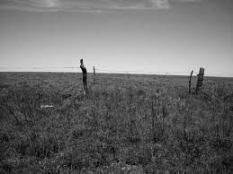
flint hills-001    Seeking my Father

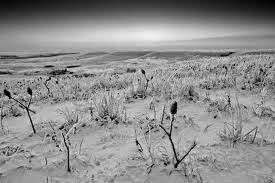
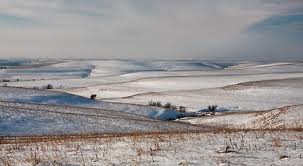
I’m stumbling about in a vast field of corn or wheat (mostly stubble) – for the requisite difficulty I want to say stalks of maize – but most likely it is wheat (author living in Kansas), though the sharp starkness of the dying shoots suggest otherwise.  There may be snow, it’s that bleak.  I’m lugging, perhaps draggling (yes – dragging a straggling weight – I do that) a shovel – nothing unusual about the tool except that it feels abnormally heavy and the iron parts are particularly cold (reminding me of the processings of my brain).  A book is open on my lap (I’m sitting in an airport) to ward off any attempts at conversation and indicate a desire to be left alone, so I might continue my dreaming.  I’m using the shovel to dig for my dad.  Like – to find him.  The field is a veritable landscape, not a “quarter” or even thousands of acres, but more like a steppe – some foreboding Russian prairie-plain – but clearly cultivated and almost fallow, or otherwise undone.

So I’m trudging through, eyeing the horizon, searching for some limiter, some possible landmarks that could clue me or direct me toward a where to dig.  Every once in awhile I stoop or coil and plunge the blade into the cloddy frozen soil, strung up in tares and straw and grasses.  I guess I’m expecting a thunk or an explosion of stars or something, because I never dig for long in one place, and soon pull up and move along.  How do I know that he’s here?  It’s as if something told me so.  A sensation a helluva lot like intuition, or premonition.  It’s a thankless task, I’ll tell you that, with the approaching holidays and stuck like this waiting on delayed Winter flights.  What hope is there for me?  It is already dusk and the field’s enormous.  I’m alone, you know.  Out here trying to find my father.  Trying to find my way.

flint hills snow

Afterword

Ever since I’ve been nearly-adult, or as long as I distinctly remember thinking about things like this – like death or family or meaning – I’ve wished I knew my father.  In college I thought it might be a matter of vocabulary – that we didn’t possess the correct vehicle for exchanging emotion and memories and hopes – so I studied America’s westward movement (the paths of our ancestry), studied land management and read farmer-writers like Wendell Berry and William Kloefkorn, Larry Woiwode, William Stafford, Robert Bly and ilk.  Trying to forge a connection now that sports and God had run their course, for me.  As my own children arrived I turned to movements like Men and the Water of Life, the Iron John sort of thing – searching what is my heritage – of gender, of blood – what the hell does “manly”(ness) mean beyond observation and nurture?  Now with sons.  Hunting for metaphors or language that might serve as derricks plumbing wells – that might draw out my father and myself and somehow blend us together.  Poem after poem, story by letter asking intimacy.  Sometimes I’d gain the courage for a lunch or an outing to interrogate him directly about how he felt about things and what were his stories.  I gifted my mother and he with a book of great questions and a blank notebook so they might fill out their inner-info when they felt like it, “for their grandchildren,” I’d said, “for posterity.”  Simply wanting to know.  As far as I know, it’s still empty.

Why is it so hard for fathers and sons?  How many of us wish we really knew – our parents from the inside out?  Believe that somehow knowing more than their strategies of being would offer us a clearer, fuller sense of ourselves?  Unburden.  Invite.  Be near.  As my father and I both age, I find myself anticipating his stages – frustrations, weariness and increasing losses.  I find myself encountering bewilderments I saw him endure, and still I constantly wonder what he would say – if he said – not regarding politics or basketball or weather or cars, but about me.  About him.  About being a father and a man, a husband and a laborer, a person, a friend.  About humor and music and art, about culture and meaning.  He studied much and has lived long, lost so many, traveled and loved and he’s beautiful.  As with my sons – toward whom I try to be so open and true – the conundrum of unknowing and uncertainty related to those closest to us is a mystery that hurts.  The above piece is one of a life of installments.  A kind of cry.