RE-GIFTING PRESENTS, part two: SHARED EXPERIENCE (art)

Roughly speaking, I understand “art” to be something created through human interaction with the world.  Whether perceptually noticed or purposively constructed, that which we experience in what we might call “aesthetic ranges” are always results of interactivity and, as far as we know, only occur for human organisms.

In light of my previous post attempting to address the function, variability and necessity of language or sign-types for human perception, survival and being-in-the-world, I want to address something fresh for me that arose in that inquiry.

Previously, I lamented the inevitable distance that occurs in living organisms between originary experience in and with an environment and the organism’s perceptual experience of it.  No matter how miniscule, there is always a gap between our encountering (for instance, of scent and our recognition of smelling; or of light toward eye and our “seeing” of colors; touching flame and reacting retracting) and our awareness of the encounter.  Neurons and nerves pass time in their messaging.  By the time we’re aware, our present is past.

But awareness and perception, cognition and sensation are themselves happening presently, occurring in a process continuously and simultaneously to ongoing encountering.  In other words, it is always the present, and we are always present, doing many different things.  Being presently and what we’re aware of presently are widely variant items, but always both and all, simultaneous with (indeed identical to); the present.

The present is the only reality occurring.

Who and what, where and how are all only ever present concerns.  When is always already answered:  NOW.

If the human organism has adapted and developed the creation and usage of sign-systems to more efficiently navigate processes of survival, I want to look a little bit into what the purposive involvement in, engagement with, those sign-usage capabilities might accomplish for us.

If our survival process, as I remarked before, is one of perceiving and predicting our individual organism’s likelihood and opportunities for existing in any given environment (context, situation), then our perceptive processes are amazingly collaborative toward quickly organizing and evaluating a chaos of inputs and outputs into maneuverable assessments and survivable actions.

Language is our principle medium of signs, used by humans to select, describe and choose what is going on at any moment both inside of us and around us.  Something like water is for jellyfish, perhaps, the medium that both constructs their world and enables them.

But language become, becomes its own experience to become again and again.  In other words, the processing of perception, awareness, consciousness, is also experience in itself.

hand

This is where it struck  me that sign-mediums are a kind of gifting again and again of present experiences.  As we interact with mediums, forming and formulating them into semiotic artifacts (whether spoken phrases, bodily movements, plastic figures or oil-smeared canvases) we are both utilizing those media to organize and process (become aware of and perceive) select elements of our encounter/experience, but also concocting new experiences as well as future presents.  Artifacts delineating our presents will be perceived, signed, comprehended again and again newly, each moment various and ever-present.

In other words, inhabiting our mediums purposively, experimentally, exploratorily, reflectively, creatively, we are both organizing, discovering and determining our own present(s) while simultaneously being new presents and gifting present experiences to become (for ourselves and others via artifacts, writings, sounds and movements).

This seems simple to me and I’m sure the wriggly seams of it, the liminal, necessarily RELATIONAL actualities of it have been sussed out much more eloquently and adequately (made present, re-presented) than this cursory blurt of mine, but it has flooded me recently like an a-ha (fresh awareness of the present?) in answering questions about “wrestling with everything inhabiting my medium.”

So thanks to all of you – writers and artists, filmmakers and philosophers – for plumbing the mediums that give you your present(s) again and again, and then offering them onward to us – a community continually re-gifting our present(s) by consciously inhabiting what our media inhabit. The What Where How Who it moves us within and between.
Fiction Family 4

Pieces that precede can be read in order here:  FAMILY: A FICTION

Family 1

section three closing thus….

They build a monument, calling it travel.  Stripping each other of context, providing a different forum.  Humans tend to revert to familiar.  Habitude of experience.  With no experience, alteration comes to bear.  Predictable as weather.

No one’s leaving home.

Other words coming to mind.

4

            Resistance.

There is, it seems, in families, this propensity.

Whatever is said, corrected, even when agreed.


Existing to clarify his spouse – to illuminate and exhibit.  In turn, she elucidates him.  Providing bases or cause – extrapolates.  Siblings arguing each other, united they stand, all as deserters.  Seven eventual versions of the parental wake-up blare: AWOL.

It’s good to be king.  Graph the assassination attempts – looks like innards of clocks.  A searing clap of surprising betrayal each time.  Unlike the spurned and necessarily nutrient mother.  Shagg proclaiming the law (as devised and developed by nature – read lifegiver/lawgiver “mom” – female coupling nurture and structure within dependency).  He handles rebellion, warding attacks and spying the skirmishes, she breeding resentment from ongoing need.

These are general patterns, biologically driven, no symphony the same.  With eight keys plus a half, on a twelve-tone scale, the songs recognizable according to differing orders.  Typify and characterize.  Declare it false.

Scraggydad is nurturing, allowing/confirming resistant responses and recumbent emotions, shame-shirking under her gaze.  In other words – as one of them – a remedial complicity.  Which she echoes into her drama – the leadership, the guilt, the collapse.

Each wanting to be cradled – rock, paper, scissors style – with an occasional simultaneous Bingo.  However unlikely, it’s what probability’s for.

Thus every level its lingo.  Select a word (sex or heaven, death or boy) and provide a taxonomy of related meanings from the eldest parent through littlest child.  It comes clear.  There are altering thesauri of usage.

Family as a game of Scrabble on the board of Life, each settling Catan.  With beeps and whistles and a slew of avatars.

A technique known as mapping provides lay of the land, similar to a geneologist’s tree applied to the present.  A thing to be explored or verified.  Corrected through each journey.  In several dictions.

The family edition.

A Family of Fiction, pt. 3

“all attempts at interpretation must abandon any pretence at direct understanding and concentrate on second degree understanding.”

-Victor Stoichita, A Short History of the Shadow-

Family 1

FAMILY A FICTION (the story to now)

Section 3:

3

            Girl-princess-daughter, her experience as only.  Not quite true collectively, there being also steps- and halves- another, older, never cohabitant, but still.  The members were stacked.  Against or for, another matter.  Depending.

The younger, caged one, doesn’t eat.  Is self-restricting.  Flutters like a bird.  Her brain engulfs her self, a genetic trait.  Possessed also, in some measure, top-down.  Each with their own rendition.  One definition of family.

Cohabitants.  Genetics.  Affinities.  Their opposite.  Relations.  Some, after all, being half-habitants, some post-, some occasional-, some rare-.  Or endangered.  Or in transitions.

If there is a nucleus, it is Scraggly and Self-aware, both co- and in-habitants constantly, at least according to them.  In the minds of their children.  Whenever they were.  Adding an unknowable “if.”

The grown and growing exhibit it.  The three on their own.  Three nearly capable, at least two of which: disinterested.  This is not about them, not a descriptive analysis.  Maybe more like a song, composing a fugue: each line for itself replete with recurring variations, cringes of dissonance and harmonic highlights.  Something like a family, a novel, a history, religion.

Oscillations that swivel near a truth, only to loop and to veer into something more real.  Being actual.  That is to say, is happening.

Inopportune call and subsequent jail time.  Jealousies and rivalries, differentials of power.  Stirred with a paste of abuse and traces of –isms.  Coupled to all the unpredictably brave accomplishments.  That sort of thing.  The life of a species.

With no one sure how to tell it.  Who solos, who’s chorus.  And when.  Where hardly matters in webs.  Or does it?  Authoritative nights at the table, father propounding to a coven of illumined and down-turned faces – forged not of incantations, but synergies of private networks.  Ubiquitous strands of escape.  Virtual tunneling.  Not to mention insolence.  Or simply vanishing within.  Daddy lost in thought.  Or mum diagnosing (she doesn’t like to think it that way).  Seldom either/or.

They build a monument, calling it travel.  Stripping each other of context, providing a different forum.  Humans tend to revert to familiar.  Habitude of experience.  With no experience, alteration comes to bear.  Predictable as weather.

No one’s leaving home.

Other words coming to mind.

Congruency: Of Delight in It

Thank you Superstitious Naked Ape for such a spot-on condensed rendition of (I think) what Pelevin’s Helmet of Horror evoked for me as well!  Really readers – check these out together – incredible lucky spontaneous occurrences of “synchronicity”?  Almost?

brain-in-hands1

“The God Machine”

by The Superstitious Naked Ape

with the personal caveat that it may as well be named “The Self Machine,” “The Reality Machine” and so forth…

The Helmet of Horror (selected emissions)

by Victor Pelevin

Entanglement

Getting back into A swing of things, I’ve missed the past couple of prompts for the wonderful mixed company of creatives that take part in the Friday Fictioneers (yes, please DO join us!).  So here’s to restarting refreshed…

Copyright-Roger Cohen

Entanglement

So this is our journey.  No way out of it.  Bound together, bound apart, bounded in.  We call it “Situation.”  Shared in common.  Held by circumstance.  Anything might bow us, but both will be effected.  The cords behind, some measures of rest, and whatever comes next – it all impacts the song.  Lucky for an other – no sound can be heard if there is only one, if our strings never touch.  Though sometimes cross and crossed over, at others we vibrate one another to the sweetest hum. It happens together in our ever-bordered context – the space of our entanglement.

N Filbert 2013

Inscribing Beauty : A Portrait of My Wife

On Beauty: A Portrait of My Wife

If I don’t write it, what reality does it possess?  What substance or content are a memory or vision?  Sound?  Fleeting concatenations – experiences.  Which is why I ask.  Like Dante or Cervantes, Homer or Herodotus, does not here a duty lie?

If no one inscribes remarkable things – they will not be remarked, thus no further remarkable.  But is writing a re-mark?  Are we indeed marked by perceptions – jumbled, edited and collated into what we call experience – do they leave some discernible trace like magnets in the guts of a computing machine – that might be recalled, rebooted, reformatted and marked again?  Or is that creation?  New traces born of the old?  What similarity – what identity – obtains?

If the scribe exists to codify – to translate vanishing occurrences into a relatively more stable domain – how should he select?  What criteria?  Whose testimony?  Should he, as artists of old, gather the evidence and forge, in his matter of medium, some combinatory new myth?  Take account of as many angles of appearance or observation as he is able, to contain and collage them into space like Cubists?

We call it “re-presentation” but we are crafting something new, something else.  The eye is not a camera.  Seeing, hearing, what we taste and feel are highly selective pro-activities – never catching a solid snippet or observing still life.  We develop according to what we expect.  Intuitive anticipation.

The façade of a building – you’ve already supplied it with volume.  Unseen.  The photo of your child – gains dimension and sound, perhaps even smell and sense.  Context invested.  Invented.  We cannot stop the alchemy from going on.  Nor would we really want to.  And yet – what might we preserve?

Suggestions?

This began as a portrait of my wife.  An impossible thing.  It will end still farther from its goal.  I meant to remark what has marked me profoundly, filled me of scars and traces, redirected my nerves and my blood, and I am left with the unexpressed, and these scribbled words of a man.

“What does it mean, to know it and not be able to say it?”

-Ludwig Wittgenstein-

Fathers & Sons

Seeking My Father

flint hills-001    Seeking my Father

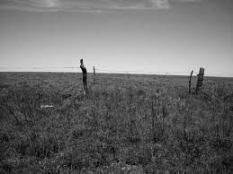
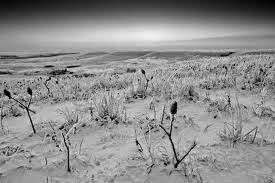
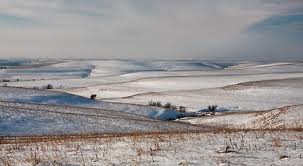
I’m stumbling about in a vast field of corn or wheat (mostly stubble) – for the requisite difficulty I want to say stalks of maize – but most likely it is wheat (author living in Kansas), though the sharp starkness of the dying shoots suggest otherwise.  There may be snow, it’s that bleak.  I’m lugging, perhaps draggling (yes – dragging a straggling weight – I do that) a shovel – nothing unusual about the tool except that it feels abnormally heavy and the iron parts are particularly cold (reminding me of the processings of my brain).  A book is open on my lap (I’m sitting in an airport) to ward off any attempts at conversation and indicate a desire to be left alone, so I might continue my dreaming.  I’m using the shovel to dig for my dad.  Like – to find him.  The field is a veritable landscape, not a “quarter” or even thousands of acres, but more like a steppe – some foreboding Russian prairie-plain – but clearly cultivated and almost fallow, or otherwise undone.

So I’m trudging through, eyeing the horizon, searching for some limiter, some possible landmarks that could clue me or direct me toward a where to dig.  Every once in awhile I stoop or coil and plunge the blade into the cloddy frozen soil, strung up in tares and straw and grasses.  I guess I’m expecting a thunk or an explosion of stars or something, because I never dig for long in one place, and soon pull up and move along.  How do I know that he’s here?  It’s as if something told me so.  A sensation a helluva lot like intuition, or premonition.  It’s a thankless task, I’ll tell you that, with the approaching holidays and stuck like this waiting on delayed Winter flights.  What hope is there for me?  It is already dusk and the field’s enormous.  I’m alone, you know.  Out here trying to find my father.  Trying to find my way.

flint hills snow

Afterword

Ever since I’ve been nearly-adult, or as long as I distinctly remember thinking about things like this – like death or family or meaning – I’ve wished I knew my father.  In college I thought it might be a matter of vocabulary – that we didn’t possess the correct vehicle for exchanging emotion and memories and hopes – so I studied America’s westward movement (the paths of our ancestry), studied land management and read farmer-writers like Wendell Berry and William Kloefkorn, Larry Woiwode, William Stafford, Robert Bly and ilk.  Trying to forge a connection now that sports and God had run their course, for me.  As my own children arrived I turned to movements like Men and the Water of Life, the Iron John sort of thing – searching what is my heritage – of gender, of blood – what the hell does “manly”(ness) mean beyond observation and nurture?  Now with sons.  Hunting for metaphors or language that might serve as derricks plumbing wells – that might draw out my father and myself and somehow blend us together.  Poem after poem, story by letter asking intimacy.  Sometimes I’d gain the courage for a lunch or an outing to interrogate him directly about how he felt about things and what were his stories.  I gifted my mother and he with a book of great questions and a blank notebook so they might fill out their inner-info when they felt like it, “for their grandchildren,” I’d said, “for posterity.”  Simply wanting to know.  As far as I know, it’s still empty.

Why is it so hard for fathers and sons?  How many of us wish we really knew – our parents from the inside out?  Believe that somehow knowing more than their strategies of being would offer us a clearer, fuller sense of ourselves?  Unburden.  Invite.  Be near.  As my father and I both age, I find myself anticipating his stages – frustrations, weariness and increasing losses.  I find myself encountering bewilderments I saw him endure, and still I constantly wonder what he would say – if he said – not regarding politics or basketball or weather or cars, but about me.  About him.  About being a father and a man, a husband and a laborer, a person, a friend.  About humor and music and art, about culture and meaning.  He studied much and has lived long, lost so many, traveled and loved and he’s beautiful.  As with my sons – toward whom I try to be so open and true – the conundrum of unknowing and uncertainty related to those closest to us is a mystery that hurts.  The above piece is one of a life of installments.  A kind of cry.


At Risk

            Why is it that what requires an army is always represented by one tiny little man?  Or that incremental power leaves aside the human – “horsepower” – cannon?

Insurmountable odds left to a roll of the dice.

I used to not have patience for this game, the long slow proposition of loss dotted by occasional accidents of “victory.”  Ever outnumbered on defense, I get it now.  I’m 42 years old.  The dice roll all day, and as the sides increase the odds go down and the stakes are higher.

Why even bother to play?  It’s a question we ask regularly.  Such a commitment of time, of energy, attention.  So much spent twiddling thumbs or enduring loss or unwanted wins.

The world is enormous, and yet miniature, even to Legos.

You and me and you, my sons, miniscule players in a massive machine of rules we did not invent.

There must be a reason we play.  I don’t believe we want to defeat one another.  But the commitment.  The attention and energy, the time.  I’m pretty certain we want those things.

So we risk.  Join in, gathering around what becomes a battlefield from a motivation of love, of loneliness, collaborations and deceits, treaties made and broken, a collective misplaced on a board.

Bon chance affection.

And another roll of the dice.

With something agreed from the start.

The Feeling of Today

Watch one of the most beautiful films we enjoy