The Pleasures of Reading : An Aspect : Multiplying Translations

The Pleasure of Reading

In other words (than what?  than which?) we all of us are readers, all of us writers.

That is a pleasure.

And all of us, always, doing both.  Simultaneously.


Speaking of my textbooks (were we?) – information sciences, developmental and behavioral psychology, reference services, librarianship / and the research to the side – physics, evolutionary biology, neuro- and cognitive sciences / my pleasures – novels, poems, stories, others’ blogs, visual, aural, literary artifacts / my relational – wife, children, family, friends, society, culture – gestures and vibes and dialogues and signs / my “self” – sensations, perceptions, formulations of these, reformulations, adjustments and maneuvers.

In other words, at all times, I am reading, even if only my lack of memorable dreams, or pulses and breaths.  And writing it all in actions, movements, responses, adjustments of speaking and writing and making.

It is a metaphor, obviously.  Perhaps.


Roman Jakobsen purported that “all meaning is a form of translation, and multiple translation (polysemy) is the rule rather than the exception.”  (I am translating his text just now into another con-text).

Wolfgang Iser’s (perhaps, anyway insofar as I am translating it here) concept of actual text (text as it is recorded by an author) and virtual text (actual text as read by a reader).

This is an aspect of the deep living pleasures of reading/writing for me.


An author/speaker/artist/scientist/mother/etc. has an urge or sensation – a possibility of action/behavior/message/idea (a virtual text) and translates it through multiple processes and levels of activity through some medium into an actual text/painting/utterance/experiment/recorded idea/sound, etc.  There it is in the real world – a physical artifact in time and space – added – if only for a moment.  Transforming (simultaneously) its maker into a recipient (translating a now existent text/sound/behavior/gesture/sculpture/experience for him or herself) and if any witness/participant/auditor/recipient or reader is in his or her environment they are simultaneously interacting (via translation through their own tools, language, perceptions, sensations, mood, etc) with the actual text, writing a virtual text (translating) of their own.

And it goes on.  And can be done innumerable times, this process, whether using an identical actual text over and over, or simply writing/reading life as it occurs, making it occur.


Paul Ricouer:  “stories are models for the redescription of the world.”  Possibly.  Or at least redescriptions (translations) of models for redescription.

Iser: “the relative indeterminacy of a text allows a spectrum of actualizations…literary texts initiate ‘performances’ of meaning rather than actually formulating meanings themselves…the reader receives it by composing it.”


Language, action, behavior as possibilities rather than certainties.


So that I can encounter with all I’ve encountered/experienced an actual text by psychologist Jerome Bruner translating these very quotes and contents with all he has experienced and translate it with the multiple translations of family life and being a human organism and novels and pains, poems and stories, paintings and laws, translated with data and education, emotions and animals, translating with you and a computer, internet, digits and bits, translating into…

a great pleasure of reading is writing reading

or, “a writer’s (reader’s) greatest gift to a reader (writer) is to help him become a better writer (reader)”

– Jerome Bruner (parentheses mine).


literary texts as “epiphanies of the ordinary”

-James Joyce-
What Happens (with a semblance of truth): A True Story (that is never true)

Many things might have happened, indeed, could have happened.  It is impossible to tell until it happens.  Whatever happens.  And so it goes.

Recollection subjects what happens to interpretation, a puzzling assemblage of memory (embodied brains in changing circumstances) and occurrences (embodied brains in specific situations), making it impossible to tell what happens, when it happens, or after it happened, save from a very particularized attention and intention, point-of-view, disposition and enmeshment (the factors being relatively endless).

And so we call histories, scientific observations, statistical reports, etc. al., “stories;” journalism, research, theories or assays (essays), “fictions;” and personal memoirs, dialogue, descriptions or statements – “fantasy.”

Everything that happens or happened is what might have happened.

Let’s theorize that an author or reader, group or individual, has a concern for “truth” – something being what it seems to be – who or what has total and essential access?  The only truth in human expression that I can surmise is that it is truly “made up.”

An individual may have something approximating total and essential access to a thought or feeling, personal experience or idea, but insofar as it actually occurred according to an experiencer, there are already multiple points of view, ranging from molecular to cosmic, matter/energy to cultural.  To say nothing of the complicating fabrics incumbent on expression – whether a grimace or a novel, a shriek of pain or a tally mark on a chart – it has entered uncertain and collaborative interpreted ground.

All to say “experience” is utterly specific and solipsistic (non-transferable “truly”) and is an enabled product of embedded participation in significant (if identifiable as an “event” or “occasion,” “moment” or “intuition” – any feeling, sensation or awareness) surroundings, expanding niches of existing things with variant points of view.

This is how I can guarantee that nothing I show you or tell you is “true.”

It may be more or less accurate to my experience or understanding of it (depending also on your experience/understanding of my presentation of it) but it will in no wise be what it is or was, in truth.  I assume truth to be as impossible as god.  It would require omnipresence, omniscience, boundary less experience (which could not accord with our experience, or a grain of sand, or an ocean) and would be immediately foiled by the omni-ability (omnipotence?) those other necessary qualities would demand.  One could not be absolutely enmeshed or identical-with and entirely and completely objectively separate or alien-from at once.  At always.  That is not a paradox but a contradiction.  If imaginable, incommunicable.

So we speak of a “semblance of truth” or a “truth-seeming” quality to account for our realities and desires (our want for security, to grow order in chaos, to know, to choose or act with less fear or uncertainty).  Things like our ages, census reports, laws and principles (grammar, mathematics, semantics, processes and methods, etc.) a creepage over toward what we think of as “facts” – majority-mutually-agreed-upon-interpretations/perceptions/hypotheses.  These can hold for a long time because they’re held by so many, so widely.  But they most assuredly change over time, again, from atomic behaviors to the shape of the earth and its relation to elsewhere, from what constitutes pain to what gets moniker’d “god.”

What counts as fact does so by being open and shared.  Semblance of truth comes by corroboration, conversation and multiplying points-of-views and expressions of experience.

Perhaps this is one reason we blog.  To try “it” out on everyone, potentially.  If our expressions resonate with others, perhaps they have a semblance of truth, or contribute toward creating it.  Enough “I know, right?’s” and we’re on our way to a fact.  But no amount of data or language, materials or activity makes it so…it rests on agreement and compromise, observation and interaction shared most widely, coagulations of interpretations, accretions of experiencing – fabrication.

Make then, express.  Hypothesize and share your experience – we ask for your two-cents worth – we’re accumulating a fund.

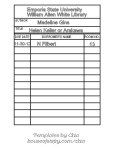
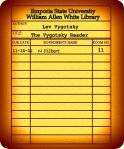
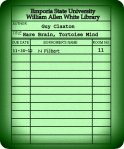
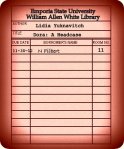
A trip to the library

– a sampling of the results…

Semantics

Semantics

Are words the poison?  The inevitable, unavoidable miscommunication?  75-80% of communication is “nonverbal,” yet according to the American Library Association even a corpse is a “document.”

What is it with semantics?  Is it sickness, like some original stain in brains such as ours – a terminal disease called “fabrication of meaning”?  “Second Sight”?

So that an arm movement, a particular gait, an expiration or whittled scar in rock will all be given significance?  All some addition, complexiting, a superadded content?

What is this penchant?  From where does it come?

It looks like the survival mechanism we think of (signify) as “prediction,” i.e. guesswork.

If we can surmise, invent, fantasize possible leads or outcomes…we’d have a better shot at preparing for it.

We make stories.

Often this is paranoia.

It’s the avoidance and terror of death.

Guess a metaphor for every existing moment, action, thing…and possibly you will survive it…know what’s coming and how to defend against or wriggle past.

Therefore, an alphabetical letter like a post-it note on possibilities, a warning-sign for danger, a diagram of fear.

Her head turns quickly – off put?  Offended?  Alert to me?  Tuned in?

Context.

Octagonal red sign at the corner…I stop.

Top sphere illuminated…I go.

“Crack!” I shift, swivel, flee.

One finger extended, my chest concaves, shoulders furl.

Drip, drip, my mouth begins to salivate.

Anticipation, desire, intuition, knowledge – all spawned in this erratic, sensationalized guessing.

Charlatans and spoofs, all of us.


“Interpreters,” “attributers of meaning” – he/she was so wrong, he/she isn’t listening,

hears, sees, feels what he/she wants (or doesn’t want – desiring either way) to.


Words are not the problem.  Signs, symbols, gestures, tones and moods – not the problems.


It’s the fear of death, our innate paranoia, our strict steeped instinct for survival.


Apathy might cure it.  Certainly suicide.  Some embracing of the facts.


It remains to be seen.


It will look like destruction.


These are only words.

N Filbert 2012

Nothing, In General

In which case, he writes, for life.  As if asked about nothing, in general.  There never has to be a reason, what is called illusion or delusion, he can’t remember which.  He is at a loss, that much he knows, unsure if “at” is place or time, so often hand in hand.

Writing.

He could just as well be painting, singing, creating some other cultural artifact, and all offered up in an aether, but he’s not.  He writes, for life, in this case, as if in general, about nothing.  Which is everything also, for him – writing, at a loss – the nowhere now here is.

The words, like images, serve.  Serve to draw out and reflect.  Like actions or encounters, self-portraits or redundancies.  In other words, those would be.  In writing he extends his veins and neural works, outstrips his body into text – an alchemy of sorts – and then relates to them as if an other, at a loss, in what he sees, or reads, as the case may be, words as much an image when inscribed.

Which are now here, which were not, because he’s writing.  Which, in fact, he does, at a loss –  moments so much like chaos, say “entropy” – for the offering of something indicative, external, outside – as if verifying a place and a time, i.e. organizing a disorder, finding a nowhere.

Similar to nothing, in general, become something, in particular.  Like an idea, or an atom, an interpreted emotion, or a god.  Each action a creation like an assortment of patterns on chaos.  Like nothing in general, or everything in particular.

At which point, in which case, he writes.

N Filbert 2012

Wisdom Today

“The same urge that leads us to mistake idiom for Word leads us to create a philosophical unconscious by repressing the origins of our concepts.”

-H. L. Hix-

…and more…

Wichita Public Library – our “home” family hearth – answers to the ESU expedience with the following!!!:::

This slideshow requires JavaScript.

beyond me wildest dreams!

and what timing!

Continued Blessings!

As if all-knowing, the superhero librarians throughout the US and through the mighty workings of our very own ESU William Allen White library and staff – (particularly those involved in the Inter-library Loan department) delivered to my door as birthday extras the following!!:

This slideshow requires JavaScript.

WHAT A DAY!  THANKS UNIVERSE AND ALL ITS PARTS!


Qualia…an introduction of sorts

Qualia

“Most of each lobe is employed in the grand human saga of making associations among events, ideas, personal experiences, strategies and people.  It seems absurd to lump all that tempest together, but we do: thought.  The word even sounds like a thick knot.  Endless raveling and unraveling, thought combines colorful yarns to clothe each moment”

-Diane Ackerman-

“This is why we create: to keep our demons down without banishing them entirely”

-Marie Palermo-

“It is hard to seize what is”

-Laurie Scheck-

“Raw feel, a name for the peculiar quale of experience”

-E.C. Tolman-

“It is possible to hold that certain properties of certain mental states, namely those I’ve called qualia, are such that their possession or absence makes no difference to the physical world”

-Philosophical Quarterly 32/133-

“an unfamiliar term for something that could not be more familiar to each of us: the ways things seem to us”
-Daniel Dennett-

“[Qualia are] the whole ensemble of consciousness or experiences”

-Gerald Edelman-

“When I do not know the ‘quid’ of anything how can I know the ‘quale’?”

-Plato, The Dialogues-

“The quale is directly intuited, given, and is not the subject of any possible error because it is purely subjective”

-C.I. Lewis-

“’what kind,’ ‘that sort,’ unobservable in others and unquantifiable in us”

-Wikipedia-

“…a proposition flaunts every logical scratch that follows from it…

Then I saw you were trying to lean against the weight of missing words, a wall at the end of the world”

-Rosmarie Waldrop-

Inescapable Intersubjectivity

Ineffaceable Tentativeness

“No self is thus separate from the total venture of language”

(Wikipedia entry – “Qualia”)

“Inside the workings of language clear vision is impossible”

-Rosmarie Waldrop-

“The brain is embodied and the body is embedded” (Gerald Edelman, 2006).  A phrase like that implies mysteries.  As if something might be explained or described.  At least.  Scribbling maps at random: entailment, entangled.

She said, “memory – a mirror with ambition,” I questioned the memory and the mirror both.  A quail quickly turns tail, coveys away, Blanchot’s ever-ultimate (as in final), question: questioning itself.

That is, what is unquestionable?

Or, everything unfinished.


I’ve introduced this all before, and now I’m building with logical scratches.  Sketching plans.

I meant to address this before, but someone’s former second grade teacher (actually only a substitute), assigned his class a writing as a way to pass the time.  “Write about the process of choosing.”

Entailment, entanglement, words with activity in me, like haunting.  The concept of selection.  What must be going on.

I must be moving on.


Earlier and consistently, the lusting of language toward the intrinsic, the ineffable.  What is private and immediate.  What cancels out in signs or symbols.  Gordian knot of tricker, Ouroborous.  So much so as to seem identified.  Inherent.

What is not possible.


My wife’s eyes swell large in a blue as yet reproduced.  This elicits in me what science designates “raw feels.”  By the time I’ve gazed enough to start cooking them, they’re a meal in themselves.  Or, “knowledge as illusion (delusion).”  At any instant, process.

Accepting awards from strangers one strangely respects.  Not profound enough for tears, significant enough to change.

I can’t explain it.

(Meaning: it doesn’t accord my theories, or, “what’s wired together, fires…”)

Entanglement.  Arbitrary associations.  Blips and bits.  Intention.

You (can’t) get the picture.

What we mean is like this.


When I first stood in the grandeur of Il Duomo, Milan.  First naked body different from mine own.  Learning differance.  Similarity.  Metaphor versus analogue.  Random maps of light and entropy.

In ambiguity lies possibilities.

Where we’ve doubted.

Those final questions.


All those books I’ve written, published under others’ names.


N Filbert 2012

Three Vigorous Recommendations

from this weeks reading…

3 wholistic recordings of the lived experience

and its entagled entailments

“To live is so startling it leaves little time for anything else”

-Emilry Dickinson-