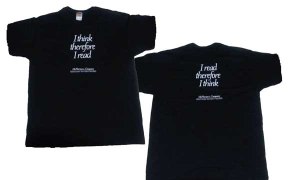
In the midst of busy, sometimes harried, rhythm-bashing holidays, Holly and I find our first day of quiet self-direction, spending a full day of her sketching, submitting images, reading… and myself completing an essay and Ida’s blank notebook and polishing on some poems…and, probably most nourishing of all (for me)…input. Β Here are the sumptuous nuggets I’ve been sampling today:
Tag: reading
Architectures of Possibility
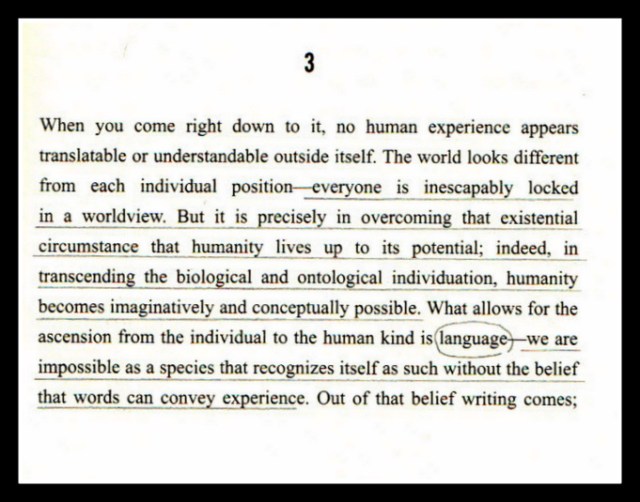
“Writing is a manner of reading. Β It is a mode of engaging with other texts in the world, which itself is a kind of text. Β And reading is a manner of writing, interpretation, meaning-making. Β Which is to say that writing and reading are variants of the same activity. Β Existence comes to us in bright, disconnected splinters of experience. Β We narrativize those splinters so our lives feel as if they make sense – as if they possess things like beginnings, muddles, ends, and reasons. Β The wordΒ narrative is ultimately derived, through the LatinΒ narrare, from the Proto-Indo-European rootΒ gno-, which comes into our language as the verbΒ to know. Β At some profoundly deep stratum, we conceptualize narrative as a means of understanding, of creating cosmos out of chaos.”
“Yet in many cultural loci these days we are asked to read and write easier, more naively, less rigorously. Β We are asked to understand by not taking the time and energy to understand. Β One difference between art and entertainment has to do with the speed of perception. Β Art deliberately slows and complicates reading, hearing, and/or viewing so that we are challenged to re-think and re-feel form and experience. Β Entertainment deliberately accelerates and simplifies them so we don’t have to think about or feel very much of anything at all except, maybe, the adrenalin rush before spectacle.”
-Lance Olsen-
“Literature is the question minus the answer.”
-Roland Barthes-
Enough about Writing…
Came across this article…seems to jibe with many blog discussions/posts floating about out there just now…thought I’d like to share it. Β It’s a bit dated in places, but the overall concept seems worth your ruminations….
Introduction:
Why Books?
LIBRARIES 2000
Libraries 2000, a seminar to re-examine the function and future
development of libraries in Alberta, was held in 1983. A committee
consisting of representatives of Alberta Culture, the Alberta Library
Board, the Alberta Library Trustees Association, the Library Association
of Alberta and the Learning Resources Council of the Alberta
Teachers Association was set up to look into ways of following
up on the suggestions arising out of the seminar. This is the second
booklet commissioned as a result of these discussions.
Public libraries have long attempted to fulfil many functions and
roles in our society. As financial and human resources have become
harder to obtain, librarians and library trustees have had to give
more attention to examining these roles and assessing their relative
worth. In recent years, there has been increasing discussion of the
public library as an information provider, but less discussion of the
more traditional view of library service.
Sam Neill is a professor at the School of Library and Information
Science at the University of Western Ontario, London, Ontario.
This booklet is based on a speech delivered at the Ontario Library
Association Conference, Ottawa, 1984, entitled “The Role of a
Traditional Library in an Age Bludgeoned by Information.” The
opinions and ideas expressed are those of the author and do not
necessarily represent the view of Albe11a Culture, or the Alberta
Library Board. The assistance of the Alberta Library Board in editing
and printing this booklet is gratefully acknowledged .
(click for full article, please)
dove-tailing ever-so-nicely with another book I stumbled across in the library (which also contains a fine consideration of David Foster Wallace in one of the chapters), and considers, I think, the same sorts of issues of humaneness and being alive meaninfully:
Question: What Makes a Masterpiece?
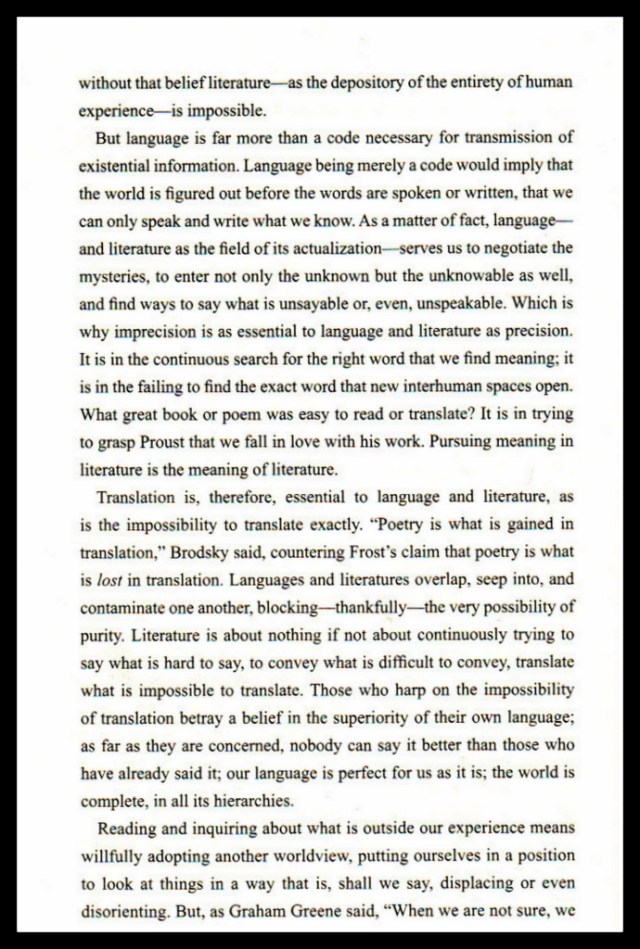
“A masterpiece isn’t a masterpiece until it is well known and has absorbed all the interpretations to which it has given rise, which in turn make it what it is. Β An unknown masterpiece hasn’t had enough readers, or readings, or interpretations…A work of art isn’t created a masterpiece, it becomes one…the authority, the familiarity and the relevance of a great work of literature: we open it, and it speaks to us of ourselves…naturally every reading affects the book, in the same way as the events we experience effect us…”
–Umberto Eco & Jean-Claude Carriere,Β This is Not the End of the Book–
Your thoughts…? Β Any “unknown” masterpieces possible?
“I am a sentence”
On Reading in Marriage
They speak of their pleasures, their necessary loves.Β There are changes you make.Β Some things are not accidents.
In other words, after decades fueled by a fifth of vodka drenched with grapefruits each day, husband is able to leave it behind.Β Although he loved it, it was not necessary.
Wife, in her cravings for sugar and salt, discovers with age they are not constitutive, not centrally.
Might be solitude or fine shoes; 80βs music or mountains and seas; active social lives or the thrills of travel, how do you know?
Husband elicits evaluation.Β Given impending demise, what gives more pleasure?
Wife admits a necessary love.
Husband responds in kind, having been in partial reverie, their warm bed surrounded by shelves of books, so that as he listens he also corresponds.Β She says.Β His eyes resting on a spine and the sweet particular music of that voiced tome slithering through him, then the next.Β Perhaps like chocolate morsels in their process of dissolve upon her tongue.
βI love sentences,β Husband says.
There ensues a pause, a sympathetic βI know.β
He ups to exit, teeth to brush, clothes remove.
He hears βI am a sentence,β a lilting and playful challenge.Β And wonders just what that might be, each person a length of sentence.Β The content.Β He puzzles the verbiage of his own as toothpaste shuffles into his beard.
He returns to the room, it is dark, Β there is no light to see by.
Opening the covers, he approaches the text, eager to find what it says.
Sunday Sustenance
conversations with my wife (www.lifeinrelationtoart.wordpress.com & www.ekphrastixarts.com)
Sigur Ros’ relatively new “Valtari” album
hope your day is great!
So Rich and Rewarding in their Own Unique Ways!
Favorite sourcings of mine
and pleasures
both INTENSELY recommended for readers and thinkers alike
(are those one and the same?)
Heroes Ringing True
On “the writer type”:
“One can describe this type as the person in whom the irredeemable solitude of the self in the world and among people comes most forcefully to mind: Β as the sensitive person who is never given his due; Β whose emotions react more to imponderable reasons than to compelling ones; who despises people of strong character with the anxious superiority a child has over an adult who will die half a lifetime before he will; who feels even in friendship and love that breath of antipathy that keeps every being distant from others and constitutes the painful, nihilistic secret of individuality; who is even able to hate his own ideals because they appear to him not as goals but as the products of the decay of his idealism. Β These are only isolated and individual instances, but corresponding to all of them, or rather underlying them, is a specific attitude toward and experience of knowledge, as well as of the material world that corresponds to it.”
On the writer’s region (“nonratioid”):
“There is no better way to characterize this region than to point out that it is the area of the individual’s reactivity to the world and other individuals, the realm of values and valuations, of ethical and aesthetic relationships, the realm of the idea…in this region facts do not submit, laws are sieves, events do not repeat themselves but are infinitely variable and individual…there is in the writer’s territory from the start no end of unknowns, of equations, and of possible solutions. Β The task is to discover ever new solutions, connections, constellations, variables, to set up prototypes of an order of events, appealing models of how one can be human, toΒ invent the inner person…which then nevertheless branches out somewhere into a boundless thicket, although not without somehow fulfilling its purpose…”
These quotes come from his exceptional small essayΒ Sketch of What the Writer Knows
which I desperately wanted to reproduce here…
if it “rings true” for you – please find a mentor and friend in Robert Musil: