Scripting the Photographer, the notebooks

Scripting the Photographer: from the Notebooks


“It’s more likely that we take pictures in order to come closer, yet again, to an unsolved contradiction: the desire to ‘photograph’ something lying beyond the jurisdiction of the eye – and likewise beyond light, shadow, chemistry, polygraphs, time, memory, hope, etc.; something that preceded by a vague certainty that this ‘future’ image (not yet extant) has already been thought, already been in the mind, yet without a concrete ‘image’; the act of manipulating physical substances (such as glass, plastic, metals), distributed in time and shaped by the logic required for the execution of an ‘intention,’ is in fact a method of ‘visually’ demonstrating this ‘mental figure,’ which itself asserts the reality of one’s own existence whenever it becomes necessary to make such an affirmation, or else repeat it – which affirmation and/or repetition are, perhaps, ideal, tautological rituals that don’t derive something from something else but merely change one’s perspective.  When ‘experiencing’ or ‘studying’ a photograph, however, one is, in fact, less inclined to start an investigation, to engage in an aesthetical einfuhlung, into the simultaneity of absence/presence.

“What we want, simply, is to study ourselves through photographs, ourselves looking out onto the field of depiction; and our desire to conclusively combine the outside view with the inside is like bridging ‘tomorrow’ with ‘yesterday,’ deleting the space ‘in between,’ which is of course impossible, since we can exist only in this ‘between.’  In our desire to overlap these concepts – we are caught ‘between.’  The present will never be ‘complete.’  The figure of death doesn’t clarify a thing, no matter how many times it’s exposed.  One hardly ever succeeds in even grasping a simple feeling of empathy.

“Every photographic attempt to capture a wedding, vacation, funeral, statue, roof, bed, etc., etc., etc., is yet another meaningless attempt to convince ourselves that we exist.  Unfortunately, we are never wholly convinced.”

-Arkadii Dragomoshchenko-

“Images are not everything, but at the same time they manage to convince us that they are.  There is a peculiar tendency of images to absorb and be absorbed by human subjects in processes that look suspiciously like those of living things.  We have an incorrigible tendency to lapse into vitalistic and animistic ways of speaking when we talk about images. ..In its most extended sense, then, a picture refers to the entire situation in which an image has made its appearance…it is a very peculiar and paradoxical creature, both concrete and abstract, both a specific individual thing and a symbolic form that embraces a totality.  To get the picture is to get a comprehensive, global view of a situation, yet it is also to take a snapshot at a particular moment…”

-W.J.T. Mitchell-
I did it anyway

CREDO

art is not a mode of faith, it’s a way of thinking. In fact, it’s better than thinking because it’s easier and more rooted in experience, only we don’t have another name for it, other than art…

the easy way out that’s hard to find”

-Ronald Sukenick-

 I think beliefs are mobile manifestos

I believe we invent experience as we go along

I am uncomfortable with creeds

I believe in thinking it through

I think we feel toward thought

I believe that art is utilitarian

I think that being is ambiguous and ambivalent

I believe in art as relationship

I think language functions

I believe making is interactive

I think we are made as we make

I believe in the nothing between

I think everything is medium

I believe to do is to be

I think we are

I am looking for words

What Begins

First Responder

Once in awhile,

perhaps always

(of this I’m unsure)

we answer;

and this answering is always a yes.

It may sound as a “no”

even feel that way too,

but “no” is no antonym,

only adjustment


A woman responds to a man

addressing a yessing already

to the asking

so even “no” is a “yes” to relation.

Negation may come

as it certainly does

in its various ways

but it cannot undo

or erase

the first token

(even if there are no children.

There are always children)


No, it merely describes,

perhaps even alters

the original gesture.

But yes is the endless beginning.

The Join

The Join”

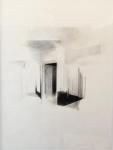
Ms. Mann had made a landscape I simply could not decipher. I had a picture like that. Charcoal and paint and wax on a large canvas made by a woman I assuredly knew but no matter how, I never knew well. Modotti’s stairwell, but this was doors, steps leading upwards or down, thresholds to or away. The openings were thick in their darkness, but whether that black was within or without, I could not say. A kind of vertigo. An incapacity to gain my bearings. An experience that art and women have always supplied me with in large measure.

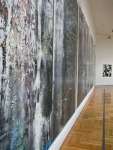
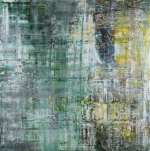
I approached a room at the St. Louis Art Museum that completely gave credence to its acronym. On one giant wall hung three enormous panels by Gerhard Richter, the three months most Winter. Opposite to it across the spacious room – a gargantuan assemblage by Anselm Kiefer was hanging. Between the two I foundered, awestruck and thoroughly a-mazed (assuming that means “to be jettisoned into an unsolvable maze or labyrinth”). Lost. Immersed. Afloat. A parallel to loving my wife.

Like cattle in a feedlot among females, I graze, stare dumbly and bellow, then stunned, flayed and strung up all of a sudden. Before I know what’s happened. Art is like that. You wander in, something strikes you in your senses, you move in – kazowy! – you’re rearranged, undone, overloaded.

I must say I don’t really mind the dystopia, aporia, conundrum’d state of being this implies, but to sense a ground for being in it (to secure one’s being at all!) is tricky. Usually it emerges after the stupor – you become cognizant of pain. Your throat is slit, your blood is gone, you’re an artifact, a meal.

Humans are not that helpless.

This was intended to be a consideration (astute, reasonable, hopefully enjoyable) of ambiguity and liminality – their presence in our apprehension of the world – of art and persons and things. Persons, places and things, how about, the designations “art” and “spouse,” “painter,” “friend,” “S.L.A.M” or “self” are afterbirths of our relations.

So the stairs, the leaky lake-y landscape, the architectures of doorways, the ladies and the painted times…

where I enter, where I leave, seems entirely up for grabs. Depends on the day, my mood or company, my body’s presence with my mind (and vice-versa), the music or chatter or silence in my head, and so on.

There’s a thrill to it, an ecstasis – as if sometimes I become phantom, fleeing and spreading into the surface of things; at others a long contemplation, as if merging with jelly at the bottom of the sea. Usually, amid much stammering, I end up stuttering: “I don’t know. I can’t describe it,” whether to partner or journal,

and begin again.

And sometimes I just breathe (think about breathing) and gaze. Something like a ubiquity of assimilation occurs, a vanishing and presence – to dis-appear. Not to cease, but, apparently, to occur “in,” diffuse, non-identically and undifferentiatedly.

Where am I?

Or might I be aptly participant? As if the similarities of cells and atoms (the family resemblance of objects) and the woven unity of wind have been accepted, acknowledged, awared in the confusion (“fusion-with”).

I don’t know. I can’t describe it.

But I like it and fear it at once – secure and unsettling – like “home,” as it were, or my “self.”

A sort of cognition of the ever-unknown lexeme “I” in its ever-unknowing surround…of people, places and things…that primal chaos and truth. Ambiguous, liminal, present.

The join.

As good as any…

This quotation from Arkadii Dragomoshchenko is as good as any I’ve yet come across in attempts to define or circumscribe what I think of in relation to whom or what or how a “manoftheword” is (in this case attributed in the masculine, because I am of the male gender, as is, supposedly, Arkadii) – but equally (as I see it) applied to any “personoftheword”:

“The place where I’ve finally found myself, is as simple as a child’s board game.  Everything in it echoes everything else.  Coincidences aren’t always believable.  And they don’t always count.  Obliqueness has its own charm…He’s writing…

The man forces out word after word.

The letters run in the rain and pour into the message.  The man, no doubt, is reading the message as he inscribes his letters.

In the message, unflinching, unfolding via ink blots, there are detailed instructions on how to correlate one letter with another, one word with another, and then the rest with rain, paper, war, objects,  fear, the hexagram of ‘fragments,’ toothaches, questions, history, tobacco smoke, poetry, foolishness, you name it…

The message also suggests that neither he nor you will receive a thing for it – this work is done gratis.”

-Arkadii Dragomoshchenko, Here” from Dust

Scripting the Photographer, pt 5

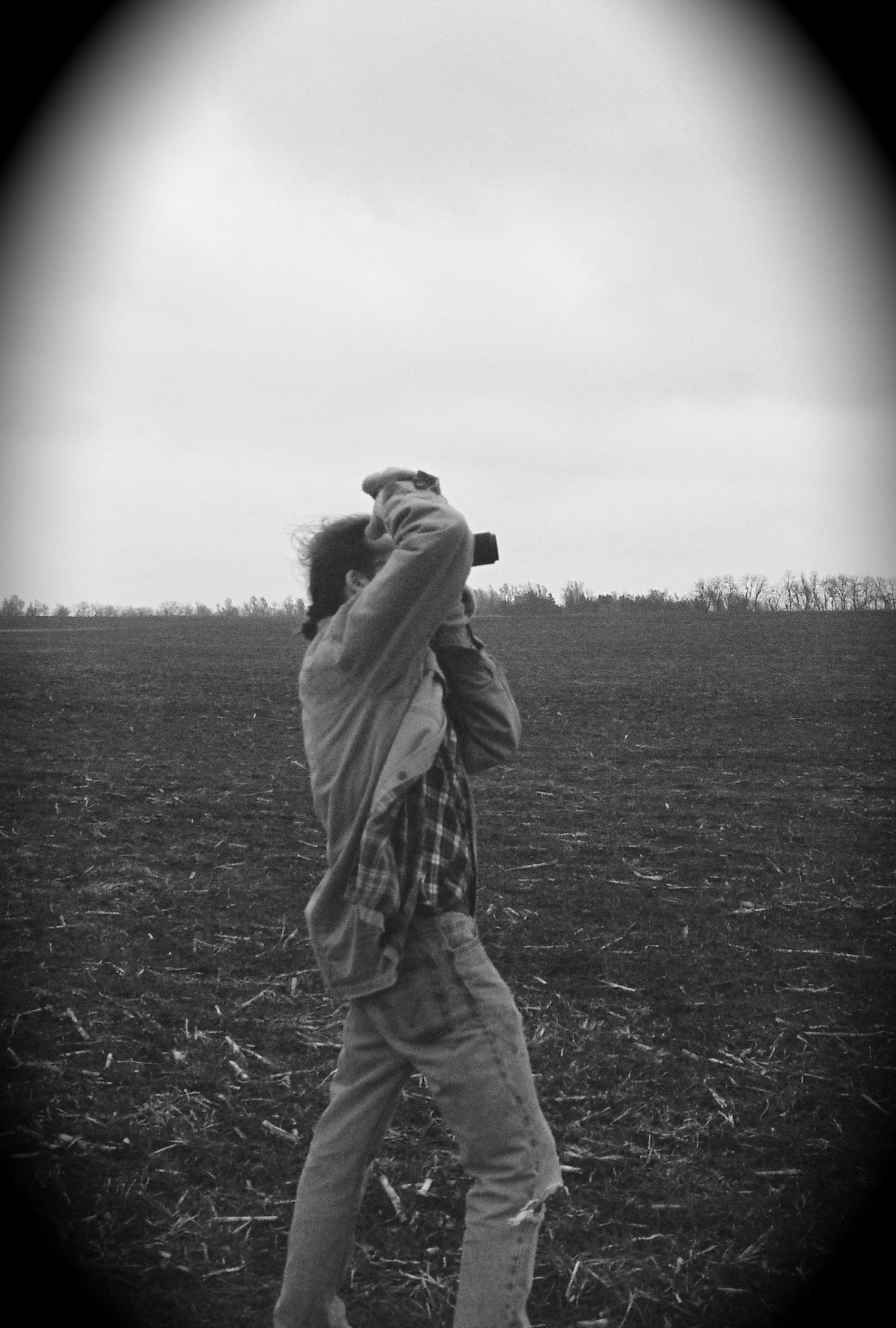
The Photographer Goes Back to Basics


If you pressed me, now. If I were honest, a photographic career is, basically, just like any other, with different tools and products. It fluctuates, you know? You move from the zeal of the capture, the feeling that your point of view (POV) might be “special” or “unique” – and it is – it’s one-of-a-kind even when one is copying someone else, still a translation or a version, not a “same.” You get over the miraculous. It wears off with time. Inattention, a zillion images from a million Kodaks, Polaroids and Nikons, and the clicker just feels overwrought, or miniscule, inundated and insignificant.

So you join a cause or a team, a kind of “group POV.” You figure there’s strength in numbers, you can at least make a digit’s difference, someone else cares or shares or might be helped by what you do, who you notice, how you work. But that film plays out as well, being as how everyone in the “group POV’ can’t ever actually escape their individual POVs, it ain’t long before you each understand a “place” or a “role,” an “effect” you come to feel is replaceable, or that you could as well perform that function on your own. Cut and splice. Disappear.

Now sometimes a kind of “back-to-square-one” occurs here – or a sensation of discovery that’s nearly always re-discovering, which is just fine. You pay a little more attention to your tools, try old ones, new ones, mix up the chemicals, collage the exposures, experiment surfaces and pages. You plunge the medium, see if something ain’t been missed or never combined, used just so, at this or that time, this or that way. When you look hard enough (if you care, that is) – you’ll find it. Someone’s been there, thought it, shot it, used it, what-not.

Then you might try plumbing your individuality – family roots or land, self-portraits, things you figure only you have access to; or you try some wild novelty – work for no other reason than to try what you haven’t seen tried, usually the results are ridiculous, maybe some cool accidents, but very rarely anything world-shaking or earth-shattering comes of it, more like play. Banality and/or play. Too finite or too abstract. Solipsistic or anonymous.

At this point, usually 20 years in or so, give or take decades, many sell out. Either by doing “well enough,” using their skills developed for someone else’s purposes, or literally unloading the shebang on Craigslist or gifting it to a young idealist upstart or relative; or you teach.

Others of us simply scale down. By which I mean you return to the basics, by which I mean you figure out through all the efforts, jobs, mechanisms and situations, what actually pleased you. What gave you the willies the highs the joys the thuds about being and doing…and you figure out, at whatever level of notoriety or negligence, how you can keep on doing these things.

You look, and you feel. What you like feeling looking you make pictures of. Could be people’s faces, secret subway shots; could be getting yourself off to remote places – mountains, trees; could be naked women or men; innocent children; dangerous wars. Could be proximity to the rich and famous; or microscopic lives of plants or insects; could be the chemicals and lights themselves, the materials – blurs, slurs, Rorschach-like concoctions. Only you know, ‘cause you’re the one that feels it when you look.

Hell I’ve been a grocery bagger, an insurance peddler, kindergarten teacher and garbage man, just to see the chaos of shapes and light, just to rove the streets to or from with my “magic box.” You’ll know if you gotta. You’ll even know what you’ve gotta.

I gotta.

This slideshow requires JavaScript.

I for instants…borrowed

Arkadii Dragomoshchenko

this one is too good to deny…

“The insignificant position of two associated objects is probably determined by both the randomness of their relationship (let us remind you that neither the ‘statue,’ nor ‘I’ in any way ‘expressed’ a desire to be together, to be united thus by a proposal of anticipation followed by a separation) and – if you will – one’s semic insufficiency.  Indeed, if the semic nucleus of the word ‘statue’ or, say, ‘she’ governs the layers of contextual semes, then ‘I’ is empty (or infinite and hollow, from the very beginning).  This lexeme has no nucleus whatsoever; it’s nothing more than a cocoon of ‘contextual semes,’ like the knot that is a constant deflection of an illusory straight line towards its starting point.

“Frankly, I’d like to say, as I did at the beginning, that ‘I’ is reduced to a ‘seething, ever-changing void.’ But let’s leave it at that.”

-Arkadii Dragomoshchenko-

And, in very much seriousness…if you are a writer in any sort of way (letters, memos, journals, ANYthing)…I find it hard to stomach you not having read Dragomoshchenko’s book Dust.  Really.  Truly truly truly.  Please, if you have even a passing interest in the use and creation and employment of language (even for conversation, thought or memory)…Dust, Dragomoshchenko, Dust, Dragomoshchenko…(mantra until you hold it in your hands)

I beg of you.

Scripting the Photographer, Pt. 4

The Photographer Battles the Inevitable

Cartier-Bresson


Point. Shoot. fstop. Time. Cut. Develop. Preserve. Capture. Take.

the bravura.

I’m an old man now. I know about time. I know how I am not I. No longer. This mottling, freckling, wrinkling and mole-ridden flesh each new hour I am forced to call mine. The pain in the shoulders and the neck and the knees, my excruciatingly stooped back, my trembles and twitches…I fight back.

I capture the young. Flesh nubile and soft, pliable and pure, elastic. I carry my posture of strength, contracted muscles of athletic days on this little 3×5 glossy scrap, you see? Here’s uncle Mort – alive, swimming – BEFORE 1918 and he was no more. Pah! Right here friend! Right here is uncle Mort. And the Native Americans did live here first, and did wear strange clothing, ride horses, build tee-pees and clod huts – you see?

What might have been erased by vile death, by erosion, what we may have never truly “witnessed” or “seen” – right here through this powerful small cannon!

Matthew Brady

If we speak simply of existing, in whatever form (given what becomes of our actual bodies and minds) Atget has defeated death – you may challenge me to find his flesh, his bones, his musty breath – perhaps not! But here, right here! His aspect, his presence, his form. See? None of us, none of us, even those of us who greet it at our own hands, like death. We try to circumscribe it, undo and short-circuit its authority, vitiate its inevitability – well, here is how I do it!

Eugene Atget

Death and anonymity destroyed by the ambiguity of the lens! You may have no inkling WHO this subject is/was, but you will not doubt that they were, and therefore are in your ingestion of their image.

Beauty vs. decay. Beauty of decay. Youth versus age, the vitality of age. Life against death, or the life of death. I can capture it, exercise my will to power, stay the tide if only this moment, you see?

The action makes the difference in the arts. That I can take action against, on, within my world and produce a stoppage, an ongoing, an object that without me would not remain, be.

A salesman’s pitch, a preacher’s sermon, a whistling in the dark, you say – I say sure! I say it’s a banter and a babbling whistle, but it is my friend, it is. This is the significant battle, the valorous war. To take a stand against void while accepting its encroachment, to face up to destruction taking names and numbers, to perpetually freeze its moments, stop-gap, isolate and preserve. Seek and destroy.

I think of each shutter-click like a whittling, another shiver off death’s enormous trunk, a cut, a shape and scrape, a form emerges in its waste.

Death will assuredly do its worst. And we are.

Aidan Wells Filbert

Contemplation Validation: an Addenda

Addenda: Contemplating Language…

Robert Frank photo


Coming clean.

Honestly.

There are many a day that I feel alone or odd or perhaps even neurotic in my obsession with languaging. I go to write…and end up being able only to write language. About language, with language, in language, against language, through language…a medium I am incapable of escaping. I think of those who write stories, or poems, articles or essays about subjects behind the words, things referred to, recounted, and I get excited, think: “I can do this!” – head into artworks or subjects, characters or narratives, and sure enough, soon as I put instrument to page…I’m locked in language…what it does, how it functions, what it means. With the gut feeling that exactly that, is what it does…means. Not something else, more, under or beyond, but means in its being languaging.

So I circle, spiral, seek into, try to self-criticize, split, examine, understand, observe, listen…and end up creating these whirligig texts where language spurs and follows, begins and begins and begins.

I wonder if it bores readers. I wonder if most persons, when I try to hash these conundrums out (the “prison” and “window” of languaging), are thinking…”why don’t you just get on with it…say something! Try it! Communicate, describe, hypothesize, anything – but don’t just dissolve your saying with saying!” I wonder if, to the bulk of our kind, reflecting on reflections without answers, resolutions, commercial products, and so on, is a stumbling block, a misfortune, a psychosis?

And things happen like this morning, where I suddenly feel validation of my contemplation…where the “eternality” of the issue feels ok for me to be obsessed by…today it comes in the form of a lengthy essay by Nobel Laureate (validation!) Octavio Paz, titled Reading and Contemplation. In it, he also enters into the trail of sources that has so shaped me: Benjamin Lee Whorf, Wittgenstein, poets, philosophers and physicists throughout the ages responding to: “Language is society’s foundation and at the same time is founded on it. Without language, there is no society; without society there is no language. To me this is one of the great enigmas of human history. Or rather the enigma.”

Sigh! I’m NOT alone! I’m digging around in perhaps the enigma of being human. “Language is more powerful than the individual self…this language that imprisons us is also a window, a lookout post on the world, on our fellows and on other languages…Perhaps the answer is to recognize that each culture – that totality of material, intellectual, and emotional structures: the things, institutions, and persons that go to make up a socity – is predominantly a symbolic system…that every act of human beings – even their crimes – say something. We are condemned to voice meaning endlessly. We are language.”

Further, “it goes without saying that everything human beings touch is impregnated with meaning; the trouble is that the moment we perceive it, meaning scatters and disappears. There is no meaning but meanings. Each one of them is instantaneous and lasts no longer than its appearance. Ashes of meaning: ashes without meaning…Meanings cancel each other out; on the ruins of meaning there appears a reality that cannot be named or even thought. To question language is to question ourselves.”

And, in a kind of ultimate reciprocation, connection, correlation…at the very core of my daily work, Paz writes:

“If everything we touch and name becomes full of meaning, and if all these meanings – provisional, disparate, contradictory – instantly lose their meaning, what is left to us? To begin all over again.”

And so I do…with this added courage. Perhaps I am not crazy. Perhaps others are interested. Perhaps languaging language matters.


*if you share my intrigue at all, I highly encourage you to seek out a copy of Paz’s Reading and Contemplation. It is a Pazian-version of my “Up with Word(s)” contemplation – nicely done, about 50 pp. I have read it in my copy: Convergences: Essays on Art and Literature by Octavio Paz

Scripting the Photographer, Pt. 3

The Photographer Speaks Candidly


Where it all begins, I suspect, is the “snapshot.” Whether family photo album, yourself messy-faced in diapers and high-chair, exotic postcards or history books – that strange “a-ha!” instigated by the similitude of the unknown or misremembered. The “whap” of what you imagine you’ve seen, fantasized, dreamt or been, suddenly presented to you as an instant, an image.

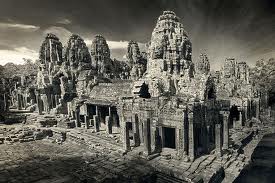
“Stealing a glimpse” kind of thing. A centuries-past wedding, the Rockies in sepia, a Hindu temple, your sister as a baby – the mystery of it, the magic! That first plastic camera, disposable and durable, that I used like a weapon as a boy. Bam! Bam! Blam! – my toe, my dog, the playground sand. Blast! Wham! Crack! – got you candy wrapper! Beetle! Back of daddy’s head!

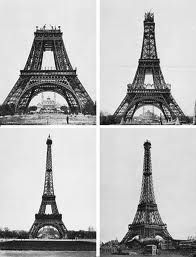
What wonder, no? The outlaw Jesse James – preserved! The Eiffel Tower! Existed then, exists now, because of this contraption, this mad science. Africa, India, colors and clothing, languages, beliefs and cultures – perhaps! perhaps! – someone must have really been there – and something! – the camera may be able to lie, but it cannot create matter, substance! It records moments, minutes, on battlefields, of cheetahs, camels and pyramids!

I had a grandpa! Or I didn’t, but here’s a possible one – detached from his family of origin – available image – who really occurred – could be mine – you see?

For all the skewing of this miniscule eye…the fragile lens…the limiting range and frame, the delicate settings and the passage of time – in only a couple of centuries (as testament to its early stimulus and fascination) – our world has been literally flooded with these fragments. Images. Perhaps rivaling the entire history of visual arts, save writing, no?

So to start, it is enthrallment. Magic, mystery, forbidden, anonymous, it appeals to everything in human youth: the impossible! To experience – perhaps to capture! To seek – to startle – to freeze – to kill.

To take the photo. To grasp the image. To snap the shot. To keep the memory, its stimulus. In the blink of an eye.

I’ve never stopped.