inspiration from Lynda Barry
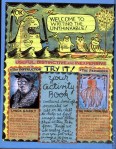
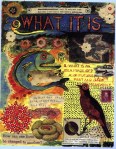
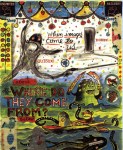
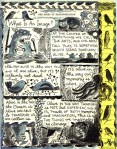
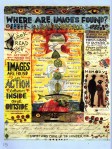
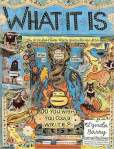
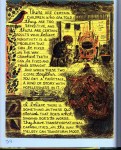
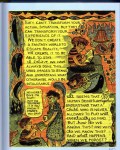

inspiration from Lynda Barry
I have never engaged “graphic novels” much in a kind of snobbery for text and misunderstanding of modes of expression. This weekend, visiting the library with my children, I snatched out titles that looked interesting and have truly been gifted by them. I have needed a weekend for rest and refreshment, I am thankful it has come. Here are my recommendations:


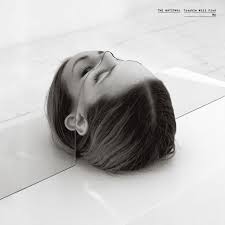
Trouble Will Find Me by The National
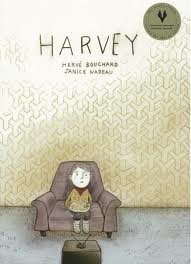
“I wondered what indeed it meant about me that I was so set against the notion of convention that I should attack it. So, I replaced the dream with the novel, stripping the stories of my dreams of any real meaning, but causing the form of them to mean everything.”
“…the gap between the subject of enunciation and the subject of enunciating not only failed to appear to me as a place of entry, but also failed to register as something I might elide. For me, there was no gap, as there is no gap for anyone.”
“…generally, people are only inclined to speak of the past with those they believe will somehow not only share some commonality, but who will also be disposed to exhibiting sympathy.”
“Is a photograph always present tense? I described them so…better, let the question be, is what is in the photograph always in the present, without a before, without an after? Of course, it is. And isn’t that actually you in the picture?”
“On Ludwig Boltzman’s tombstone is carved: S=k. LogW. S is the entropy of a system, k represents Boltzman’s Constant, and W is a measure of the chaos of a system, essentially the extent to which energy is dispersed in the world. This equation meant little to me as I read of it the first time, but as I considered it I grew excited. The space between S and W is the space between the living thing in front of me and stuff hidden inside beyond my observation and comprehension. It raises the question: How many ways can the parts of a thing be rearranged before I can see a difference? How many ways can the atoms and molecules of my hand move and recombine before I realize that something is wrong? Thinking about it scared me. Certainly, I understood that natural events symbolize collapse into chaos and that events are motivated by dissolution, but the idea of such subversive and invisible change moved me. I likened it to observing the minds of others.”

“Ezra Pound said, ‘Every word must be charged with meaning to the utmost possible degree.’ Let it be the case then. But words need no help from anyone. Bet thew ords kneeknow hellip freeum heinywon. Context, story, time, place – don’t these work like Bekins men, packing the words like so many trunks? But finally, words are not cases to be packed at all, but solid bricks (and, of course, like a brick, even a word’s atoms are not motionless).”
“We do not give the creature reality enough credit, choosing to see it sitting out there as either a construct of ours or an infinitely regressing cause for the trickery of our senses. But I claim here that the most important thing I have learned is that reality has a soul, reality is conscious of itself and of us, and further is not impressed by us or our attempts to see it. In fact, we see it all the time and don’t know it, perhaps can’t. It is like love in that way.”
-all quotes by Percival Everett
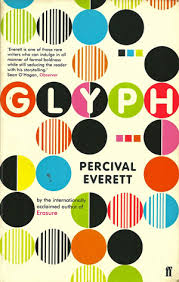
from his novel, Glyph

After a glorious week smushed together in an old log cabin without running water and an outhouse on the slopes of Pikes Peak Colorado, we have returned. It was wonderful family time – hiking, kayaking, playing, reading, climbing and performing the necessary tasks of cabin-living. Irreplacable. One of our sons was reading “How to Read Literature like a Professor” for his summer reading assignments in the wee hours and pointed out that this type of vacation shared many qualifications of the Quest in literary themes. That feels so right. Life lived in relation to others always seems a quest – to know one another better, love one another better, hear one another better, express and differentiate and develop as persons-in-relation. I have been immensely blessed with a mixed and quirky collective of children from whom I learn so much, and a spouse who cracks and opens me. It is a particular pleasure when the world around us is also so splendid and obviously large as it is in the Rockies of Colorado, and when so many distractions are replaced with shared attentions – mushrooms, critters, rock formations, streams, decrepit mines, wild donkeys, and so on. Priceless time.
Upon return it is easy to see how the quest goes on…kiddos heading back to school…classes starting again…and these packages opened in the pile of mail:
the quest always beginning…
Instigating a “family-tree” of sorts betwixt what I will call thinkers of relational ontology, I am providing another text to explore – this one from Erin Manning – the introduction from her book Relationscapes: Movement, Art, Philosophy.
You can see the heritage (or ontogeny) is vast – to trace it more completely investigate The Four Ages of Understanding by John Deely, A Thousand Plateaus by Gilles Deleuze and Felix Guattari, or The Primacy of Semiosis by Paul Bains (among others). Bakhtin, Whitehead, William James, Nietzsche and others give testimony to this sense of the entanglement and fluidity of being, the emergence and always co- or inter- of existing. The “relational nexus of experience,” as Manning has it here. The incipient potential of each pre-moment and then following “instant,” the elasticity of the almost, the threshold ALWAYS of expression-in-the-making and all of its co-constituents from throughout time and space and anything else we have segregated arbitrarily. Without further ado – What Moves as a Body Returns as a Movement of Thought, Events of Relation – Concepts in the Making by Erin Manning:

feel free to click image or title to read – (it’s a much shorter text than the last) – but no less engaging, creative, and provocative…
An unexpected and happy surprise entered my day yesterday with the announcement of a terrific book highlighting a project I was lucky enough to be involved with – a group of artists utilizing materials being removed from an historical building in Wichita, KS during a renovation – and repurposing (creating them anew) into works of art! I wrote an essay for this and now it is available in a wonderful edition you can peruse here:


Very exciting new discovery for me!
for instance: A Perspective of the Universe – Massumi & Manning
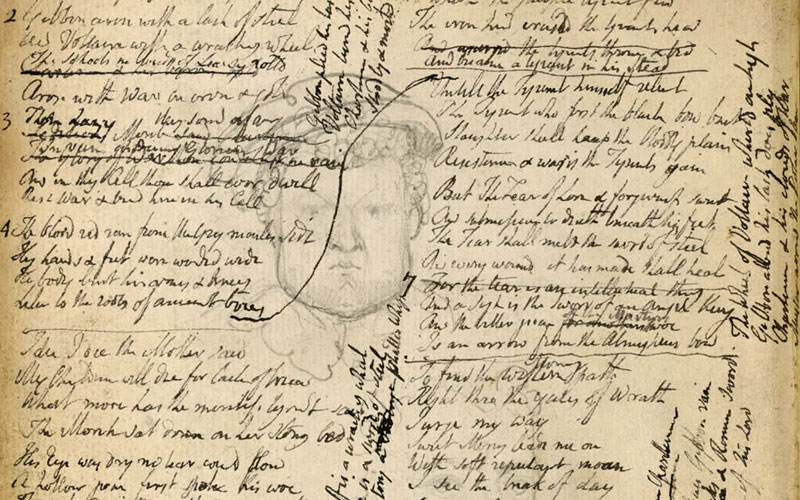
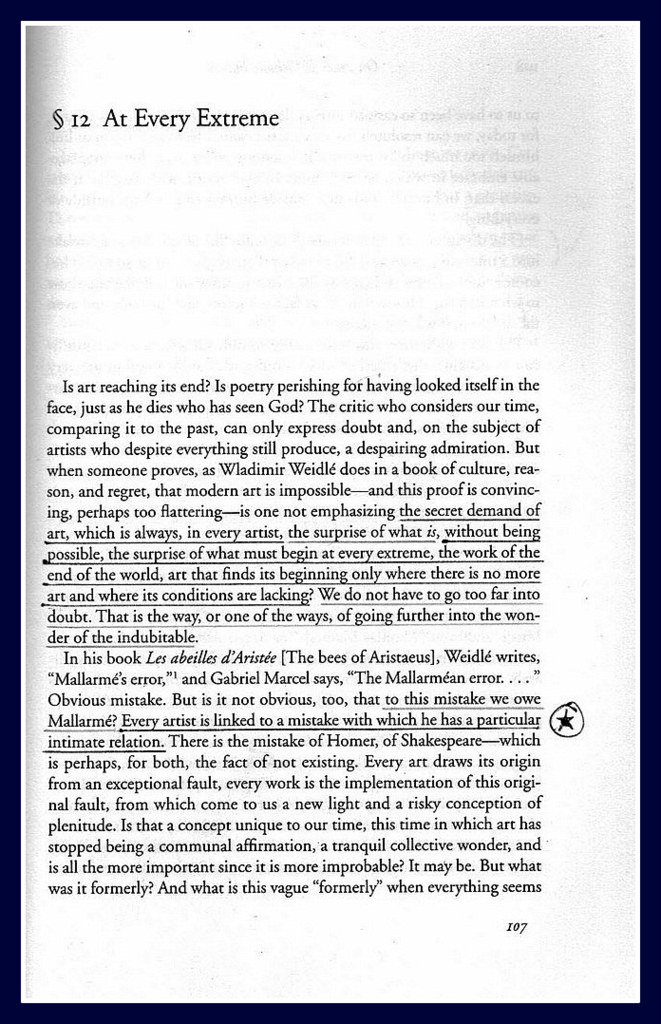
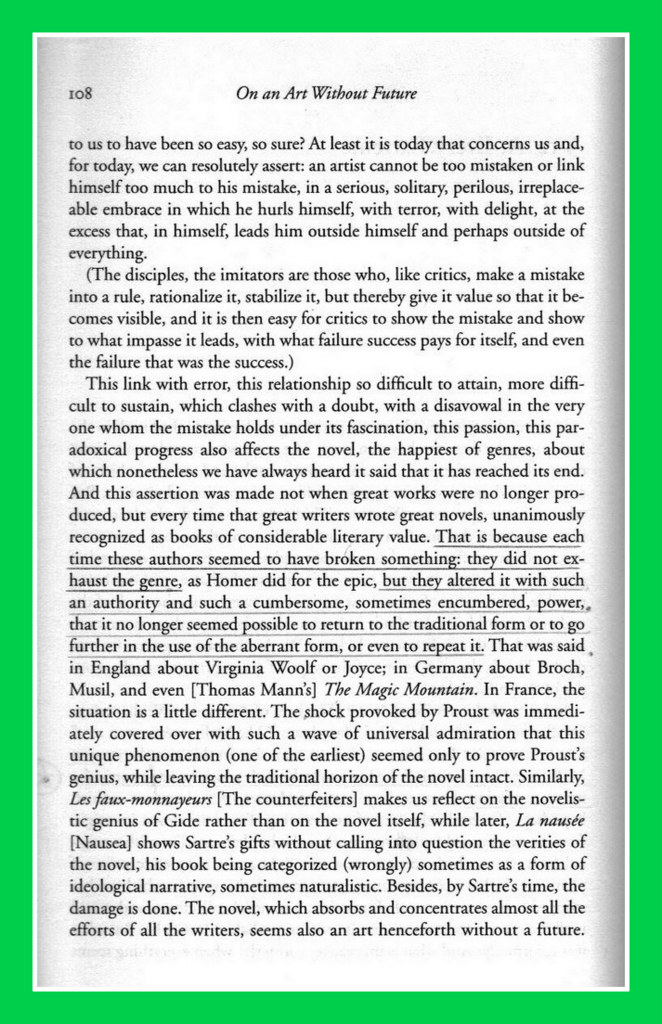
I’ve recently acquired (via Inter-Library Loan! Woo-hoo!!!) a collection of writings exhibited below:
which opens with an essay by anthropologist Tim Ingold who starts it off with a remarkable movement through slugs and storms, lines-earth-eather, Kandinsky, Klee, Merleau-Ponty, and others – investigating them through a concept of “meshwork.”
“By this I mean an entanglement of interwoven lines. These lines may loop or twist around one another or weave in and out. Crucially, however, they do not connect. This is what distinguishes the meshwork from the network. The lines of the network are connectors, each given as the relation between two points, independently and in advance of any movement from one toward the other…the lines of a meshwork, by contrast, are of movement or growth. They are temporal ‘lines of becoming’…Life is a proliferation of loose ends. It can only be carried on in a world that is not fully joined up. Thus the very continuity of life – its sustainability, in current jargon – depends on the fact that nothing ever quite fits..”
-Tim Ingold, “Lines and the Eather”-
Journeying on from there through Deleuze and Guattari, mood and weather, meteorology and aesthetics he arrives at a conception of flesh as both meshwork (exhalation) and atmosphere (inhalation) – a whole-being experience of relation enabling and realizing animate life….
I’ve now been browsing numerous writings by Ingold, fascinated by the semiotic/anthropologico/ontological /scientific meshwork his production encompasses… Thankfully, he makes much of his work available full and free to us… if you’re interested – I risk the promise it will be worth your while…
and a fascinating working paper as introduction: Realities: Bringing Things to Life
language. but brilliant. necessary? applause.
Student Magazine of IISER Mohali
Music, Musicology, and related Matters
a photographic pilgrimage to Orthodox Christian monasteries across the continent
Meandering Through a Literary Life
Orthodox Christianity, Culture and Religion, Making the Journey of Faith
Erik Kwakkel blogging about medieval manuscripts
"That's the big what happened."
Networking the complexity community since 1999
 All my Words are Silent