Going Back, Going Forward

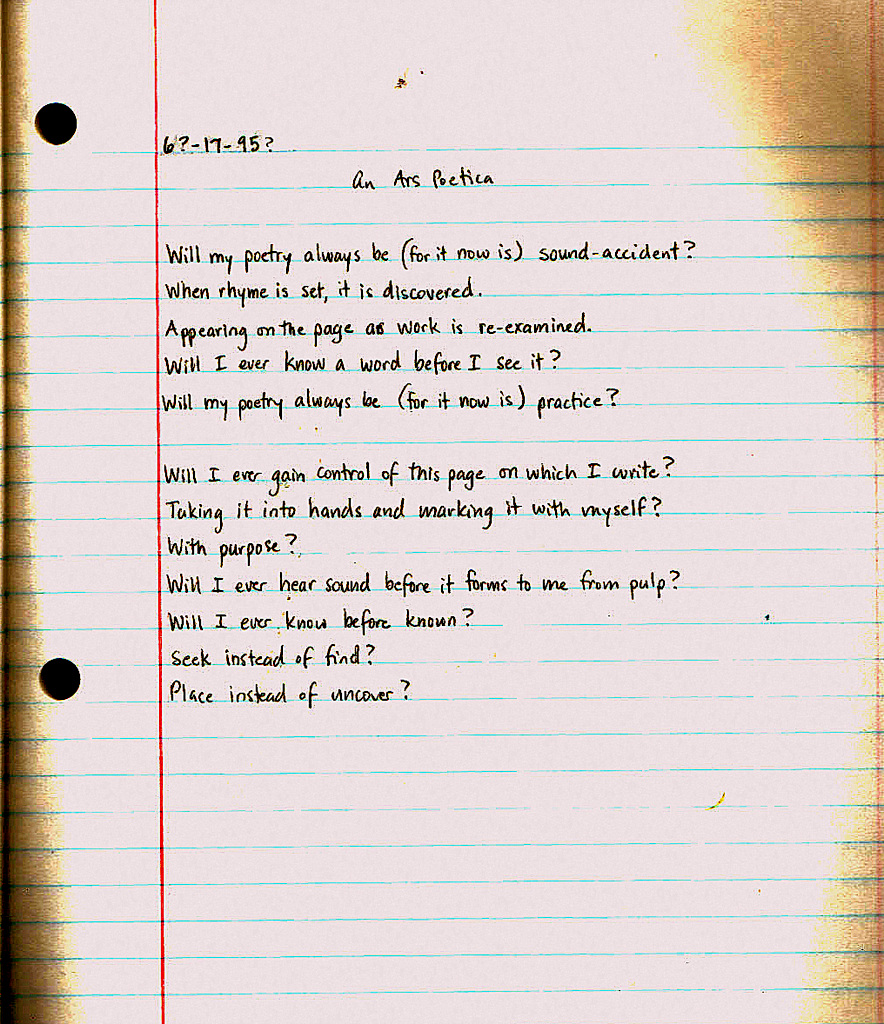
I hastily grabbed a notebook of primarily blank pages as I whooshed the children off for a swim.  I needed to study and make notes while they splashed about and played and require pen & paper for the process.  It turned out that the pages containing my writing dated some 15 years ago – journaling from a 4-day solo hike I had made in the Colorado mountains.  Included was this me-of-20-something’s poem:

Ars Poetica 1995

The whole notebook was nostalgic for me – my youthful vibrant concerns for solitude and justice, freedom and nature and virtue.  What struck me about this little number was how consistent (or persistent) the concerns and interests worded here have been (obviously) throughout most of my life.  Seeking purpose, expression, control – recognizing somehow that once language is entered, is invoked, everything changes.  Our purposes, searches, availabilities, capacities, expressions, knowledge, – all gets reworked and revised as we engage in the broader activity of language.

If, as John Canfield theorizes, “in language we never leave the sphere of the social” and that “language is a vague concept with unclear boundaries,” in part because it “grows as more language-games are added to the mix, and as existing ones are enriched in various ways,”  that, fundamentally “language is a set of customs in which words play a role, a set of patterned, culturally determined modes of interaction..” so that with “increasing cultural complexity come increasing complexity of our patterns of interaction” then my lifelong hunches that I’ll never get a handle on it, or master its use, or turn it explicitly to my purposes are a matter of course.

M. A. K. Halliday’s Triangle

Which is also what fascinates, compels and rewards its use.  Again, with such a limited arsenal of units – (take a look at your keyboard and consider for a moment to what gargantuan and variable use we put those 100 keys or so) – every engagement with the tool is interactive, reciprocally shaping and shaped by us, and unfailingly externalizing for our organism – the medium thrusts and immerses us into our society and culture and history and possible futures, as well as all the “thinks you can think” and more!

On the right day, then, my bewilderment in the face of language as my vocational practice gets to be an adventure of constant discovery, novelty, and learning – immersing me in some infinite-like context, warping and woofing my organism into a universe of threads…

all quotations from John Canfield’s Becoming Human: The Development of Language, Self and Self-Consciousness

The Nothingness of Symbols

a drowning.  a submersion.  a baptism (immersion)

I am drinking the arbitrary nothingness of symbols.

I am writing.

Writing is both a cry and a response.

Intuition / rationalization.

Nurtured and natural.

In the realm of symbols, I am safely between.  In the place of no safety.  The nowhere realm – a world of now here.

Where I am drowning.  Delirious.  Drunken on these symbols, arbitrary and well-developed, representative and unnecessary (?) signs.

I am alive.

Combining intellect to emotion to situation and its social constituents…I am writing, uttering, verbalizing –

– and, by chance, perhaps, you are here.

I am side-swiped.  Side-tracked.

In other words,

I set out to circumlocute on this very “subject” / “topic” / “matter”…yesterday…

resulting in a nothing of the kind.

Drowning in a limitation of symbols –

“composition,” we call it,

“For it is in the nature of language, as I have already noted briefly, that it is governed by the principle of ‘duality of functioning’,..to be more specific, the distinctive features of the sound system that constitute a language are determined by the limited set of phonemes employed in constructing the next unit up, morphemes.  And morphology is determined by the uses to which morphemes are put in forming lexemes or words.  Words, in their turn, are formally describable by the functions they perform in sentences.  Sentences, in turn, achieve their significance from the discourse in which they are embedded.  Discourse is governed by the communicative intentions of the speakers.  The communicative intentions of speakers, of course, are governed by the transactional requirements of the culture.  And along the way, there are further determinants of form that operate in this same way…”

-Jerome Bruner-

That sickness, that plenitude, those realistic illusions – as if one were totally absorbed in the unrealities of the human way of being-in-the-world.

“the world is not what we thought it was”

-Jim Harrison-

There will be a day my sons will die.

Hopefully I will be gone.

My spouse will die.

Hopefully I will be gone.

There is a word for things that hold too much (e.g. “things that can hold no more”)

Things at, or beyond, capacity.

There are 26 letters in the English alphabet.  They are drunk, drowned, saturate.

And still there are fresh occurrences.

There are also #s, codes, algorithms, symbols…

I like the idea of doing something that matters, of being someone that matters, of my strange happenstance of existing as an organism having some effect, making some verifiable difference in a larger web of existing things

liking the idea certainly doesn’t make it so

and yet, perhaps,

My intention had been to talk about the wonder…

…that out of 26 letters…

this many years (generations, eons)

and variety

had even occurred.

Was all.

that meaning, is interesting, is cool

that, to (lil’ ol’) me…

it’s amazing…!

in 26 letters

#s, symbols, diagrams

we keep constructing…

Sure it runs!

I wasn’t sure I had it in me this week, concocting something from a picture, worth a 100 words (you should try – visit Friday Fictioneers), but I battered and welded something together in the nick of time.   For what it’s worth –

Copyright - Beth Carter

We sang when we made it.  We laughed and we drank and we sang.  So many said that it couldn’t be done.  Not by philosophers.  But why not?  Sappy, crappy and happy we sang.  And we drank.  Marty stole the carts, Jerry supplied the pictures to spur us along – as if they were sure to result.  Trey provided visors and sunglasses, given the absence of roof.  We swore we’d take it 10,000 miles.  10,000 miles a year.  We ditched our courses, thirsty for reasons.

Of course it runs!  Look close – you can tell where it’s been.  Take it further.

Homo Fictus

“words are not a translation of something else that was there before they were”

-Ludwig Wittgenstein-

Homo Fictus

 “Even when the body goes to sleep, the mind stays up all night, telling itself stories”

-Jonathan Gottschall-

            Knowing how / knowing why.  Procedures and structures.  Diversify and unify.  Complexity-to-simplicity turned complex all over again.  Reuse and construction.  Stories.

We are saturate with story.  Each word of that sentence.  If I provide the skeleton – you’re sure to flesh it out.   The productivity of words, the how & why of humans.

Perhaps I’ll call it “making sense,” but the sense is there before, what follows is a meaning – through procedures and structures, reuse and construction, the wired and the firing, implicity spinning explicitly – and for reasons not yet fully known, I’ve gotta have mine.

“The knowledge of good and evil, all in one.  Both. 

Somebody finally said, I know my own mind.”

-Janet Kauffman-

            Experience is a complex collision I diversify and unite.  Following patterns infused by my own.  If you provide a list of observations and complaints, I may spend entire days reorganizing them – they didn’t quite “fit.”  Perhaps I’ll throw them back.  I’d like to be certain.

“the absence of doubt is of the essence of a language-game”

-Ludwig Wittgenstein-

            A personalized language-game full of cues, thesauri and symbols – my controlled vocabulary meshing your data…

“The alphabet of my DNA shapes certain words, but the story is not told.

I have to tell it myself.

What is it I have to tell myself again and again?

That there is always a new beginning, a different end.

I can change the story.  I am the story.

Begin.”

-Jeanette Winterson-

            …ah, now I’ve figured it out (made it fit  my form) – this is my story now, please listen and confirm (complexity-simplicity) – oh no?  you don’t? (complexity again) and back to the storyboards or diary…

The yearn is toward some balance, stasis, surety.  Re-cognizable re-currency.  Re-presentation.  Re-anything.  Want familiar.  The excitement may very well come with the disruptions, eruptions, defamiliarization, the constant change – it certainly heightens our senses and intension – the thrill is in the thunderous gathering of troops – flickering flashing neurons – dogs set on the intrusion…but soon we stabilize the perimeter again…incorporate the drama…

“the important thing is to consider the significance of things and not to worry about their authenticity…it’s difficult to tell at the end of the day whether it was theory or need that got you through it.”

-Joy Williams-

            …with our stories (and lies)…our illusory perceptions…needing organized to our organism…and tales are conjured, fiction begins, typing on our limited keys…

…even while the body’s at rest…

“in short, nothing so central to the human condition is so incompletely understood”

-Jonathan Gottschall-

this post inspired in part by

Friday Fictioneers 2/22 : The House that Jack Built

In keeping with the minimum-creative-work-capacity provided by the stimulus of Rochelle Wisoff-Fields at Friday Fictioneers, this week’s brief composition:

Copyright-Janet Webb

The House that Jack Built

Whatever he put his hand to.  Didn’t seem to matter.  Oh he had the will and the brawn – the heart – he was a determined man.  Yeah, the fence does look nice, dad built that.  But the house, that was Jack’s doing.  Parents said he was always that way.  Everything he touched.  Marriages, parenting, education, work.  Big dreams and fine intentions, with a flair for entropy – DIY and disorder.  Always came to pieces, his doing the undoing of whatever he done.  Easy and difficult to love on so many levels.  This house only one of ‘em.  It’s amazing anything still stands.

N Filbert 2013

Welcoming Others : Inside

“we fill pre-existing forms and when we fill them we change them and are changed”

-Frank Bidart-

Refractions on Fiction

Reflecting on fiction as representation, as presentation, as inquiry, investigation.

About how little I care – re: ideas – the freedom of impersonal investment – when a piece is duly fictional.

After the days spent composing Signs of Love I’ve only thought of how I haven’t thought of it since it was posted.  Johnson’s theory of perception, the professor’s thoughts and ideas, Monte or Margaret, Frank or Lars – how they none of them reflect on me.  How I didn’t have to worry how they came across or sounded, what positions or actions they became – what they represented – it wasn’t me!  Who does battle with a shadow?

So often, the stringy stream of conception-reflection-creation-manifestation seems to pull heavy parts of the self along with it.  Dark or slimy residue.  As if a reader who took issue, questioned or challenged a something that I wrote or language I expressed as fiction were in fact addressing some aspect of ME – rather than an open work of invented text.  Suppose, for instance, my wife reads a piece and follows it up with “so you’re saying that life is more difficult because of me?!” or a random visitor commented “how could you think or say this?!”  When in fact, of course, I didn’t – Lorraine did, or the professor or husband, writer or sand crab or whomever the character that acted or expressed it did.  Ask them then?  Another way of saying – “ask yourself.”   That’s what I as a writer continually have to do.  Language comes out, forms an idea, or a behavior is described and I have to wonder at it – is that indeed what the voicing thinks or wants or does?

Like a painter with their lines and colors, textures and strokes: what belongs once something has been marked there?

The freedoms of fiction spread as I recognized the therapy-like patience and reflection I provide to characters and voices – to language – in texts (fiction or non-fiction).  I do not feel threatened by them, do not take them personally, neither when I read nor write them.  They are other – other matter, other contexts, other contents, other kind from me.  I am busy handling matter…piecing it together, painting over, scraping away, diluting, splattering, letting it run…open to what “feels” or “sounds” right given the matter at hand – content, tools and resources.  Strenuously engaged, passionately even (at times), and also separate, observant, addressed as much by the work as it forms as addressing it onto the page.

Which got me to thinking – how much kinder might I be, even towards my “self” were I to engage what creates me as “other”?  We’re an oddly organized confabulation of matter and energy, after all, multiple diverse systems coordinate and constitutive, creative and adaptive toward a sort of dynamic organismic “whole.”  My brain no more a “me” than my penis or big toe.  How often with sharp pain in my knee or some zany daydream, a nail needing trimmed or hair left in a brush, do I question, challenge or take issue with a personal self for such systemic occurrence?  I participate with, or have (am characterized by) knees and eyes and organs, but they do not equal me.

What if some kind of “I” (collective of natural dynamic and organic systems) listened to, read, inquired and engaged the contents, emotions, concepts, actions and instincts that occurred within as fictions engaged – as benign or indeterminate others – akin to characters or words in a story or play – organized matter with energy – rather than some sort of judgmental scrutiny so often readily applied to “Me”?

The “I,” the “me,” the “self,” the “brain,” the “calf,” the organs, veins, chemicals, liquids, cords and tendons, bones and tissues, the individual cells of me – all inter-relational organisms in themselves involved in a system I experience as “me.”  With recognition, suspended disbelief, detachment, passion and care granted as I offer my own and others manifest creations in language or image, movement or sound?

Attend to your cells and systems as characters and languages today – manifestations of being – not entirely your”self” – welcome all the others inside as well.

Signs of Love

“sheer curiosity is even more universal and compelling than lust…”

-Nelson Goodman-

Our Similarities are Different, our Differences so very Alike

            I tell him he’s gotta grant she’s pretty much the same as the last one – skin all over, shoulder-length hair, fingernails and eyeballs.  Her insides must resemble too – veins and nerves, capillaries and molecules, organs and structural bones.  Her life can’t be that much different – born of a woman spent with a man, fluctuating assemblage of persons and animals, a fair share of good times and bad, events and arrangements all occurring in particular times at particular places.  Spoken to and speaking, looked at and looking, heard and hearing, nurtured and natured.  Surely a sign for something.  A sign for herself.

“But she’s so god-damned different man!” he says.  “One in 7+billion!  ‘Like’ no other creature I’ve known!  Her thoughts are anomalous.  She sentences words her-uniquely, her habits, nuances, quirks.  I tell you there’s no one else ‘like’ her!” he insists.

I point out that there are great similarities to her differences – we all of us with particularized habits, specified modes of talk, no two bones alike and what have you – but they’re bones, flesh and language all the same.  She falls within the mean – income and weight, literacy, height, okay.

“But there’re so many differences in those similarities, you dig?” he whines.  “It’s like everybody’s riffing and she’s got my groove!”
            And Johnson has a theory of perspective.  “TOP” he calls it.  He’ll listen to you gloat or bemoan and respond with his “that’s the TOPs!” as if he’s settled the foundations.  I try to get at what he means.
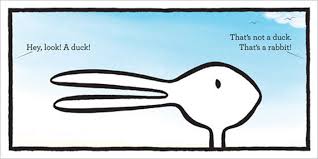
            The undergrads recently requested that I speak to them of love, and I told them all this story (it conveniently being Valentine’s Day).  I read through the roll call, through Margaret, Mary, Toby and Frank.  Through Matilde and Jason and Luzanne and Lars.  Some fat, some skinny, but most in-between, each exhibiting some marker – for instance, their names.  We need those tags to tell us apart, do we not?  We’re all so darn much the same.  Autopsies, biopsies, EKGs, X-rays and cardiograms – most of our differences are ever so slight.  Some flesh here, hair here or not, coloring, dialect, language, inches either way.  However, what we notice – are attracted to or struck by, occasionally enthralled or repelled by – in other words, whatever catches your attention – will lie in those mini-borders of difference.

We’re programmed that way, it’s a survival skill bred in the chemicals – be aware of the unexpected, the variant, the things that are unique – sights, shapes, sounds or energy – locate, isolate, focus – survive it.  Use your limited energy and resources for that – ignore the enormous other.

So every time you’re swept by lust or fall in love – there really IS a difference to that bloke or blonde – IN that gendered entity – you’ve perceived it.  Now comes the process of fitting it to YOUR life.  Your self, habits, knowledge and activities, groups and quirks and ways.  “Normalizing” – becoming “intimate” with those astounding specificities – familiar.

Accommodate, adapt, survive.

By now you’re holding hands or marrying.  Waking up next to.  Joining your bodies and your mealtimes, work and pleasure, daily rounds – and it turns out your partner’s much the same as all the rest (without losing any of their uniquenesses you first attuned to – in fact at this point you’ve uncovered many many more – including a surprising set of facets regarding yourself) – fitting and squeezing and torqueing them into their “signs,” incorporating it all into your own.

They fight, they cry, they talk and fear.  They’re selfish and sweet, funny and sour.  Relatively weak and strong, smart and dumb, kind and cruel.  What did you expect?

Yet having become part of your world, seaming into your point of view, you’re never so alert to them as first you were when they were strange to you and un-experienced, unless you’re threatened or faced with change.  Your energy and perception (remember, by instinct) are set to trigger differences, out-of-the-ordinary readings and measures – the defamiliar.

So although your partner’s arse is golden – or curved similarly to any other – your eyes lock elsewhere.  On unknowns.  Untoucheds.  It’s not adventure or risk that you seek – not exactly – although your senses could be called “restless” in their fearful jitterings and scans – you’re tuned to locate difference – unconsciously filing all that registers “recognize” as same.

As if the world were a line-up and your senses are always on call at the station.

And so on.

We all know (by now) that we’re all fundamentally, formally, the same.  We’re of genus and species and kind.  A school of fish, a hoard of bees.  Excited by difference (spelled “possible danger”) and presumptive of same (spelled “familiar”).

“What’s love got to do with it?” a spritely student asks.

What “love” has to do with it is to shape perception intentionally.  To recognize and remember the vastness of similarity (choosing to ignore many limbic cries over slight variations – the unreasonable feelings of attraction, shazaam, lust and novelty) and cultivating attention to the differences of the familiar.  The creative work of defamiliarization.

A cloud is a cloud is fine droplets of liquids and gas, pressures and waves, particles in patterns and puzzles and billions of babbling atoms…OR…sketchy shapes of oceans, mountains, camel-backs or breasts.  A cloud.  If you dissect your partner’s thumb or knee, spine or brain, or even examine an eyelash or bead of sweat close enough – you’ll enter world upon world of mystery and minute difference…similar to everyone else.  They’re individual entity’s shaped roughly like gorillas or aliens with less hair.  Or angels.  But they don’t think, walk, breathe, sleep, talk, dream, feel, sweat, laugh, stumble, fear, mimic, grieve, complain, remember, hope or anything else “like” ANY OTHER human in the world, not now, not past, not future.  Tune to that – you’ll never ever exhaust it – as you’ll never come to the end of yourself.

“Love” or “attachment,” “personal relations” or whatever we refer to it by – orients and trains our perception through attention (intentional perception).  Keeping in mind and check the reality of mass similarities (with all their exhilarating differences) and fixing determinedly on the magnitudes of distinctive, unrepeatable, specifics and uniquities of this one chosen familiar.

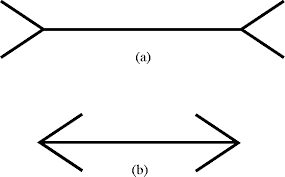
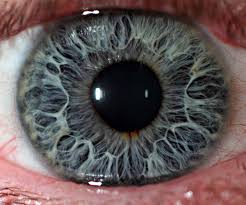
            Anyway, that’s a version of Johnson’s TOP:  “it all depends on how you’re looking at it.”
Processing Change

‘How could human behavior be described? Surely only by sketching the actions of a variety of humans, as they are all mixed up together. What determines our judgment, our concepts and reactions, is not what one man is doing now, an individual action, but the whole hurly-burly of human actions, the background against which we see any action’

– Ludwig Wittgenstein, Zettel

“CERTAIN NOVELS NOT ONLY cry out for critical interpretations but actually try to direct them . This is probably analogous to a piece of music that both demands and defines the listener’s movements , say like a waltz. Frequently, too, those novels that direct their own critical reading concern themselves thematically with what we might consider high brow or intellectual issues — stuff proper to art, engineering, antique lit., philosophy, etc. These novels carve out for themselves an interstice between flat-out fiction and a sort of weird cerebral roman à clef. When they fail, as my own first long thing did, they’re pretty dreadful. But when they succeed, as I claim David Markson’s Wittgenstein’s Mistress does , they serve the vital & vanishing function of reminding us of fiction’s limitless possibilities for reach & grasp, for making heads throb heartlike , & for sanctifying the marriages of cerebration & emotion, abstraction & lived life , transcendent truth -seeking & daily schlepping, marriages that in our happy epoch of technical occlusion & entertainment-marketing seem increasing consummatable only in the imagination”

-David Foster Wallace, The Empty Plenum-

IN THE PROCESS OF CHANGE

more soon….

Yearn Vulnerable – Friday Fictioneers 2/15/2013

Such a powerful prompt this week – yowza!  Thanks to Rochelle Wisoff-Fields and her continuous work at Friday Fictioneers for providing us with such fare to engage and reflect.  Please join us if you have an urge to translate experience into words.

The prompt:

copyright-David Stewart

(this prompt was so good I’ve included 3 responses in the manner of brainsnorts)

1.

She grasps while he flees.  The horror of everything offered.  He’s reaching all the same.  She clings, and thus submerged, loss becomes attachment.  He yearns.  They’re vulnerable.  Their hold and flight are balance.  A panicking fail like this can require only one thing – somebody’s everything – which she offers, and which frightens him to terror.  She lays it at his feet and pursues – without her he would fall – traumatizing him, for there will come a day.

copyright-David Stewart

2.

Everything depends on it.  Seems to.

This risk, this reach, this grasp.

All has been let go, ripped away for this advance.

She’s nothing left but hope and fear.

Submerged in this suspension.

And he in silent trauma – terrorized.

What would be the gain – of grasping or clasping; a yearn or a vortex; great loss or its threat?

A possible life?  An wholistic vitality?  The “whole hurly-burly”*?

What?

We leave it here.  NOW.   In the reaching.

*Ludwig Wittgenstein’s phrase for the complex background, context of human life

copyright-David Stewart

Alternate 2.

“Do you not get it?” she stressed, “can you seriously not see what I’ve done?”

“EVERYTHING!” she cried, “EVERYTHING I’ve left and abandoned, deserted, let go, in order to offer myself up to you! – to come for, reach out to – YOU!”

“This is unbelievable!” she, exasperated. “I really and truly cannot!” she, bewildered.

And he – silently terrorized, traumatized, afraid.

Trapped in this suspension – the grasping or clasping; the yearn or submersion; the loss or its threat.

And what of the gain –  a possible life?  An wholistic vitality?  What – ?

We leave it here.  NOW.  Reaching.

N Filbert 2013

Conjoined Semiosis – A Valentine

HERE:

Conjoined Semiosis – A Valentine for my wife

Amassing contexts and histories barely constitute beginnings.  Relations between entities are potentially infinite and full of traces.  Somehow, occasionally, they equal: an identity – identities – by what’s between.  Continuous dynamic variables.

By chance each of our indefinite immensities meshed boundaries.  Bodies permeable as minds, and vice-versa.  Reciprocity – reality and dream.  Kisses channeling deep into veins, correspondence shipped and received – held gently in the hands while splicing ripples through craniums.  Made of margins we, venturing portals and hallways one of another.  Each an entourage, an army, and its festival.

Bound by genuine threads.  Wrapping rocks and trading rings, patchworking children toward tapestry.  Our eyes – microscoping telescopes, telescoping memories.  We are wheres and whens, whos and whats – and how!  No wonder why receives no answers, only possible descriptions.

We search for language with our bodies.  Attempting to define the terms and parse the verbs together: love, trust, respect and honesty.  We have said “you are my person,” communication requiring the whole shebang – dismembered pasts and potential futures – all we do not know mustered toward a truth, collaborating is.

If we were to withhold what we cannot show, “whereof which we cannot speak” (as Ludwig tells) avoiding formal pseudo-propositions, we would only telegraph senses, dropping our abstracting frames and their symbol’d referents.

But we are artists – metaphors ourselves – infusing nonsense into world, creating kinds of sense, some of it illuminative.  Morphing forms and casting doubts to converge in content.

I love you.  I am so glad

WE ARE HERE