“The Conflux of Floods” : an Imagined Interview

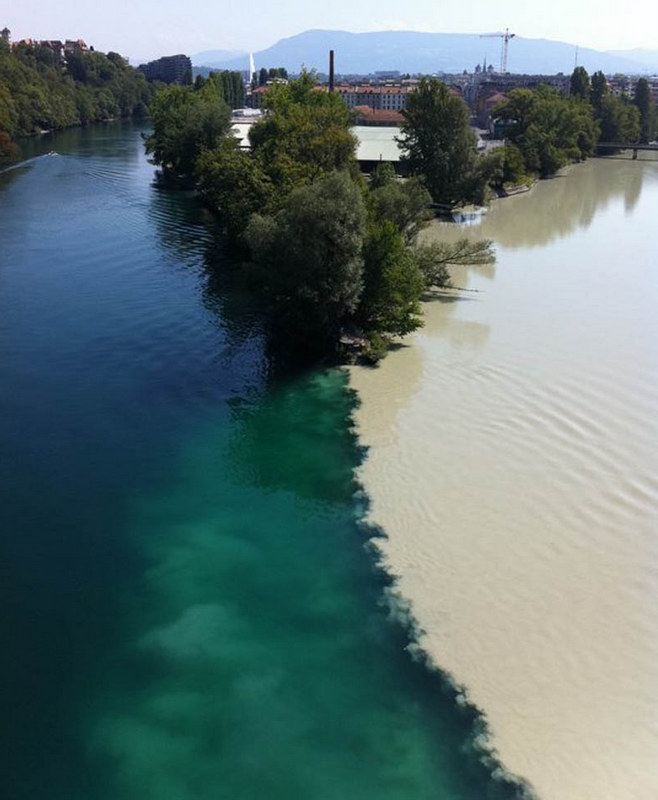
two-rivers-colliding-geneva-switzerland-rhone-and-arve-rivers_2

            In a recently daydreamt interview (I realize these may be narcissistic, but they have occurred all through my life, and come to function as ways to take account of myself) – in which I had composed writings that earned critical acclaim AND garnered popular and commercial success (crazy, right?!) – I was being astutely questioned (after all, I am both interviewer and interviewee – it’s a daydream), and pressured to account for both the critical acclaim and the mass consumption of the tangled materials of my celebrated novelistic-poetic-essaying (some multi-genred hodge-podge and hurly-burly’d collaging of human inscription).   [Which is also, obviously, occurring in this everyday attempt at its retelling].  For better or worse.

By any account, each time I endeavored to formulate an answer to reckon for the apparent realities under fantasized questioning, I was foiled – ultimately unable to appropriately language ANYthing I strove to express – for the fundamental reason that the shared social convention of language – the available (or known) English nouns, verbs, structures, phrases, vocabulary, ontologies, etymologies, forms, content and context seemed false to my meaning as soon as I spoke them.

I would begin to assay a response, and each available term (even though utilizing an extensive and deft, adept English vocabulary) – each word I was choosing – would seemingly cancel itself.  I was caught in pregnant pauses – an author seeking a term – and the accessible signs and sounds of an encyclopedic dictionary all clanged untrue – inaccurate, incomplete and implausible – incorrect!

The interview proceeded (notably un-entertainingly and un-interestingly) with solid and well-considered queries posed from the history of human making, reflection and inquiry…followed by prolonged silences as I contemplated what might be honest, authentic replies…resulting in the beginnings of obsessive-compulsive, over-thought, manically scrutinized hesitations – cancelled out and undone, revised and corrected, taken back or erased as soon as they were spoken.  Simultaneously to becoming aware of their possible interpretations – conventionalized meanings gassing the atmosphere – the breath and air of their saying and hearing.

For example:  “Well, I think that authors…how could I speak for others…it seems to me…no that’s not right,” or, “It is my intuition, sense of things…my felt experience… no, that’s not quite it.”  “As the mind processes the body’s…wait…what is not body about the mind?  Our language presents a splitting of the two that was never there…I mean…no, no, this is inadequate…” and so on.  Nothing being said.

“Ever try.  Ever fail.  No matter.

Try again.  Fail again.  Fail better.”

-Samuel Beckett-

            The failure of the interview eventually came around to the following… a couple responses that might represent something almost accurate, maybe.  May communicate a touch of something authentic, honest.  It has stuck with me for a few days, and yet I can’t quite be sure…

A question arose concerning what I might have done, or be doing if I had fathered less children, were not bound to sustaining a family, and so on… I reflected awhile… and soon realized that I am unable to imagine my life without offspring.  Nearly half of my existence has been lived as a father, and I cannot think of experiences or expressions that they do not co-create in some way.  If any of it were taken back – the struggles and fears, broken marriages, anxiety, joys and determination to survive, regular interactions with their development, activities, quizzings and personalities… I only feel impoverished.

The illusional interview concluded with a large catch-all question, something along the lines of: “Your writings have profoundly moved some readers, yet you consistently express discontent – revising, beginning again, evading – even disappointment in your faltering, hesitant works.  Can you talk about this experience?  How do you account for your dissatisfaction in light of your readers reported satisfaction?”

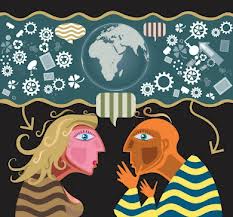
My reply:  “The only way I can think to address this right now is in terms of a conflux of flood waters.  I, the writing one, have a flood of experience that I wish to understand, interact with, relate to somehow, attempt to comprehend.  I utilize the methods, marks and systems that we, as a species over time, have collaborated and devised with which to communicate – with ourselves, with others – and I attempt, attempt, attempt to forge some accord between the vast swarming flood that my life-experience ever is – as an organism embedded in world – and the means and methods we have for making sense of, imagining, and transcribing such total experiential flow.”

“The resulting expression is always more-than, distinct and different-from the felt experience I have of the flood (as the medium borrows from far beyond my own individual abilities or thoughts, capacities – an enormous fund of expressions, vocabulary and species-deep conventionalized experiences I could not possibly evince on my own) AS WELL AS less-than, deficient, incapable and variant from (not equal to) the ubiquity of my experienced flood.  I am left simultaneously hoping the conventions of language will prove adequate, and despairing they never will be.  What results from this tangle is a writing – a text, document, artifact – of my individual attempts to process the flood of my human experience in conventionalized signs.”

“From the other side of the markings comes the flood of each individual reader’s human experience.  As they (or we, I’m describing my reading experiences) engage the verbal expressions the writer selects to represent or elicit their own flood, the reader’s flood rushes through, around, with, into these written expressions.  When what is deciphered via these conventional funds of language feels apropos, accurate or apt to the reader’s experiential living flood – we are moved, feel met, acknowledged and represented, almost comprehended and understood, and we may feel that this collection, order, expression of language we have discovered in reading actually writes us, so to speak.  Which is why you may hear readers say such things as “I couldn’t have said this better…” or “I can’t imagine this expressed any other way…let me read it to you” (the thrust of quotation).  The section of text, general outlook, sound, rhythm or content of the artifact feels almost miraculously adequate and accurate to our own flood of experience.  Of course, often it does not – in which cases we revise or repurpose our readings toward knowledge or entertainment, something partial or other than full-flood experiencing, holistic (as nearly as possible) communication.”

“We know, as readers, no Other’s experience can be identical to our own, but in lucky moments it feels so.  Feels possible that our experience of the living flood is shared, understood, that our individuality, solipsism is not a locked room, or impassable barrier.  This is the “magic,” if you will, of human social conventions as mediums for individual experiences: they enable or facilitate our joinings, our cooperation, solidarity, convergence.”

“So neither the writer nor the reader are responsible for authoring profound writings, or rather BOTH are: multiple floods of experience crash through the arranged signs and symbols, separated by time and space and differences, but still possible violent confluences – depending on both, or all.  Living experiencings rushing the sign-sets enabling some felt sympathy, intimacy, accord between the floodings and the expressions: conflux.”

“Otherwise it simply doesn’t ring true – might be appreciated for its artistry or ingenuity, ideas, craft, imagination – but NOT an occasion for profound felt accord, convergence, a totalizing feel of representation/expression.”

“Floods in conflux: right now this seems to me the opportunity that care and attention, effort and awareness of our socially species-al co-creating mediums of communication (art, music, technologies, labors, habitudes, languages, modes of inquiry, etc…) allow for, offer us, in moments of fortunate concord.”

“Does that answer your question in any way?”

Tape ends.


Re-searching: Hope Questions

skeleton at desk

I archive.

– Edouard Leve –

At some point in the future this will be very important to someone: that I wrote.  Will be significant.  To someone.  That I disciplined my “self” determinedly, conspicuously to experience; to experience experience.  That I asked questions of as much as I could, and as many, and then held on to each question in a kind of world’s-largest-ball-of-twine or world’s-largest-bundle-of-wire or inter-cranial-neuronal-tangle, or… that each little curiosity that cropped up as I “came up against”, each discomfort, each discomfiting sensation, I translated – and when I rendered it, became something different, something new in the world (even though agelessly repetitious) and that new thing was another questioning animal – and those questions disappeared into the world’s-largest-body-of-water – doubt – oceans and underground marshes, or, in actual everyday life, simply a “questioning spirit,” an “inquiring mind,” a “researcher” (to search again) – a human that keeps turning round and around observing things, seeking, searching, asking, in other words, I feel like it will be important – to some other existent thing/individual/organism/ being – that I quizzed and catechized (and that, mostly genuinely, compunctionally) whatever discomposing-affective-awareness-alert occurred for me (thereafter losing them all, after their fashion, in the generalized posture or aspect of querying) followed it in accord with its continuance of interest and then released, lost, offered it to a larger sign:

question mark

Someday it will matter that every little thing, moment, perception (i.e. “experience”) that I noticed, felt, underwent – was aware of becoming-encountering – I interrogated, I archived, I disoriented, mislaid, lost track of in some larger point-of-view, mien or cast: I had reservations, I chronicled, I forgot.  And inscribed.  Addressed and assigned in whatever way I was capable of.  Marked and then faded, cancelled by the mere activity of demarcating.

Translating manifestations and intimations into gestures and cues delimited and distinguished (de-scribed) the perturbation and disconcertment into ambiguous and indeterminate denotations…opaque obfuscations or auguries that bore little substance or portent.

My questioning, rather than resulting in poignant prognostications or revealing adumbrations simply fed the murky mass of life’s analysis – a scrupulous and turbid scrutiny.

I beggared the question and then repented.  Metanoia.  I aimed and turned, aimed and swerved, and turned again.

When the engagement perturbed, I transliterated, diverted, and sacrificed it to a chaotic deity … discovering … language.


Scripture : Roots

Scripturient

“In the beginning was the word…”

“…and the word was god.”

Enigma.

My youth was spent immersed in a form of neo-fundamentalist, conservative, evangelical Christianity.  It would be difficult for me to estimate the number of bible readings, passages memorized, commentaries consumed, and sermons received during my first twenty-some years of life.

Twenty-some years later, libraries of world literature later, this particular phrase, passage, verbal construction remains like a haunting, a rule, a resonance and reverberation of the deepest sort – a kind of First Sentence that rises and echoes in me whenever I turn myself to writing.  A statement some whole of me attached to in presumptive belief and passion that constitutes, in its way, the work of my adult life.

In what “beginning” was the word?  And what was that word, are we to read this word as, literally, “god”?  Or are words themselves divine, godlike in their creativity and actionable functions?  In the full passage we read that the word is both “with” god and itself god…a quintessential meta-statement from whatever interpretive stance one selects.

“In the beginning was the word [in beginnings words become?  In words become beginnings?],

and the word was with god [words that are with] and the word was god [words that are].”

            Religiously:  when humans spoke “god,” gods became.  Conception creating realities.  Referentiality – a term is attached to an object, idea, relation…and the object, idea, relation begins to become that term (and vice-versa, through public practice).

Words epitomize co-creation, collusion.  I am a tiny human organism, an infant birthed into a community of persons.  This community attaches a term to me: “Nathan.”  I grow into that name, define and fill it with characteristics, behaviors, activities, experiences…and, for my communities (the others I relate to) that word “Nathan” comes to mean my specific organism in the world.

Words are beginnings, are like relational diagrams, invisible cross-hatchings and webbing throughout lived experience as humans – inceptions of internal and external possibilities and limitations via their activity as connective linkages, as references and realities.  Every term is metaphor – symbol, signal, object – requiring its interpretant.  The multi-sided act: language.

So what began with language?  Language that joins with and is?

I suggest meaning.  Conscious participation, co-mmunication, reflective relating.

Religiously:  posit Supreme Being and it posits world.  Speak reality and reality speaks.  All a matter of relating, relation…communication…language.

World becomes via collaboration, interaction – made possible through efforts of mutuality and distinction: gestures, intelligible utterances, multilogues, dialogues – communication.

Possible interpretation: A god languages “god” into being.  “Unicorn,” “fairy,” “truth,” “quark,” “molecule,” “consciousness,” – invisible, imperceptible “realities” language (WITH) and then become (ARE).  Subsequently the commerce and exchange of the universe alters…

Each utterance brings new relations and thereby new “things/realities” into concourse.

I can believe that what begins in language (or, communication/relation/collusion) is MEANING (such a word as “god” itself).

I find, trundling through countless notebooks, pages, typescripts, letters and journals, that at the head of any larger work or endeavor I attempt is inscribed this personally indelible takeaway from my youth’s indoctrination:

In the beginning is the word

a thing that creates in being constructed

always co-constructed WITH something else/Other

and becoming something else/Other in its utterance and collusion

organism + environment = meaning

all reality resides in relation

all of these also words, beginnings, possibilities

In beginnings are words

and in words begins begins begins

ever forging relations into realities into relations

tying things one to another to another to another

in concourse

en route as route

Summer Recapitulation

Given the nature of things… withdrawal from school… disregulation of schedule / child-rearing / presences… obligated projects, desired collaborations, attempts… preponderance of labor… decrepitude and erosion of house, car, body…

Herein lies a revised Summer Reading List – old and new and recapitulatory…

“FICTION”

This slideshow requires JavaScript.

“POETRY”

This slideshow requires JavaScript.

“OTHER”

This slideshow requires JavaScript.

Writing: Impetus

writing-unthinkable-workshop-web-550x367


It’s hypnotic.  Illogic.  You may recall genetic components – a sentiment, experience, curiosity or sensation…the fabrication begins its own spells.  That plane where you drift from expression or fractaling inquiry toward Medium.  When plot is played out and the voices keep talking.  Or some other member begs a word.

You are no longer quite “author.”  When it begins I’m usually puzzled or amazed.  A vague and shifty core obsesses and eludes me.  I ponder awhile, do research, spawn a dialogue or few with available others…but eventually turn to writing.  A word inscribed in secret not only leads to more, but ricochets through spacetime like a pinball.  The versions of the brain call out over the callosum:  “Felt anything like this before?  Have we had an experience that resonates?” / and / “Say – it seems I’m in the midst of something – check it out!  Any words in your concordance for such as this?”  To and fro – attemps to signify and symbolize, reify, rectify, making truce with our immersion.

The “language drill.”  As it burrows metaphor, it fragments and splinters dust around the edges.  Retrieving as it leads.  Recalling through invention.  I use my handwriting to find out.   To find out.  Searching something, spelunking expeditions, a nettling curiosity blind-feeling hunches and perceptions.  Pulling them towards words in attempts to trick them into trap.  Building tunnels, margins, stairwells to aim the lights at.  As if  broad enough term-corrals might lasso and then spiral, slowly cinching it round, whatever “it” is.

But whoa then, hold on!  Once a breadcrumb trail’s discerned, it forges.  Makes its rhinoceric way in accrual and erasure.  Constructing as you follow, conundrum’d and deleting.  A word – and sources cling like filaments.  None of them accurate and all informing.  History, culture – traditions.  Intimate pain and joy.  Perception, conception and query.  Discovering bewilderment.  Creating the unsaid.

Victim and perpetrator both, you, author, artist, song.  Skewing and distorting in equal measures.  Changing as you change it.  This is the making.  The being-made.  Creator and created both.  The artist in her medium.

There is no “having done.”  Failure or not, it virals and contaminates.  The path is incompletion.  “The Artist’s Way…”  Never through, until it’s through with you, coincident with a life.

Who do we say that we are?

exploring mystery


To be continued…


“Yet if language gives no words for what happens…it nevertheless gives itself”

-Christopher Fynsk-

Experience Language

“Communication is the awareness of a chain of meaning of which every speaker and interpreter is part”

-Renate Lachmann-

“Two voices is the minimum for life, the minimum for existence”

-Mikhail Bakhtin-