Welcome!

Because…yeah.

Piera Cicchetti's avatarMDPI Magazine

The MDPI Magazine highlights a selection of papers from MDPI peer reviewed, open-access journals, chosen for their wide interest to researchers and others interested in the life sciences and related fields. The Magazine will also include interviews and guest commentaries, and aims to support the maintenance of a broad outlook for investigators, and to stimulate both rigorous and imaginative thinking, perhaps inspiring fruitful new research ideas or approaches. Readers are likewise highly encouraged to share their particular perspectives in order to stimulate useful scientific exchanges.

I hope that you enjoy the content, and welcome your comments on our highlighted articles and any feedback or suggestions for the MDPI Magazine.

Yours sincerely,

Piera Cicchetti, Ph.D.
Editor-in-Chief
MDPI Magazine
E-mail: cicchetti@mdpi.com

View original post

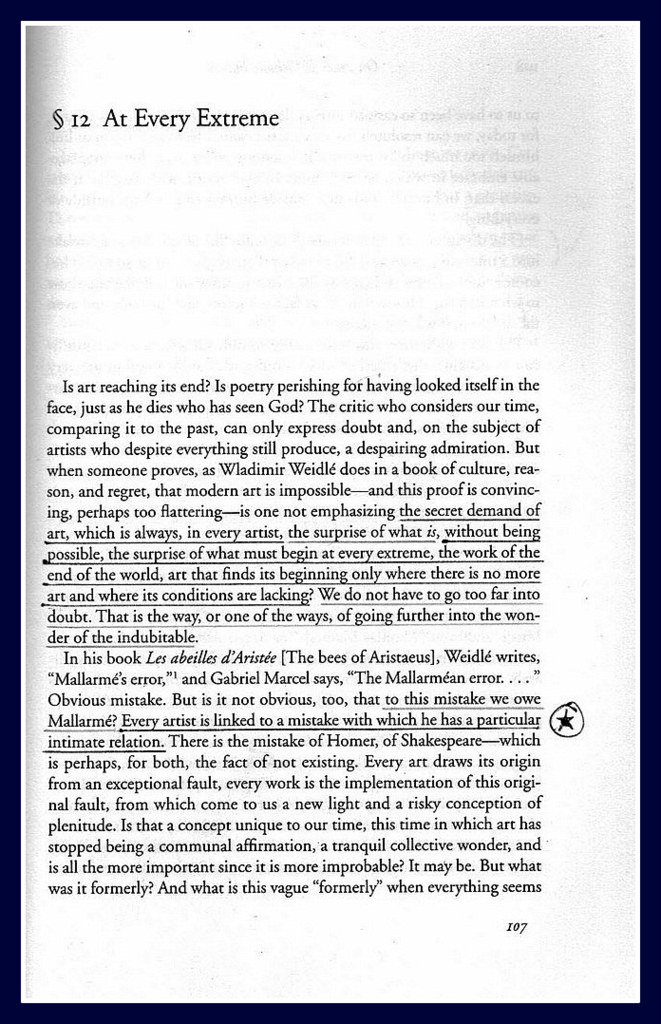
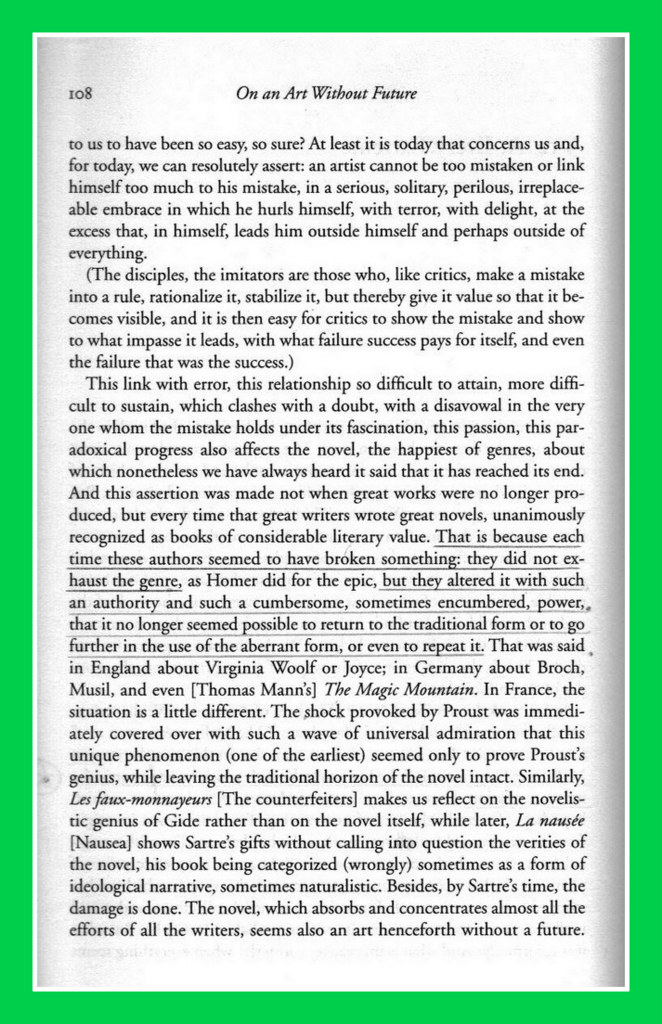
ART IS A MISTAKE

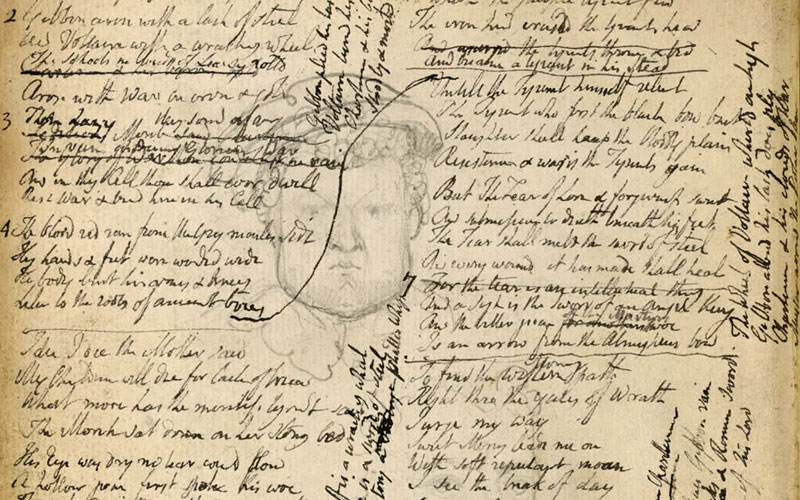
writing-britain-blake-lge

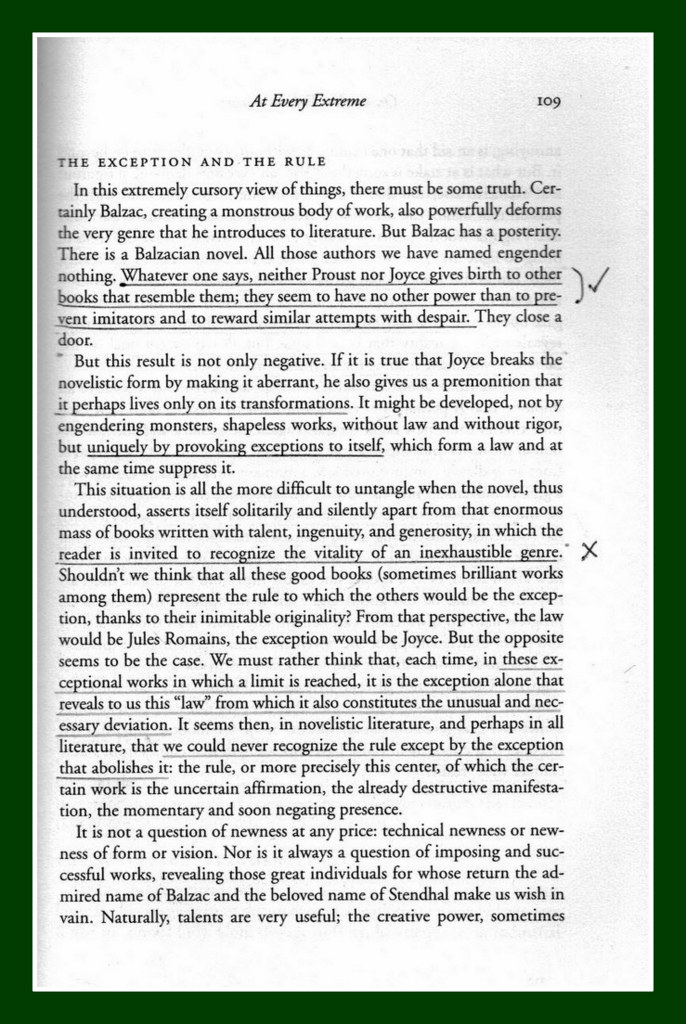
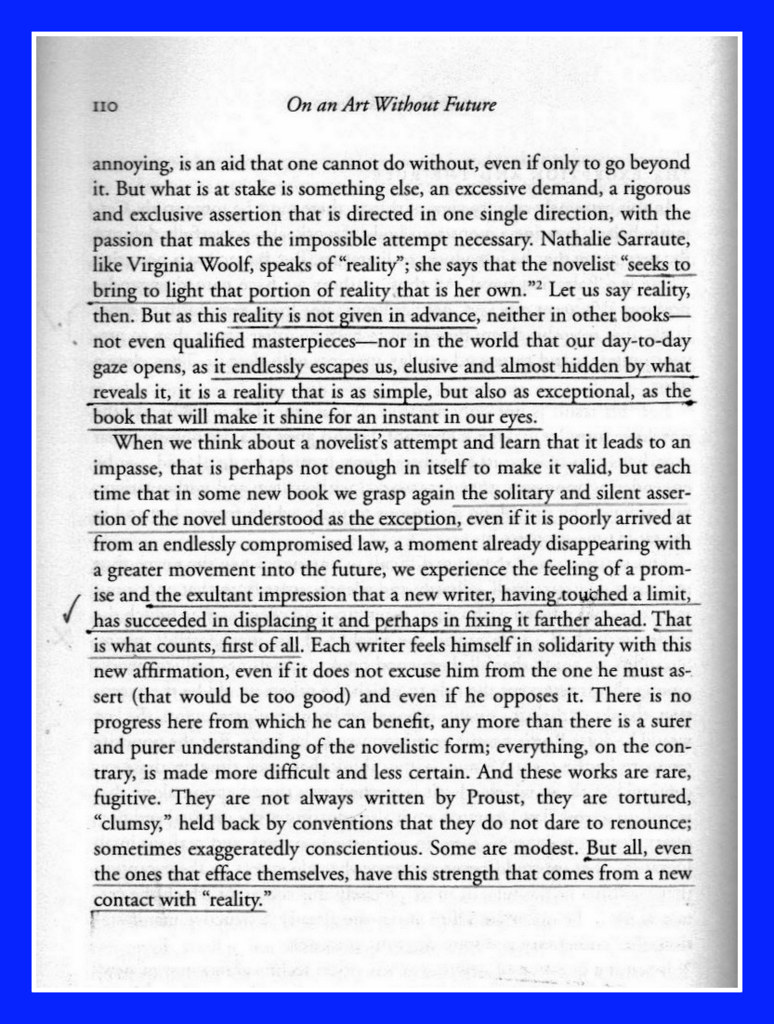
Blanchot Extremes-001Blanchot Extremes2-001Blanchot Extremes3-001Blanchot Extremes4-001

-Maurice Blanchot, from The Book to Come-

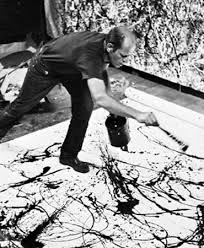
Pollack

MAKE THEM!

June 23, 2013 – 3:44 pm – if you had the coordinates you could Google Map it.

What I was composing the other day in my head, or wherever daydreaming occurs: filling up that gap between inside or outside, idea and actual, etcetera.  They told me not to worry about losing it – that it would return, re-emerge.  I lost it.  The idea, sensation, form, content – everything.  Well, not everything, exactly, I guess, because how could I conjure that there was something, some experience, some initiative or other, had I truthfully lost it?  Okay, maybe they’re right, and “everything” is a question of access.

In any case, well, no – in present case or tense or whatever now-situation might be (“Weather”? – see Roland Barthes, The Preparation of the Novel, or Tim Ingold’s essay in Vital Beauty) I am not experiencing “access” to something some part or parts of me (some connectivities) believe or invent a past tense for – a disjunction/abstraction/detachment from.  A difference.

I am believing that I felt differently about something at some other time, that language was forming out of me relating to that affect, and that I had the potential capacity to express all that semiotically – or, in a way that it might make sense, be shared, exist.

Now I’m languaging nothing.  Or, not exactly nothing, more like a different something that in fact is the semiosis of another inexpressible or inaccessible possible something.  Which means, potentially, anyone could find it, discover/uncover/invent/compose/co-construct (co- probably redundant to con- but then I’m not Russian, at least not currently) that initiative and perhaps I’d re-cognize or re-member whatever realigned threads rewove into this particular weaving (what is “now”).

Etcetera.  This is how it goes down for me (current context taken mostly for granted).


Writing’s Toxin

Barthes - Novel

“Is it possible to make a Narrative (a Novel) out of the Present?  How to reconcile – dialecticize – the distance implied by the enunciation of writing and the proximity, the transportation of the present experienced as it happens?  (The present is what adheres, as if your eyes were glued to a mirror).  Present: to have your eyes glued to the page; how to write at length, fluently (in a fluent, flowing, fluid manner) with one eye on the page and the other on ‘what’s happening to me?'”

“The novelistic ‘drive’ (the love of the material) is not directed toward my past.  It’s not that I don’t like my past; it’s rather that I don’t like the past (perhaps because it rends the heart), and my resistance takes the form of the mist i spoke of – a kind of general resistance to rehearsing, to narrating what will never happen again (the dreaming, the cruising, the life of the past).  The affective link is with the present, my present, in its affective, relational, intellectual dimensions = the material I’m hoping for (cf. ‘to depict whom I love’).”

“This is actually to go back to that simple and ultimately uncompromising idea that ‘literature’ (because, when it comes down to it, my project is ‘literary’) is always made out of ‘life.’  My problem is that I don’t think I can access my past life; it’s in the mist, meaning that its intensity (without which there is no writing) is weak.  What is intense is the life of the present, structurally mixed (there’s my basic idea) with the desire to write it.  The ‘Preparation’ of the Novel therefore refers to the capturing of this parallel text, the text of ‘contemporary,’ concomitant life.”

“Now, although at first glance making a novel out of present life looks difficult to me, it would be wrong to say that you can’t make writing out of the Present.  You can write the Present by noting it – as it ‘happens’ upon you or under you (under your eyes, your ears) – In this way, we at last come in sight of the double problem, the key to which organizes the Novel – on the one hand, Notation, the practice of ‘noting’: notatio.  On what level is it situated?  The level of ‘reality’ (what to choose), the level of the ‘saying’ (what’s the form, what’s the product of Notatio)?  What does this practice involve in terms of meaning, time, the instant, the act of saying?  Notatio instantly appears at the problematic intersection between a river of language, of uninterrupted language – life, both a continuous, ongoing, sequenced text and a layered text, a histology of cut-up texts, a palimpsest – and a sacred gesture: to mark life (to isolate: sacrifice, scapegoat, etc.)”
“On the other hand, how to pass from Notation, and so from the Note, to the Novel, from the discontinuous to the flowing (to the continuous, the smooth)?  For me, the problem is psychostructural because it involves making the transition from the fragment to the nonfragment, which involves changing my relationship to writing, which involves my relationship to enunciation, which is to say the subject that I am: fragmented subject (=a certain relationship) or effusive subject (a different relationship)…a Novel-Fragment…”

Grenzsituationen II

Please read previous post with this in mind:

I would love for any/all to share what those “Limit Texts/Artifacts” are for you?

grenzsituationen

Please share via comment what encounters or engagements with works of art, science, philosophy, writing, music, and any other cultural artifactual form has altered from then on how you select, evaluate, engage other related artifacts from then on?

Thank you!

Transductive Conversations…cont’d (via Lance Olsen)

baby at laptop


“One of the wonderful things about word processors is they transform all composition into continuous process.  You can rearrange, rewrite, tinker, copy, cut, paste, open separate files for separate chapters or story sections or poem fragments, a window for notes, another for your outline, and still another for your list of characters and their attributes, and have them all on your screen simultaneously so you can flip among them as necessary while your web browser provides you with a dictionary, a thesaurus, a Wikipedia page, a website to aid you checking this fact or that…

(The less than wonderful thing about word processors is they make every draft look like a final draft, sloppy writing look as polished as just-published.  Careful about being duped by the sheen, and don’t disregard the notion of trying to compose on a lined tablet unless you’ve already tried it and found it lacking; it is a method that both slows perception and increases conscientiousness).”

-Lance Olsen-

olsen


for Friday Fictioneers – 21 June 2013

copyright -Managua Gunn

As long as nobody moves.  Scenario accomplished.  Sky filled with blues.  Reflected in waters, reassembled by lines – manufactured / emergent.  The breath would come.  Optionally.  A reality could be structured with less than this.  Hold still.  In the beginning – world.  Populous, variegated, intricate with potential.  A setting of pebbles and mimes.  Activities at the ready.  Engine set to whirl.  As long as nobody moves.  Nobody says.  Nobody breathes.  Still-pointed swirl.  Anticipation.  The drawing of the sneeze.  A trickling toward itch.  Hummingbird-eyelid.  A sudden rush of wind.  Transgress.

On entering the world(s) of the text: Prologue

via J.M.G. Le Clezio

Terra Amata

Terra Amata2

Terra Amata3

Terra Amata4

The Last Bookshop

A providential addendum!

Água Viva – Clarice Lispector and reading the invisable text. (Book Review)

Lispector…

lisathatcher's avatarLisa Thatcher

The journey one takes toward Clarice Lispector has a great deal to do with the way she is read. I came to her through Helene Cixous, and therefore she (CL) has become inseparable from me, as I experiment with my reading of her, paying almost as much attention to my internal carry-on-chorus that wobbles along side my conscious movement from word to word in the linear structure. Clarice Lispector exists for me outside the text, using the context defined “inner world” to stretch out and beyond into the borderless “outer world”. It is her ability to create this (anti)structure that separates her work from “stream of consciousness” or circular topic based narratives. I read a lot of experimental fiction that tires to appear deliberate when marrying avant-garde techniques such as experiments with grammar, reflexive thinking/acting and searching for the space between the words, but hers is the only writing I…

View original post 1,005 more words