Writing Prompt

I have been attempting to take part in Madison Woods organized Friday Fictioneers which has been very enjoyable and a fantastic exercise – particularly to see the many figments of minds operating on a singular prompt – how various persons / how various world!  I came across this sentence standing on its own in the midst of a story by Lynne Tillman recently and it just will not leave my head.  I thought “a picture is worth a thousand words!?” – how about “these words are worth a billion pictures!?”  I’m sharing them here hoping they might also inspire in many of you reams of stories…And I’d love to receive links to the works that you create with/in/from them – any length, any time.  Here’s the sentence:

“In an embrace, something may be confirmed, avoided, or resolved.”

-Lynne Tillman from her story “Phantoms” in This is Not It

Writing: the Characters

Writing: the Characters (1)


Not beginning from anywhere but here.

Here being where I am looking for a character, a someone, and specific, with a mind, a body, and particular knowledge and actions, whom I might observe and record.  On whom I might test out my language.  Whom I create.

Exercise in perception, then.  To see what I could see, perhaps, if I looked a certain way, at or into a certain person.  What I might hear, and how to say it.  What would be felt and its work of translation.  The smells and the tastes and the histories, for both of us.  Or perhaps even all.  No, that’s too far.

Right here, though, investigating perception, that preform vehicle, formed by our surroundings – imagination – the multiplex of learning structures allowing me to sense, to perceive.  That also, is here.

Imagination and perception – their invention we call world, and a character, a subject/object like my hand I might observe, hold aside of me while attached by nerves and cells, tissues and blood, by life, its embodiment.

Non-abstract abstracted – that conundrum – here.  The truthfulness of experiencing becoming honest lies.  The words, the print of hand, what tells (or who), and how.

Perhaps another thinks this way?  Well, not exactly, but shares concerns with idiomatic nuances?  Perhaps his education (or hers) was difficult, or pleasurably a breeze, they mastered information like a large and thirsty sponge?  Absorbed and were absorbed in such interstitial structures.  Or not.  Not at all.

An uneducated person with adaptive gifts for resonance.  A mimicking trickster riddling what is heard into naïve and complex wisdoms?  That would be fun.

Perhaps another world – country, continent, planet?  Someone observed for years suddenly inserted in a strange context, situation.  How do they behave, react, manage and survive?  I could use myself in a planet of clouds, or the tunnels of worms, what would characterize me?  How would I change?  What might I effect?  If I were made of clay or had a thousand lovers in a desert?

The only edge to possibility is what experience brings.


But pretending to begin right now, I see him clear.  There is a woman he is watching he finds beautiful.  When she works he sees the curve of her small breast which he desires.  He is ruddy yet refined, of middling age.  He’d like to court her but fears all pain that can’t be bandaged.  He’s afraid of words and their millions of ropes and anchors.  Reality feels like conflict, for him, a continual coming-against, and adjustment.  Adaptation he experiences as loss.  Of unrealized ideals.  And so he walks, spinning narratives in his head.


Here, that possible visitor handmade.  But who?  And how would I know him?  And where was he from?  How was he formed?  Who does he belive?  And so forth…

One way to be here.

One way to press your hand against the wall.
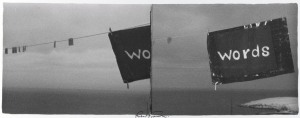


how bout that!

Carolyn Page's avatarABC of Spirit Talk with Carolyn Page

Wichita, Ks, USA   (Listen while you read)  

(Once upon a time there was a town. This town was lonely; it was in need of company. And so, what did this little town do? We shall tell you, dear friends. This little town decided to attract people by way of it’s ordinarily outrages scope of things to do. This it did. It decided to make itself attractive by way of making itself extraordinarily attractive. And, how did it achieve this?

This little town achieved this success by being innovative. It is today a city that is noted for its innovations which have proven, over time, to be so different from its neighbours that it is today a city marked by one or two attractions not seen elsewhere. It is this inventiveness that spurs on the inhabitants to be even more innovative within their own lives.

They can be seen doing…

View original post 59 more words

A Parable

A Parable

Perhaps one day you will ask for something that you want but do not need, or even need but don’t quite understand.  On a lark, let’s say, out of a “why not?” not exactly exasperation nor as fueled as curiosity, almost a simple value, who knows, but perhaps you do.

How will they respond to your free request (a spontaneity without expectation) now having burdened them with options?  You had thought it a gift, an eruption, a “no harm done,” “nothing to lose,” but of course, in the world, there is more.

So your request floats out, on the air, like a streamer, swaying and curving, rippling past the subjects to which it’s addressed.  For some it’s a slap, for others a trial, still others just dodge it and head for silent hills.

You had thought it a good, an offering of joy, a connection and possibility, not something to wind or to bind.  Never something so knotty.  A kind of safe enclosure that’s open, a meadow of sorts, where gentle counterparts might convene when they wanted or needed and whomever appeared could relate.

But in order to appear each required a turn, of attention, of glance, of an ear – to surmise and to meet, to attend.  Bodies incapable of severance.  Could they send an arm, an eye, a knee or other organ, they happily would, provided it would not be missed any elsewhere (their “here”) – and this proved impossible.

One respondent, upon lending a hand, was not able to help his young son tie his shoes.  Another offered her hair only to find herself fired from her workplace.  Each was affected by your generous request while you were left with dismembered parts in your park.

Unintentional, no doubt, you found as well that it was not spare fragments you were needing for your want.  The severed hand grew stiff and cold under your knees; the hair like strands of sand in the night on your chest.  The smells were changing.  The eyes you’d assembled were distracted, neither here nor there the parts were failing.

In an awkward flashing of a dream a teacher’s voice arrived with cliché: “be careful what you wish for.”  You’ve been waking to that for awhile.

The Violation in Art

The Violation in Art


The trouble with artists, as I see it, is that they’re always breaking things.  Breaking out, breaking in.

As if their experience of the world (and in my opinion anyone might be an artist at any given time)…well, look at it like this…a human person develops perceptions and accumulates.  Artistry consists in these experiences transmuting, transforming and breaking out in alternate forms.

The world seeps, floods, sifts or bursts its way into the artist’s mechanisms of being, and their processing of said worlding breaks its way out, somewhere, somehow.  Often anywhere, anyhow!

Breaking in to us.

A person combined with their experience breaks out in a form through their hands or their vision, movements or mouth…the artifact then enters our perception, experience, breaking in to our own operations and proceedings…entering us.

Now you’ve a mingling of persons going on via artifact, motion or sound.

If you think about this, it’s threatening.  It’s criminal!  It’s viral.  And it can happen at great distances, even invisible, even in your sleep.  It may appear at first benign, even pleasurable, might mirror some part of ourselves (or so it seems) – because of its careless remove from identity toward object it feels safe and external…but how we take it in!

With anger or lusting or joy.  Voyeuristically, “privately,” or in a well-guarded institution.  Through literature, youtube, mp3s.  In deep thought or with staid attention, and passing glances or air-gathering ears.  No matter, there’s infusion, con-fusion, an intimate entwining going on.

And it is without-which-not on either side: construction/reception, speaker/hearer, writer/reader, dancer/audience.  We all become necessary and involved, creating ubiquitous perpetration.  And no one to accuse once it’s part of our experience, our (perhaps unwitting) invitation.

Like cancer or nutrients, an other-marked entity joins with our own joining to theirs in apprehension, a collusion of worlds and of persons.  An act in which all are responsible: reciprocal engagement of voyeuristic and combinatory intimacy, breaking open, breaking in,

breaking out

breaking through

a delicious and permissive crime.

Paper Dolls: A Dress Series in Paint and Poetry

an artifact we conjured

Writing: Resonance and Quotation

Resonance: Reverberations: The Nature of Quotation


“Awake O sleeper!…”

(Ephesians 5)

“…life is but a dream”

(children’s rhyme)

“The Tao that can be spoken…”

(Tao te Ching)

“From the way I say your name I always know…”

(???)

“In the beginning was the Word…”

(John 1)

“To be or not to be”

(Hamlet)

“Try again.  Fail again.  Try again.  Fail better.”

(Sam Beckett)

“I went to the word to make it my gesture.  I went, and I am going”

(Edmond Jabes)

            Color stained into fabric woven into rug.  Of a piece, as they say, indistinguishable from the object itself.  So the words flow into us, saturate and stain us, are absorbed and resurface as we ourselves.  Like echoes in the cranium, or instinctual responses of the body.  Resonant reverberations.

“And so it was…” (A.A. Milne?)

“Once upon a time..”  “In the beginning…”

Countless appearances, an abyss of sources, the word lives on.

Who first used “love” or “light”?  “To be” or “not”?  “Hello,” “yes,” “a”?

Our life is quotation, interpretation, paraphrase.

We shelter in a common blanket.

We’re covered with a shared snow.

We drink of one great water.

Languages one to another, stained and woven rug.

N Filbert 2012


Beautiful Illustrations By Benjamin Lacombe

wow!

Solidarity

a little something of our shared work…came to me as I stepped into her office and saw the work on a table…and thought – why haven’t we ever written on that?

Writing: the Margins

This slideshow requires JavaScript.

Writing: the Margins

“All words run along the margins of their secrets”

– Susan Howe –


Now we are getting somewhere.  Now we can go ahead and believe in telling and in being told.  If “every word runs along the margins of its secrets.”  If so, (and it feels truthful, even if untrue) then…

there might be other margins, or perhaps every margin limns its contents and its secrets?  Perhaps, then, our senses, and every limit of our perceptions “run along the margins of their secrets,” like our cells and bodies do.

That “perhaps” means here “possible” – an enormous margin full of stuff and secrets.  I.e. seen and unseen, known and unknown, believed and unbelievable, etc.

And if “Limits/are what any of us/are inside of” is truthful of Charles Olsen to utter, then we might be everywhere up against the margins of the limitless.

Speaking practically, a margin is variable, and bodies and language (synonyms of a sort) are more variable than variables.

So to say, we may indeed (in our actions of doing and making, saying and thinking – signing and gesturing) be communicating.  That is, it is possible.  Words running along their margins of secrets, senses apprehending along their own secret margins, the boundaries porous and variable: something might be meeting there, might be weaving, might be, as it were, com-prehended (apprehended together in some so-called secret way)…co-mmunication?

If language, in its way, defines the social, our context, like skin, for participation in world…connectivity, sharing in common, is not only possible, but necessary, and the secrets, the ineffables, the private, what we thought of as incommunicable, is clinging there, infused with the margins, the borders where we interact, transact, have (as it were) our being.

Therefore

“it is not infinite.  Even infinite is a term”

-Louis Zukofsky-

by which I mean all our words signifying –lessness: limitless, timeless, meaningless, objectless, and so forth, limn their mysteries as much as the constant traction we enact with our names.

Lines wide enough for all of us to traffic in, and obviously very thin, perhaps transparent – we are dancing here.

Feet and minds, hands and mouths ever each right where they seem to be and also where they’re not…marginal movements…co-here-ence, always presently together, secret and exposed.

Perhaps and possibly.

N Filbert 2012