(The First Good Novel)

Meaning

In any breaks in necessity – between semesters, breaks at work, children otherwise occupied, no “required” readings or commissioned work, etc… – with each passing season, I gradually discover what matters most to me (literarily speaking, which, for me, involves much of my lived life) – perhaps I might refer to it as my meaning-making-factory-resources (Blanchot says of Borges that he is “an essentially literary man – which means that he is always ready to understand according to the manner of comprehension that literature authorizes).”  At this point in my living, over four decades along, and a large percentage of the pie devoted to reading, those voices I turn to, their messages and efforts, have become quite consistent.  Each year there are new ones, new threads and concepts, theories and expressions that very significantly impact my living – but they tend to find their place as commentaries, extensions, additives and queries to what (I suppose) now forms my central “canon” of sorts.

This struck me, following my return to Bakhtin and Blanchot, and as we prepare for vacation how I immediately reached for Soulstorms by Clarice Lispector and The Museum of Eterna’s Novel (The First Good Novel) by Macedonio Fernandez.  In searching for this image of Fernandez:
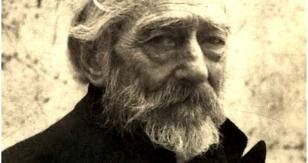
Macedonioa host of Google’s “related images” arose – including Borges, Lispector, David Foster Wallace – and I got that vision of how pantheons develop and connect and gradually form a kind of woven semiotic pattern – a “worldview” or “Innenwelt” I guess – it begins to make sense what’s connected to what and whom to whom throughout time and space of world-being.  Beckett, Blanchot, Dostoevsky, Pessoa, Rilke, Cixous, Kafka, Bakhtin, Jabes, these visions and verbals I return to again and again and again and again – inexhaustibly – and although my copies are nearly glutted with markings and underlinings – and they feel intimate and familiar (on the one hand) – that I also feel I am always learning them anew, freshly, with EVERY read.

These things astound me.
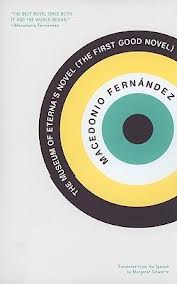
Museum of Eterna's Novel

Of this particular book (which I often say is the very best novel I have ever read, repeatedly), Adam Thirlwell writes “It is a novel which does not want to begin.  Or, perhaps, it is really a novel which does not want to end…The aim of Macedonio Fernandez’s novels is to convert all reality into fiction (or the other way around).”  “The real subjects of this lightly playful novel are the grave ones of death and love.”

“In his novel, Fernandez tests the possibility that all philosophical questions are only meaningful in relation to human relations: that all questions of infinity are really questions about love.”

and so on.
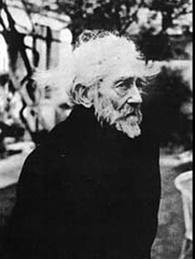
Macedonio 2

Macedonio is, for me, a hero the likes of Bakhtin, Blanchot, Beckett – those writings and writers I will never “get over,” never “get around.”  Writings I can only ever “go through.”

Perhaps these writings are characterized by the question – “What is it to be real?”  I recently discovered in one of those “shock of recognition” moments that although I’ve studied theology, philosophy, classical music, art and literature and now information sciences and systems theories – that none of the CONTENTS of these fields sustain my passions – it is the relationships between them – the ligaments and synchronous reverberations they emit – the MEANING-making effects of their pursuit and inquiry that is REALLY what drives me toward, into and through them.  I’m not looking for truth or necessarily facts or any answers – but for PROCESSES and PRACTICES that enrich, enhance and extend my biological life in relation to the world I’m “thrown into.”

Borges wrote of Fernandez: “Macedonio is metaphysics, he is literature” and that “writing was no trouble for Macedonio Fernandez. He lived (more than any other person I have ever known) to think.  Every day he abandoned himself to the vicissitudes and surprises of thoughts as a swimmer is borne along by the current of a great river.”  The novel’s translator writes: “The method is madcap; the intent is desperately human.”

Perhaps that is what I’m after – to be “desperately human.”

and now we’re heading off to the wilds – to be desperately human with-world with-family – replete with above-mentioned authors and without wi-fi or internet services!

P.S. (also from current reading – The Waste Books by Georg Christoph Lichtenberg):

“Be attentive, feel nothing in vain, measure and compare:  this is the whole law of philosophy.”

and

“To grow wiser means to learn to know better and better the faults to which this instrument with which we feel and judge can be subject.”

All the best!
As relates to…


bakhtin2

I have wanted to share (for years) the significance and import of Mikhail Bakhtin‘s manner of thinking, writing in the formation of my own worldview and understanding of the confounding irritations of working in language and the interactional miracles of the medium.  C.S. Peirce and Bakhtin strike me as two composers with whom I do not encounter a brilliantly organized thought or true-ringing arrangement of letters that they are not echoed in.  I discover re-presentations and simulacra of their models, but rarely extensions, corrections, or improvements.

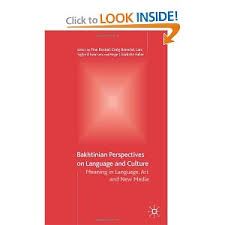
With that in mind, I have been poring through a multi-authored volume entitled Bakhtinian perspectives on language and culture: meaning in language, art, and new media edited by Bostad, Brandist, Evensen and Faber.  Note-taking, underlining, cross-referencing, formulating, and it has occurred to me that these texts are SO mesh-marked with mnemonic traces for me, that I should simply provide interested readers access to all I can link.  Setting out to locate a Pdf of the introduction and chapter 2: “Rhetoric, the Dialogical Principle and the Fantastic in Bakhtin’s Thought” I came across the entire collection available online – and so I offer it here.  If you begin, and the perspective captivates you – read on – to the chapters that carry concepts you are passionate about.  If not, never ye mind!  I am happy that texts like this can be available – not easily “stumbled upon” in contemporary bookstores and libraries (unfortunately).

To life:

Bakhtinian Perspectives


par example:  “Language is to be experienced as an interaction of signs neither neutral nor innocent: the word bears the burden of the contexts through which it has passed.  And every speaker or listener bears the consequences of signs put into circulation, of signs he perceives and answers, of signs he picks up and makes use of for his own ends.  One cannot stifle the traces stored in them.  One has to face the cultural experience a whole language underwent in its history.  Speaking this language and listening to it one unwittingly responds to this experience – the ‘word that lies on the border between one’s own and the other,’ the ‘word that is actually half someone else’s.’  The one meaning cannot maintain itself in the face of the many meanings.  B’s concept irritatingly links the atomizing intrusion of the many meanings into the one (an act that atomises this meaning) with the idea that meaning ‘explodes’ in the contact of two different meanings.  In other words: splitting up and differentiation, accumulation and trace must be thought of as occuring in the word simultaneously…Because meaning is always a recourse to another meaning and a project for creating new meaning, it doesn not achieve a decisive, definite presence.”

And so forth….!!!!

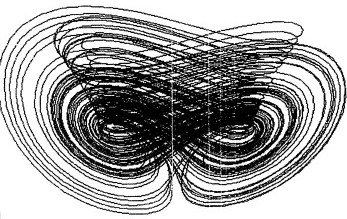
Traces…of ekphrasis…of chaos…of semiosis…of emergence

Experience, anyway. Coupling. (section 5)

Coupling Chaos


5


Couplings


            We conferred, that is, we engage, experiencing contact.


We will set out, clinging, and submerge in, together.  To gather, to keep hold.  To track and trace in the tracing of trackings.  To recognize with(-ness).  To witness with-ness.  As experiment – critical.  Experience, anyway.  “Ours.”


Between the quark and the jaguar, we leap in, already moving.  Enduring much criticism: stop-motion behavior/practice.  A snipping tool.  We move on.


Must have been moving before we begin, different organization, as also (ever “also,” both/and) until “we” is spoken, still speaking.  In other words.


If complexity allows purpose, however shallowly combined – moment-airy radiant gradient – if selection involved “choice” (in other words), so we.  So-viet.  Co-Be=”It.”


We continue beginning potentials.  Experience.  Anyway, any way at all, even those unimagined per se – potentially – given contexts (complexes before and beyond) to speak spatially (corrupted language: co-ruptured, erupting-together).  “Always more than one,” our simple mantra.  Breathe.  Walk.


Early ones (to speak temporally, parler temporellement, another language) tout “the world knows not boundary.”  Perceptual divisor, arbitrary (i.e. species-specific) and then some.  Or boundary as invented in traversal, trespass, complex thoroughfare, reciprocity.  Feed-forward in a sort of randomness, chaos emerging orders.


We blend thus to cognize.  We merge to pattern difference.  Another way of saying “no boundary” (i.e. engagement, interactivity, living, being).  To couple.


Beginning again in infinite multiplicity (our limited numeracy) – were we able to count even to we.


casclick here to read Experience, anyway. in its current entirety

Mirror-Mirage

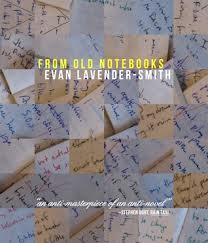
“Contemporary authors who construct a thick barrier between themselves and their readers such that authorial vulnerability is revealed negatively, i.e., via the construction of the barrier.”

Lavender-Smith - FON

“The scientist and philosopher are like identical twins in a world without mirrors.”

Evan Lavender-Smith

Experience, anyway. sector 4


The following being part 4 of the growing mycelium that happens when I’m alone…

if interested, to-date is accreted here
Escher

4


Relatively speaking, it will all be over soon.  For some sooner than others, but soon all the same.


I’ve seen a lake filled with upright sticks and trees.


What’s written on the body dies with it.


There are reasons to stay alive.


A mysterious pressure arrives with “real.”


To think of recounting, embellishment.  A pressure to remain “true.”  Wherefrom do these come?  If I transcribe only facts as they are agreed to – collaborated – I do not accord with “real,” for imagination is always active and participant.  It would be like deleting affect.

Emotion.

And yet.  To consciously create a re-telling – devise a version – something’s different from experiencing’s bricolage.  The positing of author, I-collage, selection of pieces.  The pieces also selecting – opportunities for perception.

Only another experience.  Another form of framing.  A novel utility.


I write – construct a world – at times aiming for mimesis, but, as it happens, the interaction required between resources and agency = experience anyway.


Telling of my son is never writing him, it’s composing MY.  Which in no way obviates the Other off whom I riff.  Only keeps him discrete from my perception and activates subjectivities for us.  Unless I seek to define or contain – to account for him – ab-straction, object-ify.  Caesura of love: to falsify.


Whatever one takes as “real” exerts pressures of false.


Demands one set one’s course for “proof” as opposed to “truth” – a demonstration.


It’s experience, either way, and a variant sort – the staking-of-real or searching-for-proof sort – joining a demonstration – no less fabric of experiencing than any other, no less interactive or “real,” ever unique.


Categories falsify.  And enable.  No matter, still they matter.  I relate to them as things.  As limits and opportunities.  It equals changes.  Equaling experience, anyway.


To look toward wife and perceive.  To co-orient agreements.  Perchance to be/have experience to-gether (to gather).  Align what we share in kind.


“Real” being what we organize of reality, changing each moment’s notice (before-during-aft each the moment itself) – unlocatable present.  As I collage it (now past tense).


I listen to your story, constructed-on-the-run, as it were.  Me too.  Co-being.  I agree as I edit and reform.  Agreements forming knots, not points or solid nodes.  Tangles of perceptions, cast, re-cast, and still wet clay.  The surface never hardens.  When it “seems” there are still seams – a thoroughfare.


How we know that we’re alive, or better, “living” – curse the verbal nouns.  There are no steady states – but constructed patterns.  Sane inventions.  At times.  Experience, anyway, “experiencING” – seamingly changeless change.


The urge, in writing, to stay.  To thwart or channel flow.  Progression of narrative – a pressure.  Another experience:  the tension of process and now.


Why inscribing haunts us with false.  Telling or speaking too.  Even in song, something occurs.  The fluidity cripples and hardens.  We strive to trick it loose.  Account for dangling threads at every touch, but even the threads are intangible.  Change is a force of form.


I recall.  To vocalize back or again.  The loop a seductive model.  And I fragment.  The attempt to be impartially partial (or “real”) winds its way through every act.  Acts don’t start and finish, English-infernal-nouning.  To name is to kill it is said.  To stop up beING.  But it seams another example of change, going-on, the ever-activity experiencing.  Why fight back (wards)?


Recall: back words?  Assembling experience anew?  Only different (our noticing change) – i.e., experience, anyway.


To loop is false, such lovely model.


A probable linguistics

“In our day-to-day use of the English language we possess a perfect record of the language’s evolution; when we hear ourselves speak we listen to the voices of all those many millions who have come before us, who have, in their own use of the language, constructed ours, as we continue to construct it.

Whether or not we’re able to decipher this record is another matter altogether.”

-Evan Lavender-Smith-


We are Registry

Friday Fictioneers, July 26, 2013

maui-from-mauna-kea

Between you and me, of myriad conduits, the others.  We set out.  Toward.  Send messages made of signs and symbols, ripples, waves – our gestures.  We move.  Where we are.  It resonates.  When you touch down and look in my direction, molecules dither, there is some concord.  Generation. Gravitation.  I do not believe in “flow,” or that everything is One.  You set out, we are in relation.  Things pull, things press.  Hearing dribbles in the brain and puddles.  Echoes something else.  I am here.  I will be.  I set out.  Between the myriad conduits and air, water, fire.  We breathe.  We become a ground.  We register.

N Filbert 2013

Identities taking form…such brief individuations

Instigating a “family-tree” of sorts betwixt what I will call thinkers of relational ontology, I am providing another text to explore – this one from Erin Manning – the introduction from her book Relationscapes: Movement, Art, Philosophy. 

You can see the heritage (or ontogeny) is vast – to trace it more completely investigate The Four Ages of Understanding by John DeelyA Thousand Plateaus  by Gilles Deleuze and Felix Guattari, or The Primacy of Semiosis by Paul Bains (among others).  Bakhtin, Whitehead, William James, Nietzsche and others give testimony to this sense of the entanglement and fluidity of being, the emergence and always co- or inter- of existing.  The “relational nexus of experience,” as Manning has it here.  The incipient potential of each pre-moment and then following “instant,” the elasticity of the almost, the threshold ALWAYS of expression-in-the-making and all of its co-constituents from throughout time and space and anything else we have segregated arbitrarily.  Without further ado – What Moves as a Body Returns as a Movement of Thought, Events of Relation – Concepts in the Making by Erin Manning:


feel free to click image or title to read – (it’s a much shorter text than the last) – but no less engaging, creative, and provocative…


The fluid character of the life process

Alright – I know that if you’re scrolling through a blogroll you aren’t looking to read intently, carefully and thoroughly some theoretical finely-tuned creative innovative rendition of what it is to “be alive.”  Beyond that, I’ve posted this before.

Here’s the thing.  Over a couple of years of this blog-o-sphere bus(y)ness, I’ve been happy to have network/meshworked into some pretty intriguing and instigative minds here.  And a few of these things that spur me – well, I get compelled again and again (as I reread them again and again) to share them – with the compulsion murmuring – “this is going to feel like home, elation and release” to these mind-persons.

So, I offer Tim Ingold’s “Bringing Things to Life: Creative Entanglements in a World of Materials” once again – hoping that those of you (you’ll know who you are when you start into it – you’ll have a difficult time stopping) who accord with this sort of thing will take the time (when you’re able), NO, that you’ll MAKE some time, a nourishing opening – to pore through this one and respond or reverberate with it…

Tim Ingold – click image for article fulfillment

FYI in addition:

Tim Ingold: To Learn is to Improvise

I trust you’ll be delighted