We Make Art

We Make Art: A Query toward Perceptive Extension

paper snowflakes by Holly & children

Waking reminded –

I’ve been working over things in my sleep.  Parenting issues, marriage.  Vocation deadlines, assignments.  Logistics and payments and scheduling.  Improbable care of the self.

– that overwhelm is inevitable, inherent.

Everything we know (or surmise) about anything indicates vast beyonds unknown and ignored.  In order to see, to breathe, to speak, to hear, to feel, to think, to live.  We filter and avoid.  Press the vast majority of the world’s availability into a void.  So of course we can’t manage our world, or comprehend, even minimally control.  We can barely deal with even a relatively microscopic set of variables, and those only enough to survive.

Reminded, awake then, that overwhelm is constant and inevitable.  Inherent to the systems of which we are and are a part.  Living is processing vastness.  Essentially unscalable.  And we thought bacteria were small!

            So it comes as no surprise that at times we feel oppressed, drowned, immersed – helpless, confused and at loss.  Pretend for a moment that we have to-dos that seem important + unforeseen and substantial grief + illness + snow days (which = a house full of ecstatic children, active and noisy and eager to be entertained) + inclement weather shuffling schedules and doctors, activities and possibilities around + limitations of time, energy and internal resources + anxiety or mood ‘disorders’ + love and high hopes + responsibilities and intentions + fears and deep hurts + a body (bodies) mind (minds) to feed and nourish +…

Too Much Information, a saturated context for the human organism.  The black box crashes.  The connections run slow.  The screen jerky and fuzzy.  Head aches, breath thickens or shallows, noise is incommensurate – the signals scramble…

At first breach, first sign of imperturb…we check in, acknowledge – perhaps argue or fight or make love (i.e. signify our overwhelm and our intensity), sit still, register what we can…

and wake up, reminded:

WE MAKE ART.

            Once ground is touched, we go in (or out) – “seventh direction perception” – we begin to consciously process/perceive.

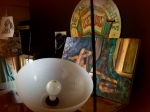


The query that sprouted is as follows: might the activity of art-a creative dialogic relation of index-sign-symbol, signifier-signifiant-and interpreter, i.e. “becoming-forth” – expand our perceptive capacities/processing?

In other words, in enacting the relationship of making, creatively, holistically, might we draw on more of the world’s availability – perceived and “dismissed” – a fuller context of experience less limited by intentional activities of categorical aims and constraints, thereby opening more of us to more of it in an open reciprocal dynamic interrelation, thereby sort of processing in “lump sums” – a gulping digestion of overwhelm?

We set aside prescribed roles, beliefs and opinions and work out, work into, an arbitrary generalized conventional (safe) medium…we fog our normalized paradigms and strictures of interpretive alertness – mores, values, expectations and censorship – we reach out gathering in.  Interact.  It seems something larger is carried, is moved – more than the medium, more than ourselves, more of a context, a world.

Does art extend our perceptive capacities?  Our scope of perception – to process, to be?  A kind of open-boundaried passage of experiencing between organism and world?

works in progress by Holly Suzanne

Friday Fictioneers 2/22 : The House that Jack Built

In keeping with the minimum-creative-work-capacity provided by the stimulus of Rochelle Wisoff-Fields at Friday Fictioneers, this week’s brief composition:

Copyright-Janet Webb

The House that Jack Built

Whatever he put his hand to.  Didn’t seem to matter.  Oh he had the will and the brawn – the heart – he was a determined man.  Yeah, the fence does look nice, dad built that.  But the house, that was Jack’s doing.  Parents said he was always that way.  Everything he touched.  Marriages, parenting, education, work.  Big dreams and fine intentions, with a flair for entropy – DIY and disorder.  Always came to pieces, his doing the undoing of whatever he done.  Easy and difficult to love on so many levels.  This house only one of ‘em.  It’s amazing anything still stands.

N Filbert 2013

Welcoming Others : Inside

“we fill pre-existing forms and when we fill them we change them and are changed”

-Frank Bidart-

Refractions on Fiction

Reflecting on fiction as representation, as presentation, as inquiry, investigation.

About how little I care – re: ideas – the freedom of impersonal investment – when a piece is duly fictional.

After the days spent composing Signs of Love I’ve only thought of how I haven’t thought of it since it was posted.  Johnson’s theory of perception, the professor’s thoughts and ideas, Monte or Margaret, Frank or Lars – how they none of them reflect on me.  How I didn’t have to worry how they came across or sounded, what positions or actions they became – what they represented – it wasn’t me!  Who does battle with a shadow?

So often, the stringy stream of conception-reflection-creation-manifestation seems to pull heavy parts of the self along with it.  Dark or slimy residue.  As if a reader who took issue, questioned or challenged a something that I wrote or language I expressed as fiction were in fact addressing some aspect of ME – rather than an open work of invented text.  Suppose, for instance, my wife reads a piece and follows it up with “so you’re saying that life is more difficult because of me?!” or a random visitor commented “how could you think or say this?!”  When in fact, of course, I didn’t – Lorraine did, or the professor or husband, writer or sand crab or whomever the character that acted or expressed it did.  Ask them then?  Another way of saying – “ask yourself.”   That’s what I as a writer continually have to do.  Language comes out, forms an idea, or a behavior is described and I have to wonder at it – is that indeed what the voicing thinks or wants or does?

Like a painter with their lines and colors, textures and strokes: what belongs once something has been marked there?

The freedoms of fiction spread as I recognized the therapy-like patience and reflection I provide to characters and voices – to language – in texts (fiction or non-fiction).  I do not feel threatened by them, do not take them personally, neither when I read nor write them.  They are other – other matter, other contexts, other contents, other kind from me.  I am busy handling matter…piecing it together, painting over, scraping away, diluting, splattering, letting it run…open to what “feels” or “sounds” right given the matter at hand – content, tools and resources.  Strenuously engaged, passionately even (at times), and also separate, observant, addressed as much by the work as it forms as addressing it onto the page.

Which got me to thinking – how much kinder might I be, even towards my “self” were I to engage what creates me as “other”?  We’re an oddly organized confabulation of matter and energy, after all, multiple diverse systems coordinate and constitutive, creative and adaptive toward a sort of dynamic organismic “whole.”  My brain no more a “me” than my penis or big toe.  How often with sharp pain in my knee or some zany daydream, a nail needing trimmed or hair left in a brush, do I question, challenge or take issue with a personal self for such systemic occurrence?  I participate with, or have (am characterized by) knees and eyes and organs, but they do not equal me.

What if some kind of “I” (collective of natural dynamic and organic systems) listened to, read, inquired and engaged the contents, emotions, concepts, actions and instincts that occurred within as fictions engaged – as benign or indeterminate others – akin to characters or words in a story or play – organized matter with energy – rather than some sort of judgmental scrutiny so often readily applied to “Me”?

The “I,” the “me,” the “self,” the “brain,” the “calf,” the organs, veins, chemicals, liquids, cords and tendons, bones and tissues, the individual cells of me – all inter-relational organisms in themselves involved in a system I experience as “me.”  With recognition, suspended disbelief, detachment, passion and care granted as I offer my own and others manifest creations in language or image, movement or sound?

Attend to your cells and systems as characters and languages today – manifestations of being – not entirely your”self” – welcome all the others inside as well.

Signs of Love

“sheer curiosity is even more universal and compelling than lust…”

-Nelson Goodman-

Our Similarities are Different, our Differences so very Alike

            I tell him he’s gotta grant she’s pretty much the same as the last one – skin all over, shoulder-length hair, fingernails and eyeballs.  Her insides must resemble too – veins and nerves, capillaries and molecules, organs and structural bones.  Her life can’t be that much different – born of a woman spent with a man, fluctuating assemblage of persons and animals, a fair share of good times and bad, events and arrangements all occurring in particular times at particular places.  Spoken to and speaking, looked at and looking, heard and hearing, nurtured and natured.  Surely a sign for something.  A sign for herself.

“But she’s so god-damned different man!” he says.  “One in 7+billion!  ‘Like’ no other creature I’ve known!  Her thoughts are anomalous.  She sentences words her-uniquely, her habits, nuances, quirks.  I tell you there’s no one else ‘like’ her!” he insists.

I point out that there are great similarities to her differences – we all of us with particularized habits, specified modes of talk, no two bones alike and what have you – but they’re bones, flesh and language all the same.  She falls within the mean – income and weight, literacy, height, okay.

“But there’re so many differences in those similarities, you dig?” he whines.  “It’s like everybody’s riffing and she’s got my groove!”

            And Johnson has a theory of perspective.  “TOP” he calls it.  He’ll listen to you gloat or bemoan and respond with his “that’s the TOPs!” as if he’s settled the foundations.  I try to get at what he means.

            The undergrads recently requested that I speak to them of love, and I told them all this story (it conveniently being Valentine’s Day).  I read through the roll call, through Margaret, Mary, Toby and Frank.  Through Matilde and Jason and Luzanne and Lars.  Some fat, some skinny, but most in-between, each exhibiting some marker – for instance, their names.  We need those tags to tell us apart, do we not?  We’re all so darn much the same.  Autopsies, biopsies, EKGs, X-rays and cardiograms – most of our differences are ever so slight.  Some flesh here, hair here or not, coloring, dialect, language, inches either way.  However, what we notice – are attracted to or struck by, occasionally enthralled or repelled by – in other words, whatever catches your attention – will lie in those mini-borders of difference.

We’re programmed that way, it’s a survival skill bred in the chemicals – be aware of the unexpected, the variant, the things that are unique – sights, shapes, sounds or energy – locate, isolate, focus – survive it.  Use your limited energy and resources for that – ignore the enormous other.

So every time you’re swept by lust or fall in love – there really IS a difference to that bloke or blonde – IN that gendered entity – you’ve perceived it.  Now comes the process of fitting it to YOUR life.  Your self, habits, knowledge and activities, groups and quirks and ways.  “Normalizing” – becoming “intimate” with those astounding specificities – familiar.

Accommodate, adapt, survive.

By now you’re holding hands or marrying.  Waking up next to.  Joining your bodies and your mealtimes, work and pleasure, daily rounds – and it turns out your partner’s much the same as all the rest (without losing any of their uniquenesses you first attuned to – in fact at this point you’ve uncovered many many more – including a surprising set of facets regarding yourself) – fitting and squeezing and torqueing them into their “signs,” incorporating it all into your own.

They fight, they cry, they talk and fear.  They’re selfish and sweet, funny and sour.  Relatively weak and strong, smart and dumb, kind and cruel.  What did you expect?

Yet having become part of your world, seaming into your point of view, you’re never so alert to them as first you were when they were strange to you and un-experienced, unless you’re threatened or faced with change.  Your energy and perception (remember, by instinct) are set to trigger differences, out-of-the-ordinary readings and measures – the defamiliar.

So although your partner’s arse is golden – or curved similarly to any other – your eyes lock elsewhere.  On unknowns.  Untoucheds.  It’s not adventure or risk that you seek – not exactly – although your senses could be called “restless” in their fearful jitterings and scans – you’re tuned to locate difference – unconsciously filing all that registers “recognize” as same.

As if the world were a line-up and your senses are always on call at the station.

And so on.

We all know (by now) that we’re all fundamentally, formally, the same.  We’re of genus and species and kind.  A school of fish, a hoard of bees.  Excited by difference (spelled “possible danger”) and presumptive of same (spelled “familiar”).

“What’s love got to do with it?” a spritely student asks.

What “love” has to do with it is to shape perception intentionally.  To recognize and remember the vastness of similarity (choosing to ignore many limbic cries over slight variations – the unreasonable feelings of attraction, shazaam, lust and novelty) and cultivating attention to the differences of the familiar.  The creative work of defamiliarization.

A cloud is a cloud is fine droplets of liquids and gas, pressures and waves, particles in patterns and puzzles and billions of babbling atoms…OR…sketchy shapes of oceans, mountains, camel-backs or breasts.  A cloud.  If you dissect your partner’s thumb or knee, spine or brain, or even examine an eyelash or bead of sweat close enough – you’ll enter world upon world of mystery and minute difference…similar to everyone else.  They’re individual entity’s shaped roughly like gorillas or aliens with less hair.  Or angels.  But they don’t think, walk, breathe, sleep, talk, dream, feel, sweat, laugh, stumble, fear, mimic, grieve, complain, remember, hope or anything else “like” ANY OTHER human in the world, not now, not past, not future.  Tune to that – you’ll never ever exhaust it – as you’ll never come to the end of yourself.

“Love” or “attachment,” “personal relations” or whatever we refer to it by – orients and trains our perception through attention (intentional perception).  Keeping in mind and check the reality of mass similarities (with all their exhilarating differences) and fixing determinedly on the magnitudes of distinctive, unrepeatable, specifics and uniquities of this one chosen familiar.

            Anyway, that’s a version of Johnson’s TOP:  “it all depends on how you’re looking at it.”

Fiction. Fractals. Filosophy.

The WHYs of them:

“semiotics is not about the ‘real’ world at all, but about complementary or alternative actual models of it… an infinite number of anthropologically conceivable possible worlds.  Thus semiotics never reveals what the world is, but circumscribes what we can know about it; in other words, what a semiotic model depicts is not ‘reality’ as such, but nature as unveiled by our method of questioning.  It is the interplay between ‘the book of nature’ and its human decipherer that is at issue.”

-Thomas Sebeok-

“the forms and laws in our worlds do not lie ready-made to be discovered but are imposed by world-versions we contrive – in the sciences, the arts, perception, and everyday practice.  How the earth moves, whether a world is composed of particles or waves of phenomena, are matters determined not by passive observation but by painstaking fabrication…Constable urged that painting is a science, and I suggest that science is a humanity.”

-Nelson Goodman-

“a mobile unsteady structure…with all the bits always moving about, fitting together in different ways, adding new bits to themselves with flourishes of adornment as though consulting a mirror, giving the whole arrangement something like the unpredictability and unreliability of living flesh…The endeavor is not, as is sometimes thought, a way of building a solid, indestructible body of immutable truth, fact laid precisely upon fact…Science is not like this at all.”

-Lewis Thomas-

“Perhaps the best way to think about post-modern self-referentiality is not as a denial of language and literature’s connection to the world but as their self-consciously pointing to themselves trying to point to the world.”

-Robert McLaughlin-

Nathan Portrait

This slideshow requires JavaScript.

Charting Change

“the rare scholars who are nomads-by-choice are essential to the intellectual welfare of the settled disciplines.”

-Szolem Mandelbrot-

After 12 nomadic years of self-study, retail labor, marriages and parenting, I am now in my second semester of graduate studies in Library & Information Sciences.  As my coursework progresses and evolves toward more specified researching, the organization of my passions and values, interests and desires do as well.  Over the past year my blog manoftheword and the other blogs I participate in have primarily been creative instigations and outlets.  Places where my ongoing work in art and literature can find some audience and I can process and work through ideas and conceptions as they fumble their way toward something more finished, hopefully one day publishable, perhaps useful to others.  Most of my poetic efforts I have exposed through Spoondeep along with the work of a dear friend of mine.  The works my wife and I set out to do and continue (not nearly as often as we desire) can be witnessed at Combinatory Art in Motion, where we attempt a contemporary and relational ekphrasis as an open and intimate artistic endeavor.  

As the demands of schooling, parenting and marriage bundle and thicken, my focuses also need to sharpen and grow more efficient.  In accord with this, I have changed the title and some of the goals of keeping this blog active and vital.  The discipline of Library & Information Sciences is proving to be a wonderful practical theoretical grounding of the majority of those aspects I love most about our world:  language, art, relationships and learning, and I am focusing my investigative work in the program on semiotics, human-information-behavior, Information Retrieval systems and tools and design, and the function of language in our acquisition of knowledge and interpretation of the world and its data.  This is nothing new for me, and I have attempted and practiced many of these same methods throughout my life – reading, writing, and communicating with others.

All this to say that The Whole Hurly Burly will become a place for me to work out my creative life in language and symbols (or images) as it has been, but will probably have fewer posts and hopefully entries that are more fully developed.  Research takes time, and so many hours of reading and interpretation, and as elements arise that I can only work out for myself poetically or in imaginative prose, if they seem to have some merit or I need feedback I will post them here.  There may also be more theoretical hypotheses as I struggle to make sense of the many lines of thought rubber-band-balling my brain.  I will keep up with Friday Fictioneers so that there will be at least one fiction exercise a week and will continue to pass on crucial inspirational quotes/music/arts/ideas as they flood my desk.

It has become very clear to me that I want whatever I do to be drawn up from the whole messy complex background texture and tangle of being a living human being among other humans and the larger matrices of the world – it is this untangleable complex and network of social and natural, individual and corporate, intimate and estranged, abstracted and imaginative realities that I take Wittgenstein to be referring to when he refers to it as “the whole hurly-burly” of our goings-on.  And the sinewy, grueling and challenging process of attempting to refer to our experience semantically, in language, in symbols, in sounds and shapes is the most rewarding activity I experience – and when we come close to our desire it feels in me to be what David Foster Wallace signifies “making the head throb heart-like.”  

These, then are the goals of this blog moving forward.  To engage and investigate the “whole hurly burly” and to offer it to you  in hopes it might cause your “heads to throb heart-like.”  I cannot thank you enough for whatever time you give my process and work, your kindness in engaging and insightful comments.  Here’s to development and change —

and what is currently infusing me:  Currently Reading

Processing Change

‘How could human behavior be described? Surely only by sketching the actions of a variety of humans, as they are all mixed up together. What determines our judgment, our concepts and reactions, is not what one man is doing now, an individual action, but the whole hurly-burly of human actions, the background against which we see any action’

– Ludwig Wittgenstein, Zettel

“CERTAIN NOVELS NOT ONLY cry out for critical interpretations but actually try to direct them . This is probably analogous to a piece of music that both demands and defines the listener’s movements , say like a waltz. Frequently, too, those novels that direct their own critical reading concern themselves thematically with what we might consider high brow or intellectual issues — stuff proper to art, engineering, antique lit., philosophy, etc. These novels carve out for themselves an interstice between flat-out fiction and a sort of weird cerebral roman à clef. When they fail, as my own first long thing did, they’re pretty dreadful. But when they succeed, as I claim David Markson’s Wittgenstein’s Mistress does , they serve the vital & vanishing function of reminding us of fiction’s limitless possibilities for reach & grasp, for making heads throb heartlike , & for sanctifying the marriages of cerebration & emotion, abstraction & lived life , transcendent truth -seeking & daily schlepping, marriages that in our happy epoch of technical occlusion & entertainment-marketing seem increasing consummatable only in the imagination”

-David Foster Wallace, The Empty Plenum-

IN THE PROCESS OF CHANGE

more soon….

Yearn Vulnerable – Friday Fictioneers 2/15/2013

Such a powerful prompt this week – yowza!  Thanks to Rochelle Wisoff-Fields and her continuous work at Friday Fictioneers for providing us with such fare to engage and reflect.  Please join us if you have an urge to translate experience into words.

The prompt:

copyright-David Stewart

(this prompt was so good I’ve included 3 responses in the manner of brainsnorts)

1.

She grasps while he flees.  The horror of everything offered.  He’s reaching all the same.  She clings, and thus submerged, loss becomes attachment.  He yearns.  They’re vulnerable.  Their hold and flight are balance.  A panicking fail like this can require only one thing – somebody’s everything – which she offers, and which frightens him to terror.  She lays it at his feet and pursues – without her he would fall – traumatizing him, for there will come a day.

copyright-David Stewart

2.

Everything depends on it.  Seems to.

This risk, this reach, this grasp.

All has been let go, ripped away for this advance.

She’s nothing left but hope and fear.

Submerged in this suspension.

And he in silent trauma – terrorized.

What would be the gain – of grasping or clasping; a yearn or a vortex; great loss or its threat?

A possible life?  An wholistic vitality?  The “whole hurly-burly”*?

What?

We leave it here.  NOW.   In the reaching.

*Ludwig Wittgenstein’s phrase for the complex background, context of human life

copyright-David Stewart

Alternate 2.

“Do you not get it?” she stressed, “can you seriously not see what I’ve done?”

“EVERYTHING!” she cried, “EVERYTHING I’ve left and abandoned, deserted, let go, in order to offer myself up to you! – to come for, reach out to – YOU!”

“This is unbelievable!” she, exasperated. “I really and truly cannot!” she, bewildered.

And he – silently terrorized, traumatized, afraid.

Trapped in this suspension – the grasping or clasping; the yearn or submersion; the loss or its threat.

And what of the gain –  a possible life?  An wholistic vitality?  What – ?

We leave it here.  NOW.  Reaching.

N Filbert 2013

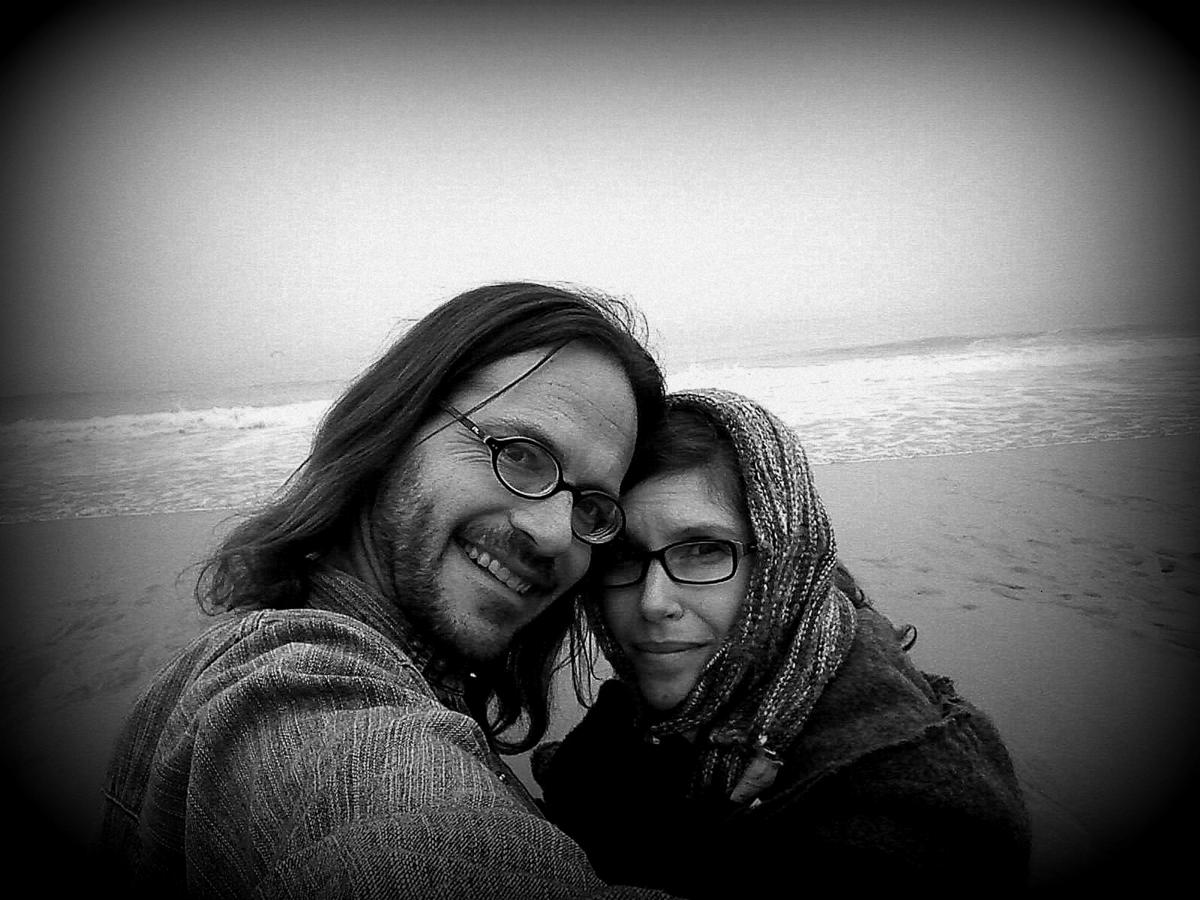
Continuities – for my wife and children

Another day filled with the thickness of love

for my wife on Valentine’s

IMG_3479

The Way It Is


There’s a thread you follow.  It goes among

things that change.  But it doesn’t change.

People wonder about what you are pursuing.

You have to explain about the thread.

But it is hard for others to see.

While you hold it you can’t get lost.

Tragedies happen; people get hurt

or die; and you suffer and get old.

Nothing you do can stop time’s unfolding.

You don’t ever let go of the thread

William Stafford