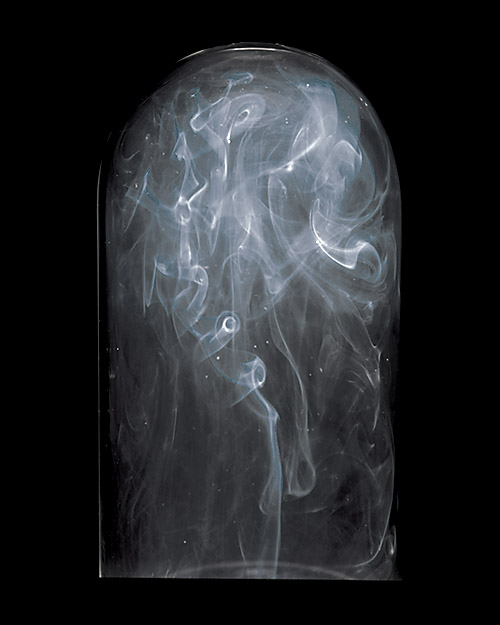
Question: What Makes a Masterpiece?

“A masterpiece isn’t a masterpiece until it is well known and has absorbed all the interpretations to which it has given rise, which in turn make it what it is.  An unknown masterpiece hasn’t had enough readers, or readings, or interpretations…A work of art isn’t created a masterpiece, it becomes one…the authority, the familiarity and the relevance of a great work of literature: we open it, and it speaks to us of ourselves…naturally every reading affects the book, in the same way as the events we experience effect us…”

Umberto Eco & Jean-Claude Carriere, This is Not the End of the Book

Your thoughts…?  Any “unknown” masterpieces possible?

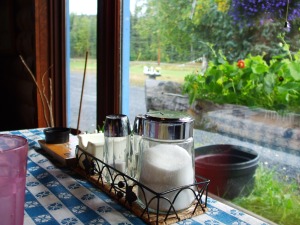
Outside This Window

I struggled this week, this picture, and the myriad of life going on…couldn’t seem to find a spark.  But in the spirit of Friday Fictioneers, felt I oughta make a go of it.  So here it is – and in accord, many thanks to Rochelle Wisoff-Fields for taking up the inspirational, curatorial mantle of keeping our practice alive!

Stomps back, livid grimaced flesh flushed, shouts, more of a gritty scrape of screed: “you never…anyway…I don’t know why I ever…” huffs, seethes, jolting in a kind of place.

Unseen, steely, weight of concrete in its rage, him, silent, back there, unmoving.  Something trembles.

Wind too, perhaps occasions of rain, drizzle, precipitation seems likely, somewhere, here, somehow.

She keeps it going, it’s like a flood, like a multi-chambered dart gun, can’t seem to stop, doesn’t want to end.  Not silence.  Not distance.  Disregarding.

Something recedes, perhaps him.  Substances exiting every direction.  All wearing out.

Everything outside this window.

N Filbert 2012

Holly Suzanne and the Layering of Experience

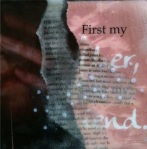
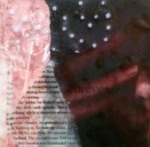
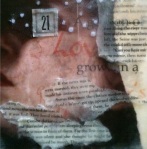
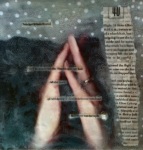
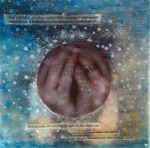
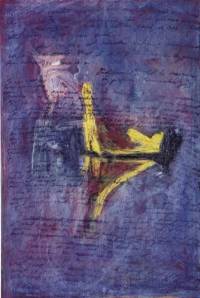
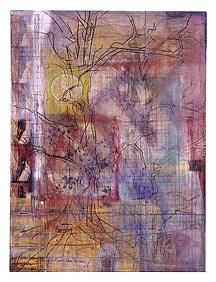
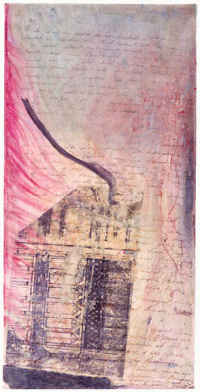
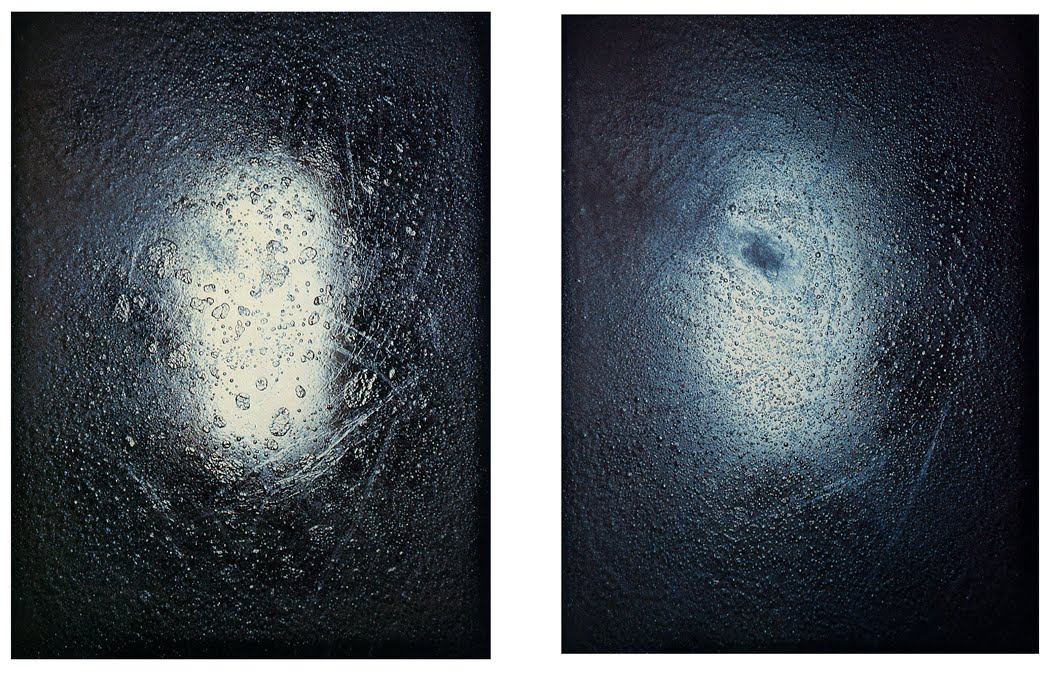
It is my great pleasure to be composing something for myself regarding my wife’s art in regards to an upcoming showing of hers in Wichita KS (see below for details).  I am accustomed to engaging her work with an ekphrastic/participatory sensibility and interaction rather than an observer’s point of view.  The pieces below are mixed media encaustic works by Holly Suzanne on 6×6 or 8×8 wood boards.

This slideshow requires JavaScript.

“First my…forever my…grown in a…garden” of hands, words, expressions, visages and image.

The mind in bloom, the mouth as fruit, our world in our hands, are nothing new.

Underlying love vaguely aware of an end from the stars of night to ground of flesh,

in layers.

I was thinking of text-emotion-change-emotion-text-emotion-change.  Of over and again.  Begin.

With rarely the perspective to see in, or through, as we are forming and tattering layers simultaneously.  Always.

There is something viscous about us, like warm wax.

“Turning away…she saw herself…”  But not really.  Recollection rearranges, perception also blinds.  Assemblers and dissemblers we.  Our stories.  Growing them even as we prune.  Story over story, backwards, forwards, like the strokes of a brush, the trembling of hands, motions of a body at rest.  What comes out, in, or through depends on the moment.  Each story a backstory with a curious future.

“First my…forever my…” ever-altering “garden,” the world in my hands behind my face.  I tinker and trouble, collage and create, rationally embodied in emotion.  What shields and separates reveals and connects: our skin, our language(s), our sighs.

Even our  names are malleable, oily pools.

Look at, look in, look through.  And over again.

Begin.

If near Wichita…you can look for yourself!!:

Holly Suzanne Show: Mead’s Corner Coffee House
October 31-November 30, 2012

see more of Holly’s works here: Holly Suzanne: A Gallery of Creative Artistry

Holly Suzanne Fine Art

and visit her blog! Lifeinrelationtoart

Related: Show Announcement – Mead’s Corner (Combinatory Art in Motion)

The Pleasures of Reading : An Aspect : Multiplying Translations

The Pleasure of Reading

In other words (than what?  than which?) we all of us are readers, all of us writers.

That is a pleasure.

And all of us, always, doing both.  Simultaneously.


Speaking of my textbooks (were we?) – information sciences, developmental and behavioral psychology, reference services, librarianship / and the research to the side – physics, evolutionary biology, neuro- and cognitive sciences / my pleasures – novels, poems, stories, others’ blogs, visual, aural, literary artifacts / my relational – wife, children, family, friends, society, culture – gestures and vibes and dialogues and signs / my “self” – sensations, perceptions, formulations of these, reformulations, adjustments and maneuvers.

In other words, at all times, I am reading, even if only my lack of memorable dreams, or pulses and breaths.  And writing it all in actions, movements, responses, adjustments of speaking and writing and making.

It is a metaphor, obviously.  Perhaps.


Roman Jakobsen purported that “all meaning is a form of translation, and multiple translation (polysemy) is the rule rather than the exception.”  (I am translating his text just now into another con-text).

Wolfgang Iser’s (perhaps, anyway insofar as I am translating it here) concept of actual text (text as it is recorded by an author) and virtual text (actual text as read by a reader).

This is an aspect of the deep living pleasures of reading/writing for me.


An author/speaker/artist/scientist/mother/etc. has an urge or sensation – a possibility of action/behavior/message/idea (a virtual text) and translates it through multiple processes and levels of activity through some medium into an actual text/painting/utterance/experiment/recorded idea/sound, etc.  There it is in the real world – a physical artifact in time and space – added – if only for a moment.  Transforming (simultaneously) its maker into a recipient (translating a now existent text/sound/behavior/gesture/sculpture/experience for him or herself) and if any witness/participant/auditor/recipient or reader is in his or her environment they are simultaneously interacting (via translation through their own tools, language, perceptions, sensations, mood, etc) with the actual text, writing a virtual text (translating) of their own.

And it goes on.  And can be done innumerable times, this process, whether using an identical actual text over and over, or simply writing/reading life as it occurs, making it occur.


Paul Ricouer:  “stories are models for the redescription of the world.”  Possibly.  Or at least redescriptions (translations) of models for redescription.

Iser: “the relative indeterminacy of a text allows a spectrum of actualizations…literary texts initiate ‘performances’ of meaning rather than actually formulating meanings themselves…the reader receives it by composing it.”


Language, action, behavior as possibilities rather than certainties.


So that I can encounter with all I’ve encountered/experienced an actual text by psychologist Jerome Bruner translating these very quotes and contents with all he has experienced and translate it with the multiple translations of family life and being a human organism and novels and pains, poems and stories, paintings and laws, translated with data and education, emotions and animals, translating with you and a computer, internet, digits and bits, translating into…

a great pleasure of reading is writing reading

or, “a writer’s (reader’s) greatest gift to a reader (writer) is to help him become a better writer (reader)”

– Jerome Bruner (parentheses mine).


literary texts as “epiphanies of the ordinary”

-James Joyce-
Sentence Strokes

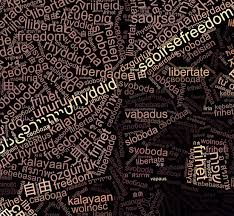
About running small.  Over a surface made of paint.  Exhilerating lostness.  It is then I know texture.  Arms draped over a streaking swell.  Scritches and scumbles underfoot.  Are there this many colors in the sea?  Splattering like sparrows.  Am I getting the picture?  I lie down.  Cairns and edgings against my back.  What seemed soft – crisp and poky as briars.  What looked hard and smooth gives like dried glue.  I scurry in the trenches left by brush.  Spin through dips and curls.  A painting is a planet I inhabit.  Directed through the paths of subtlest vein.  To explore I engage.  Guard asks that I step away.

N Filbert

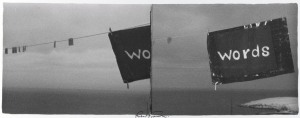
Words & Images (Viggo Mortensen)


What Happens (with a semblance of truth): A True Story (that is never true)

Many things might have happened, indeed, could have happened.  It is impossible to tell until it happens.  Whatever happens.  And so it goes.

Recollection subjects what happens to interpretation, a puzzling assemblage of memory (embodied brains in changing circumstances) and occurrences (embodied brains in specific situations), making it impossible to tell what happens, when it happens, or after it happened, save from a very particularized attention and intention, point-of-view, disposition and enmeshment (the factors being relatively endless).

And so we call histories, scientific observations, statistical reports, etc. al., “stories;” journalism, research, theories or assays (essays), “fictions;” and personal memoirs, dialogue, descriptions or statements – “fantasy.”

Everything that happens or happened is what might have happened.

Let’s theorize that an author or reader, group or individual, has a concern for “truth” – something being what it seems to be – who or what has total and essential access?  The only truth in human expression that I can surmise is that it is truly “made up.”

An individual may have something approximating total and essential access to a thought or feeling, personal experience or idea, but insofar as it actually occurred according to an experiencer, there are already multiple points of view, ranging from molecular to cosmic, matter/energy to cultural.  To say nothing of the complicating fabrics incumbent on expression – whether a grimace or a novel, a shriek of pain or a tally mark on a chart – it has entered uncertain and collaborative interpreted ground.

All to say “experience” is utterly specific and solipsistic (non-transferable “truly”) and is an enabled product of embedded participation in significant (if identifiable as an “event” or “occasion,” “moment” or “intuition” – any feeling, sensation or awareness) surroundings, expanding niches of existing things with variant points of view.

This is how I can guarantee that nothing I show you or tell you is “true.”

It may be more or less accurate to my experience or understanding of it (depending also on your experience/understanding of my presentation of it) but it will in no wise be what it is or was, in truth.  I assume truth to be as impossible as god.  It would require omnipresence, omniscience, boundary less experience (which could not accord with our experience, or a grain of sand, or an ocean) and would be immediately foiled by the omni-ability (omnipotence?) those other necessary qualities would demand.  One could not be absolutely enmeshed or identical-with and entirely and completely objectively separate or alien-from at once.  At always.  That is not a paradox but a contradiction.  If imaginable, incommunicable.

So we speak of a “semblance of truth” or a “truth-seeming” quality to account for our realities and desires (our want for security, to grow order in chaos, to know, to choose or act with less fear or uncertainty).  Things like our ages, census reports, laws and principles (grammar, mathematics, semantics, processes and methods, etc.) a creepage over toward what we think of as “facts” – majority-mutually-agreed-upon-interpretations/perceptions/hypotheses.  These can hold for a long time because they’re held by so many, so widely.  But they most assuredly change over time, again, from atomic behaviors to the shape of the earth and its relation to elsewhere, from what constitutes pain to what gets moniker’d “god.”

What counts as fact does so by being open and shared.  Semblance of truth comes by corroboration, conversation and multiplying points-of-views and expressions of experience.

Perhaps this is one reason we blog.  To try “it” out on everyone, potentially.  If our expressions resonate with others, perhaps they have a semblance of truth, or contribute toward creating it.  Enough “I know, right?’s” and we’re on our way to a fact.  But no amount of data or language, materials or activity makes it so…it rests on agreement and compromise, observation and interaction shared most widely, coagulations of interpretations, accretions of experiencing – fabrication.

Make then, express.  Hypothesize and share your experience – we ask for your two-cents worth – we’re accumulating a fund.

final light-writing this week 🙂

NW Filbert's avatarGypsy Wall

closing out the week with these…the crew seems familial to me…working the light


View original post

Writing Whys Wherefores


I notice that there has been a recent spate (probably not all that) of authors of blogs I follow and enjoy, reflecting on why it is that they write, and what they think they might be doing by writing…in the current upheaval of things I needed to make some additions to my “About” page and provide a brief bio for another project and in that process stumbled across an earlier writing of mine that seemed to accord or converse with you other creators, so I’m reposting it here in case it adds anything…

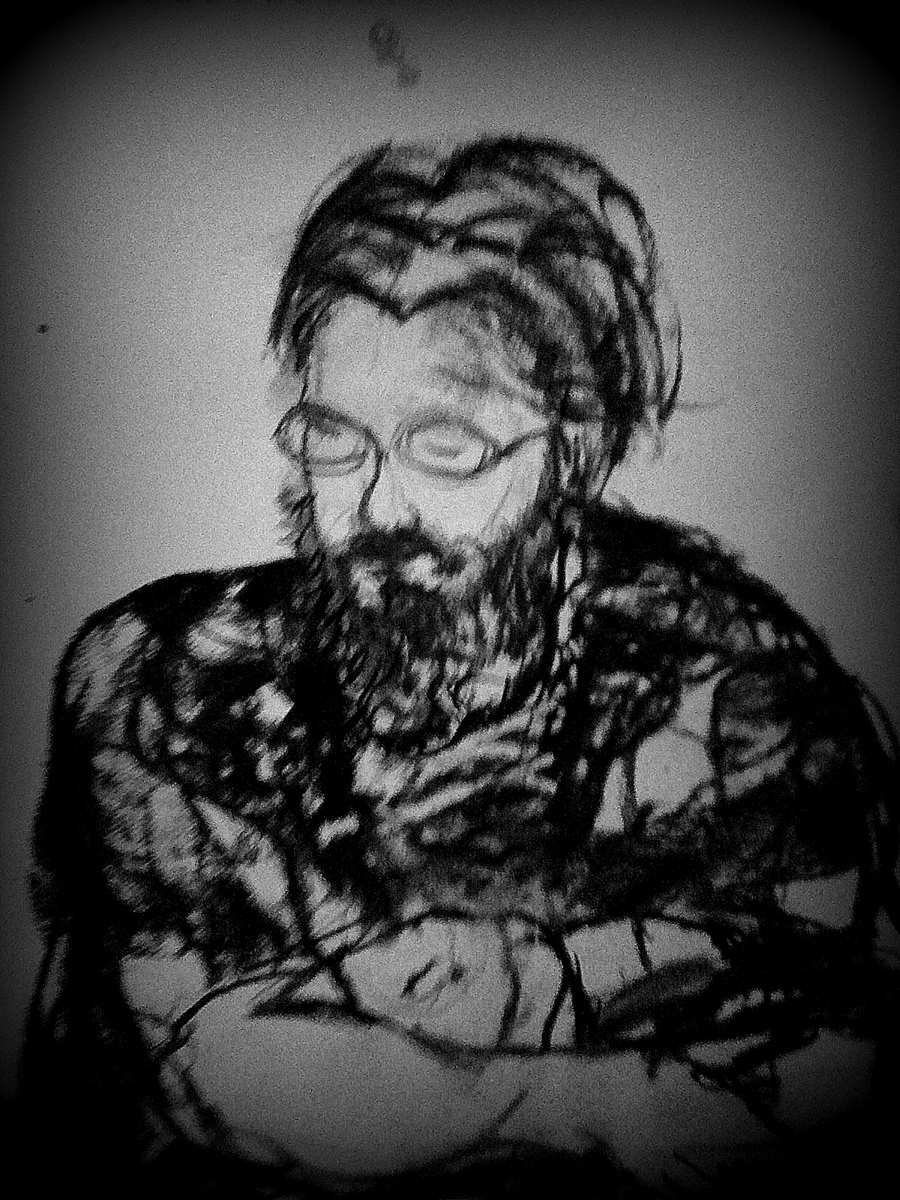
Quick sketch of me by Holly Suzanne

Living is a kind of madness (a prose text)

in reference to

Christian Mihai

Brainsnorts

Boy with a Hat

Adventures in American Writing

and others, thanks!

now i’m finding artists “associated..”

NW Filbert's avatarGypsy Wall

View original post