Lessons Learning in Metaphors

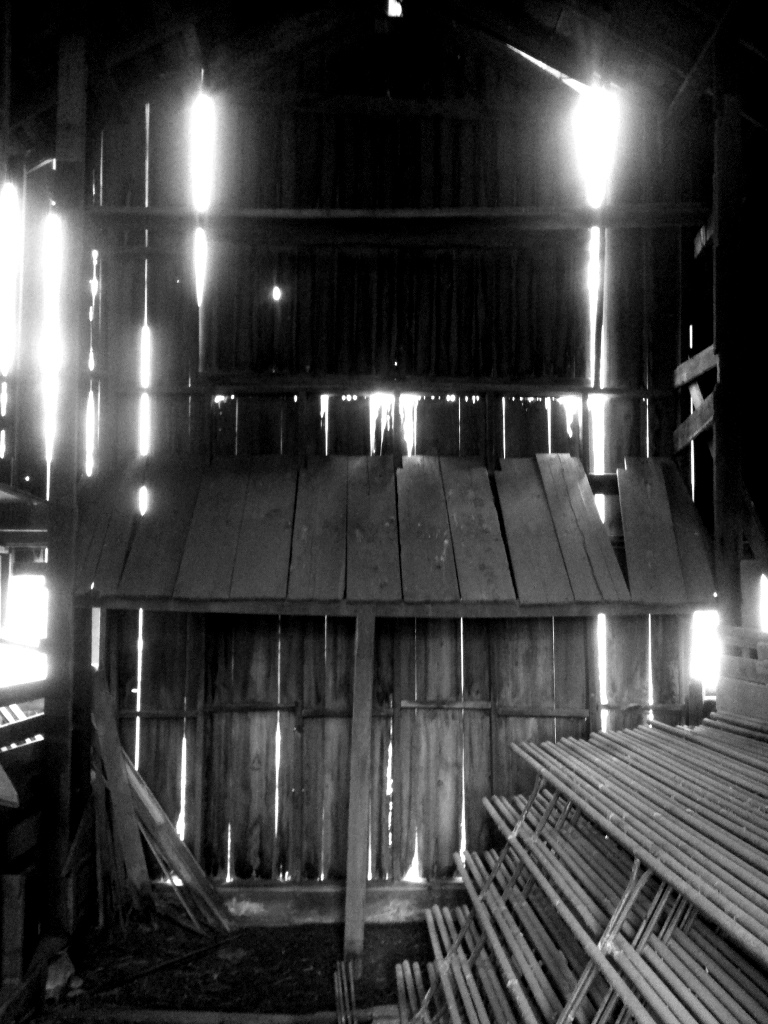
1-photo 2-002

HERE.  Abandoned places fall apart.  Decay to exposure.  We, bereft.  We, grieving.  In the absence of care… Upkeep.  Keeping up.  Often when significant change occurs, we do not bother “keeping up.”  Rather things, people, places, seem to hold on as long as possible to what is familial / familiar / to what seems known, as long as they can.  Perhaps this marks some difference between survival and thriving.  Maintenance versus development.  Preservation versus advance.  Enclosing versus opening.

But time.  Molecules move and shake around; synapses shift, come undone, frackle, rewire…adjust.  Adapt.  There are new conditions.  The movement of beings, of the world, continuously alters our context, alters ourselves.  When they left, or something seemed lost, other inhabitants, presences, qualities, realities fill the perceptive interoperable surround…some constraints are increased, some loosened, restraints, license, “competition”:  wind, rodents, weather, routine… The primary structuring relationships morph.  Continually.

Now wife.  Now wife and children.  Now certain finances.  Now no finances.  Now surety, stability, now uncertainty, hazard, CHANGE.  CHANGE (never not occurring) ALWAYS EQUALS OPPORTUNITY (for living things), ALWAYS EQUALS DIFFERENCE.

Now no wife.  Now children.  Now no job.  Now scrapping for sustenance.  Now certain friendships.  Now the absence of certain friends.

Now different care.

What will the winds do?  The rain, the sun, the heat, the ice?  Critters?  What new sounds will my structure make – interactions – given the changes in conditions, in surround?  WHAT ARE WE NOW?  The same.  Structurally – a form made for interaction, a part of the world, interlocked and interwoven, a bundle of functions and processes, intentions and conditions – exposed by happening in a world.

This slideshow requires JavaScript.

“Things fall apart, the center cannot hold”

(Great!  How else…life?)

And how beautiful the potencies of change.  How messy.  How easy to attribute – “good” “bad” “difficult” “help” “harm” “ease”…

But is what’s happening to the homestead, the barn now – in lieu of human use and care – less easy?  Less beautiful?  Does not every context surrounding and composing a structure of forms – both help and harm of a sort?

Would it be false to say this erosion, this abandonment to other interests and types of care, this shifting of primary interactions, reciprocating attachments, looks like loss?  With all that light pouring through?  All the redolent air and wheezing whistling and rattle?  Has the new (ever-altering) context of comings-and-goings helped or harmed this structure…or, perhaps mostly…BOTH?  Just like the previous and every future one?

We.  I.  You.  Crafted ever-so-intricately in contexts we are unable to adequately identify (comprehensively) or evaluate – for they ARE the context that is co-creating (in-forming) our identifications and evaluations.  We interpret – according to the context we are enmeshed in/with.

CHANGE CONTEXT – CHANGE PERCEPTION, INTERPRETATION, IDENTIFICATIONS, EVALUATIONS…change even what we look for…

A breaking, a leaving, an abandonment, some loss…(simply, really, change) – do they not equal a kind of damage, a kind of harm, so full of openings, exposure, new perspectives granted the initializing structures that we truly DO NOT KNOW what living is for?  But this? – TO LIVE?!

The rent places let the outside in in novel ways, creating coevally novel openings for the inside to emerge.  The wear co-creates other structural stresses and reliefs, new releases and new enclosures, novel shapes and textures, colors perhaps we never knew were possible to begin with.  Never a potential until the context came that facilitates and allows, enacts and enables.

Always interacting, we change.  Always changing (along with our entire surround) defines INTER-ACTION.  Barn: Enter, Action.  Always.

NOW…this…
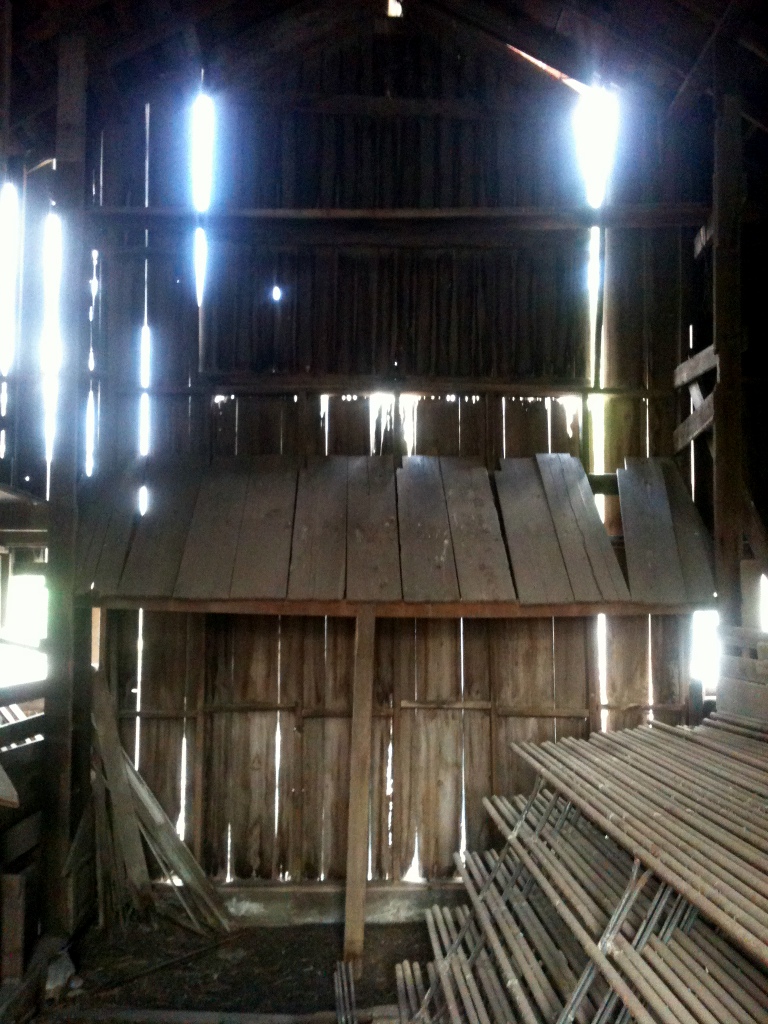
1-photo 2

Experiences confoundingly rendered with these sound contexts:
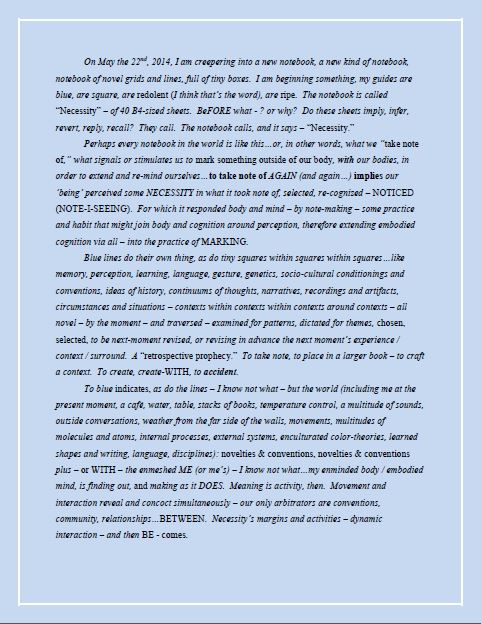
The “Necessity” Notebook

This slideshow requires JavaScript.

B4 Notebook EntryOn May the 22nd

In Strange States and Finding Delight : Questions on Being Well and Doing Well

 “Nothing that is complete breathes.”

-Antonio Porchia-

Description:  Flux.  By its very nature, significant change is unsettling, disregulating and life-altering.  Over the past 6-8 weeks I have lost spouse, employment, my personal and relational rhythms and schedule, the savings in my bank account depleted.  I have applied for over 180 jobs, written as many cover letters, tweaked as many resumes, attempted to keep up with my coursework, and take good care of my four amazing children who abide with me.  Each week in therapy (without doubt a literal life-saving engagement) the session will end with something like curiosity at just how uncertain, good, terrifying, significant, painful, frightening, moving, difficult and meaningful the week’s happenings are.  I have felt I am living multiple lifetimes of experience in each 7-day period.  Inherently, overwhelming are experiences that cannot be described, portrayed, understood or explicated.  These are strange statesdevoid of much that could be regulating or structuring, a wild gyre of hope and despair, connection and separation, exhaustion and inspiration.  Strange states.

One of the things that has pestered and picqued me this past week is a growing recognition that most of the people I know – friends, peers, acquaintances, relatives – are people that can DO almost anything well, even exceptionally.  Humans have such an uncanny adaptive ability to (as Kafka says) “wriggle through.”  My people are the sorts of persons who find satisfaction and contentment in being well – the activity of living itself, ever specific to context, is its own contentment and satisfaction, often regardless of what they are doing (it seems).

From early on, many of us were instructed to “follow your passions,” or “use your gifts and talents,” another way, I am thinking, of saying FIND DELIGHT.  Delight, it seems to me, is that tone of experience we incur when both being and doing provide utmost satisfaction and contentment for our individuated and particular “selves.”  Moments such as that first eye contact that seems comprehending, recognizing between the infant you have brought into the world and love so much and yourself.  Moments often termed “flow” – when your ache to express and the form of your expression seem to unite, resonate – in whatever medium you most enjoy – dancing, painting, writing, conversing, thinking, playing, sculpting, calculating, making music, serving others – whatever it is that brings you joy coupling with your own unique history and experience and way of being.

And here’s the rub:  in our authentic relationships, most of us have a good sense between us of what it is that makes our “others” tick, or thrive, their core desires and wishes, delights and strengths.  HOW they like to be WHO they are.  My friends who love to observe and capture beautiful moments, create photographs, artefacts of world/self combined are often selling insurance, teaching classes, running cash registers.  My friends with conceptual strengths and reflective panache – philosophers with ever-evolving ideas and visions of the world and how it functions – are often administering organizations, delivering mail, stocking grocery shelves.  My friends who thrive in drama and play, or sport and music, or math and surfing – end up spending their days repairing roofs or selling shoes, concocting coffee or serving food, mowing lawns or teaching children.  AND THEY ARE EXCEPTIONAL AT WHAT THEY DO!

The rub:  When people are being wellit seems they do well, regardless of whether the task or activity would inherently give them delight.  It is the being that delights them, and they infuse whatever they do with that wonder and wealth.  The query:  is there, when is there, how is there – the possibility of (remember, our lives are brief) – combining our capacities for being well with those things we most enjoy doing well and might that not result in a life characterized by delight ?  Is it possible to insist on?  And is one able to survive?  As I search for work – I realize just how many things I am able to do well – like so many others – and that doing well at things has a certain level of satisfaction because one is being well.  But what joy (remember, our lives are brief) if our lives might be characterized by being well/doing well those things that delight us (nourish our well-being)?  We are social, and because of that our survival depends/inter-depends on one another – and society needs certain things of us – teachers, mail deliverers, food service, grocers, manufacturers, administrators, tax accountants, waste management, shoe repairers, and so on.  We fill these positions FOR one another, for our greater good, making effort to infuse and tweak our responsibilities with as much as we are individually able to also gain some satisfaction and contentment with the ways that we be in those roles.

This question is unclear.  I suppose I am wondering the experience of all of you out there – Is it possible to live a life characterized by delight?  Where we are able to survive being well doing what we most enjoy doing well?  I have yet to fill out the application, sit through the interview for, or see the job posting that asks me to DO WELL WHAT I BE.  Perhaps that is the application of life itself.  Perhaps I will never run across the posting that says – actualize your desire to write – whatever you are compelled to write – and we will make sure you are sustained and healthy.  Any testimonies of conflated being and doing and surviving and thriving out there?

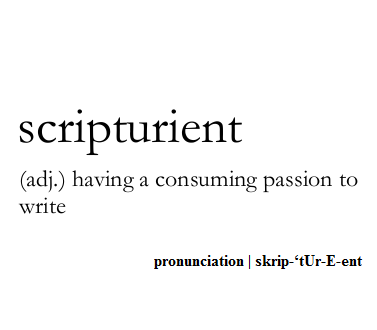
Scripturient“Would there be this eternal seeking if the found existed?”

-Antonio Porchia-

ReWritten / ReWriting

accidentally opened a file from the past that seemed related…

reading-writing

The Pleasure of Reading

In other words (than what?  than which?) we all of us are readers, all of us writers.

That is a pleasure.

And all of us, always, doing both.  Simultaneously.


Speaking of my textbooks (were we?) – information sciences, developmental and behavioral psychology, reference services, librarianship / and the research to the side – physics, evolutionary biology, neuro- and cognitive sciences / my pleasures – novels, poems, stories, others’ blogs, visual, aural, literary artifacts / my relational – wife, children, family, friends, society, culture – gestures and vibes and dialogues and signs / my “self” – sensations, perceptions, formulations of these, reformulations, adjustments and maneuvers.

In other words, at all times, I am reading, even if only my lack of memorable dreams, or pulses and breaths.  And writing it all in actions, movements, responses, adjustments of speaking and writing and making.

It is a metaphor, obviously.  Perhaps.


Roman Jakobsen purported that “all meaning is a form of translation, and multiple translation (polysemy) is the rule rather than the exception.”  (I am translating his text just now into another con-text).

Wolfgang Iser’s (perhaps, anyway insofar as I am translating it here) concept of actual text (text as it is recorded by an author) and virtual text (actual text as read by a reader).

This is an aspect of the deep living pleasures of reading/writing for me.


An author/speaker/artist/scientist/mother/etc. has an urge or sensation – a possibility of action/behavior/message/idea (a virtual text) and translates it through multiple processes and levels of activity through some medium into an actual text/painting/utterance/experiment/recorded idea/sound, etc.  There it is in the real world – a physical artifact in time and space – added – if only for a moment.  Transforming (simultaneously) its maker into a recipient (translating a now existent text/sound/behavior/gesture/sculpture/experience for him or herself) and if any witness/participant/auditor/recipient or reader is in his or her environment they are simultaneously interacting (via translation through their own tools, language, perceptions, sensations, mood, etc) with the actual text, writing a virtual text (translating) of their own.

And it goes on.  And can be done innumerable times, this process, whether using an identical actual text over and over, or simply writing/reading life as it occurs, making it occur.


Paul Ricouer:  “stories are models for the redescription of the world.”  Possibly.  Or at least redescriptions (translations) of models for redescription.

Iser: “the relative indeterminacy of a text allows a spectrum of actualizations…literary texts initiate ‘performances’ of meaning rather than actually formulating meanings themselves…the reader receives it by composing it.”


Language, action, behavior as possibilities rather than certainties.

So that I can encounter with all I’ve encountered/experienced an actual text by psychologist Jerome Bruner translating these very quotes and contents with all he has experienced and translate it with the multiple translations of family life and being a human organism and novels and pains, poems and stories, paintings and laws, translated with data and education, emotions and animals, translating with you and a computer, internet, digits and bits, translating into…


a great pleasure of reading is writing reading

or, “a writer’s (reader’s) greatest gift to a reader (writer) is to help him become a better writer (reader)” – Jerome Bruner (parentheses mine).


literary texts as “epiphanies of the ordinary”

-James Joyce-

Revisiting Aspects of Writing

to see if there might be some positive resonances yet….

images-5

Aspects of Writing.

(please click image or title to link)

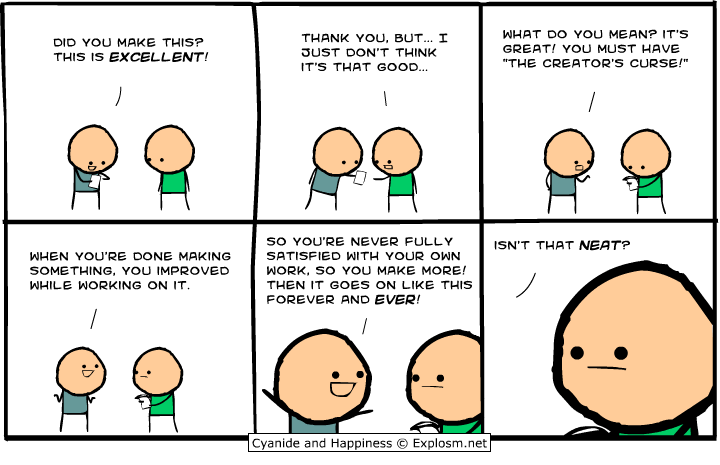
“The Creators Curse” – a raw deal – and everything is practice

When I stood up from the couch I thought.  I’m tired of everything being practice.  Each character sketch, each poetic fragment, each novel attempt, each theory, each relationship, each parenting moment, each breath.  All participated in as if the engagement might provide benefit, as if the pain will promote healing, as if the mistakes will prove corrective, as if fitness might improve health.  “Lifelong learning” – how nice it sounds, how endless.

But learning for what – ?  There’s just more life until… and then it’s probably simply (well, complexly) variantly continued – one situation hardly informs another – for the next now the context has changed, as well the elements, the matter, the flow.

So then I think again – perhaps it’s fear.  That lifelong learning, or anything meta- entails a splitting off – a doing WITH the observation; and thinking WITH  reflection; the subject’s objectification.  A remove.  And so it feels like practice rather than NOW.  

Earlier today (apologies – I’m really just rambling this post – no pre-write, no consideration or filtering) my son shared this with me:

Cyanide Happiness Creators Curse


– The “Creators Curse” from Cyanide & Happiness.  In our making we extend and become in the risking required to attempt…to craft… to work… so it cannot end, for if we grow or move or change (which we will) the work will need to go farther, be finer, account for those fluctuations… ever stepping into new, fresh, dynamic, complex realities… PRACTICE IS IMPOSSIBLE.

But if we turn and try to bring the effort up to speed, in that turning, that editing, that effort, nothing stops.  Nothing stops moving into that next moment, next ream of realities, heart-beat’s context, juggling atoms and muscles and breath…  “Improvement”?  Who knows.  But different for sure.  And even if we reach and stretch toward the work we imagine versus the work we are capable of…it all changes in kind…as change.

In optimistic moments this is cause for hope.  The possibility that something might improve, benefit may come, a temporary health could be achieved.  But not achieved only altered.  And not altered only changing.  I’ve argued before that we must lose our tenses to be honest to living – everything must become verb.

But I don’t want anything to be practice anymore…rather maybe process – doing, making, saying thinking in or with … everything.

I’m very tired of the hesitation, illusory gap, the pretend-vision of seeing our seeing, or feeling our feeling; loving our loving, writing our writing, thinking our thinking our  thinking…

I want to be : living, writing, parenting, loving, doing, making, saying, thinking NOW and HERE as IS.  

Meaning is Molecular…

compliments of Percival Everett

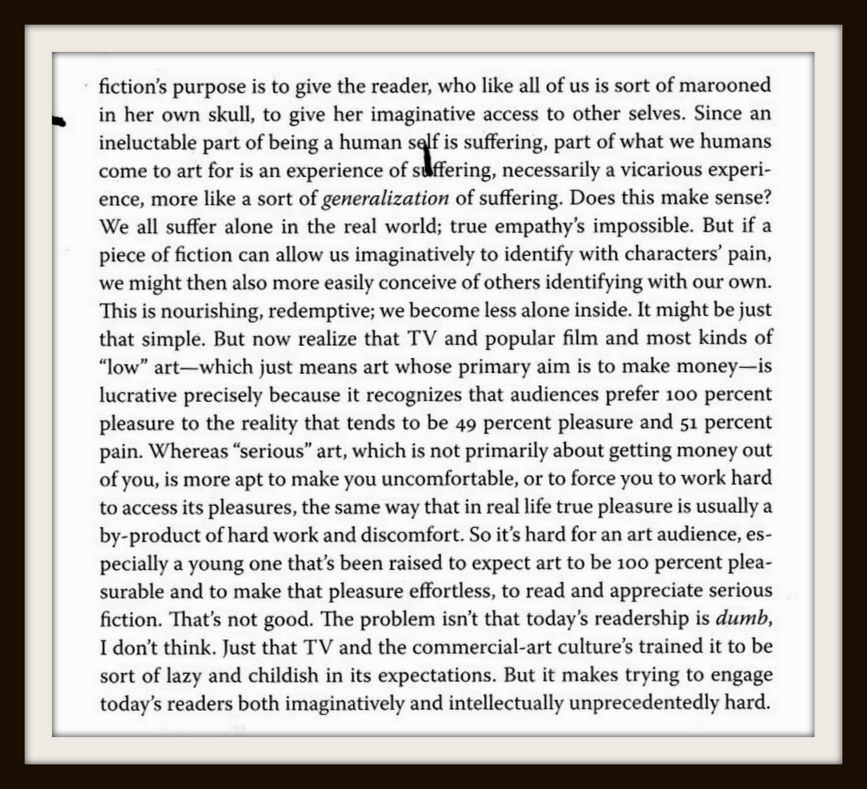
What David Said…

DFW interview

-David Foster Wallace interview

Inebriation

currently absorbing…

This slideshow requires JavaScript.

Thought Provocations

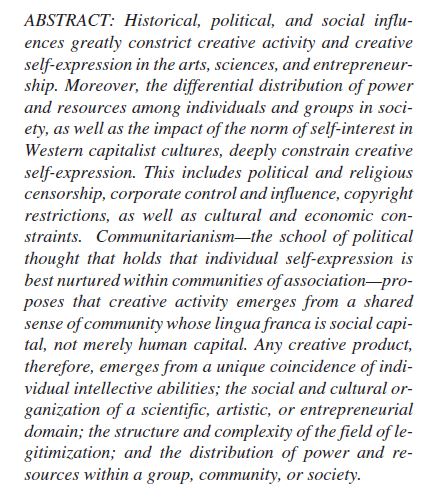
Political Economy Creativity


Jay Seitz

you can read the full article here (if interested)

Seitz – Political Economy of Creativity