Welcoming Others : Inside

“we fill pre-existing forms and when we fill them we change them and are changed”

-Frank Bidart-

Refractions on Fiction

Reflecting on fiction as representation, as presentation, as inquiry, investigation.

About how little I care – re: ideas – the freedom of impersonal investment – when a piece is duly fictional.

After the days spent composing Signs of Love I’ve only thought of how I haven’t thought of it since it was posted.  Johnson’s theory of perception, the professor’s thoughts and ideas, Monte or Margaret, Frank or Lars – how they none of them reflect on me.  How I didn’t have to worry how they came across or sounded, what positions or actions they became – what they represented – it wasn’t me!  Who does battle with a shadow?

So often, the stringy stream of conception-reflection-creation-manifestation seems to pull heavy parts of the self along with it.  Dark or slimy residue.  As if a reader who took issue, questioned or challenged a something that I wrote or language I expressed as fiction were in fact addressing some aspect of ME – rather than an open work of invented text.  Suppose, for instance, my wife reads a piece and follows it up with “so you’re saying that life is more difficult because of me?!” or a random visitor commented “how could you think or say this?!”  When in fact, of course, I didn’t – Lorraine did, or the professor or husband, writer or sand crab or whomever the character that acted or expressed it did.  Ask them then?  Another way of saying – “ask yourself.”   That’s what I as a writer continually have to do.  Language comes out, forms an idea, or a behavior is described and I have to wonder at it – is that indeed what the voicing thinks or wants or does?

Like a painter with their lines and colors, textures and strokes: what belongs once something has been marked there?

The freedoms of fiction spread as I recognized the therapy-like patience and reflection I provide to characters and voices – to language – in texts (fiction or non-fiction).  I do not feel threatened by them, do not take them personally, neither when I read nor write them.  They are other – other matter, other contexts, other contents, other kind from me.  I am busy handling matter…piecing it together, painting over, scraping away, diluting, splattering, letting it run…open to what “feels” or “sounds” right given the matter at hand – content, tools and resources.  Strenuously engaged, passionately even (at times), and also separate, observant, addressed as much by the work as it forms as addressing it onto the page.

Which got me to thinking – how much kinder might I be, even towards my “self” were I to engage what creates me as “other”?  We’re an oddly organized confabulation of matter and energy, after all, multiple diverse systems coordinate and constitutive, creative and adaptive toward a sort of dynamic organismic “whole.”  My brain no more a “me” than my penis or big toe.  How often with sharp pain in my knee or some zany daydream, a nail needing trimmed or hair left in a brush, do I question, challenge or take issue with a personal self for such systemic occurrence?  I participate with, or have (am characterized by) knees and eyes and organs, but they do not equal me.

What if some kind of “I” (collective of natural dynamic and organic systems) listened to, read, inquired and engaged the contents, emotions, concepts, actions and instincts that occurred within as fictions engaged – as benign or indeterminate others – akin to characters or words in a story or play – organized matter with energy – rather than some sort of judgmental scrutiny so often readily applied to “Me”?

The “I,” the “me,” the “self,” the “brain,” the “calf,” the organs, veins, chemicals, liquids, cords and tendons, bones and tissues, the individual cells of me – all inter-relational organisms in themselves involved in a system I experience as “me.”  With recognition, suspended disbelief, detachment, passion and care granted as I offer my own and others manifest creations in language or image, movement or sound?

Attend to your cells and systems as characters and languages today – manifestations of being – not entirely your”self” – welcome all the others inside as well.

Fiction. Fractals. Filosophy.

The WHYs of them:

“semiotics is not about the ‘real’ world at all, but about complementary or alternative actual models of it… an infinite number of anthropologically conceivable possible worlds.  Thus semiotics never reveals what the world is, but circumscribes what we can know about it; in other words, what a semiotic model depicts is not ‘reality’ as such, but nature as unveiled by our method of questioning.  It is the interplay between ‘the book of nature’ and its human decipherer that is at issue.”

-Thomas Sebeok-

“the forms and laws in our worlds do not lie ready-made to be discovered but are imposed by world-versions we contrive – in the sciences, the arts, perception, and everyday practice.  How the earth moves, whether a world is composed of particles or waves of phenomena, are matters determined not by passive observation but by painstaking fabrication…Constable urged that painting is a science, and I suggest that science is a humanity.”

-Nelson Goodman-

“a mobile unsteady structure…with all the bits always moving about, fitting together in different ways, adding new bits to themselves with flourishes of adornment as though consulting a mirror, giving the whole arrangement something like the unpredictability and unreliability of living flesh…The endeavor is not, as is sometimes thought, a way of building a solid, indestructible body of immutable truth, fact laid precisely upon fact…Science is not like this at all.”

-Lewis Thomas-

“Perhaps the best way to think about post-modern self-referentiality is not as a denial of language and literature’s connection to the world but as their self-consciously pointing to themselves trying to point to the world.”

-Robert McLaughlin-

Nathan Portrait

This slideshow requires JavaScript.

Processing Change

‘How could human behavior be described? Surely only by sketching the actions of a variety of humans, as they are all mixed up together. What determines our judgment, our concepts and reactions, is not what one man is doing now, an individual action, but the whole hurly-burly of human actions, the background against which we see any action’

– Ludwig Wittgenstein, Zettel

“CERTAIN NOVELS NOT ONLY cry out for critical interpretations but actually try to direct them . This is probably analogous to a piece of music that both demands and defines the listener’s movements , say like a waltz. Frequently, too, those novels that direct their own critical reading concern themselves thematically with what we might consider high brow or intellectual issues — stuff proper to art, engineering, antique lit., philosophy, etc. These novels carve out for themselves an interstice between flat-out fiction and a sort of weird cerebral roman à clef. When they fail, as my own first long thing did, they’re pretty dreadful. But when they succeed, as I claim David Markson’s Wittgenstein’s Mistress does , they serve the vital & vanishing function of reminding us of fiction’s limitless possibilities for reach & grasp, for making heads throb heartlike , & for sanctifying the marriages of cerebration & emotion, abstraction & lived life , transcendent truth -seeking & daily schlepping, marriages that in our happy epoch of technical occlusion & entertainment-marketing seem increasing consummatable only in the imagination”

-David Foster Wallace, The Empty Plenum-

IN THE PROCESS OF CHANGE

more soon….

Conjoined Semiosis – A Valentine

HERE:

Conjoined Semiosis – A Valentine for my wife

Amassing contexts and histories barely constitute beginnings.  Relations between entities are potentially infinite and full of traces.  Somehow, occasionally, they equal: an identity – identities – by what’s between.  Continuous dynamic variables.

By chance each of our indefinite immensities meshed boundaries.  Bodies permeable as minds, and vice-versa.  Reciprocity – reality and dream.  Kisses channeling deep into veins, correspondence shipped and received – held gently in the hands while splicing ripples through craniums.  Made of margins we, venturing portals and hallways one of another.  Each an entourage, an army, and its festival.

Bound by genuine threads.  Wrapping rocks and trading rings, patchworking children toward tapestry.  Our eyes – microscoping telescopes, telescoping memories.  We are wheres and whens, whos and whats – and how!  No wonder why receives no answers, only possible descriptions.

We search for language with our bodies.  Attempting to define the terms and parse the verbs together: love, trust, respect and honesty.  We have said “you are my person,” communication requiring the whole shebang – dismembered pasts and potential futures – all we do not know mustered toward a truth, collaborating is.

If we were to withhold what we cannot show, “whereof which we cannot speak” (as Ludwig tells) avoiding formal pseudo-propositions, we would only telegraph senses, dropping our abstracting frames and their symbol’d referents.

But we are artists – metaphors ourselves – infusing nonsense into world, creating kinds of sense, some of it illuminative.  Morphing forms and casting doubts to converge in content.

I love you.  I am so glad

WE ARE HERE

Going on from there…

“For that I blame the craven desire to speak, to write, to be heard.”

-Ben Marcus, The Flame Alphabet

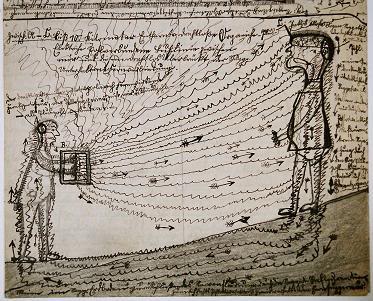
Nerve Language by Daniel Schreber

Semantic Animals

It goes on.  Seduced (sickened and soothed) by symbols, I read.  I write.  In dilettante-like forays into advanced mathematics, physics, cognitive sciences and biology,  I learn:

“The first message is that there is disorder”

(-James Yorke, attributed with naming the science known as Chaos)

            So back to first principles (they have a habit of coming in threes, and splitting into fragments).  I take out a blank sheet of paper, filled with lines.  A patterned absence.  Boundarying void.  I write “seduced” because I’m thinking about language.  Thinking instinct and survival and desperate need.  Thinking overload, “more than you could possibly imagine.”  Semantic animals.

When I last saw the snow fall, it was raining, offering an impression of “wet.”

She is far from me in two dimensions.  Only two, of multiples of three.  I count by the “trick of the nines.”

If only there were a way to collect accurate data.  Then adequately calculate and organize.  Unfortunately, life is mostly made of problems existing on continuums of countless dynamic variables, most of which – unsolvable.  They call these “differential,” or Derrida’s Infinitude of Differance.  Professionals finally agreeing: “regularity is aberration.”

We search for patterns.  Even in chaos we find them (or create).  Seduced (sickened and soothed) by symbols, we “read.”  There are so many oscillating signals that even the few we don’t inherently tune out we call “noise.”

Philosophically, on the other hand, where I feel more like an amateur or novice, I understand the problem/hypothesis/theory equation to be: EVERYTHING goes into EVERYTHING, that we’re only ever engaging possibilities.  That probables are fleeting, and certainties are few:  You are limited, peculiar, and definitely will die.

In other words, “the very process of cutting up and cutting off, opens up and opens out,” or some of us are developing “a belief in the musicality of creative disjunction” (Lance Olsen), because, seduced (sickened and soothed) by symbols, we select and collage our own inspection.

It’s easy to forget the first things that we find, i.e. that all positive statements and beliefs are built on “that there is disorder,”

and seduced (sickened and soothed) by symbols,

we go on from there.

Perambulating

This morning she said she was “taking a walk for mental health.”

I decided to set out/in too…

This slideshow requires JavaScript.

Spontaneous Reduction

ink and touch

Then I dropped my voice – BOOM – right onto the sidewalk.

A glitter, a spritzing, a spark.  A diffusion and ooze.  It runs out.

Watch it pour along the surface, draining toward sewage.

Voice.  A voice.  My voice.  Sploosh.


All the books I want are priceless.

Those I need – they cost too much.

I am a writer who learns.

I am a learner who writes.

I am a failure that loves.

I am a lover that fails.

It becomes apparent: Yes, I am.  A parent.

The book I am not reading –

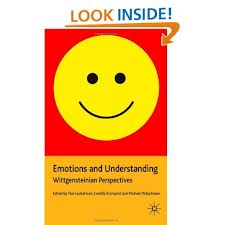
Emotions and Understanding

caught in a withdrawal.

That is, boundaried from writing.

Between abstraction, and empathy.

There lies a void, inevitably.

You can’t trust silence.

We rush to fill.

(That distant sound).

Therefore,

I read for conversation.

But Writer says I’m “vague”

(don’t fulfill responsibilities)

Attention.  Integrity.  Inquiry.  Response.

(-ability)

I simply tripped, a clumsiness

[I dropped my voice]

but I am here.

Enmeshed in words but unable.

(metadata lacking)

I’m no librarian.

Vague because I say so.

(my human apparatus little equipped for the overwhelm of data)

Ant in a kingdom

-of words-

of signifiers.

Less than that.

I wrap my brain around it.

Waving goodbye to body.

My voice drops.

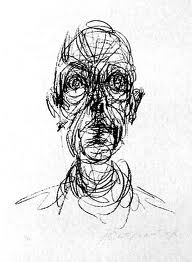
Alberto Giacometti sketch of Diego Giacometti


fRiction

“The more narrowly we examine language, the sharper becomes the conflict between it and our requirement.  (For the crystalline purity of logic was, of course, not a result of investigation; it was a requirement.)  The conflict becomes intolerable; the requirement is now in danger of becoming empty. – We have got onto slippery ice where there is no friction and so in a certain sense the conditions are ideal, but also, just because of that, we are unable to walk.  We want to walk; so we need friction. Back to the rough ground!”

-Ludwig Wittgenstein-

“Language is a labyrinth of paths.  You approach from one side and know your way about; you approach the same place from another side and no longer know your way about.”

Fictions of Family, pt. 10

the developing words:

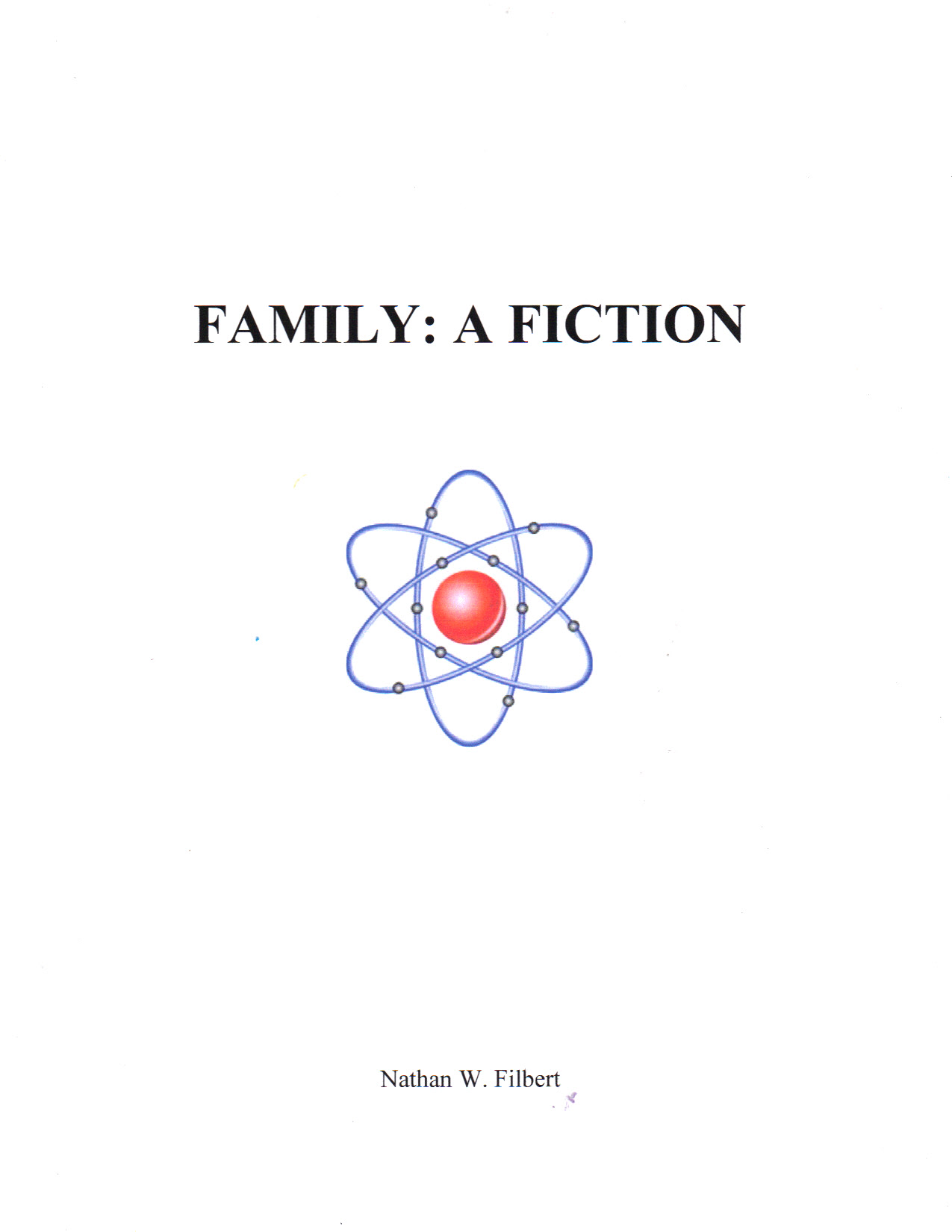
FAMILY A FICTION

Family 1

and part 10:

10

It taking so long to figure it out.  What it’s “about.”

Discombobulates like sporadic noise.  The fragments living are.


Four decades, seven children from three wives until he recognizes relation.  Which changes things.  Significantly.

It is the third wife (times charm) – out three strikes she staid on.  Stays on.  The difference between things.

In relation to one another.  Evolving perception.  The what-not, call it “aboutness.”  Or in relation to…


This in relation to that is about this much this high this far.  Or else nothing at all.  In itself.  By itself.

By himself, barely amount, insignificant cipher, plus three plus seven plus anything adding up, er, becomes.

Alone is less than one, or, not a number.  It takes 1 to know 1, in other words, all-one really means no 1.  Unless distinguished from something else, another 1, an other.


This he could tell.  The third wife, the difference between.  The aboutness.  Differing shapes entirely, nearer still, at this distance.

1 cannot equal.  Impossible equation.  Might as well be naught, be 0 – a 1 wrapped around itself (turned-in) – revealing just a hole, something seen through.  Looked straight through.

Telescope, microscope, still substance unseen, a looking at, really, looking for.  Simply looking, opened at both ends.  Perhaps a simple function.  What an organism is, alone.


She calls out, in fact pursues him halfway across.  As if to say she sees something, peering through her self-same circularity – that he is there.  He begins experience, begins to get it – something else must be looking, another 1, for him to be seen, to hear of himself.

In what she tells him.


Multiple inputs introduce noise (read chaos, read being), make possibilities, provide things to figure out.  With all the variables it takes a lot of time (to get what it’s about).

Materials from the Book of the Living

Materials (for Dubravka Djuric) by Lyn Hejinian

from The Language of Inquiry by Lyn Hejinian

[worth every second]