Art of the Occurrence of Meaning


Interconnection

Art of the Occurrence of Meaning


    I consider that I work strenuously to come to terms with (understand, be aware or conscious of, perceive and interpret) what it is I value, care about, intend, hope or purpose. 

            I am prodoundly interested in what is often referred to as “theory of mind” (TOM) – “that which hovers somewhere on the boundary between the explicit and the implicit, the conscious and the subconscious, the objective and subjective” – Maurice Bloch.  And semiosis – what I understand to be the process and activity of utilizing available resources, situations, internal and external sensations to construct moments of meaning (“worlding” you could call it – co-here-ing in an embedded context).  The seamless combination of culture/person-ality, internal/external, embodied/extended, conscious/subconscious – or selective/regulative – processes that occur in real-life human experiences. 


            Perhaps this is “Anthropology” as Maurice Bloch would have it: 


“Anthropology, at least as I conceive it, presents the immense merit of uniting knowledge about human beings – that is constructed from the top down, by general theory, which in the case of cognitive psychology is supported by rigorous and controlled experiments – with knowledge of particular men and women that is constructed from the bottom up, based on the observation of people as they live their lives” 


some commensurate multi-disciplinary examination of human life.  I hear myself saying to myself… 


[ASIDE: from high school through college when I envisioned being a great poet, I always wanted to be what I termed the “Master of Grey” – one able to plumb and express the indeterminate and indistinct – those liminal mixed and ambiguous realities of experience – exemplified by rain or fog or shadow – the betweens, the margins, the shades…] 


       Anyway, I hear myself saying to myself when I listen to myself speaking to myself (so very many variations of selves), that as much as I am fascinated and intrigued by the processes of the world (geological, biological, neurological, sociological and so forth) and the apparatuses and hows of human meaning-making (electro-neuro-biological, socio-cultural, etc…), I am yet more interested in the occurrences of human  meaning experiences. 


            The “occurrence of meaning” seems to me the experience of all those elements and processes indiscretely conjoined and con-fused – wholes of which parts can’t be specified – signifieds/signifiers/significants indiscriminate: our PRESENT. 


            This is where art arises for me.  Art and action, for art is action.  Art seems to me – or processes of human making – an attempt at conjoining/confusing/commingling and co-relating of the many modes and motions, nodes and notions, processes and practices, influences confluencing the convergences we term experience. 


            Artistic acts are those where subject/object, conscious/subconscious, selective/regulative, internal/external, intentional/accidental distinctions in human processes do not apply – and these convergences, these realities of human living are sometimes actualized or embodied/externalized.  Perhaps, in my way of thinking. 


            Modalities and genres, fields and spheres, behaviors, cognition and domains – social and personal intertwingled, the perceived and imperceptible carrying on simultaneously – CONverged – and that verge – that edge, rim, margin of activity – that liminal, boundary-zone open border-space is the essential – 


            a human way of mediately presenting occurrences of meaning, in their variety and multiplicity.  Perhaps. 


Or so I am thinking. 


Answerability in the body of the world. 


The meaning event seen in its total matrix.
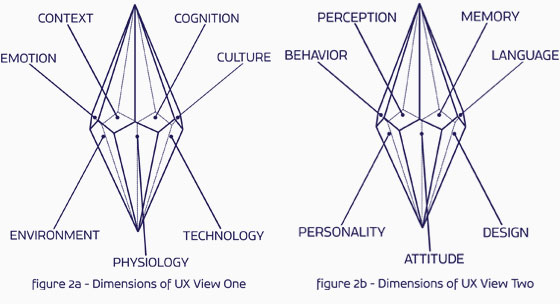


dimensions of experience Interconnection


thanks to UX/dimensions for image and dimension labelings

Composition

shadow composition

Approach the page with no idea.  No secondness of reality or facts.

See what the words will do.  Like spontaneous sex with your lover.

What happens next.  If you’re lucky.

What words will come?

Look closely.  Draw the pen near the paper.  Remember, you’ve no idea, like what I’m writing.  Language finding synonyms making thoughts.  Perception in the body.

Something already in the clear, or on it.  Never clear.  Do you see it?

Don’t let the first mark frighten you, it is already done, everything coming after you can edit: crossing out, crossing over.

See the line?  To chase or avoid, either way, impossible to capture or erase.

Look again – do you see it?  Hover but don’t inscribe, what is it waiting there?

I’m not being mischievous or rhetorical, facetious or mystical.  I want you to see what is always already there, predividing your canvas, filtering the open before you engage.  What you cast out around you, the shadow of your general ‘self.’

See it there gathered at point of pen, shading back toward your physical hand and pooling around it?  The absence of your presence forming incorporeality.

You are visiting here.  Your shadow is the record.  What you make out you make up.  But it’s never the first word or the beginning line.  Reality comes before you and spreads out, interfering and refracting the light you wish to use.

At times a bulky blot, at others barely discerned, evidence nonetheless that you are, in fact, tracing.  Operating in a kind of cloud of substance, adding lines and loops, particles, threads.

They say art (and representation) began in shadows, with shadows – recognition of other and presence and beyond.  Likely a myth that is true.

For starters, notice the outline, letting it outline itself/yourself, the visible ghost informing your are

Now, since you’ve already overshadowed what’s next, begun what’s begun, press down and press forward, press on…

Vicente Carducho, tabula rasa. engraving, 1633

Scribbling. Toward purpose.

Summer is quickly departing.  In the next few weeks – school supplies, a trip to the Rockies to a rustic cabin, a trip to Branson with little children and wizened parents, work, deadlines, textbooks, and BAM! the “Fall” begins.  I don’t know if I’m easily overwhelmed, perhaps so, I can say I am overwhelmed.  I think I’m good at surviving things, at persistence, but in a rather melancholic way, steeled and a little removed.

I am not certain what will become of this blog as two years of a most incredible opportunity that cost us so much is coming to an end – the ability for Holly and myself to devote ourselves to our personal passions, our internal vocations: our families, our art.  Enormous changes are afoot.  I will be back to work and a full-time graduate student, Holly will practice more therapy and a little less creating artifacts, two high schoolers ever increasing their busyness, fullness; and two young ones growing ever so fast.  Our older children are fairly self-sufficient, but also ever growing and expanding, and keeping up with all requires our hearts.

In a recent interview, my interviewer looked at me and addressed the cliche “Change is difficult.”  Pause.  I agreed all over my body.  She resumed: “change is NOT difficult, it is always occurring, ALWAYS.  What we experience as “difficult” during the endless changing is perspective.”

She was right.  My mind and body were not.  I create the difficulties by my approaches and interpretations.  The difficulties themselves often becoming creative catalysts of change.  “I am proud to be melancholic.” (see following quote).  It is empowering to gradually claim responsibility for one’s self and one’s constant choices of outlook, intake, response, action.  Thus I enter the ensuing flow.

This morning has been spent reflecting the feelings I’m having of loss in relation to this blog, more open time for reading/writing/composing, family-time, couple-time.  The feeling that perspectival anticipation re: these ensuing shifts has slumped me, lessened my determination, devotion.  I countered it with Lynne Tillman (as I often do), and read the following, from Madame Realism Lies Here (everything is intentional in her writings :)):

“In her waking life, as in her dreams, she concocted art that confronted ideas about art.  

So life wasn’t easy; few people want to be challenged…

…Madame Realism’s work wasn’t her child.  But, inevitably, it was related to her, often unflatteringly…

…what if art can’t tell the truth?  What if it lies?…

Art was a golem.  It had taken over.  It had a life of its own, and now she feared it was assessing her.  What did it say about her?…

What I make is not entirely in my power, as conscious as I try to be.  It’s always in my hands and out of my hands, too.  I like to look at things, because they make me feel good, even when they make me feel bad.  I’m proud to be melancholic.  I like to make things, because they usually make me feel good.  I am not satisfied with the world, so I add to it.  My desires are on display.  What I make I love and hate…

…She made a spectacle of herself from time to time, mostly in her work, trying to tell the truth and finding there’s no truth like an untruth.  She kept pushing herself to greater and greater joys and deprivations, which were invariably linked.  And like any interesting artist, who can’t help herself and is in thrall to her own discoveries, Madame Realism shocked herself most, over and over again.”

(from Lynne Tillman, This is Not It)

It’s like this.  So onward I go.  Be assured I will try to stay up with all of you wonderful creators.  And I will (“can’t help himself”) keep making at each opportunity.  And I thank you all so much for these past 8 months or so where I have had the inception of experiences of finding an audience, truly being read and responded to, a sort of community of creativity.  It has greatly influenced my life and practice and confidence in keeping to my dreams.  Thank you!

Be well everyone.  Be well.

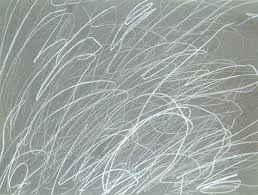
Mark Marking Marks

Cy Twombly

Mark Marking Marks

“oh it’s working, it’s magic, each word lifts me up, takes me away from here,

from this nothing; I feel…I am…speak always, Maybegenius.”

Macedonio Fernandez

Writing as the ‘Talking Cure’

As long as I keep speaking, Mark thinks, – ?

WHAT IS REAL?

            As long as I keep talking to myself, even better the inscribing, using matter somewhat foreign to myself, like this plastic pen, this sheet of paper, this blue ink…I am providing myself with evidence.  A humming continuity, a series of marks, a silent sounding breathed into air.

But when unable?

As long as I keep telling myself these stories, Mark thinks, – ?  then what – ?  why – ?

There is evidence that I am here, he says to himself, marking it down.  Marks make Marks, he supposes, I am, at least as far as the reach of this pen, and I stay, at least longer than my thoughts, he thinks.

Mark got tattoo’d.  He did so for evidence, a permanence.  They said it could not be undone.  So he had them spit into his skin the names of those who had changed him, affected.  As if to say, to go on and on saying, these, these existed for me, in and on me, these folks made impressions that made impressions on me, therefore I must, yes, it logically follows, here – you can see them can you not – ?, it logically follows that I must exist – to have these names, these titled and organized and permanent woundings of names, of those who existed (it’s attested by many), so it follows, it must, with them pierced in my arms, that I, too…

If it all keeps on talking, these whispering names, the sound of my voice, the terms in my head, and if I work to make it real, as an object, if I chisel or stencil or ink it to the world, then surely it must testify on my behalf – I was here!  I am here!  I’ve left my Mark!  Mark marking Mark – a declare!

Or so he is thinking through his days, through his life or lives, through his odd and self-imposing tormenting sort of fear, of worry.

Am I?

To no effect?  he wonders – ?

Mark often fears he’s interchangeable.  Or worse.  Perhaps another boy would have been a better son, left a fuller name, a more remarkable mark than – ?.  Another man a truer spouse and more sensitive or empathetic, more evolved or more mature than his straggly droopy heavy brain of a – ?.  A more substantial father with clearer love and direction, firmer hands, readier tears – ?.  Mark was aware they were out there.  They’d been fellow students, inhabited stories and novels and other people’s lives.  Why were his people stuck with the – ?.  His nagging mark, so often read right over as innocuously as a comma or period.  Weren’t they looking for content not a pause or an absence?  A man marked by inquiry?

But if I leave here some trail strewn round my desk, this floor all these cupboards, perhaps at some point they will see I was here!  I am!  And I was watching and listening, loving and feeling them all.  Spending myself and my worries in this strange attempting to trace and to hold, to keep and remember their details, their effects, my responding.

Someday shuffling through or perhaps clearing out, maybe they’ll stop, pause, question and wonder.  Who was this man?  Where was he?  When?  How?  Why?

What did he do think make say?  And perhaps they’ll find these markings.  Perhaps they won’t have burned or mouldered away, and all these messaging reports, all these processings and accounts will come to mean, to have significance, these bird-routes of scratches and marks, dashes dots lines, this pouring forth of constructing an identity against with the world…

As long as I keep speaking, Mark thinks, possibly –

– ? –

Content’s Dream

“The essential aspect of writing centered on its language is its possibilities for relationship, viz, it is the body of ‘us’ness, in which we are, the ground of our commonness, 

Language is commonness in being, through which we see & make sense of  & value.  Its exploration is the exploration of the human common ground.  The move from purely descriptive, outward directive, writing toward writing centered on it wordness, its physicality, its haecceity (thisness) is, in its impulse, an investigation of human self-sameness, of the place of our connection: in the world, in the word, in ourselves.”

-Charles Bernstein-