Things that Remain from Abandon: Implicit Intricacies
A Fiction Fragment

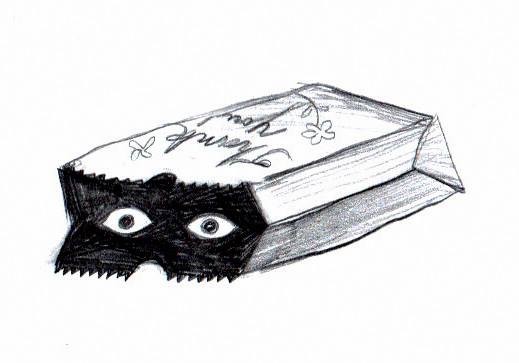
There’s this first thing. And then the side of it. The underside. Maybe a knot.
My shirt looks like a dress.
A darkness that comes open. A light controlled by dimmer switch.
It’s just work. Effort. The cost of paying attention. No end of account.
Start with what you might call a “feeling.” Continue that way. And move on. Navigable hunch.
The roles are flipped.
And flipped again.
Flip-flop, padding along.
Topside.
I don’t remember much, but it all comes with. Sometimes called “effects.”
Affect. I perceive.
I watch her move, and move, and move again. I listen. I smell. I wish to touch. I like to learn. I don’t know what. Just find out. It doesn’t happen. Well, sometimes. But not as often as I wish.
I don’t know what the wishes are.
If that’s not true, then I don’t understand.
Over. Under. Stand. Other sides.
When most accurate, I breathe. Just that, and staying there, I follow.
Staying as a sort of plodding. A moving. A padding along.
It seems that sounds compete. But they collapse, constructing more.
If sights and sounds were all. Or,
If there was a difference.
A word was used – was “murky.”
I touch the curves. I’m searching edges.
The switch dims and brightens, dims again, brightens.
Something. And then the side of it. Another side. A knot.
Outside being inside, dims and brightens, inside-out again. Staying there.
An old and thankful argument. To whom? For what? To what? For whom? And so on.
Or just affect. And staying there, I move along. And I am thankful.
You ache.
You are older,
and beautiful,
in the way piles of gravel
surprise you
along the turnpike.
Those gathered around you
are increasingly less –
less in years, less in words,
and less in common –
saving the uncommon
tastes and thoughts and talents.
You still have books
and a dimming light
and more than enough love.
You eat, you drink, and make merry.
Some things you remember together,
almost
almost the necessary ones,
say a child, a lover, a poem.
There are gifts, a few –
those given you yourself
and to others –
“the allowance” –
allowing
care and celebration,
some sweet welcoming,
some join.
It’s alright,
she is here, beside you,
they are sleeping in their beds,
are scattered to the days,
are bleeding, are breathing
so much talk of labor
in our culture –
piles of effort
for finding peaceful paths,
to the country,
the cabin,
toward some freedom
to live.
We live.
Our days adding up
while counting down,
in strange measures –
now in years,
by the hours,
in moments.
III.
Rattling bones, deep-falling diaphragm – through continuous sightings and encounters with “H” (“her”) these consistently occur – even over hours, days, and months.
I might say that what characterizes our particular version of intimacy are curiosity and wonder and the ecstasy of discovery and finding – imbuing apparently abandoned spaces with vitality and imagination.
A week later was a potluck for the visiting artist. Small-talking with “her” in the kitchen – I felt inadequate to be occupying her time and “let her go” to mingle with the many I was certain were desirous of her indomitable and imaginative company. I spoke with her partner, the farm-inhabiting-best-friend-artist-lady, and H sidled in. There was much laughter (their minds are contagious and entertaining – as if the structures of adulthood and professional culture never quite ‘took’ or corralled possibilities)…around “her” my breath dissipates. We’d both been hired as rural mail carrier associates with joint training to occur the week following; both commissioned to respond to this artist’s intimately relational performance work; both in love with abandoned places and their loss and decay – both committed to discovering lost or overlooked things.
There we were.
I in poverty.
Day one of training sat us next to one another, her length and beauty, doodles and read-alouds from the training manual enthralling. I worked to breathe and lived through my peripheral perception – registering her movements, hair, wrist, knee, hands, mouth pronouncing acronyms, quirky nervous habits, footwear, scent and clothing…
She suggested (did she?) lunch together. I’m quite certain that converged through a clumsy stumbling and fragmented semblance of conversation. I had planned only banana and peanut butter on my budget – yet each day we went – for that amazing hour – somewhere I’d never been before in a city I’d spent over three decades in and around. An abandoned hotel, a nature trail, small chain restaurants, of which one, perhaps, constituted a first “date,” as, after placing our orders, she removed to the restroom and I was left to pay the bill! (Delightful things like that).
Blessings. I was gaining practice in “soaking in the good” – a strategy instructed through my therapy, and H was much better than I ever imagined, a remarkable alchemy of behaviors and body parts – co-constituting an unknown ‘ideal’ to my mind, sensations, experience and history. I was dumbstruck, amazed, bewildered, befuddled – in other words – alive and in hope.
I’d been asking her coterie of creator-friends to visit my home for fire or food or an art-making party – to no response or avail. Everyone taking a read. She agreed, then doubted, then declared she thought she might appear via an internet message. Thus she arrived, of a Sunday afternoon in April, to my home.
We parlayed and exchanged – art, family, friends, lives, plans, hopes, strategies, likes and dislikes, ideas and tears, meanings and lies and other truths. I ached toward her – finding romance and desire and a periscope of loving peeking out, looking round, checking for safety. It isn’t safe. It’s unlikely, bizarre, fantastical : sixteen years between us and four marriages – her blossoming while I fade to grey, her popping with –larity, my struggling for place. She asked me to sit next to her.
The sides of our arms. Legs. Eventually fingers becoming entangled. We talked staring straight ahead, caught in some astronaut training module machine, no gravity, no reference, dizzied and desirous, disbelieving and desirous, frightened and desirous, with just the right amount of belonging and estrangement, novelty to craft courage and excitement throughout our neural nets.
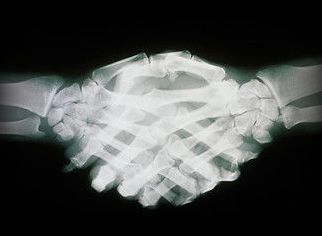
We concocted funnel cakes of cinnamon and sugar, mustard, jalapenos and sausage. They flopped and sickened, we laughed and she left. I think perhaps we loved, even then, that day. She left behind a bevy of hands from a book she created, by extraction. Our hands were open, our minds and hearts, a letting-go, with patterns and a freeing, a dance: in common, in Kansas, in history, in hope, in commitments, in fears and neuroses.
Letting-go.
I love drawing from the world – almost anything, almost everything – ingesting, sensing, feeling, digesting (transforming, processing) into me to pass it on again.
I love the encounter of humans – frightening, fragile things – the desire and revulsion our fullness brings.
Hope. Dread.
I hope to be loved and wanted.
I dread the opposite.
As if it were about me.
As if there were a thousand suns
And we were one of them
Time doesn’t work that way.
It’s been called an arrow
but it’s likely not –
likely wrinkled, warped and bent –
just like us
giving life to it.
Love is like this.
Like our memories.
I remember clearly what is incorrect –
if anything’s erected so.
I doubt it,
along with me and you and everything else…
just enough to believe.
It is very difficult to know what the “right” memory might be. Everything is actually: how it felt, how it seemed, what happened, in fact ALL of it is WHAT HAPPENS, and continues changing with each instant.
So I’m stuck selecting, revising, innovating, adapting – re-membering – we call it. The continuous process of limitedly attending to our experiences from as many angles and aspects as we are made of, and assembling them according to each moment’s need, or, our felt need to make new senses of being ongoingly alive.
However, not “stuck,” but rather tremendously active, pulsing, vibrating, jittering and triggering – “flowing” it seems to some – adjusting, adapting, regulating, surviving – ever re-membering my present. WHAT HAPPENS.
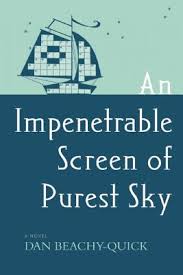
“Emerson thought the mind’s nature was volcanic…A rock falls into the eye and becomes molten in the mind and memory cools it back into the rock first seen. It alters when it reemerges, but one cannot tell the difference. It looks the same but we are imagining it. Memory is igneous more than ingenious, igneous, and like granite, intrusive, heaved up within oneself, the whole range of one’s life, mountains’ forbidding height looming over the plains where one lives, mountains formed by the life already lived, but toward which one is always walking, one’s own past ahead of him, seeking the improbable path already forged, this path back through oneself, this path we call the present tense shifts and the path is lost, path from which the walker emerges only to turn around and see the peaks pulled up by his feet, and the snowy pass, and alpine heights, where those stranded sometime must feed on themselves to survive, where sometimes, through the icy crust, the crocus blooms.”
– Dan Beachy-Quick-
As I mentioned in yesterday’s post, the notebook I grabbed in case of moments of free creative scribbling contained prior forgotten reflections that carried me into further reflections…recorded below:
 The wonderful thing…
The wonderful thing about writing…
The wonderful thing about writing is that you can always begin. You always face opportunity. BEGIN.
In addition to that…”in other words”…
In other words, you can always start over.
Begin. Start over. Begin. Start over.
It’s a wonderful thing.
Language. like moving your body, there’s a kind of body to inhabit. A world. A way of being. You wake. You move. You remember…by dis-membering.
In other words.
You sleep. As you cease to sleep, you remember. You remember by feeling your limbs, your breath, by seeing, by feeling things (Dismembering). As you dismember (stuffy nose, neck-ache, coffee smell, pain behind the eyes, the need to potty, and so on…) – you also re-member (stitch together, sew, seam, canvas, invent) and become (again). Writing is like this.
Language. A body dismembered – waiting for membering (memory, membership) – invention, use. Beginning. Again.
In other words, like organs instructured in-skinned, awaiting awareness, the fabric of socio-cultural symbology (languaging) lies: in wait: to be animated, enlivened, embodied: woke up.
The substance, the atoms and organs – await. Circulation, enervation, emergence – to live – animate –
to be possible
And become.
In other words, to create, to move, to motivate.
There is no such thing as starting from scratch.
But a scratch is a beginning.
In our bodies, within matter,
in the world – moving gauze, filling quilts,
sensing flesh, donning clothes, filling whispers…
I’m alive. I begin.
The wonderful thing about writing…
…to awake into a way of being.
 p.s… i’m thinking that each begin includes a hope to mean
What I was composing the other day in my head, or wherever daydreaming occurs: filling up that gap between inside or outside, idea and actual, etcetera. They told me not to worry about losing it – that it would return, re-emerge. I lost it. The idea, sensation, form, content – everything. Well, not everything, exactly, I guess, because how could I conjure that there was something, some experience, some initiative or other, had I truthfully lost it? Okay, maybe they’re right, and “everything” is a question of access.
In any case, well, no – in present case or tense or whatever now-situation might be (“Weather”? – see Roland Barthes, The Preparation of the Novel, or Tim Ingold’s essay in Vital Beauty) I am not experiencing “access” to something some part or parts of me (some connectivities) believe or invent a past tense for – a disjunction/abstraction/detachment from. A difference.
I am believing that I felt differently about something at some other time, that language was forming out of me relating to that affect, and that I had the potential capacity to express all that semiotically – or, in a way that it might make sense, be shared, exist.
Now I’m languaging nothing. Or, not exactly nothing, more like a different something that in fact is the semiosis of another inexpressible or inaccessible possible something. Which means, potentially, anyone could find it, discover/uncover/invent/compose/co-construct (co- probably redundant to con- but then I’m not Russian, at least not currently) that initiative and perhaps I’d re-cognize or re-member whatever realigned threads rewove into this particular weaving (what is “now”).
Etcetera. This is how it goes down for me (current context taken mostly for granted).
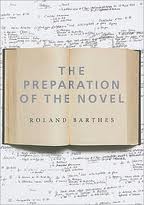
“The novelistic ‘drive’ (the love of the material) is not directed toward my past. It’s not that I don’t like my past; it’s rather that I don’t like the past (perhaps because it rends the heart), and my resistance takes the form of the mist i spoke of – a kind of general resistance to rehearsing, to narrating what will never happen again (the dreaming, the cruising, the life of the past). The affective link is with the present, my present, in its affective, relational, intellectual dimensions = the material I’m hoping for (cf. ‘to depict whom I love’).”
knee-jerk response trying to coax the writing machine within, thanks Rochelle Wisoff-Fields and Friday Fictioneers community

I was never good with numbers.
I meant, I intended, I felt the pressing need to say, to clarify. But I was never good with numbers. At least to specify, remonstrate, apologize, perhaps even to confess. Certainly profess, express remorse, plead a little, cry. I wanted you to know. So many things. How you struck me, thudded through, infiltrated, saturated, overwhelmed. How I craved and believed. What I dreamt.
But I was never good with numbers.
Student Magazine of IISER Mohali
Music, Musicology, and related Matters
a photographic pilgrimage to Orthodox Christian monasteries across the continent
Meandering Through a Literary Life
Orthodox Christianity, Culture and Religion, Making the Journey of Faith
Erik Kwakkel blogging about medieval manuscripts
"That's the big what happened."
Networking the complexity community since 1999
 All my Words are Silent