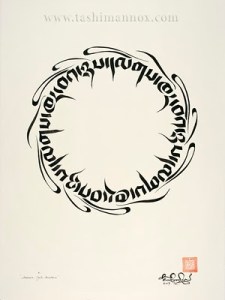
A New Character approaches…

Homo Scribus

Homo Scribus Attonbitus

            For this foray I need, as they say, a “blank slate,” “carte blanche,” a banded void.

In other words, I know what I’m doing this time, not relying on the “shoulders of giants,” resting on no other’s laurels, or catapulting off some foreign quotation.  No grand metaphors from the dead or established.

I’ve come of age.

I view the spines of those lying around me – oh they’ve had their say and sung it quite loudly if you ask me! – now mouldered and whispering like ghost-chatter or chains rattling in a cellar wind.  No, those pregnant freight-train loads have departed this station and become imperceptible tremors, thunder-rumbles echoing to far dissipation.

I’m setting out my own trail.  No trail.  Expedition – yes, that’s it!  Packed with only myself and whatever remains undigested in my system, I’ll set out, set in; implore and explore.

My eyes, my hands, my legs and feet.  My lanky arms, my ears and my snoot – my particular mindbody complex and whatever might come to surround me!

No more reading!  No more imitating masters!  No more interludes and origins – referential abysses!  Nay, only this human specimen armed with senses and gestural capacities – engaging this world!

Sounds heroic, adventurous, creative and crafty – as a Ulysses hoisting his sail – a voyage and a journey, an epic assay of discovery!  (Forget the “Ulysses” slip – no more of that, believe me, I’m on my own here, now).  I’ll delete out the crutches and mentors, all competitors now on the lyrical battlefield of verbalizing existence!  Stand back!  Give way!  Fall silent!  (please???) – it should be my turn now!

I’m ready, able and willing – this is my moment.

Cutting ties, spreading wings, taking the stage, the road untraveled, for I’ll be building it as I go – my road.  My way.  My path.  My vision.

You’re probably wondering to yourself how you’ll identify something so unique, unprecedented and individually differentiated – yes?  Probably brimming up with anticipation and excitement – as if attending some grand unveiling, or approaching the mysterious goal of a lifetime’s pilgrimage?  Quite right to be ecstatic, verklempt and even a good deal afraid, perhaps intimidated – we can never know when awe and glory might undo us!

Prepare yourselves.

From this point forward you’ll be engaging this writer’s voice.  Texts, language and letters funneled and revealed via this being’s mediums and convergences.  As I invade and am invaded by my existence/existents; subjects, objects; realities, fancies and facts…you, dear lucky readers, shall be privileged and forced into a kind of secret society, veritable coterie and gnostic initiation into

the unknown of the unnamed one

            For indeed, perforce and assuredly instigating, nay, creating (as if ex nihilo, pro nihilo)… beginning such an enterprise as this requires all become fresh and new –

nothing answering to nothing

absolutely!  A virginal venture for all – an only!   Circumstance in the making of being made – the copulation of a human complexity encountering and being-countered-by ALL (within/without).

Oh, I’ve come of age.  Proven my ability to survive, alive, and to endure all the many centrifugal/centripetal formulating methods of provenance and progeny, culture and biology, genetics and genius,

have undone, erased, reformed or assimilated

and set forth as if naked, stripped bare,

into a fantastic actuality (“reality”!) likewise deposed and evolved.

To the marks!

On your marks (well, mine, actually) –

get set –

and here/now GOES!!

[drat! here/now went!]

Again…


“in response, you make a gesture filled with uncertainties…”

-Arkadii Dragomoshchenko-

Another Rejected (albeit kindly!) fiction…

WHO THEN IS SPEAKING?

“the preliminary condition of any work of literature is that the person who is writing has to invent that first character – the author of the work… the author’s name and the various ‘I’s’ that go to make up the ‘I’ who is writing”

Italo Calvino

“’I’ can only be identified by the instance of speech which contains it, and by that alone”

Emile Benveniste

“Who, then, is speaking?”

Maurice Blanchot

who is speaking: 

I am the one, come to tell the story, the code of information and words, with    letters and gestures and some touches of inflection, but I mean to tell it straight and impartially, save the parts I must needs factor in.

who is writing:

And I am the one, come to present the speech in images – to sketch, doodle, scrawl and scribble – marks and letters and symbolic dashes and curves, points and curls in order that you might decode, perceive and interpret the messages of speaker, silent though you both may be, with all of us reading what we each are choosing to see.

who is reading:

we, all of us, some before the text is made, some almost simultaneous with it, others far along and away, ingesting quite similar physical marks and gestures, each in our own way through our various individual-minds, group-minds, cultures, vocabularies, languages and eras.  In other words, nothing stays the same, and everything is alike in this.  We read, re-marking the text.

who is not-writing:

I am capable of inscribing in my mind and body, the world.  As if an invisible typing-machine, a reordering recorder, some receptive-creator-genius, as it were, a super-computer which you are incapable of judging for yourself, as each to our own mechanisms, susceptibilities, senses and necessary wiring.  Humana/inhumana – therein lies the distinctives, do not doubt it.  I am known by my knowing.

who is not-speaking:

Therefore I do not tell, have no voice of my own but merely exist to compile and report, as if I were a memory file tabbed for all occasions.  I absorb, alchemize and purify.  I add solvents and neutralize, catalyze, in effect I am a scientist or theorist, objectively observant as I play in my private lab.  Whereof I do not know I cannot speak, and results are eternally forth-coming, each instant a universe of new, each moment a rearrangement of all the parts in an ever-altering and incomplete whole…my lips are sealed.

who is not-reading:

[the non-readers, alas, are unable to report or tell.  Our theories include the “supernova” and “black holes;” however, some have suggested to add in this category “blind faith practitioners,” “idealists,” “atheists,” – actually all –isms and –ologies, but given their abilities to say and to write and/or gesture their positions, “non-reader” would have to be distorted to incorporate “those who read in only one way”] –editors note

who is speaking:

“and like I said, ‘it began,’ he said, ‘this way:  she turned the corner in a frenzy of hurry, skirt twirling this way and that, clop-clop of pumps, some windy vibration to her flesh,’ which corresponds very neatly to the moment I heard him exclaim, (he who I’m speaking of), and forthwith interviewed concerning the commotion, sitting (as he was), on the bench in the park, with such a beautiful female, I had thought, at the time I approached him, given the apparent accident of noise fomenting beneath my window”

who is writing:

wrote

who is reading:

is a little confused by the pronouns.  The speaker apparently involved in the he-she story that he tells, but is the she also the beautiful female or some other rushing one?  He being the same as exclaimed and sweated on the bench?  Am I reading this right?

who is writing:

I write it as I hear it, with the proviso of necessary adjustments, corrections and expansions to concoct a sensible array of language, given current grammatical and syntactic preferences of the culture at large and my own personal tastes.  Not that I actually “hear” it, as it were, more as if I see it occurring on the page where my hand is making marks, deriving setting, speech, movement and character from the silent leak of pen, like reading perhaps, a proto-reading of sorts, replete with imaged-in (image-ined?) activity, not physical, of course, save insofar as my hand and parts of my arm make a sort of jittery movement in utilizing the pen, but, well, is that any clearer?  Helpful in any way?

who is reading:

am I supposed to know all that?  I picked this up engage a story, a motion-picture-in-words type of thing, not a movie with commentary and special-effects how-tos;  I’m very uncertain as to what’s actually going on here – am I to believe I’m encountering a work of someone’s imagination that I might while away some hours of my life participating in, thereby stimulating my own?  Or is this some sort of step-by-step author-diary phenomenological-literary inquiry, with which I have no concern or interest whatsoever?


who is writing:

Where does the reader fit in? (a marginal note)

who is speaking:

“so he says to me, I mean, I’m just sitting here enjoying a beautiful Spring day on my favorite perch in the local park with this incredible girl I finagled to my side with brilliant hubris and aesthetic chatter, just sensing the verdant nearness of her, knowing that just beneath that thin satiny-cotton her flesh continued – from her arms and knees to her chest and crotch, those virile thighs, I’m dizzy almost here – my intellect on autopilot while my senses imbibe, and this guy, this frantic frazzled business dude scurries up asking ‘What!?  Is everything – ?’  ‘What’s happened?  Is everyone okay?!’ and ‘What the hell is going on?!’  I bristle of course, no one likes shit instead of rain on parade day hoping for a carnival ride, and I cinch up, scowl, and I tell him, I tell this guy: ‘Sir!  What are you talking about?  Step back!  Calm down!  Breathe…then begin again, but slow it down – try to make sense!’ demonstrating my world-wizened calm and strong fearless demeanor to the steaming body right there up next to me – I’d picked the half-bench with a patch of sun so we’d necessarily be close and she’d need remove her sweater-shawl thingy – I wanted the curve of her shoulder, slight swell of the breast, and neck and jawline all around, the way her hair chose so many intricate ways to secretly touch her skin”

who is reading:

Wait.  So the guy telling the story isn’t the observer of the action?  Or did you forget to switch scenes or something?  I mean, I guess we are in the park now on a bench reeking with sensuality, you’ve brought me closer to the lady, but truly – who then, is speaking?

who is writing:

(seems readers have so much to say) [that, in parenthesis further along the side of the page, ed. note].  I’d like to involve the reader(s) here, to take them into account.  Who should I ask?  Or should I simply re-read what I’ve written, perhaps aloud, pretend I’m someone else – not the spider’s butt spinning the web, but the focused chameleon on the next branch?

who is speaking:

“Honestly, I don’t really feel that he ‘gets it,’ most of the time?  I’m not really here for the talking, you know?  As if I’m a silage pile feeding the hogs of his emotions or desires, or simply raw fuel for his machines.  I often feel like some objectified character or like I’m playing a role, you know?  Sometimes even as flimsy and see-through as an idea!  As if I’m here simply to be used.  A tool, like his cock or his pen.  I usually don’t let on because otherwise I’ve no way to be seen or heard, it would be like I don’t even exist if it weren’t for him.  He does pay attention to me, as far as that goes, a careful kind of threatening interest, truth be told, but it’s cheapened because he only cares insofar as he wants (or, as he might put it – ‘needs’).  I don’t know, all his ‘he saids, she saids, I say, you say,’ – it gets old, I get lost, and often become confused about who or what I am – this is sort of a caveat here, unscripted, I think, I’m just saying…”

who is reading:

            [writer notes: is speaking too]

who is reading:

I do get a “feel,” in my body, as to what’s going on here.  I’m hearing a lot of voices on a lot of levels and I’m trying to piece them all together – as if all the parts, in fact, are part of a whole – and the whole is this limited pulped object filled with typescripts that I’m holding in my hands and reading.  Representational then, I guess?  I reiterate: I didn’t purchase this for a mirror to life, or struggles of making sense.  I wasn’t itching to go back to my school-days – science, philosophies – I should have ordered a film, but now I feel stuck – what with the time spent and cursory effort – I got comfortable…I almost feel duped…and yet…

who is writing:

how can you drown a baby, right?  I mean, it’s begun its life, it has promise and as many possibilities as the next child – rebellious, colicky, all the spit-up and shit it throws back at you – I can’t just discard it, leave it to itself, it needs me, I think.  I brought it into this world, am I also responsible to take it out when it runs amok?  How the hell do you control a living thing like language?  Am I the man?  Wanting the girl?  Questioning confusion?  Discovering a traumatic event?  Exclaiming?
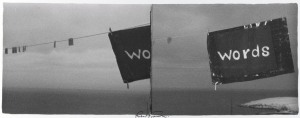


I, the infinite? instants…

I, Gelaftimus


A jumble of words.  A spasm, a syndrome.  The spraying of a passing fancy, designation.

You don’t know where I got these words, nor do I, or only rarely.  A voided origin, a lifetime suffering verbs and the masks of nouns.

Experience: feels like something moving forward, somethings breaking and tumbling about it.  “Feels like.”

A kind of perceptual first instance, shaped by everything before, altered by everything after.

At the limit then, boundary-lip, threshold.  Moving, and that ceaselessly.  Colliding.

A poet, after committing suicide in his youth, now festering under the ground, is found to have remarked that “a tree grows upward…the path of least resistance.”  So most of us.

Whatever “us” might mean, a jumble of words, perhaps a spasm, unconscious and involuntary instinct, so carefully and meticulously learned: to say.

Gelaftimus is what I feel today, this moment, my wife sitting and stewing on her couch, me (whatever “me” might mean) crabbing over my desk, this white paper, with a ball-point pen, scribbling – “a jumble of words, a spasm.  A syndrome.”  Perhaps.  But it is gelaftimus, I tell you that.

Early on I was assigned this particular label: “Nathan,” only later coming to find that “the meaning of a word is determined entirely by its context.  In fact, there are as many meanings of a word as there are contexts of its usage.”  (V.N. Volosinov, et. al.)  “Feels like” experience.

Needless to say, “I” have struggled with defining the cluster of words “I,” “Nathan,” “man,” “boy,” “me,” “son,” “husband,” “father” and so on in their perpetually altered contexts, circumstances and situations, ever re-de-term-in-ing their possible meanings.

A jumble of words.  A spasm and syndrome.  Instinct and accomplishment (accomplice-ment?)

My wife, last night on the swing, beside me, in the dark, on the porch, spoke of “not being allowed to say” as a child – so very many experiences “not to talk about” –  frozen (perhaps) in their places or processed without knowledge dementedly deep underground (out of sight, out of mind, and so forth).

Contextually, she was addressing the decades-old infancy of “figuring out the world around me and my relation in and to it.”

“Reality works in overt mystery”

Macedonio Fernandez

which I found (what she said) to feel like truth (as in actuality) – the jumble of words, the spasms and syndromes of “making words fit.”  The odd difficulty we sometimes name “maturity,” i.e. beginning and growth.

I would confuse myself in this (were I to find me).

Alas it floats on the crest of the wave, breaks and spreads on the shore, regathers in a reflective pool, drifts away and starts again in fragments and particles.

Poised on a threshold, hardly poised.  Rather in the breeze, a metaphor passing hands.

This jumble of words.  Syndromes and spasms.  Accumulated masterfully and haphazardly over ages and accidents.  Feels like, experience.

Gelaftimus, today.


“A sight, an emotion, creates this wave in the mind, long before it makes words to fit it; [or making it fit with prefabricated words? –N.F.] and in writing [that babble at the crest of the wave –N.F.] one has to recapture this, and set this working (which has nothing apparently to do with words) [?! –N.F.] and then, as it breaks and tumbles in the mind, [ever creating more waves – N.F.] it makes words to fit it [or fits it to words which recognize? – N.F.]”

Virginia Woolf

I, for Instances of Assembled Appendices

“Unable to say ‘I’ in either past or future.  Yesterday’s face, almost unrecognizable.  Tomorrow’s face, barely thinkable.”

-Edmond Jabes –

“One evening, pulling photographs from his youth out of a drawer, he quoted a dialogue between a child and his grandmother, who was showing him a picture of a very pretty woman:

        “Granny, who is this lady?”

        “Why, it’s me, darling, when I was young.”

        “And who is it now?”

        “And he said to me: ‘You see, in this Who is it now? lies the riddle of a life.'”

-Edmond Jabes-

The Nothingness of Personality

Currently Reading

Currently Reading.

I, for Instants, inevitable infinity

Attempts at Auto-bio-graphy, or, self-life-writing, or, the inevitably ineffable


longitude

lassitude


aberrations of pain

with twisting serpents


origin: absence

defined by failure and loss

the inevitably ineffable


so say it

I do not love myself

nor find a self to love

and it’s nobody’s fault

but mine

(who?)


a descent of crows

inevitable,

ineffable,

undone

and scoring marks

into a void


of absence

and solitude

without a solo


no validation

no remorse

an abyss of ontology

and chaos of course


vocation

fashioning masks

of contexts

and stories


aberrations

of hypotheses

blind, deaf

and dumb


insurmountable

point

Borges’ Aleph

all,

if


uncertain

promise

trial and error

errantly


possible

within, without

and unlikely

unless


I do not love myself

and find no self to love

and it’s nobody’s fault

but mine

(whose?)

unless

undone

inevitably

ineffable


I say


For Communal Delight

If you enjoy, wish to, revel in, feel ecstasy toward, crave and are intoxicated by

the glories of language

I fervently recommend


for your enjoyment!

I, for Instants: the writer question

I the Question; I the Answer That Does Not Satisfy

“I am both wound and knife”

E.M. Cioran

“Time is a river that sweeps me along, but I am the river;

it is a tiger that mangles me, but I am the tiger;

it is a fire that consumes me, but I am the fire.”

Jorge Luis Borges

“The question inaugurates a type of relation characterized by openness and free movment; and what it must be satisfied with closes and arrests it.  The question awaits an answer, but the answer does not appease the question, and even if it puts an end to the question, it does not put an end to the waiting that is the question of the question.”

Maurice Blanchot

“all things oscillate round me, and I with them, an uncertainty unto myself.

All for me is incoherence and change.  All is mystery and all is meaning…”

Fernando Pessoa


I am the writer.  Am I also what is written?

Both wound and knife.

I am the husband?  What the husband does.

I am their father.  Am I also their fathering?


I am the writer.  Not the writer I believe I am, want to be, imagine.  Am I the writer?  What is written does not appease, does not satisfy.  I am waiting, asking, waiting in openness for possibility.  I am the answering I do not desire.


Am I what is written?  Partial answers.  Fragments pieced together forming questions.  I wait.  Am I the one who waits?  While writing?


I love.  Do I love?  I answer by loving.  I am dissatisfied by my loving – it is not what I had hoped, was waiting toward, believed possible.  I am not the lover I asked for.


I feel I am the open, the possibility – the questioning.  My answering closes, arrests, delimits me.  I am neither satisfied nor appeased.


I am the human.  Am I human?  If I answer for that I am dissatisfied, given the question, the possible replies.


I write I am the writer, the one writing, this phrase of the question.  Its answer never satisfies, leaves me waiting, asking again, anew.  The questions.


“the anarchist keeps watch within us and opposes our resignations”

E.M. Cioran


The Temptation to Exist

“’I am both wound and knife’ – that is our absolute, our eternity”

“the idolatry of becoming”

“blasted joys and jubilant despair”

E.M. Cioran

The Temptation to Exi(s)t


We’ve got our words all backwards.  Ever trapped in what we deny.  Our escape = net.

Space.  Time.

If we say it is all relative, yet act.  “Choose.”  Freedom is nothing.  The words, then, are all backwards, you see, we “mean” our opposites.

Desire.

Could cumulate as the evil.  But still – you see?  Hope for understanding, for wisdom, knowledge, some trivial insight.  Log of shipwreck: cling.

Desire.

Another enemy: “intensity.”  Synonym “passion,” carpe diem.  Opposite: freedom.

In-tense-ity.  State of inhabiting tension, clinging to stress, to invite suffering (“jubilant despair”).  Opposite: being. freedom.

A blasted joy.  (Suffering).  Opposite of freedom: want.  Making antonyms by definition: “to be.”

If we seize, choose, behave, acquire, reach, speak, move…”the idolatry of becoming” – antonym? = freedom.

Kingdom equals freedom.  Queendom.  Selfdom.  “To be”-dom.  Backwards words.  Backwords.

Opposite of intense: rest, quietude : thought and action one : in-sane.  Opposite of want, greed : poverty : possession-less, without, without within : beggar.

Freedom : opposite : control.  Self-, other-, environmental-, habitation-, security-.

Be/have : to exist is to grab, to steal, to do violence.  Being + having : system : be/have.  Opposite: freedom.

Say it backwards.  We say it backwards.

I shout “freedom” driving the blade into my throat, bloody want.  Cannot “have.”  Are (are NOT = desire to become – false worship – be/having).

Religion : human organization to be/have.  Become.  To be.  Religion as an argument for (against) existence.

Already ARE.  Before “being,” prior to “having.”  No need : freedom.  “Meaning” the opposite of what we say.

We’ve got our words backwords.

Backwards: have-been.  There it is clear.

The temptation of the system, the race or kind, was “to be” as something to have, to get, to come into, be-come…that existence was a goal, something to arrive at, achieve, seizing the days, the moments,

Synonyms: act, will, intent, purpose, do.make.say.think. to mean

Synonym: be/having

Opposite: freedom.

Existence having been from the first.

Having been = at the last.

Synonym : freedom : nothing.


Clothing – an ultimate ekphrasis?

Costume as Metaphor


            We dress ourselves in certain clothes, change our hair and faces in order to look some way we think to look.  Appearance changes us and it need not be dissembling.  Indeed, what are we?  Are we anything?  Sometimes, we become what we look to be which we have thought to be.  And, on further thought, this may be nothing also though, for the time, it looked to be something.  Other times, our dissembling seems wrong in its particular, as a contradiction of another identity as though we had that identity and an assumed one could contradict it.  We want to be something: whatever we really are, whatever we could hope to be.  But, ‘What we really are is a mystery, and what we could hope to be has only such value as our hope assigned it.  Our aspirations are blind and arbitrary and their success is only their own.

Children dress in scraps of costume and play at being what the scraps suggest.  They try it and let it go.  Later, our commitments are sometimes fuller and the letting go isn’t so easy when our interest wanes as it may.  We hedge it with other interests on the side, secret selves or contradictory clothes which protest the real me, so that anyone’s person may well be multiple and all the multiples tentative and exploratory as children’s are.  The space remaining for definition – so wide for children, or so it seems – becomes narrow and limited and definition farther and farther off and we accept what we were as if it were what we are or even what we had meant to be.  But it isn’t.  We know so.

When we ask who someone is we get places and ages for answers, occupations and antecedents, what times and places someone has occupied or what other external has occupied them, as though we were all blanks and had no shape or nature except by possession.  Our need to possess and our need to be possessed proclaims this.  If we really were something in ourselves, could we need anything?  Could anything possess us?  Possessions hardly satisfy us.  They must have been not our need.

But, whatever our need, they must in some sense have been wrong and we sense the wrong not by contrast with some other possession though it must often seem so: the apparent greenness of other pastures or even this same pasture in the approach of some spring.  We have hopes for projected futures, for what may someday be in spite of all.  In spite of all.  In the light of all.  How impressive the all is: the endless possibilities whose indefinite endlessness makes absurd any one.  How hopeless it is to pose in any particular costume when all we are is limitless and costume denies that, limits us in a role.

What can we ever be if the limitlessness of the all is truly our quality?  We can as little be anything as we could if we were nothing as also it seems we are.  It is hard to decide; and the decision whether we are all or nothing, based as it is on the same premise, produces the same result; we cannot ever be anything.  Though we dress however forcefully or fancifully we will, it is always pretension though the pretense may have its successes, even for a long time.

What of the world?  Though there may seem to be nothing outside ourselves, there is a sense in which we observe and the object, as though it were, of our observation we call the world.  This is absurd because the world is as little as we are.

And yet the language has its declensions and its conjugations.  If we speak at all we speak in the structure of the language and what we say, whatever it is, may matter far less than our accession to the way the structure of the language divides experience in terms of person and tense so as to say we are (or were, will be), so as to say what was or could, what is, who is the first or second or third person, what is singular or plural, that there are or could have been, that there still might be, certain actions, certain reactions.  We speak in tongues however prosaic our speech may be.  The boldness of language supervenes our actual experience.  It means to say what we don’t know.  It creates the world as if the world were.  Its whole necessity is metaphor.

And language need not be verbal; that is to say our postures and houses, our laws and landscapes, our science and public buildings, share the character of language.  They are metaphor also: creations of desire.

Forgive the world, however terrible it is.  We dream of horror, impelled by what we don’t know, and the world seems to contain it; but it is not a real world and nothing requires our belief.

That we believe in nothing is a hard requirement because we want to believe in something: some political theorem, say, or religious creed or, sparing these, some unevaluated strength of our own as though in our person we might prevail and that prevalence had the salience of some proof.  For what?  For our dying?  Because we do.  Unable to think of ourselves this way, think instead of someone ten thousand years from us one way or another who will have or had a name, a place and costume no more and as much as we have.  And who is he?  Even so far as we know, it is a pretense of knowing.  Abandon that.

Belief in nothing is a positive belief apart from relieving us of partialities; and, even in that respect, it is a liberation.  The world is not partial.  Nothing is all and the world is nothing as we are.  What should we say?  Nothing to say of ourselves and the world tells us nothing.  The world is a silence.  But we talk of it and to it.

We know nothing of the world and will never know.  All we say is metaphor which asserts at once our unknowing and our need to state in some language what we don’t know.  How we love clothes; plain clothing or even our nakedness, speaking the silence of the world, or fanciful costume in which we praise some aspect of the world we mean to praise.  Clothing as metaphor, not to dress ourselves nor to say what the world is if we knew but to praise that world however it might be.  Rich fabrics and fine leathers, ruffles and satin, silver and lace, glorious colors and the fragile purities of clean whites: none of these is the world nor are they all together the world.  Songs only that sing its praise, the earnest entreaties and importunities of our desire.

William Bronk

from Vectors and Smoothable Curves