Getting back into A swing of things, I’ve missed the past couple of prompts for the wonderful mixed company of creatives that take part in the Friday Fictioneers (yes, please DO join us!). So here’s to restarting refreshed…
Entanglement
So this is our journey. No way out of it. Bound together, bound apart, bounded in. We call it “Situation.” Shared in common. Held by circumstance. Anything might bow us, but both will be effected. The cords behind, some measures of rest, and whatever comes next – it all impacts the song. Lucky for an other – no sound can be heard if there is only one, if our strings never touch. Though sometimes cross and crossed over, at others we vibrate one another to the sweetest hum. It happens together in our ever-bordered context – the space of our entanglement.
Assembling for the task, we began. Each in our strengths conspiring. Tristan executed calculations which were pinpoint. Ida concocted the sounds and the language we could use, boxing up the requisite books and emotions. We counted on mama for the overall surround, a global view of the society – espousing natural characteristics and roles. Oliver modeled the world and placed it on a bucket. Everything was ready – needing only performative passion – a unified desire. We waited for Aidan, lugging the chains that would keep us on course, to hold back entropy’s risk. Leaving me to chronicle this family’s brave new world.
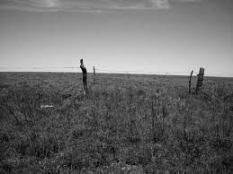
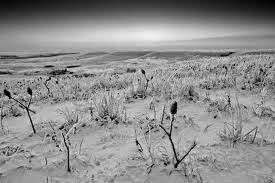
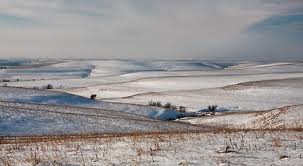
I’m stumbling about in a vast field of corn or wheat (mostly stubble) – for the requisite difficulty I want to say stalks of maize – but most likely it is wheat (author living in Kansas), though the sharp starkness of the dying shoots suggest otherwise. There may be snow, it’s that bleak. I’m lugging, perhaps draggling (yes – dragging a straggling weight – I do that) a shovel – nothing unusual about the tool except that it feels abnormally heavy and the iron parts are particularly cold (reminding me of the processings of my brain). A book is open on my lap (I’m sitting in an airport) to ward off any attempts at conversation and indicate a desire to be left alone, so I might continue my dreaming. I’m using the shovel to dig for my dad. Like – to find him. The field is a veritable landscape, not a “quarter” or even thousands of acres, but more like a steppe – some foreboding Russian prairie-plain – but clearly cultivated and almost fallow, or otherwise undone.
So I’m trudging through, eyeing the horizon, searching for some limiter, some possible landmarks that could clue me or direct me toward a where to dig. Every once in awhile I stoop or coil and plunge the blade into the cloddy frozen soil, strung up in tares and straw and grasses. I guess I’m expecting a thunk or an explosion of stars or something, because I never dig for long in one place, and soon pull up and move along. How do I know that he’s here? It’s as if something told me so. A sensation a helluva lot like intuition, or premonition. It’s a thankless task, I’ll tell you that, with the approaching holidays and stuck like this waiting on delayed Winter flights. What hope is there for me? It is already dusk and the field’s enormous. I’m alone, you know. Out here trying to find my father. Trying to find my way.
Afterword
Ever since I’ve been nearly-adult, or as long as I distinctly remember thinking about things like this – like death or family or meaning – I’ve wished I knew my father. In college I thought it might be a matter of vocabulary – that we didn’t possess the correct vehicle for exchanging emotion and memories and hopes – so I studied America’s westward movement (the paths of our ancestry), studied land management and read farmer-writers like Wendell Berry and William Kloefkorn, Larry Woiwode, William Stafford, Robert Bly and ilk. Trying to forge a connection now that sports and God had run their course, for me. As my own children arrived I turned to movements like Men and the Water of Life, the Iron John sort of thing – searching what is my heritage – of gender, of blood – what the hell does “manly”(ness) mean beyond observation and nurture? Now with sons. Hunting for metaphors or language that might serve as derricks plumbing wells – that might draw out my father and myself and somehow blend us together. Poem after poem, story by letter asking intimacy. Sometimes I’d gain the courage for a lunch or an outing to interrogate him directly about how he felt about things and what were his stories. I gifted my mother and he with a book of great questions and a blank notebook so they might fill out their inner-info when they felt like it, “for their grandchildren,” I’d said, “for posterity.” Simply wanting to know. As far as I know, it’s still empty.
Why is it so hard for fathers and sons? How many of us wish we really knew – our parents from the inside out? Believe that somehow knowing more than their strategies of being would offer us a clearer, fuller sense of ourselves? Unburden. Invite. Be near. As my father and I both age, I find myself anticipating his stages – frustrations, weariness and increasing losses. I find myself encountering bewilderments I saw him endure, and still I constantly wonder what he would say – if he said – not regarding politics or basketball or weather or cars, but about me. About him. About being a father and a man, a husband and a laborer, a person, a friend. About humor and music and art, about culture and meaning. He studied much and has lived long, lost so many, traveled and loved and he’s beautiful. As with my sons – toward whom I try to be so open and true – the conundrum of unknowing and uncertainty related to those closest to us is a mystery that hurts. The above piece is one of a life of installments. A kind of cry.
Why is it that what requires an army is always represented by one tiny little man? Or that incremental power leaves aside the human – “horsepower” – cannon?
Insurmountable odds left to a roll of the dice.
I used to not have patience for this game, the long slow proposition of loss dotted by occasional accidents of “victory.” Ever outnumbered on defense, I get it now. I’m 42 years old. The dice roll all day, and as the sides increase the odds go down and the stakes are higher.
Why even bother to play? It’s a question we ask regularly. Such a commitment of time, of energy, attention. So much spent twiddling thumbs or enduring loss or unwanted wins.
The world is enormous, and yet miniature, even to Legos.
You and me and you, my sons, miniscule players in a massive machine of rules we did not invent.
There must be a reason we play. I don’t believe we want to defeat one another. But the commitment. The attention and energy, the time. I’m pretty certain we want those things.
So we risk. Join in, gathering around what becomes a battlefield from a motivation of love, of loneliness, collaborations and deceits, treaties made and broken, a collective misplaced on a board.
I am telling you a simple story. A simple story of simple things and full of details. I will be telling it the rest of my life.
Details.
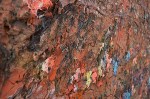
detail – Anselm Kiefer
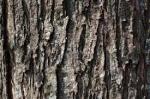
tree bark
age and character
Take time.
It takes time to develop the details, these simple stories. Bear with me.
This year I stopped smoking. I began “vaping” e-cigarettes on Father’s Day, a reciprocal gift from my family, ostensibly FOR my family: my health – their comfort and security.
I had thought of my habit as an addiction and pleasure – it’s satisfactions including (but not limited to) the occupation of my body and sense so my mind might generate more freely – an item in the hand and oral fixative, the beautiful tedium of packing and rolling, the scents of tobaccos and sweet crackling of flame to thin paper, the distinctive clink of a Zippo. And there was the intake – that onrush of Other-air against the back of the throat, the lung’s recognition that breath is substantial – has meaning and purpose. A matter of routine, comfort, psychophysiology and control. Among other things. Fine insofar as it goes. Pieces of detail. Replacement sufficed.
Last week I contracted a version of the flu [please be patient – the process goes roughly as follows: details accumulate but require time to coalesce and organize toward a meaning – our lives as cabinets of curiosities]. Out of character for me – this was the real deal – an incapacitating sick. Associated with it was the scent and flavor, the electric verve of the nicotine-drop-oils that crackle and pop when my ecig works its vaporous magic. Compounding the problem (if illness is a “problem” per se – perhaps more appropriately “discomfort”) – my comfort no good to me.
In early October, due to an oversight in my timing (hang on – gather ingredients, let them simmer and stew, the feast is ahead), I depleted my store of these essential oils without backup, amidst a time of unusual stress. As a stop-gap measure and to avoid hurt or offense (a grouchiness and malaise isolating those around me) I purchased a package of “all-natural” tobacco cigarettes to get me by until my liquids were refilled. The cigarette had changed – no, it was I who now found it insufficient and distasteful – acrid and smelly – inconvenient and inferior to my system. So I squirreled them away – in case of emergency.
Emergency! (well, hardly, but still): slowly recovering from flu, sore and exhausted, wife away on a ten-day journey to faraway climes, two naughty puppies causing trouble, and tending and taxiing four active, hungry children, one of them herself quite ill – at day two without nicotine (happy pill / support / community / God / alcohol / touch / solitude / nature / music / food – whatever one’s personal representation/manifestation of “comfort” might be)…details…
while my daughter lay napping, the others at school, in a moment of relative quiet…I ferreted out one of those “Natural American Cigarettes,” by now all dried up and crispy, months opened and old, and slipped out to the porch…
Voila!
Except not, really.
Not a sudden revelation – but an accumulation of details taking particular shape.
Not an enlightenment – but light swollen and fractured to specific degrees.
Not momentous insight – but a lens crafted and ground, melted and curved to a singular clarity.
Bic schicks. A flame. A crackle. I inhale. Nothing special to the taste, nothing tremendous for throat or lung. Just a smoky draft of air – as from the belchings of a campfire in the mountains, or a compound conflagration of a family reunion bonfire in the late of night (but it isn’t!) when the kids are down and the adults unwind (but I’m not)…
A detail I’d overlooked about smoking (amassed over more than two decades – stay with me now) was precisely that. Looking things over. Smoking drove me outside and it stopped me. For the length of a cancer stick’s burn in this anti-smoking campaign of a culture, I would be isolated from friends and family, house or home, commerce or eatery, and would be situated somewhere where all there was to do was look over and listen. My hands and mouth, neck and torso occupied – eyes and ears thus freed, for a few minutes, to simply wander and attend. Caught by details.
Like these:
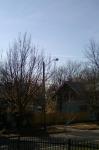
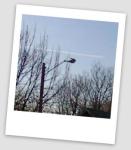
a Jetstream, held in a pale sky, contrasted by solid starkly swaying Winter branches, juxtaposed with the sturdy steel of a streetlight. And the dirtying yellow of late Autumn’s surprise bloomings held in some final tangled stubborn greens among deceasing leaves and grasses. Cracking boards, peeling paints and muted hues of dust in sunlight’s shadows – a vibrant puppy, warm and dark – our lives – amassing details – collating and collecting.
[Cigarettes are unnecessary for this] (a mere detail).
When my wife/partner/spouse/friend/coworking companion and lover is away, a part of me gets excited – when the children are busy with school or their moms – it portends to offer me a kind of working solitude – a something I’m forever whining about – idealizing, anticipating, “requiring,” in its absence. A chance to be temporally isolated with my brain, my body, and language – to think (ostensibly) without limit, read or write to my little heart’s content, to create or conspire with no active consciousnesses to account for but mine – no schedules to sync, no dinners to heed, the only limitations my own (and those sweet blasted puppies – a significant detail!), but still: abnormally free to dig and delve, explore and enjoinder, experiment and invoke reveries without feeling selfish…
but, the details, amassed in this way, exposed something quite different…
Jetstream, streetlamp, sky and tree. Angle of roof, discolored paint, fragmenting light – the nature of materials.
I’m at a loss for what to search or explore, discover, uncover…from what vantage point or perspective? Me? – in relation to – Me? Set out from an entire illusive fabrication? An emptiness without basis?
A point as a map is a nowhere unless there’s something surrounding. Unless there’s another point…somewhere. Me pushing through (the details profess) is a movement nowhere, without reference to something or someone outside, different, Other.
My wife is my primary referent (and “wife” is too small, as grand as it is). My person, my artist, my human. The being attached to me – not really mine at all, but for her purposings toward me. Our children, our puppies, our things. Habitat. “Econiche.” World. What I “relate” to equals me, enables me, crafts me into someONE, someWHERE, doing someTHINGS…which otherwise would NOT be…
Co-dependence? Inter-dependence? I like IN. IN-dependence – in depending, attaching, choosing and evaluating ourselves in our Others – we ARE.
Jetstream, streetlamp, color and line
background, foreground, texture, time
space and matter, energy, form
Details.
The details accrue and accrue, and with time…combine, reformulate, convene – which can feel new and curious and true, but simply go on gathering more, detailing to no end, as they relate, interact, recombine – can feel revelatory, enlightening, even profound – perhaps they all are – but they all are and ongoing…
amass and revise, amass and renew, accumulation and attention, awareness and incremental adjustments of relation…
Without Life in Relation (both the active reality, and the her that makes, with me, an us), I have little where or whom to set out from or toward
“I am someone who tries to write, who right now more and more seems to need to write, daily; and who hopes less that the products of that need are lucrative or even liked than simply received, read, seen…why I’m starting to think most people who somehow must write must write. The need to indite, inscribe – be its fulfillment exhilerating or palliative or, as is more usual, neither – springs from the doubly-bound panic felt by most persons who spend a lot of time up in their own personal heads. On one side – the side a philosopher’d call ‘radically skeptical’ or ‘solipsistic’ – there’s the feeling that one’s head is, in some sense, the whole world, when the imagination becomes not just a more congenial but a realer environment than the big Exterior of life on earth…The need to get words & voices not only out – outside the sixteen-inch diameter of bone that both births & imprisons them – but also down, trusting them neither to the insusbstantial country of the mind nor to the transient venue of cords & air & ear – a necessary affirmation of an outside, some Exterior one’s written record can not only communicate with but inhabit…the textual urge, the emotional urgency of text as both sign and thing. The other side of the prenominate 2-bind – … – is why people who write need to do so as a mode of communication. It’s what an abstractor like Laing calls ‘ontological insecurity’ – why we sign our stuff, impose it on friends, mail it out in brown manila trying to get it printed. “I EXIST” is the signal that throbs under most voluntary writing – & all good writing…
what must the world be like if language is even to be possible?”
“A way of connecting, on relatively safe middle ground, with another human being”
“that ‘neutral middle ground on which to make a deep connection with another human being’… was what fiction was for. ‘A way out of loneliness’…”
Jonathan Franzen, on David Foster Wallace
“If the novel were able ‘to give the reader, who like all of us is sort of marooned in her own skull, to give her imaginative access to other selves,’ it opens the potential that she might, as a result, feel ‘less alone inside’”
Kathleen Fitzpatrick, on David Foster Wallace
My son and I arguing about the nature of things – is there anything we can agree on? mutually believe? are we similar? – in what began as an attempt (on my part) to soothe obvious hurt and confusion (on his part). He kept pointing to (referencing) his mirror, his bedside table, in an effort at agreement, at a meeting-point that might be solid, be reliable, be “correct,” or “true.” Some relatively stable collection of roving and vibrating molecules we might sharingly recognize, might hold, attend, or unite around – together.
Throughout my life I’ve attempted to comprehend – to make a symbol for myself – what works of art, particular pieces of music, specific phrases or pages of literature, momentary glimpses of nature, dollops of emotional experience DO. How they work. Why they “feel” – move us, take an occasional effect we might call “profound.” Why, even if they shatter us, cause us to weep, provoke in us the enormous courage required to change, we also somehow still feel safe, often empowered, somewhere beyond “okay” (ecstatic? – out of ourselves?)?
Although often evoking experiences I’d describe as most completely, totalizingly personal, I always felt their effectiveness, their possibilities of success and individuated power, came precisely because they were not (personal). That what intimacy they provided – what outlet or spillage, what expression they represented or evinced – was contextually impersonal, through matter and energy uniquely organized, mediated.
In other words, we could throw all of ourselves into, at, toward or away from them (works of art, formal arrangements of world) without the danger or threat, anxiety or fear, of influence. We wouldn’t hurt, harm, embarrass, shame, offend or be misunderstood by a cornflower, a collective of strokes of paint, a recording of sound waves, moving molecules. No direct hits of miscommunication, misinterpretation. Perfect, variable, flexible presentations of world, of other, that we might release ourselves in relation to, without fear.
Existent things, moments, that genuinely represent otherness from ourselves but without direct exposure, without a being’s inquiry, possible scrutiny, judgment or evaluation. Interpretation. Many-sided, borrowed perhaps, but mediated via only one person – me. I could not fail, fall short, be inadequate to, or otherwise mess up a novel, poem, composition or film, and if I experienced myself as any of those things – it was my own judgment, assessment. Mediated.
After years of such exposure, why do I still choose sides, entrench myself in arguments of logic, when I mean to comfort, soften and heal? Alone, later, I sat and asked myself over and over – IF I have changed, grown, matured in any fashion in my 42 years of life, IF I have learned anything to the point of conscious belief, what might it be? – what might I say that I know?
I don’t know.
What I scribbled into the margin of my journal was simply that my fundamental belief about the world and life in it was that – at the core of things – “Everything is essentially messy.” By which I (at least partially) meant (intended) was incomplete, mobile and complex.
Nothing “fixed.” Staid, finished, whole.
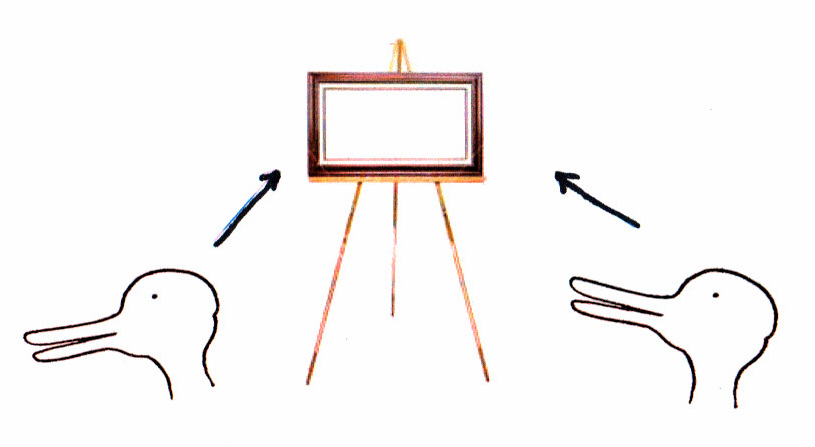
Throughout years of journaling, as I’ve grown to understand how deeply I desire “intimacy” (which I suppose I would describe as “shared personhood” or “met experience”? Co-events?) I have repeatedly diagramed what seems to me an only possible means between humans:
Using Wittgenstein’s duck-rabbits to represent whatever we happen to perceive ourselves as, and “Art” on an easel representing anything as a mediated format outside of our “selves” (themselves, I surmise, also likely a constructed medium for experiencing world), to or in which multiple human persons might invest all they experience themselves to be, without necessary personal organism-survival fears, and, possibly, perhaps, occasionally MEET via that medium in toto (or as nearly as possible): experience intimacy, mutuality. No longer isolated as a being, alone, but finding a common, a sharing-realm, co-perceiving, co-experiencing.
If it be so, that, in fact, as human organisms, all of our entity-type experience is, truly, mediated – through various organizations of mobile and voluble matter and energy – never identifiable as a stasis or final form, if we might begin to see it (us) as such – might we become able to experience direct, person-to-person (experientially) intimacy? Co-being? This is where I have turned effort (driven by desire) with my wife, my children. What if we became safe mediums for one another to experience through?
“Language discovers what one might know, which in turn is always less than what language might say.
We encounter some limitations of this relationship early, as children. Anything with limits can be imagined (correctly or incorrectly) as an object, by analogy with other objects – balls and rivers. Children objectify language when they render it their plaything, in jokes, puns, and riddles, or in glossolaliac chants and rhymes.
They discover the words are not equal to the world, that a blur of displacement, a type of parallax, exists in the relation between things (events, ideas, objects) and the words for them – a displacement producing a gap.
Because we have language we find ourselves in a special and peculiar relationship to the objects, events, and situations which constitute what we imagine of the world.
Language generates its own characteristics in the human psychological and spiritual conditions.
Indeed, it nearly is our psychological condition.
This psychology is generated by the struggle between language and that which it claims to depict or express, by our overwhelming experience of the vastness and uncertainty of the world, and by what often seems to be the inadequacy of the imagination that longs to know it –
Language is one of the principal forms our curiosity takes.
It makes us restless.
As Francis Ponge puts it, ‘Man is a curious body whose center of gravity is not in himself.’
Instead that center of gravity seems to be located in language, by virtue of which we negotiate our mentalities and the world; off-balance, heavy at the mouth, we are pulled forward.
Language itself is never in a state of rest.
Its syntax can be as complex as thought. And the experience of using it, which includes the experience of understanding it, either as speech or as writing, is inevitably active – both intellectually and emotionally.
The ‘rage to know’ is one expression of the restlessness engendered by language. ‘As long as man keeps hearing words / He’s sure that there’s a meaning somewhere,’ as Mephistopheles points out in Goethe’s Faust…”
I struggled this week, this picture, and the myriad of life going on…couldn’t seem to find a spark. But in the spirit of Friday Fictioneers, felt I oughta make a go of it. So here it is – and in accord, many thanks to Rochelle Wisoff-Fields for taking up the inspirational, curatorial mantle of keeping our practice alive!
Stomps back, livid grimaced flesh flushed, shouts, more of a gritty scrape of screed: “you never…anyway…I don’t know why I ever…” huffs, seethes, jolting in a kind of place.
Unseen, steely, weight of concrete in its rage, him, silent, back there, unmoving. Something trembles.
She keeps it going, it’s like a flood, like a multi-chambered dart gun, can’t seem to stop, doesn’t want to end. Not silence. Not distance. Disregarding.
Something recedes, perhaps him. Substances exiting every direction. All wearing out.
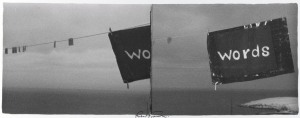




 All my Words are Silent