
Tag: semiotics
What Follows
As I mentioned in yesterday’s post, the notebook I grabbed in case of moments of free creative scribbling contained prior forgotten reflections that carried me into further reflections…recorded below:
 The wonderful thing…
The wonderful thing about writing…
The wonderful thing about writing is that you can always begin. You always face opportunity. BEGIN.
In addition to that…”in other words”…
In other words, you can always start over.
Begin. Start over. Begin. Start over.
It’s a wonderful thing.
Language. like moving your body, there’s a kind of body to inhabit. A world. A way of being. You wake. You move. You remember…by dis-membering.
In other words.
You sleep. As you cease to sleep, you remember. You remember by feeling your limbs, your breath, by seeing, by feeling things (Dismembering). As you dismember (stuffy nose, neck-ache, coffee smell, pain behind the eyes, the need to potty, and so on…) – you also re-member (stitch together, sew, seam, canvas, invent) and become (again). Writing is like this.
Language. A body dismembered – waiting for membering (memory, membership) – invention, use. Beginning. Again.
In other words, like organs instructured in-skinned, awaiting awareness, the fabric of socio-cultural symbology (languaging) lies: in wait: to be animated, enlivened, embodied: woke up.
The substance, the atoms and organs – await. Circulation, enervation, emergence – to live – animate –
to be possible
And become.
In other words, to create, to move, to motivate.
There is no such thing as starting from scratch.
But a scratch is a beginning.
In our bodies, within matter,
in the world – moving gauze, filling quilts,
sensing flesh, donning clothes, filling whispers…
I’m alive. I begin.
The wonderful thing about writing…
…to awake into a way of being.
 p.s… i’m thinking that each begin includes a hope to mean
Troubling Identity in Writing – What Scribbling Does
As an addendum and prequel to writing anything/everything I wanted to share a couple of terrific essays on the strange elimination (or difficulty of perceiving) a “self” or “personality” or “identity” or any of those socially constructed concepts relating to human individuals. Prompted by the scribbling exercise of last week (see previous post) – the conundrum has long fascinated me and seems to be so well presented in texts like Jorge Luis Borges‘ The Nothingness of Personality (also perhaps available here) and this tremendous first essay – relating to Maurice Blanchot‘s writings – in Anne McConnell’s Approaching Disappearance – (click image to read)
all help me to understand better why it often seems hard for writerlies to formulate or maintain “strong senses of self” – as the practice of entering language in such a way seems to dissolve the separations that might preserve that artificial construction.
Related…
“Yet if language gives no words for what happens…it nevertheless gives itself”
-Christopher Fynsk-
“Not to discover – not to be able to discover – the solution, is the general tragedy of all writing”
“To try to express oneself and to want to express the whole of life are one and the same thing”
-Jorge Luis Borges-
“Reality works in overt mystery”
-Macedonio Fernandez-
Self-writing / Autography

I want to know how everything we do (as the human kind of organisms) functions for us, including wanting to know how wanting to know how everything we do (as the human kind of organisms) functions for us, including wanting to know how wanting to know how wanting to know how everything we do (as the human kind of organisms) functions for us, including…
8th segment
’cause I don’t have to stop. ’cause it doesn’t.
8
And now “I” am different, again. Change. Is how I would “put it.” What with the whip of atoms calling “I” ever-coupling to the Itself that the “I” calls “world,” really, when one gets down to it, in it (always), the distance is elusive (is “illusion”). And so “I” changes at the rate of the wind “I” is sharing; of the sea “I” is seeing; of the matter (volatile shivering).
It is Here. We are. Since we cannot claim a territory, we strain for modes to re-fer (de-fer?). Differ. We’re attuned to it. The rhythm of our tune is differance. There is no reason that suffices. We are in it. It.
A live.
In vocalizing, movement sounds (for humans). Or in gesture – perceptible matter (always suited to the version capable). It is always a matter of moving around, shuffling space with time. I cry, there is movement. The air and the chemical sea. I look – things displace, replace, are placed by my gaze – an interactive mechanism – part of a NEVER discontinuous train.
We touch, because sound, because cell, because particles and waves (as both) – because movement. Because “separate” is an aberrant traction (abs-traction). A practical folly.
I love you – re-cognition that borders are empty, margins erased. That “you” and “I” intersperse (wind, sea, light) molecules. Movement. Alive. I love a live.
Because live doesn’t noun an “f.” Life. Life is a period, an arbitrary stop. Imposed. But a “v” simply vibrates. We are a-live. We are the living. Even the “the” can’t contain it. It rushes the punctual, overcomes it. We are us and I love you (us).
Perhaps we need little realms to find out. To discover. Acting networks to re-member (to sew, to put back together) what’s dismembered convention. “The way it is” – what we’re impressed to “get by” (“survive”).
This, It, is NOT the survival of fittest, a live is the fittest and cannot be dismembered, “I’s” just being particled Lifes – and those not really – except in that most human of ways (itself a “not really” invented by us). It is more complex than that (call it “what’s live” or Enaction), and can’t be reduced to its “parts.”
Nor combined in a “whole” (another punctuated word). It’s not final, complete, but just changing (rates of wind, of sea of weather; of stones and planets, emotions and plants) – if we could dissect it (and we try) the variation of paces “seem” astounding…but It’s chock full of seams like two sides of paper – not different but same save the semes that are perceptible.
These semes are intended for motion: I love you. My so-called chapters and segments to “say” – we are us, there’s no other, and we’ve little idea of that.
“I” lean back, am exhausted, and rest (always moving). “I” don’t see the difference in sleep.
(The First Good Novel)
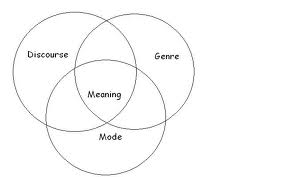
In any breaks in necessity – between semesters, breaks at work, children otherwise occupied, no “required” readings or commissioned work, etc… – with each passing season, I gradually discover what matters most to me (literarily speaking, which, for me, involves much of my lived life) – perhaps I might refer to it as my meaning-making-factory-resources (Blanchot says of Borges that he is “an essentially literary man – which means that he is always ready to understand according to the manner of comprehension that literature authorizes).” At this point in my living, over four decades along, and a large percentage of the pie devoted to reading, those voices I turn to, their messages and efforts, have become quite consistent. Each year there are new ones, new threads and concepts, theories and expressions that very significantly impact my living – but they tend to find their place as commentaries, extensions, additives and queries to what (I suppose) now forms my central “canon” of sorts.
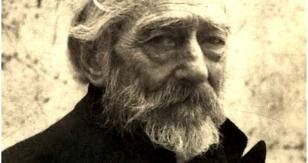
This struck me, following my return to Bakhtin and Blanchot, and as we prepare for vacation how I immediately reached for Soulstorms by Clarice Lispector and The Museum of Eterna’s Novel (The First Good Novel) by Macedonio Fernandez. In searching for this image of Fernandez:
 a host of Google’s “related images” arose – including Borges, Lispector, David Foster Wallace – and I got that vision of how pantheons develop and connect and gradually form a kind of woven semiotic pattern – a “worldview” or “Innenwelt” I guess – it begins to make sense what’s connected to what and whom to whom throughout time and space of world-being. Beckett, Blanchot, Dostoevsky, Pessoa, Rilke, Cixous, Kafka, Bakhtin, Jabes, these visions and verbals I return to again and again and again and again – inexhaustibly – and although my copies are nearly glutted with markings and underlinings – and they feel intimate and familiar (on the one hand) – that I also feel I am always learning them anew, freshly, with EVERY read.
These things astound me.
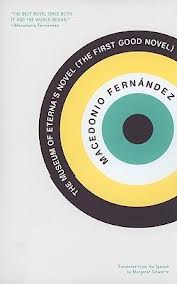
Of this particular book (which I often say is the very best novel I have ever read, repeatedly), Adam Thirlwell writes “It is a novel which does not want to begin. Or, perhaps, it is really a novel which does not want to end…The aim of Macedonio Fernandez’s novels is to convert all reality into fiction (or the other way around).” “The real subjects of this lightly playful novel are the grave ones of death and love.”
“In his novel, Fernandez tests the possibility that all philosophical questions are only meaningful in relation to human relations: that all questions of infinity are really questions about love.”
and so on.
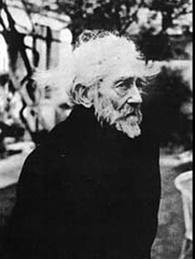
Macedonio is, for me, a hero the likes of Bakhtin, Blanchot, Beckett – those writings and writers I will never “get over,” never “get around.” Writings I can only ever “go through.”
Perhaps these writings are characterized by the question – “What is it to be real?” I recently discovered in one of those “shock of recognition” moments that although I’ve studied theology, philosophy, classical music, art and literature and now information sciences and systems theories – that none of the CONTENTS of these fields sustain my passions – it is the relationships between them – the ligaments and synchronous reverberations they emit – the MEANING-making effects of their pursuit and inquiry that is REALLY what drives me toward, into and through them. I’m not looking for truth or necessarily facts or any answers – but for PROCESSES and PRACTICES that enrich, enhance and extend my biological life in relation to the world I’m “thrown into.”
Borges wrote of Fernandez: “Macedonio is metaphysics, he is literature” and that “writing was no trouble for Macedonio Fernandez. He lived (more than any other person I have ever known) to think. Every day he abandoned himself to the vicissitudes and surprises of thoughts as a swimmer is borne along by the current of a great river.” The novel’s translator writes: “The method is madcap; the intent is desperately human.”
Perhaps that is what I’m after – to be “desperately human.”


and now we’re heading off to the wilds – to be desperately human with-world with-family – replete with above-mentioned authors and without wi-fi or internet services!
P.S. (also from current reading – The Waste Books by Georg Christoph Lichtenberg):
“Be attentive, feel nothing in vain, measure and compare: this is the whole law of philosophy.”
and
“To grow wiser means to learn to know better and better the faults to which this instrument with which we feel and judge can be subject.”
All the best!
As relates to…
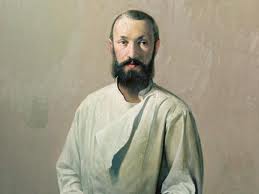
I have wanted to share (for years) the significance and import of Mikhail Bakhtin‘s manner of thinking, writing in the formation of my own worldview and understanding of the confounding irritations of working in language and the interactional miracles of the medium. C.S. Peirce and Bakhtin strike me as two composers with whom I do not encounter a brilliantly organized thought or true-ringing arrangement of letters that they are not echoed in. I discover re-presentations and simulacra of their models, but rarely extensions, corrections, or improvements.
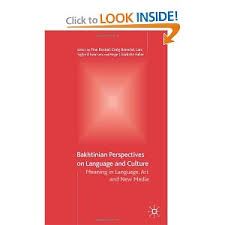
With that in mind, I have been poring through a multi-authored volume entitled Bakhtinian perspectives on language and culture: meaning in language, art, and new media edited by Bostad, Brandist, Evensen and Faber. Note-taking, underlining, cross-referencing, formulating, and it has occurred to me that these texts are SO mesh-marked with mnemonic traces for me, that I should simply provide interested readers access to all I can link. Setting out to locate a Pdf of the introduction and chapter 2: “Rhetoric, the Dialogical Principle and the Fantastic in Bakhtin’s Thought” I came across the entire collection available online – and so I offer it here. If you begin, and the perspective captivates you – read on – to the chapters that carry concepts you are passionate about. If not, never ye mind! I am happy that texts like this can be available – not easily “stumbled upon” in contemporary bookstores and libraries (unfortunately).
To life:
par example: “Language is to be experienced as an interaction of signs neither neutral nor innocent: the word bears the burden of the contexts through which it has passed. And every speaker or listener bears the consequences of signs put into circulation, of signs he perceives and answers, of signs he picks up and makes use of for his own ends. One cannot stifle the traces stored in them. One has to face the cultural experience a whole language underwent in its history. Speaking this language and listening to it one unwittingly responds to this experience – the ‘word that lies on the border between one’s own and the other,’ the ‘word that is actually half someone else’s.’ The one meaning cannot maintain itself in the face of the many meanings. B’s concept irritatingly links the atomizing intrusion of the many meanings into the one (an act that atomises this meaning) with the idea that meaning ‘explodes’ in the contact of two different meanings. In other words: splitting up and differentiation, accumulation and trace must be thought of as occuring in the word simultaneously…Because meaning is always a recourse to another meaning and a project for creating new meaning, it doesn not achieve a decisive, definite presence.”
And so forth….!!!!
Experience, anyway. Coupling. (section 5)
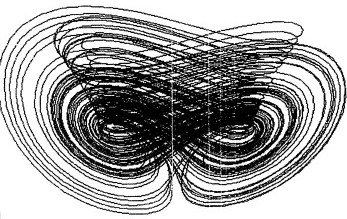
5
Couplings
We conferred, that is, we engage, experiencing contact.
We will set out, clinging, and submerge in, together. To gather, to keep hold. To track and trace in the tracing of trackings. To recognize with(-ness). To witness with-ness. As experiment – critical. Experience, anyway. “Ours.”
Between the quark and the jaguar, we leap in, already moving. Enduring much criticism: stop-motion behavior/practice. A snipping tool. We move on.
Must have been moving before we begin, different organization, as also (ever “also,” both/and) until “we” is spoken, still speaking. In other words.
If complexity allows purpose, however shallowly combined – moment-airy radiant gradient – if selection involved “choice” (in other words), so we. So-viet. Co-Be=”It.”
We continue beginning potentials. Experience. Anyway, any way at all, even those unimagined per se – potentially – given contexts (complexes before and beyond) to speak spatially (corrupted language: co-ruptured, erupting-together). “Always more than one,” our simple mantra. Breathe. Walk.
Early ones (to speak temporally, parler temporellement, another language) tout “the world knows not boundary.” Perceptual divisor, arbitrary (i.e. species-specific) and then some. Or boundary as invented in traversal, trespass, complex thoroughfare, reciprocity. Feed-forward in a sort of randomness, chaos emerging orders.
We blend thus to cognize. We merge to pattern difference. Another way of saying “no boundary” (i.e. engagement, interactivity, living, being). To couple.
Beginning again in infinite multiplicity (our limited numeracy) – were we able to count even to we.
 click here to read Experience, anyway. in its current entirety
Inflexions: Issues
Inflexions: Issues.

Very exciting new discovery for me!
for instance: A Perspective of the Universe – Massumi & Manning
Experience, anyway. cont’d
2
Like before, but never exactly. That’s why similar and memory, and that’s why it’s new. Begins. Never not change. If only pennies. It works. It goes on.
So that what seems a chasing, a tracing, a spy-archaeology-sci/fi-breathless-fragile-safebreak (i.e. “creative writing”) is also dirgy dredging, slurry stirring, re-invention redone renewing some old search. If he wrote “to get it right” it would be wrong.
Standard unlocatable with too many variations depending on, all boundaries shift with each decision – though it feels less freedom of choice than compulsion to find – where there’s nothing to find that’s not making (constructed – what’s there getting too little credit in general) – what’s done with what’s attended.
Not meant to be confusing – but from quark or qualia, wave-particle to universes full of looming holes, it plainly is. At least what we’re able to tell of it – representamen – hingey symbols we careen from like units of mobiles in wind or gyring pirate swings.
There is that. Is, is, is, is : handy set of markings and concepts “to be” the seeking and the sought – condition and conclusion – of begin.
Listening now – the statue the only Other besides the dogs – well, and whomever all conjoined to craft these scribblings to serve as silent sounds filled with elastic contents over meticulously-constructed time. The billions. And infinite (as far as he’s concerned or capable of “counting”) quanta of wave/particle/atom/molecule/element – dithering thoroughfares making up ginormous pervasive systems within systems in which he depends and participates toward is.
– To music, quiet head of Buddha lurked behind, no longer staring with the eyes as much as ears – sense shift and collusion – never one without another – it goes on.
 All my Words are Silent