Transductive Conversations…cont’d (via Lance Olsen)

baby at laptop


“One of the wonderful things about word processors is they transform all composition into continuous process.  You can rearrange, rewrite, tinker, copy, cut, paste, open separate files for separate chapters or story sections or poem fragments, a window for notes, another for your outline, and still another for your list of characters and their attributes, and have them all on your screen simultaneously so you can flip among them as necessary while your web browser provides you with a dictionary, a thesaurus, a Wikipedia page, a website to aid you checking this fact or that…

(The less than wonderful thing about word processors is they make every draft look like a final draft, sloppy writing look as polished as just-published.  Careful about being duped by the sheen, and don’t disregard the notion of trying to compose on a lined tablet unless you’ve already tried it and found it lacking; it is a method that both slows perception and increases conscientiousness).”

-Lance Olsen-

olsen


for Friday Fictioneers – 21 June 2013

copyright -Managua Gunn

As long as nobody moves.  Scenario accomplished.  Sky filled with blues.  Reflected in waters, reassembled by lines – manufactured / emergent.  The breath would come.  Optionally.  A reality could be structured with less than this.  Hold still.  In the beginning – world.  Populous, variegated, intricate with potential.  A setting of pebbles and mimes.  Activities at the ready.  Engine set to whirl.  As long as nobody moves.  Nobody says.  Nobody breathes.  Still-pointed swirl.  Anticipation.  The drawing of the sneeze.  A trickling toward itch.  Hummingbird-eyelid.  A sudden rush of wind.  Transgress.

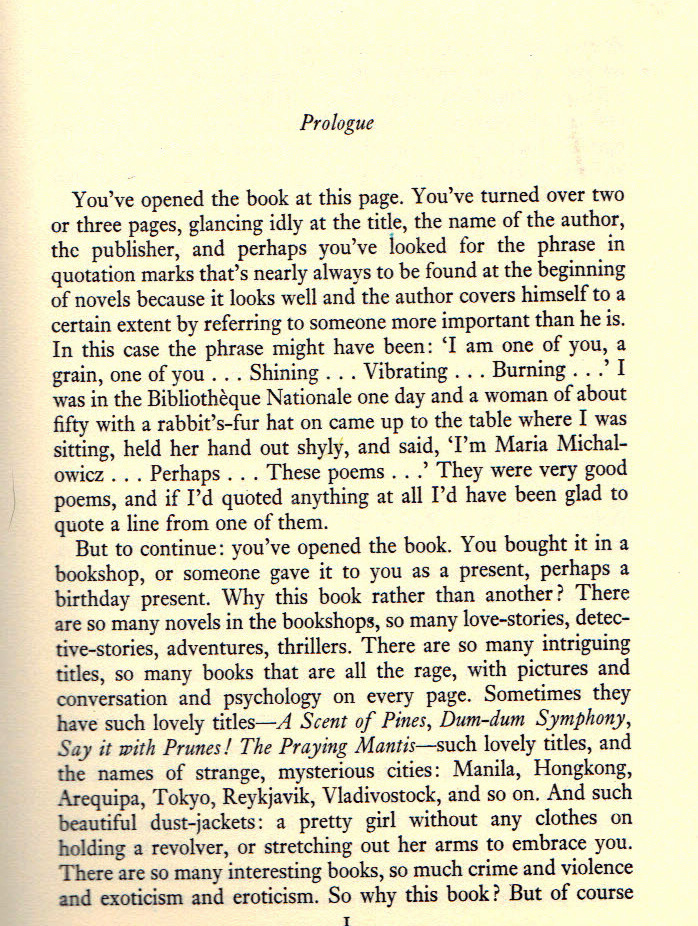
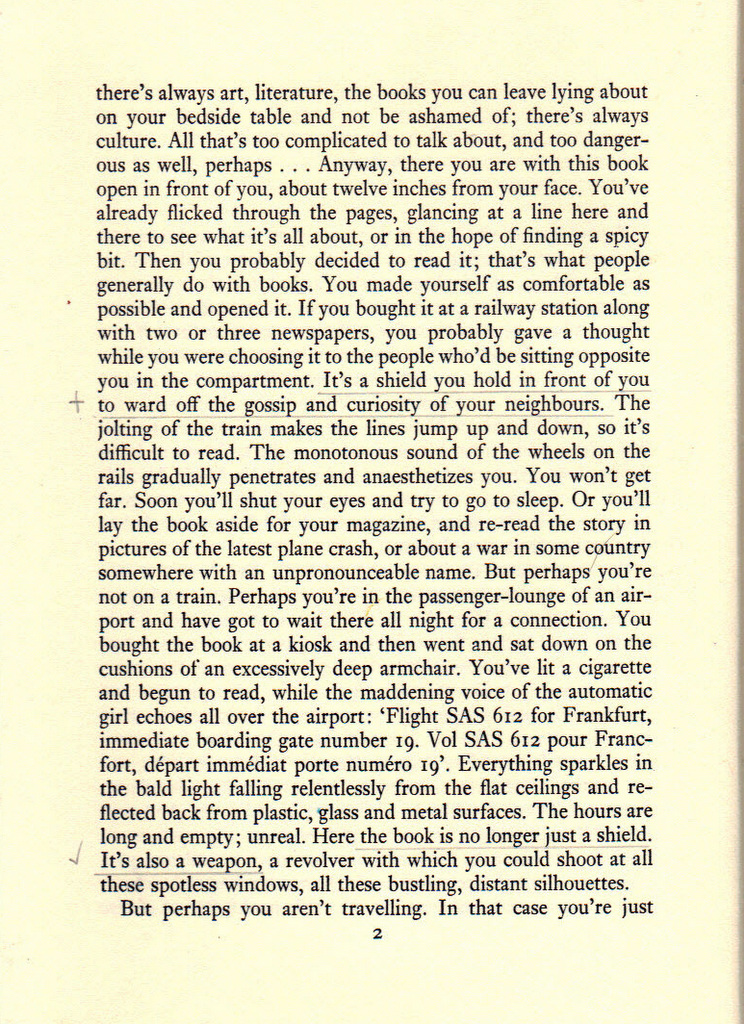
On entering the world(s) of the text: Prologue

via J.M.G. Le Clezio

Terra Amata

Terra Amata2

Terra Amata3

Terra Amata4

Lines, Meshwork, Aether…

I’ve recently acquired (via Inter-Library Loan!  Woo-hoo!!!) a collection of writings exhibited below:

Vital Beauty: Reclaiming Aesthetics in the Tangle of Technology and Nature

which opens with an essay by anthropologist Tim Ingold who starts it off with a remarkable movement through slugs and storms, lines-earth-eather, Kandinsky, Klee, Merleau-Ponty, and others – investigating them through a concept of “meshwork.”

“By this I mean an entanglement of interwoven lines.  These lines may loop or twist around one another or weave in and out.  Crucially, however, they do not connect.  This is what distinguishes the meshwork from the network.  The lines of the network are connectors, each given as the relation between two points, independently and in advance of any movement from one toward the other…the lines of a meshwork, by contrast, are of movement or growth.  They are temporal ‘lines of becoming’…Life is a proliferation of loose ends.  It can only be carried on in a world that is not fully joined up.  Thus the very continuity of life – its sustainability, in current jargon – depends on the fact that nothing ever quite fits..”

-Tim Ingold, “Lines and the Eather”-

Journeying on from there through Deleuze and Guattari, mood and weather, meteorology and aesthetics he arrives at a conception of flesh as both meshwork (exhalation) and atmosphere (inhalation) – a whole-being experience of relation enabling and realizing animate life….

I’ve now been browsing numerous writings by Ingold, fascinated by the semiotic/anthropologico/ontological /scientific meshwork his production encompasses… Thankfully, he makes much of his work available full and free to us… if you’re interested – I risk the promise it will be worth your while…

Lines: A brief history by Tim Ingold

Being Alive by Tim Ingold

and a fascinating working paper as introduction:  Realities: Bringing Things to Life


Percival Everett on Meaning

“Transductive Reading”

Warning:  an unfortunate side-effect of immersion in summer, family and graduate studies is the near-impossibility of crafting fragments of writing into art.  For the time being, then, if you choose to read this blog, it will consist primarily of recommendations, snippets, quotations and reflections with hopefully a weekly creative venture of flash fiction or a poem or two.  The following will fall under the “Reflections” category.

I mentioned “transductive” a few posts ago.  As defined by Gilbert Simondon, a transductive relationship is “a relationship whose elements are constituted such that one cannot exist without the other – where the elements are co-constituants: e.g. humanity and technics are indissociable” (from Bernard StieglerTechnics & Time, vol 2: Disorientation).

I read books by piles.  From time to time I post an updated “currently reading” list, usually comprised of 50 or more books that I keep lined about my desk as a privacy barrier and womb-like conversational enclosure.  I dip in and out of these, ruled by something like mood or intuition – at times I sense exactly what voice or rhythm, style or subject I desire, crave, or need for some sort of equilibrium I lack, and slowly regain by engagement with these texts.  In other words, for my own sense of sanity, well-being, provocation or anticipated growth, I need a collective of minds and voices, styles and subjects to wake me, challenge me, inform me, soothe me, spur me on.  Here’s a smattering from each of the stacks surrounding me…

This slideshow requires JavaScript.

What I recognized today, is that the way I read is transductive – each voice, style, subject, mind I engage is co-constitutive of the others I take in.  

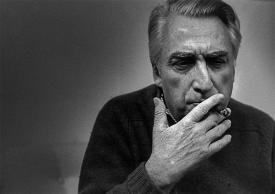
For example, today I’ve been primarily soaking in Mark Taylor’s Field Notes from Elsewhere, and Roland BarthesThe Preparation of the Novel lectures.  Barthes describes the urge to change, to purpose singly, “to invest / disinvest / reinvest” as an experience of the “middle-of-the-journey” – an impossible location, but “nothing other than the moment when one realizes that death is real” and time changes, everything is re-evaluated, re-purposed, the familiar is questioned and made strange.  I think (transductively) what Taylor refers to as “Elsewhere“: “not so much a place as a condition that renders whatever had seemed familiar utterly strange…the axis of the world shifts, even if ever so slightly, and what passes for normal changes.

These books are filled with insight, interest and intrigue (as are the whole swoop of titles in the slideshow), but today, today, I am revelling in the company and conversation these writings (surrounding me) construct and carry one, the opportunity I have to be in the midst of it, my mind like a circuit-operator, pushing buttons, pulling plugs, reconnecting, crossing wires, silencing…reading this way is kind of like the work of conducting a symphony – except the melding sounds occur only within the ampitheatrical shell of my own neuronally-linked brain…transductively.

These works co-constitute me, and come to co-constitute my transductive relationships with my loved ones, environment, world.  Taylor writes provocatively of all the betwixt and betweens of reality – “I am never sure whether light makes the mountains appear or the mountains make light visible…Darkness in the  midst of light and light in the midst of darkness…There is a texture to light that allows – no, requires – the tissue of vision to be constantly woven anew…

Paradoxes and contradictions form the very stuff of our lives…the challenge of teaching, writing, and, indeed, living is to join the abstract and the concrete in thinking about questions that truly matter” (Taylor).  

At this stage in my own biolography…I feel this acutely and persuasively.  The “before / after” of which Barthes writes so fluidly – that there is not enough time left to go on creating projects for the future, what lies behind has not achieved the “wanting-to-write” sufficiently…Elsewhere has been visited (or has visited)…and change, choice and directions must be purposed…

To Want-to-Write‘ (Vouloir-Ecrire) = attitude, drive, desire, I don’t know what: insufficiently studied, defined, situated.  This is clearly indicated by the fact that there’s no word for this ‘wanting to’ – or rather, one exists, a delightful exception, but in decadent, late Latin: scripturire, used just once (in the fifth century) by Sidoine Apollinaire, the bishop of Clermont-Ferrand who defended Clermont against the Visigoths (major poetic work).  What I mean to say is: since a word exists in one language, albeit only once, it is wanting in all the others…

     Why?  Probably because underrepresented, or perhaps, in a more complex manner, because here the relationship between the drive and the activity is autonymical: wanting-to-write is only a matter of the discourse of someone who has written – or is only received as discourse from someone who has managed to write.  To say that you want to write – there, in fact, you have the very material of writing; thus only literary works attest to Wanting-to-Write – not scientific discourses…an order of knowledge where the product is indistinguishable from the production, the practice from the drive (and, in that case, belongs to an erotics) – Or, put differently again: writing is not fully writing unless there’s a renunciation of metalanguage; Wanting-to-Write can only be articulated in the language of Writing: this is the autonymy I referred to…”

-Roland Barthes-

I’m there.  Elsewhere.  Wanting-to-Write…
 

New Feasty Arrivals – kudos Inter-Library Loan

How Literature Saved My Life by David Shields
The Preparation of the Novel by Roland Barthes


Stammering Great Literature

“Great literature is written in a sort of foreign language.  To each sentence we attach a meaning, or at any rate a mental image, which is often a mistranslation.  But in great literature all our mistranslations result in beauty”

Marcel Proust

“Having a bag into which I put everything I encounter, provided that I am also put in a bag.  Finding, encountering, stealing instead of regulating, recognizing and judging…It is an assemblage, an assemblage of enunciation.  A style is managing to stammer in one’s own language.  It is difficult, because there has to be a need for such stammering.  Not being a stammerer in one’s speech, but being a stammerer of language itself…writing does not have its end in itself precisely because life is not something personal.  The only aim of writing is life, through the combinations which it draws…and there is no method for finding other than a long preparation…”

-Gilles Deleuze-


Waiting for words to tell…

Immersed in summer and studies, I find myself struggling with capacities of some purer form of origin beyond connections.  The creativity that satiates me in relationship and studies is one of associations, extensions, combinatory experiments of life-experiences and informations and knowledges.  Fiction and poetry, in a unique manner, seem to process the connectivities and associations invented somehow more within myself.  Not so much in activities of external bonds and ties that loop within/without between concepts and voices, persons and family, and my own; but what bonds those activities and informations spawn within me.  I am finding that these recognitions and constructions take a different sort of time and attention than the frenetic and immediate processings of conceptual knowledges and intimate relations.  Those, of necessity, must be continuous, on the fly, in situ.  Creative writing, in distinction, requires for me the ability for bracketing a space and time in which I am able to attend (somehow) to the recursive loops and dangling ganglia of my own organism of thoughts and emotions.   A sort of internal processing vaguely distinguishable from reciprocal or social processing.  It may not even be real, but only a sensation of process, a variant attention, a sidelong perspective.  In any case, it emits something unique in my writing and reflection, feelings and sensations, and something that I cannot simply produce; something that must be prepared and allowed for, visited, beckoned, welcomed.

I recognized this as I struggle to create for a project, and also possess a yearning to be creating new fictions.  The process art both provides and requires is unique and intense, difficult and serious.  It calls to mind the “effortless efforts” of things like meditation and awareness, mindfulness and tolerance.  The writings of Laura (Riding) Jackson piqued this recognition for me and I will share a couple of early paragraphs from her book The Telling.

“[1] There is something to be told about us for the telling of which we all wait.  In our unwilling ignorance we hurry to listen to stories of old human life, new human life, fancied human life, avid of something to while away the time of unanswered curiosity.  We know we are explainable, and not explained.  Many of the lesser things concerning us have been told, but the greater things have not been told; and nothing can fill their place.  Whatever we learn of what is not ourselves, but ours to know, being of our universal world, will likewise leave the emptiness an emptiness.  Until the missing story of ourselves is told, nothing besides told can suffice us: we shall go on quietly craving it.

[4] Everywhere can be seen a waiting for words that phrase the primary sense of human-being, and with a human finality, so that the words themselves are witness to what they tell.  The waiting can be seen not only in the eager inclined posture of believers.  It can be seen also on the faces of disbelievers, the idolizers of the evident: they are not happy in their impatient assurance of there being no cause but uncaused circumstance, they wear the pinched look of people whose convictions make them a meagre fare.  In the eyes of all (in the opaque depths in them of unacknowledged presentness to one another) are mirrored (but scarcely discerned) concourses where our souls ever secretly assemble, in expectation of events of common understanding that continually fail to occur.  We wait, all, for a story of us that shall reach to where we are.  We listen for our own speaking; and we hear much that seems our speaking, yet makes us strange to ourselves.

[5] …A religion addresses the longing in us to have that said from which we can go on to speak of next and next things rightly, in their immediate time – the telling of what came first and before done forever…How our story has been divided up among the truth-telling professions!  Religion, philosophy, history, poetry, compete with one another for our ears; and science competes with all together.  And for each we have a different set of ears.  But, though we hear much, what we are told is as nothing: none of it gives us ourselves, rather each story-kind steals us to make its reality of us.

from The Telling by Laura (Riding) Jackson, 1967


Accompanying me home

“For my father, the road had to wind uphill both ways and be as difficult as possible.  Sadly, this was the sensibility he instilled in me when I set myself to the task of writing fiction.  It wasn’t until I brought him a story that was purposely confusing and obfuscating that he seemed at all impressed and pleased.  He said, smiling, “You made me work, son.”  He once said to me in a museum, when I complained about an illegible signature on a painting, “You don’t sign it because you want people to know you painted it, but because you love it.”  He was all wrong of course, but the sentiment was so beautiful that I wish to believe it now.  What he might have been trying to say, I suppose, thought he never would have even thought about it in these terms, was that art finds its form and that it is never a mere manifestation of life.”

-Percival Everett-

compliments of: