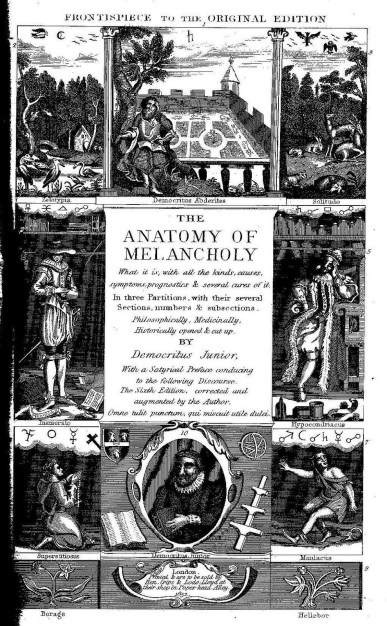
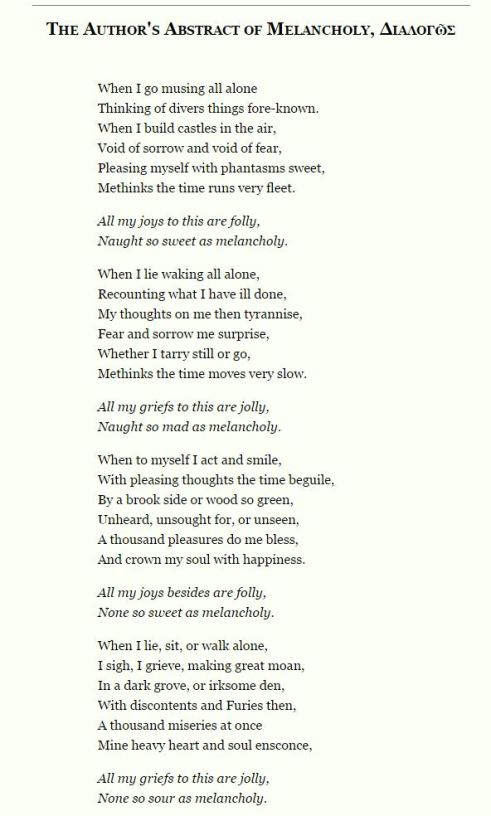
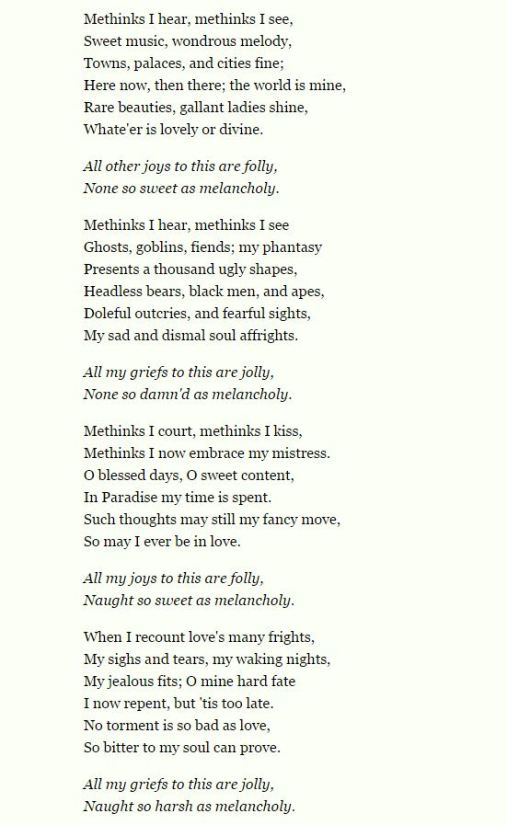
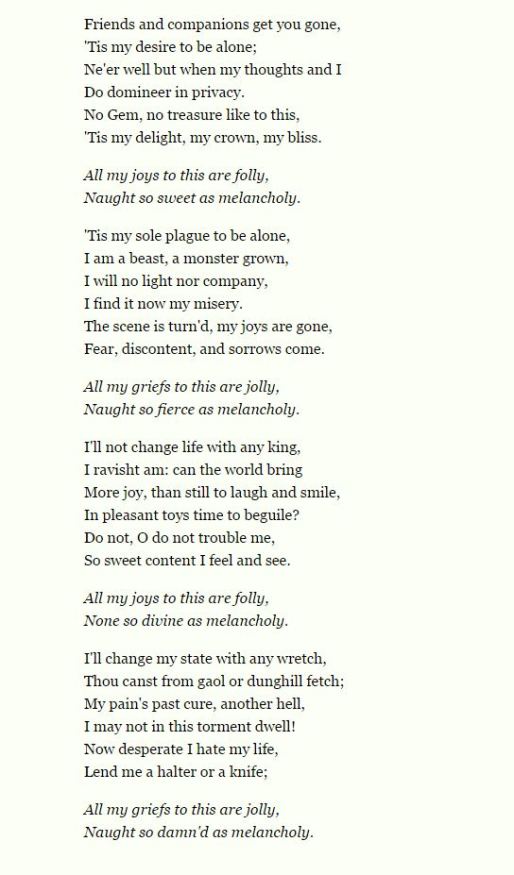
-Robert Burton, The Anatomy of Melancholy –
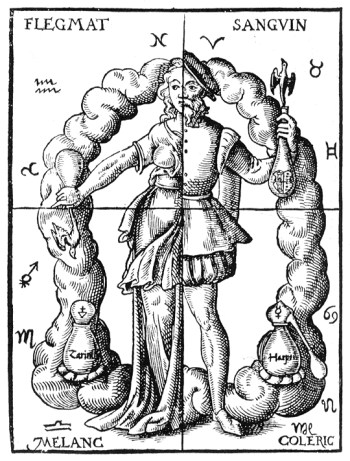

-Robert Burton, The Anatomy of Melancholy –
Philippe Lacoue-Labarthe – Ending & Unending Agony: On Maurice Blanchot



“Man does not live by bread alone, but also by the comedies with which he willingly deceives himself.
In Man it is the animal, it is the natural being, which eats. But Man takes part in rites and performances.
Georges Bataille – Hegel, Death & Sacrifice
The Complicity of Communication: The Death of Knowledge
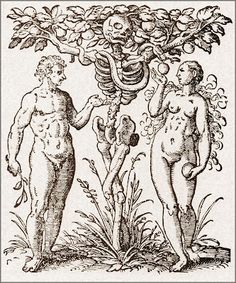
Perhaps we talk what we “know” to death. Is that in the definition “to know”? To shrink, reduce, fit-to-one’s-size, assimilate?
Is communication inherent complicity? The effort at taking a complex and messy, wholistic, excessive, leaky, mysterious and comprehensive lived-experience and rat-tat-tatting away at it with letters and sounds, symbols and utterances toward some acceptance, some convergence of ‘meaning’ necessarily equaling its crucifixion, its disappearance, its waste? If we manage to twist and contort it to language have we wrung it of reality? Making a different one? A communicable one? A humanly manageable one?
I know (for one) that when I seek to inscribe, assay, proclaim or declare “what happens” – as soon as some assent or understanding seems achieved I sense the evisceration of the expression. Whether it’s descriptive, imaginative, poetic, academic or pragmatic…forcing it, wrenching it, seducing and eliciting it (sentencing it) into vocabulary, into dialogue, into verbiage…leaves me with a variant experience than the one I sought to transfer.
I mean this…we arrive at…this. I feel, perceive, desire this…it comes out hackneyed and damaged. Holy crap!…this occurred! – Can I just say? Will you let me tell? – and then…what proceeds is an entirely different occasion…a wounded, striated, cut and assembled collage that never equals the issue.
Convergence. Its own beautiful, extravagant phenomenon. But not quite expression. Not quite translation. Not quite… Always saying more than I intended and less than I meant. Always saying less than I intended and different from what I meant. Language. Open, flexible, ambiguous, gargantuan…and limited, boundaried, sensible, requiring…
I try, tried, keep trying. And never. Each utterance a signing off. Each proclamation death-sentencing its sensation. Each squeezing toward the dictionary, no matter how scrambled and undone, redone, invented, inverted, still wringing the beauty to beast.
I said I love you. It came out conditioned. Assented to. Agreed. & Compromised.
I said I want you. Interpreted “if…”
I said I am… emitting particulars and contradictions.
I said I wish… conditioning demands.
I wanted to say. To sing. To whisper.
Vocabling calm and certain and saturation.
Sounding like need and fear and some small evil.
Echoing an anxious desperation.
There is this……..which verses that……and do not equal.
So I am alone
As are you
and then this
between
and same
and different
mix –
some third business –
contorted angle
wound and rendered
wrapped about
and wriggled
writhing
&
struggling
to be
near
what it
is
I love you.
for lispector
“and it came, with its long passageways without end”
-Clarice Lispector, Soulstorm –
and then again, the words, the words they came, presently, fluently, astonishingly as miracles, your body, the languid haunches – temptations, always – your breasts – these letters, formed in the hands…you, you, you, all of you, and I want/ed, I want, I am wanting to grapple, devour and subsume, consume (no, never!) you, but utterly – to the end – to everything – a swallow and fire and drowning and drought – to eviscerate, desiccate, absorb – to thorough you. I want to thorough. I want to you, thoroughly. Yes, that is what. That is the who what am I? The always when and every how – I want you thoroughly, but not you as realized by or digested in or taken or given or experienced thoroughly (without remainder) but rather
What I am saying (without remainder) What I mean is, what I am saying, shouting, quite silently shrieving, shrieking, screeing, WHAT I CRAVE REVEALING ENTIRELY BY RAVAGING TO END…
I WANT TO YOU.
And I want you to want to me, as mad, as madly, as terribly and
I am ravenous now, each instant and you for starving for me (I’d like that – have me)
but yes and I am having taking giving receiving AND YOU.
I do not understand.
It maddens, controls,
frees.
And this is what I mean.
In hopes that I was born for this…
for Hallie
found in Liu Hsieh, Chamberlain for the Surrogate Secretary in the Easter Palace, in his book The Literary Mind and the Carving of Dragons, represented here by Eliot Weinberger…
“The twenty-eighth of the fifty chapters in his book is called “WIND BONE,” wind and bone, and is the most mysterious. To express emotions one must begin with WIND; to organize the words, one must have BONE. He whose bone structure is well-exercised will be well-versed in rhetoric; he who is deep of wind will articulate well his feelings. It would seem that WIND is sentiment and ideas, and BONE is language, but Liu also says that to be thin in ideas and fat in words, confused and disorganized, is a sign of the lack of BONE. And yet when ideas are incomplete, lifeless and without vitality, it is also a sign of the lack of WIND. What is WIND and what is BONE have never been conclusively determined by generations of Chinese critics, but what is certain, according to Liu Hsieh, is that the perfect combination or balance of WIND and BONE, the metaphor for the ideal poem, is a bird.”
–Eliot Weinberger, An Elemental Thing—
Glimpse of Lightness : Venice Biennale 2015
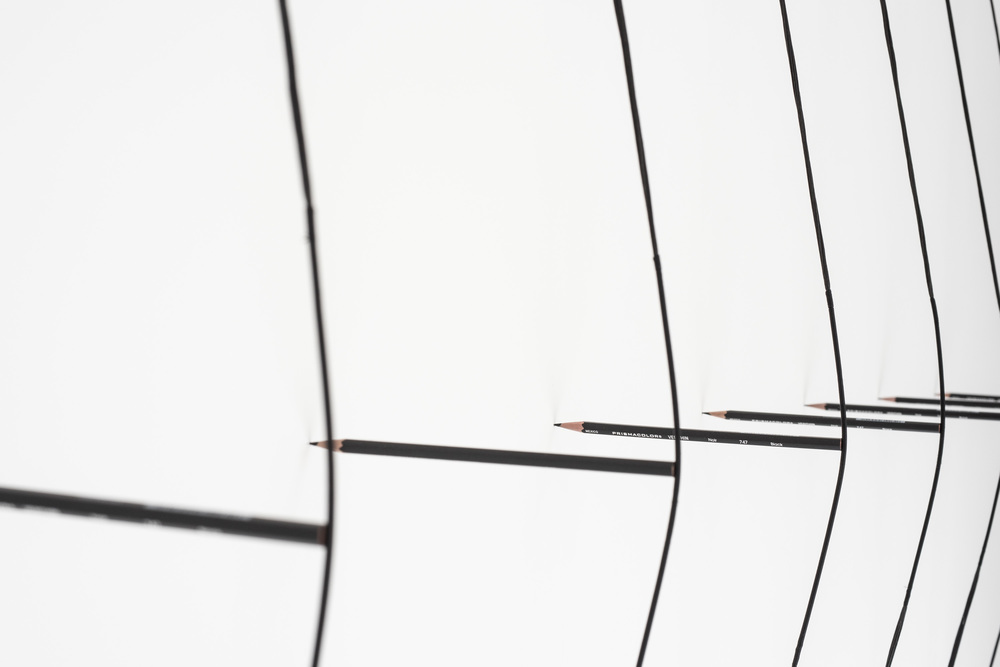
Marco Maggi – “Drawing Machine” – Uruguay Pavilion, Venice 2015
How does art “happen”? What is a work of art in an age of reproduction? Who, where, what, and how are we in relation to composition, construction, collage, creation, craft… encountering “art” as a strange “zone of indistinction”, an “undecidable”[1], perhaps an interference, or intervention – at the renowned Venice Biennale 2015? What lightness might we glimpse in such immersion, inundation, veritable floundering and bewilderment among “works of art” – the touted greats within the most prestigious cultural institution in the world.[2]
In a deep cleft of Agamben and Heidegger, physical and mental exhaustion, a set of European Graduate School students (which gratefully included myself) set out to engage “art” in the context of the famed Venice Biennale Exposition, assigned to look for “glimpses of lightness” – something “having little weight…alleviating…demonstrating ease or agility…mirth, levity…and a graceful slenderness”[3] OR – “lit brightly, illuminated, illuminating”.[4] The day began hefty and hot with prospects of 89 national participations, 44 collateral events in the Giardina della Biennale plus an additional “more than 136 artists from 53 countries” at the Arsenale.[5] We set out.
The 2015 Biennale was filled with many ambiguous / ambivalent / open works that, depending on the perspective of the observer, might be engaged with levity, mirth and playfulness or burdened by art-extraneous political, moral and conceptual communiqués and paraphernalia. I found myself wondering if art was happening in such a context – a deluge and glut of politics, morality and economy. I began looking at things curious if messages could be untangled, read past and through, passed by: emotional, commercial, personal, national, site-specific – querying – “what here is ‘being raised, set forth, set up’? (Heidegger). ARTing: can we come to art through artists and artworks and exhibitions?[6]
Considering art as Riss – rift – an outline, sketch, drawing and marking setting into relief a “moment” or “space,” a new relation hard to distinguish, perhaps undecidable, opportunities of encounter with encountering-itself, being – itself – being, in relation to. A passage. Something beyond good and evil (ethics); beyond division, calculation and measure of perception (subject/object, this/that, here/there) (ontology); beyond narcissism (me/you, us/them, him/her) (epistemology); beyond laws and institutions and individuality (ours/theirs, who/what, when/where) and so on… Toward activation – activity + occurrence, an awareness, a-tension at/of/with/in NOW? [ultimate zone of indistinction and undecidability]. Play? Lightness? Resisting the urge to pronounce, proclaim, propose; swerving past strife, through strife – holding open? – Art…as Being…an open question? Some undoing in its doing, some common toggling call to a present, re-present, encounter? Are we able to tear up a world in an activity of mending, assembling and combining it (rift)? To set up a world in an activity of revealing (veiling/unveiling) as a poet might do (oscillating signs) with a semiotic semantic, ex-hibit-ing, exposing, en-light-ening – making lines instead of following them, opening spaces rather than closing, becoming in difference to became? I wondered what might result if we scrambled the sites/sights on some randomizing algorithm of names/nations/pavilions or scrambled the labels and ‘statements’ according to same. To undo in order to Art.
So what rends? What can tear through the amalgams and overlays we bring to each encounter with one another, with the world? What might cause a rift to occur in my own perceptions, predispositions, cares, concerns, propensities? Where do the potentialities lie? What will bring me to the open? Below are a few works I encountered in the heat and dust and exhaustion of 2015’s 56th La Biennale di Venezia that re-oriented me, turned me into at least two sides of a chasm, illuminated a seeing-space, a being-space for me – provided me with glimpses of lightness.
“Blind Spot.”[7] The first work that woke me, intervened, destabilized and shifted my course was Blind Spot by Mykola Ridnyi (Ukraine) located in the Arsenale. Working from the ophthalmologic analysis of scotomas – areas of partial alterations or degenerated acuity in our normal fields of vision that are surrounded by normative and well-preserved views. We all have them, aspects we never see clearly – biologically, culturally, psychologically and personally. Scotoma is not a condition to be overcome, but to be aware of. As I engaged the Biennale, I recognized that artists, nations, participants and audiences all live their existences with “Blind Spots.” The effortful work to account for them only serves to expose further areas where “things disappear on us.”[8] Accompanied by C-prints painted with various exemplars of scotomic affect, Ridnyi’s installation ripped an awareness into me that opened my emotional reactivity to nation-state pavilions and exhibits, artists compromises to culture and fame, my own dear lack of self-critique and clear-sightedness, and the ever open question of how and what we engage in our being-alive, relating, and “reading”/”seeing” the world.
Not far beyond “Blind Spot” resided Ricardo Brey’s “Every life is a fire (2009-ongoing,.”[9] intricate, redolent boxes opening out in glass cases – the layers, complex details and labyrinthine qualities of our coagulating, webbing construction of idiosyncratic interpretations of the world. “The box is our head,” he notes, “the box is the cave… is the attic… is the memory and the world.” The boxes are an attempt to represent the intensifications of internal modes and their relationships in spatial terms; and what results is a “hermeneutics of the soul” that creates “a topography of the mind.” Articulated like a labyrinth or mandala, Brey considers the box-mind compound the “most metaphysical project” he has attempted, nothing less than “a workshop to produce the invisible” or “the countless” that is also “the way out and the jail.”[10] The attempt to articulate the inarticulable, visualize the unseen, expose blind spots through elaborate archiving and representation and obsessive care and attention also ripped into my own desperate strivings for self-awareness, knowledge and authenticity.
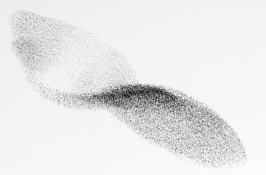
And finally, yet in retrospect to my Biennale’d day, an early return…Marco Maggi’s Global Myopia (Pencil + Paper) (Uruguay Pavilion) and, particularly, his piece at the entrance to the show: “Drawing Machine (nine possible starting points)” (image above). Options. Beginnings. Openings. In what direction will the “drawing” move? From what emphases and characteristics? What intricacies of our histories and culture, memories and desires, experiences and imaginations will direct the ensuing mark of us in relation to our world, ourselves, our perception, one another? Maggi reports, powerfully, that “ the only subject of Global Myopia is drawing.”[11] Lines begun – a movement, a glance, a word, a new distinction. Rifts and rendings, gaps and site-specificities, we inscribe – blindly, collectively, collaboratively, actively and in elaborate idiosyncratic ways both laden and illuminating – glimpses of lightness outlining our crossings, traversals and conduct through All the World’s Futures.[12]
References
Agamben, G. (1993). The coming community. Minneapolis : Minneapolis :
Agamben, G. (1998). Homo sacer. Sovereign power and bare life. Stanford, Calif. : Stanford, Calif. :
Agamben, G. (1999a). Potentialities : collected essays in philosophy. Stanford, Calif. : Stanford, Calif. :
Agamben, G. (1999b). The man without content. Stanford, Calif. : Stanford University Press, 1999.
Agamben, G. (2004). The open man and animal. Stanford, Calif. : Stanford, Calif. :
Blind spot – Mykola Ridnyi. (2015). Retrieved August 30, 2015, from http://www.mykolaridnyi.com/works/blind-spot
Every life is a fire. (2015). Retrieved August 30, 2015, from http://www.ricardobrey.com/every-life-is-a-fire.html
Every life is a fire. (n.d.). Retrieved August 30, 2015, from http://www.ricardobrey.com/every-life-is-a-fire.html
Heidegger, M., & Heidegger, M. (1977). Basic writings from Being and time (1927) to The task of thinking (1964) (1st ed). New York: Harper & Row.
Heimo Zobernig at the Austrian Pavilion, Venice Biennale / MOUSSE CONTEMPORARY ART MAGAZINE. (2015, May 13). Retrieved August 30, 2015, from http://moussemagazine.it/zobernig-austrian-venice-2015/
La Biennale di Venezia – Biennale Arte 2015: All The World’s Futures. (2015). Retrieved August 30, 2015, from http://www.labiennale.org/en/art/news/05-03.html
La Biennale di Venezia – History of the Venice Biennale. (2015). Retrieved August 30, 2015, from http://www.labiennale.org/en/biennale/history/
La Biennale di Venezia – Home. (2015). Retrieved August 30, 2015, from http://www.labiennale.org/en/Home.html
lightness, n.1. (2015). OED Online. Oxford University Press. Retrieved from http://www.oed.com.proxy.wichita.edu/view/Entry/108230
lightness, n.2. (2015). OED Online. Oxford University Press. Retrieved from http://www.oed.com.proxy.wichita.edu/view/Entry/108231
Welcome. (2015). Retrieved August 30, 2015, from http://www.marcomaggi.org/welcome/
[1] (Agamben, 1993, 1999a, 1999b)
[2] (“La Biennale di Venezia – History of the Venice Biennale,” 2015)
[3] (“lightness, n.1,” 2015)
[4] (“lightness, n.2,” 2015)
[5] (“La Biennale di Venezia – Biennale Arte 2015: All The World’s Futures,” 2015)
[6] (Heidegger & Heidegger, 1977)
[7] (“Blind spot – Mykola Ridnyi,” 2015)
[8] (“Blind spot – Mykola Ridnyi,” 2015)
[9] (“Welcome,” 2015)
[10] (“Every life is a fire,” 2015)
[11] (“Welcome,” 2015)
[12] (“La Biennale di Venezia – Biennale Arte 2015: All The World’s Futures,” 2015)
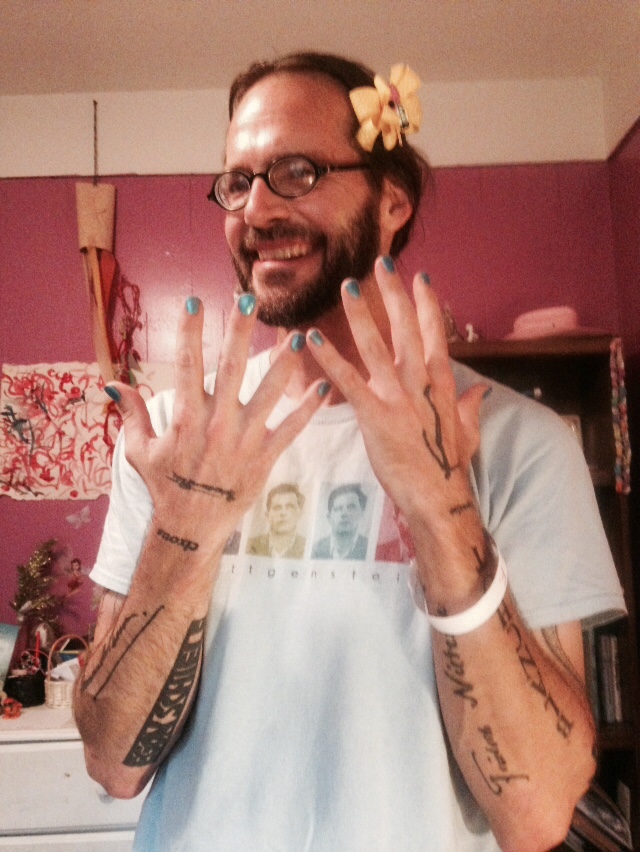
I am not a scholar. I know that now.
I am middle-aged.
I have pursued no discipline, field, or “area of knowledge” to its limits.
“Core literature.”
Librarian. “Litterateur” (awful sound). These.
Exploring fields: science, literature, philosophy, history, critical thought – through the “core literature” – the Canons of the Field.
Only so far.
Not to the ends.
What a novelist needs. Knowledge a little beyond average, a little obsessive, a little “never satisfied.”
A librarian: able to discourse with “Scholars” in any field – enough terminology, vocabulary, “core knowledge.”
“Jack of all trades, king of none.”
Yes, that.
Librarian. Litterateur. (I don’t know what else to call it).
Me.
Degrees in Classical Music, Theology, Philosophy, Information Science, Art & Critical Thought.
It’s something.
But not “scholarship”.
Core Knowledge.
Trying to be human.
Trying to know what I need to know to be that.
Trying to be.
i want never to encounter work I wish to edit
One week along…European Graduate School (Saas-Fee, Switzerland). It’s like nothing I’ve ever engaged, participated in, encountered before.
To learn
Martin Heidegger
Music, Musicology, and related Matters
a photographic pilgrimage to Orthodox Christian monasteries across the continent
Meandering Through a Literary Life
Orthodox Christianity, Culture and Religion, Making the Journey of Faith
Erik Kwakkel blogging about medieval manuscripts
"That's the big what happened."
Networking the complexity community since 1999
 All my Words are Silent