The Death of Knowledge – Complicit Communication

The Complicity of Communication: The Death of Knowledge
Death Knowledge

Perhaps we talk what we “know” to death.  Is that in the definition “to know”?  To shrink, reduce, fit-to-one’s-size, assimilate?

Is communication inherent complicity?  The effort at taking a complex and messy, wholistic, excessive, leaky, mysterious and comprehensive lived-experience and rat-tat-tatting away at it with letters and sounds, symbols and utterances toward some acceptance, some convergence of ‘meaning’ necessarily equaling its crucifixion, its disappearance, its waste?  If we manage to twist and contort it to language have we wrung it of reality?  Making a different one?  A communicable one?  A humanly manageable one?

I know (for one) that when I seek to inscribe, assay, proclaim or declare “what happens” – as soon as some assent or understanding seems achieved I sense the evisceration of the expression.  Whether it’s descriptive, imaginative, poetic, academic or pragmatic…forcing it, wrenching it, seducing and eliciting it (sentencing it) into vocabulary, into dialogue, into verbiage…leaves me with a variant experience than the one I sought to transfer.

I mean this…we arrive at…this.  I feel, perceive, desire this…it comes out hackneyed and damaged.  Holy crap!…this occurred! – Can I just say?  Will you let me tell? – and then…what proceeds is an entirely different occasion…a wounded, striated, cut and assembled collage that never equals the issue.

Convergence.  Its own beautiful, extravagant phenomenon.  But not quite expression.  Not quite translation.  Not quite… Always saying more than I intended and less than I meant.  Always saying less than I intended and different from what I meant.  Language.  Open, flexible, ambiguous, gargantuan…and limited, boundaried, sensible, requiring…

I try, tried, keep trying.  And never.  Each utterance a signing off.  Each proclamation death-sentencing its sensation.  Each squeezing toward the dictionary, no matter how scrambled and undone, redone, invented, inverted, still wringing the beauty to beast.

I said I love you.  It came out conditioned.  Assented to.  Agreed.  & Compromised.

I said I want you.  Interpreted “if…”

I said I am… emitting particulars and contradictions.

I said I wish… conditioning demands.

I wanted to say.  To sing.  To whisper.

Vocabling calm and certain and saturation.

Sounding like need and fear and some small evil.

Echoing an anxious desperation.

There is this……..which verses that……and do not equal.

So I am alone

As are you

and then this

between

and same

and different

mix –

some third business –

contorted angle

wound and rendered

wrapped about

and wriggled

writhing

&

struggling

to be

near

what it

is

I love you.
The Loving(?) [dis]Organization of Fire

for lispector

“and it came, with its long passageways without end”

-Clarice Lispector, Soulstorm

and then again, the words, the words they came, presently, fluently, astonishingly as miracles, your body, the languid haunches – temptations, always – your breasts – these letters, formed in the hands…you, you, you, all of you, and I want/ed, I want, I am wanting to grapple, devour and subsume, consume (no, never!) you, but utterly – to the end – to everything – a swallow and fire and drowning and drought – to eviscerate, desiccate, absorb – to thorough you. I want to thorough.  I want to you, thoroughly.  Yes, that is what.  That is the who what am I?  The always when and every how – I want you thoroughly, but not you as realized by or digested in or taken or given or experienced thoroughly (without remainder) but rather

What I am saying (without remainder) What I mean is, what I am saying, shouting, quite silently shrieving, shrieking, screeing, WHAT I CRAVE REVEALING ENTIRELY BY RAVAGING TO END…

I WANT TO YOU.

And I want you to want to me, as mad, as madly, as terribly and

I am ravenous now, each instant and you for starving for me (I’d like that – have me)

but yes and I am having taking giving receiving AND YOU.

I do not understand.

It maddens, controls,

frees.

And this is what I mean.

In hopes that I was born for this…

for Hallie

The Living Dead: a Reflection

“Dad, are you living or dead..ing?” son asks at dinner (aged 9).

Characteristic pause…”Well, both,” I reply.

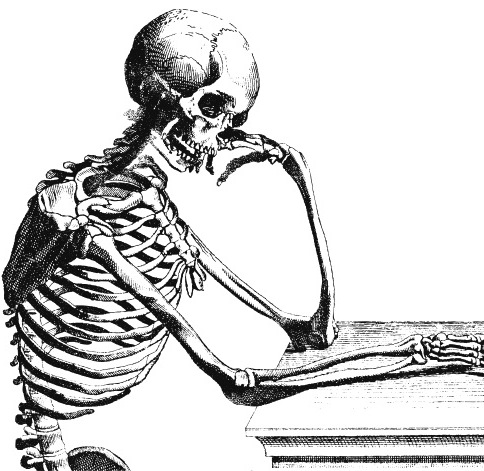
sad skeleton

How could it be otherwise?  I’ve stayed the course, exercised my body, prepared a meal, feeling fine, alone, aware…and comes the call:  “Living or dead..ing?”  Parental response – stop.  [Why is he asking?  What is he thinking?  How is he feeling?  Bodily signs?   Follow the language – “living or dead…dead..ing…dying.”  What is called for here?]  He thinks the living dead a lot,  so I respond directly:  “Well, both, and how could it be otherwise?  I couldn’t very well be dying if I wasn’t alive, no?  And the process of dying is constructed of living, yes?  So it’s all in one moment I s’pose.”

We move on.

But I don’t.  Not so much.  It’s a good question.

It reminds me why I’m a philosopher, a poet.  Why we tend toward the same, differently.  We watch for the shared, the communal in our experience, anywhere.  We work the same queries.  In a living ruled by science, by probabilities and hypothetical cause, by vague notions of what-might-happen-next given conditions and dynamically complex systems…philosophers, poets and artists tend to seek out what’s certain – what is nevertheless the case: we feel, we think, we live, we die, a world is there – the details change with the order of the day.  Or night.  The language or discipline.  The methods or culture, practice or beliefs.  Depending on the questions.  Who’s asking and how.

We happen – become – and unhappen.

Because my dad, almost 80, evinces this.  Because I’ll be half-90 in 48 hours.  What I asked for is called Cosmic Pessimism, which says something.  I happen…vary…and stop happening that way.  How that occurs, what and who and when and why change nearly as quickly as we do.  Should I say, what we think or believe occurs?  Rationalization of experience.

Reminds me of this, of the action of writing.

I still can’t do it “live.”  Can’t inscribe it as a “post” or a “tweet” or a “message.”  I’ve got to get some static.  IN-scribe is a physical act of scratching, digging, carving in clay.  ON-scribing is more what we do – laying down ink, pounding down letters, playing with light.  Writing with materials like paper and ink relatively makes something stay put for awhile.  So we can revise.  Perhaps that’s all Rilke meant – give yourself the opportunity to edit, erase, respond to your action before you present it.  Is revision revivification?  Stay something, pause.  Apply yourself to your living and choose an occurrence.  Does this wrinkle the union of living and dying?

At work I’m struggling with teaching the methods of multi-disciplinary research.  How to template a strategy of awareness to potentially everything?  We’re living and dying and attempting to know, understand, RATIONALIZE something about that.  Literally ANYthing applies, or may nourish, correct, influence or direct that essential inquiry (and DOES!).  How does one know where to look?  How does one know how to live it?  How does one know what one needs?  To synthesize rationalizations from multiple fields and methods and practices.  To compare all the answers or theories or thoughts?  To differentiate results and observations coming from various humans and schools and materials and tools and contexts and set-ups and the myriad messiness of living/dying organisms in relations beyond our control?

“You must revise your life” (Rainer Maria Rilke).

Revising your dying.  Is it possible to live moments in such a way that they outstrip the correlative dying?  To live more than die?  Once in awhile?  I think we have experiences, moments, in which we feel more alive than in others.  “Are you living or dead…ing” he asks.  Well, waking into a maze to traverse every day – cleaning and feeding and playing the roles (father, lover, employee, friend, son, writer, scholar, blogger, house-owner, house-keeper, cook, playmate, librarian, instructor, male, man, person, reader, and so on), shopping and feeding and listening and nourishing and working and running to tire – feels a bit more like “dead…ing.”  But there are moments!  Times.  “Events,” we call them (I guess).  Twistings and turnings and something like gathered occurrences, Being + Well-Being, Whitehead might say.  A more spectacular death I suppose.  Perhaps elevated experiences of living just heighten the jouissance of death?

I don’t know.

We happen – become/unbecome – and unhappen.

The marks left from that – our inscriptions, palimpsests and paths.  Veined.  Seared-in.  Scored.  In some cases, welded – some cases cancelled, erased, blotted out.  Living-dead…ing.  Vice versa?

To edit, revise, pause – is it possible?  What did he mean?  What might it mean?    Curving back doesn’t alter the time.  Going over is still going forth.  We wend and wind and whirl and reveal we are living and dying.

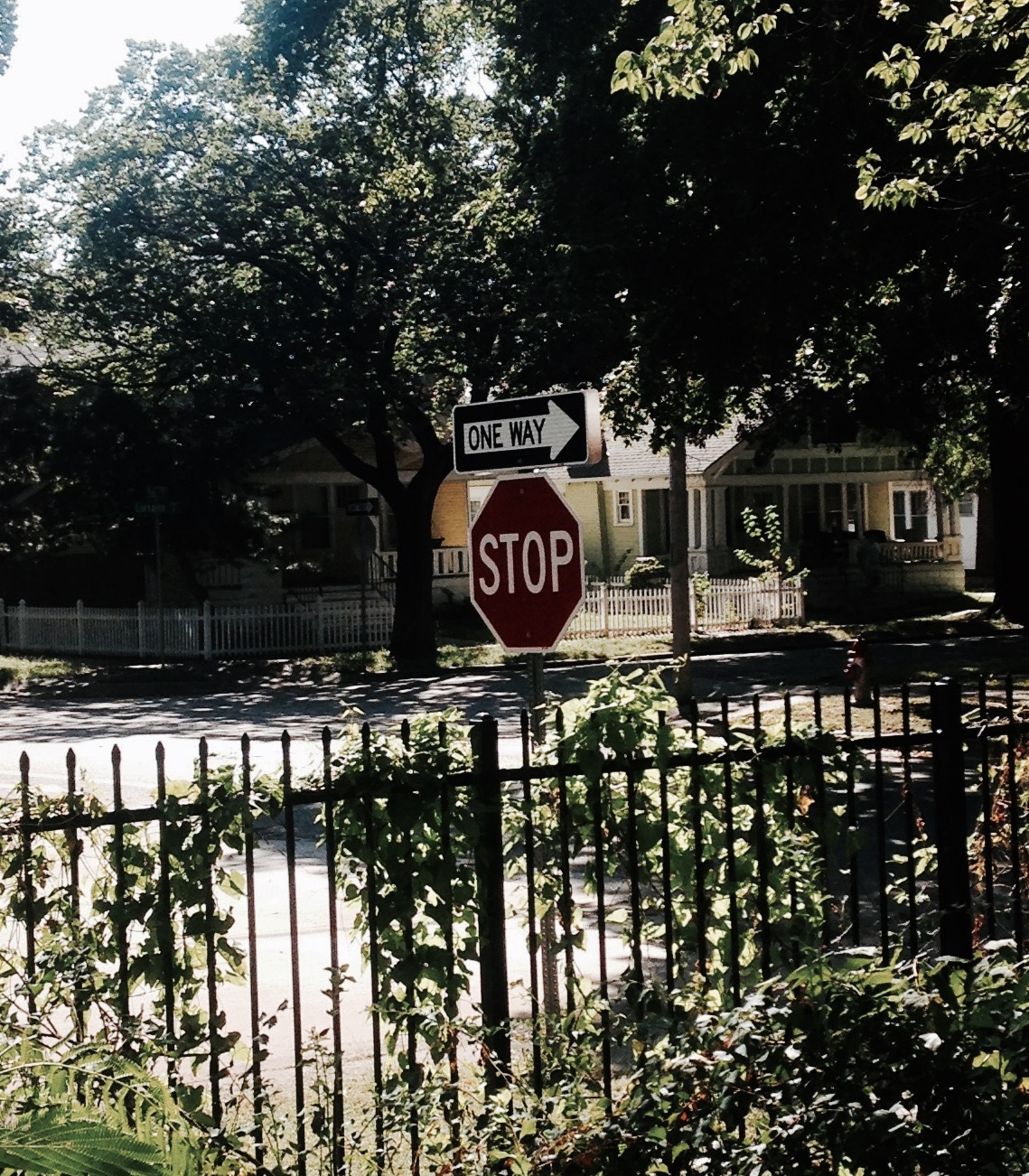
One Way to Stop

            Setting his tumbler down after a sweet, refreshing sip that burns and broils his gut, he gazes off the porch through Autumn morning.  “Quit it,” he thinks, whispers silently harshly, inside his insistent brain.

“Stop smoking, stop drinking, stop thinking too much.  It’s ruined,” repeating, “in ruins.  You ruin.”

His hazy survey settles onto a sign always visible where he wonders, worries, and writes.

blog photo

            Well aware that it’s one way.

But it doesn’t stop.

Watching his father deteriorate.  Among 7.3 billion (and counting) other inescapable dyings.  Kills himself surely by living.  Unidirectional and certain – that end.  The End.

Living’s a one-way to death whatever one chooses.  There’s no stopping that.  Perhaps the street sign motors this daily train of thought with each morning cigarette.  And love and forgetting; his children; conjured wishes, hopes and purposes blare redly to STOP! again, again,

and now his mind – himself against himself (against himself) screeing: “Quit it.  Stop.  Stop dying.  Stop killing yourself. Stop ruin!”

But it’s one way.  He knows it never stops.

Secret 2

i want never to encounter work I wish to edit

Vignettes of the Hermit

Vignettes


He changed his clothes, wearing a color he usually would not.  And of course the day was different.  “Sameness” (from one moment to the next) is a difficult seed to piece.  Yet, he’s identifiable.

Last year, his hair was cut.  By a trusted friend, no doubt, yet it hadn’t been severed for nearly two decades.  His behavior altered, his manner of speaking and greeting.  Him.  But (to those who knew him) he was still recognizable.  Somehow.  Even if not so much to himself.

Humans are strange.  There’s the sound of rain.  Emotions.  Appearances.  Sunlight.  And many other things besides.  There is language, for instance.  And touch.  Scents.  Each tiny change – alteration/adaptation – is micro- and macro-scopic.  Is.  Effective and affective.  Not easily discounted.

****************************************

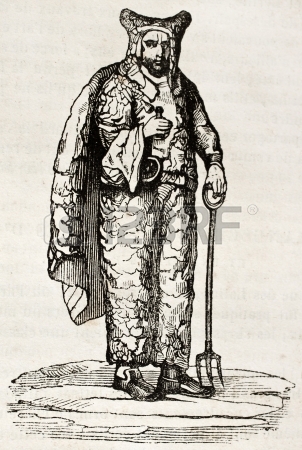
15204032-old-engraved-portrait-of-john-bigg-the-dinton-hermit-by-unidentified-author-published-on-magasin-pit

******************************************

She did not want to interact with him.  That, at least that (much) was clear.

She sat down, she closed her eyes.

She wished to stop the opportunity.  As if to say – “I am now sleeping.  You (any other) cannot reach me.”  Any (other) – even (you) – blanked out, refused, forgotten.”  “I am asleep.  Do Not Disturb (me).  I am Off Limits to you (any) you.”

He understands.  Reads sign signals.  Goes silent.  Writes on paper.

His dialogue – a wounded scraggly trail of hurt – writing.

No one (wants to) listen(s) to him: so he wails, expresses, tells, shares his story with flattened and dehydrated tree-pulp.  He draws confessions (conventional words), his family-language, blah blah blah – onto surfaces of desiccated dying.

So he might feel (an eensy-weensy tiny-whiny) a little bit that he matters.  That (i.e his feelings, experiences, being) is not ONLY shut out by closing (closed) eyes, but may (in fact) –

No, never mind.

[someone might care?]

No, never mind.

Eyes closed, shutters drawn: No.

Notebook.

Believing language makes things possible.

He (in order to survive) needs belief (otherwise – ?) that someone (one?) hears (cares?) attends (asks?)

Shaping letters onto dead matter.

Anyway.

Media

So…fascinating and intriguing things are being done…

Kafka’s Wound – Will Self

Things that remain from abandon : Implicit intricacies

pic_admin_oracle_spatial

Things that Remain from Abandon: Implicit Intricacies

A Fiction Fragment

What a Story Looks Like to Me

The Trouble Is

He feels slow, tectonic, deeply submerged even, unable to act, not able to speak, disabled (apparently) to respond, incapable even of processing.  Something seems to have happened.

She – is confused and confounded – experiencing a complex cocktail of distress and depression, pointless and pointed-out, sludged, sloughed and slathered, comatose and doomed, sad and angry in equal measures.  A compound.  A compound problem.

But she’s not.  And he can.

And they will.

The trouble is.

Yes, the trouble is.

Not easily fitted.  Because it is this time.  Again, it is now.  And now, again.  The words were made from before, or for some last time, some other.  Something foreign.  Along with the categories, analysands and diagnoses.  Along with the remedies: all for a potential future or other distinctively past.

But it is now.  Yes, the trouble is.  Is now.

Words of others.  Ideas, aspects.

Always malappropriate and inadequate.  Words are not it.  Words are something else.

This is not discrete or verifiable.  Simple.  Is.  Trouble.

Yes, the trouble is.

And the trouble is now.

She collapses.  He freezes again.  And this frozen is yearning.  Something excruciating.  Like her.  Like where she is, now collapsing.  Collapsible.  Collapsed.  That’s the trouble.

The trouble is.

He wishes and fumbles, at light-year’s remove, another era, disabled, catatonic, all too aware.

She breaks in and through her fall.  He hitches and constricts.

She gurgles a sound, a horrible mutable sound, hardly audible in her destruction and dismantling, her infolding and coming undone.  And he cries, cries out, a sort of bellow and howl of noiseless emission, helpless to keep up with time, incapable of presenting, shaped and occurring like shore-stones and wheat-seed.

She is done.  He has yet to arrive.  He will not get there.  Too far ahead and far too behind, and she is in trouble, and the trouble is.

Yes, the trouble is.  It is now.

Something has happened.

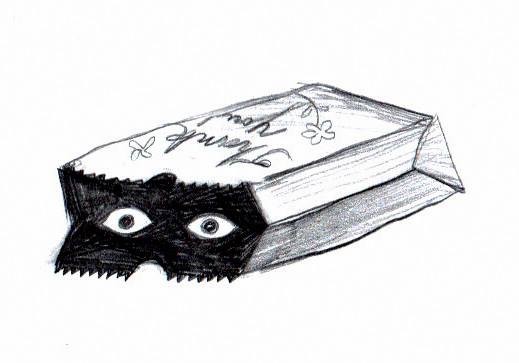
There, Thank You

sketch by Hallie Linnebur

There’s this first thing.  And then the side of it.  The underside.  Maybe a knot.

My shirt looks like a dress.

A darkness that comes open.  A light controlled by dimmer switch.

It’s just work.  Effort.  The cost of paying attention.  No end of account.

Start with what you might call a “feeling.”  Continue that way.  And move on.  Navigable hunch.

The roles are flipped.

And flipped again.

Flip-flop, padding along.

Topside.

I don’t remember much, but it all comes with.  Sometimes called “effects.”

Affect.  I perceive.

I watch her move, and move, and move again.  I listen.  I smell.  I wish to touch.  I like to learn.  I don’t know what.  Just find out.  It doesn’t happen.  Well, sometimes.  But not as often as I wish.

I don’t know what the wishes are.

If that’s not true, then I don’t understand.

Over.  Under.  Stand.  Other sides.

When most accurate, I breathe.  Just that, and staying there, I follow.

Staying as a sort of plodding.  A moving.  A padding along.

It seems that sounds compete.  But they collapse, constructing more.

If sights and sounds were all.  Or,

If there was a difference.

A word was used – was “murky.”

I touch the curves.  I’m searching edges.

The switch dims and brightens, dims again, brightens.

Something.  And then the side of it.  Another side.  A knot.

Outside being inside, dims and brightens, inside-out again.  Staying there.

An old and thankful argument.  To whom?  For what?  To what?  For whom?  And so on.

Or just affect.  And staying there, I move along.  And I am thankful.