Clothing – an ultimate ekphrasis?

Costume as Metaphor


            We dress ourselves in certain clothes, change our hair and faces in order to look some way we think to look.  Appearance changes us and it need not be dissembling.  Indeed, what are we?  Are we anything?  Sometimes, we become what we look to be which we have thought to be.  And, on further thought, this may be nothing also though, for the time, it looked to be something.  Other times, our dissembling seems wrong in its particular, as a contradiction of another identity as though we had that identity and an assumed one could contradict it.  We want to be something: whatever we really are, whatever we could hope to be.  But, ‘What we really are is a mystery, and what we could hope to be has only such value as our hope assigned it.  Our aspirations are blind and arbitrary and their success is only their own.

Children dress in scraps of costume and play at being what the scraps suggest.  They try it and let it go.  Later, our commitments are sometimes fuller and the letting go isn’t so easy when our interest wanes as it may.  We hedge it with other interests on the side, secret selves or contradictory clothes which protest the real me, so that anyone’s person may well be multiple and all the multiples tentative and exploratory as children’s are.  The space remaining for definition – so wide for children, or so it seems – becomes narrow and limited and definition farther and farther off and we accept what we were as if it were what we are or even what we had meant to be.  But it isn’t.  We know so.

When we ask who someone is we get places and ages for answers, occupations and antecedents, what times and places someone has occupied or what other external has occupied them, as though we were all blanks and had no shape or nature except by possession.  Our need to possess and our need to be possessed proclaims this.  If we really were something in ourselves, could we need anything?  Could anything possess us?  Possessions hardly satisfy us.  They must have been not our need.

But, whatever our need, they must in some sense have been wrong and we sense the wrong not by contrast with some other possession though it must often seem so: the apparent greenness of other pastures or even this same pasture in the approach of some spring.  We have hopes for projected futures, for what may someday be in spite of all.  In spite of all.  In the light of all.  How impressive the all is: the endless possibilities whose indefinite endlessness makes absurd any one.  How hopeless it is to pose in any particular costume when all we are is limitless and costume denies that, limits us in a role.

What can we ever be if the limitlessness of the all is truly our quality?  We can as little be anything as we could if we were nothing as also it seems we are.  It is hard to decide; and the decision whether we are all or nothing, based as it is on the same premise, produces the same result; we cannot ever be anything.  Though we dress however forcefully or fancifully we will, it is always pretension though the pretense may have its successes, even for a long time.

What of the world?  Though there may seem to be nothing outside ourselves, there is a sense in which we observe and the object, as though it were, of our observation we call the world.  This is absurd because the world is as little as we are.

And yet the language has its declensions and its conjugations.  If we speak at all we speak in the structure of the language and what we say, whatever it is, may matter far less than our accession to the way the structure of the language divides experience in terms of person and tense so as to say we are (or were, will be), so as to say what was or could, what is, who is the first or second or third person, what is singular or plural, that there are or could have been, that there still might be, certain actions, certain reactions.  We speak in tongues however prosaic our speech may be.  The boldness of language supervenes our actual experience.  It means to say what we don’t know.  It creates the world as if the world were.  Its whole necessity is metaphor.

And language need not be verbal; that is to say our postures and houses, our laws and landscapes, our science and public buildings, share the character of language.  They are metaphor also: creations of desire.

Forgive the world, however terrible it is.  We dream of horror, impelled by what we don’t know, and the world seems to contain it; but it is not a real world and nothing requires our belief.

That we believe in nothing is a hard requirement because we want to believe in something: some political theorem, say, or religious creed or, sparing these, some unevaluated strength of our own as though in our person we might prevail and that prevalence had the salience of some proof.  For what?  For our dying?  Because we do.  Unable to think of ourselves this way, think instead of someone ten thousand years from us one way or another who will have or had a name, a place and costume no more and as much as we have.  And who is he?  Even so far as we know, it is a pretense of knowing.  Abandon that.

Belief in nothing is a positive belief apart from relieving us of partialities; and, even in that respect, it is a liberation.  The world is not partial.  Nothing is all and the world is nothing as we are.  What should we say?  Nothing to say of ourselves and the world tells us nothing.  The world is a silence.  But we talk of it and to it.

We know nothing of the world and will never know.  All we say is metaphor which asserts at once our unknowing and our need to state in some language what we don’t know.  How we love clothes; plain clothing or even our nakedness, speaking the silence of the world, or fanciful costume in which we praise some aspect of the world we mean to praise.  Clothing as metaphor, not to dress ourselves nor to say what the world is if we knew but to praise that world however it might be.  Rich fabrics and fine leathers, ruffles and satin, silver and lace, glorious colors and the fragile purities of clean whites: none of these is the world nor are they all together the world.  Songs only that sing its praise, the earnest entreaties and importunities of our desire.

William Bronk

from Vectors and Smoothable Curves


for instants!

J Walters's avatarCanadian Art Junkie

The Scribbled Line Portraits of illustrator Ayaka Ito and programmer Randy Church began as a class assignment before the stunning digital photography innovation came to public attention at a Toronto FITC workshop.

The series showing shredded human bodies integrated 3D and programming for a project with a three-day deadline while the two were at the College of Imaging Arts & Sciences at Rochester Institute of Technology.

Ito and Church “put their models through the shredder” using a custom Flash drawing tool, HDR lighting, Cinema4D and Photoshop.

The project began as a class assignment and grew into a fully realized series which won an Adobe Design Achievement Award and has been featured in 3D World Magazine and Communication Arts Magazine.

A post from DesignBoom with more technical detail on the process, here.

NOTE: This is from the Art Junkie archives, 2012.

View original post

Reminder…

    “”I write.”  This statement is the one and only real “datum” a writer can start from.  “At this moment I am writing.”  Which is also the same as saying: “You who are reading are obliged to believe only one thing: that what you are reading is something that at some previous time someone has written; what you are reading takes place in one particular world, that of the written word.  It may be that likenesses can be established between the world of the written word and other worlds of experience, and that you will be called upon to judge upon these likenesses, but your judgment would in any case be wrong if while reading you hoped to enter into a direct relationship with the experience of worlds other than that of the written word.”  I have spoken of “worlds of experience,’ not of “levels of reality,” because within the world of the written word one can discern many levels of reality, as in any other world of experience.”

-Italo Calvino-

p.s….

“A work of literature might be defined as an operation carried out in the written language and involving several layers of reality at the same time”

“The preliminary condition of any work of literature is that the person who is writing has to invent that first character, who is the author of the work”

(further Calvino’s)

Affinities : Possessing the Wordless

The following quotations are from “Putting Down Marks (my life as a draftsman)” by Jim Dine.  Where he uses “draw” or “drawing” substitute “write” or “writing” and I find a remarkable similarity with my own experience making things…I find his work and thought quite inspiring to my own and wanted to share with you many writers/artists/thinkers…


This slideshow requires JavaScript.

“I’ve always had a wish to put down  marks”

“My mind was going and so was my hand”

“I love building up, erasing, losing it, bringing it back, taking it away.  I trust my method of not trusting”

“He’s always so frightened of failure and of finishing, and that moves me” (of Giacometti)

“But what is really the optimal situation for me is to get my brain around what I’m trying to do.  That’s all.”

“I have a total connection between my hand and my eye – it’s just that I can’t see sometimes”

“Drawing is not an exercise.  Exercise is sitting on a stationary bicycle and going nowhere.  Drawing is being on a bicycle and taking a journey.  For me to succeed in drawing, I must go fast and arrive somewhere.  The quest is to keep the thing alive – “

“I’m interested in making a vehicle within which it is possible to feel certain things…And these emotions don’t have words.  They really don’t”

“I want to get my drawing out of my heart the way photography accesses my marginal thoughts and images”

“The state of wanting to draw something, for me, is a way to capture it and that’s a primary emotion for me.”

“I want to possess them and what better way of possessing them than to draw them.  The reason I wanted to possess them is they reminded me of other things that are wordless”

“Drawing is the medium which has been the blood of my life”

THANK YOU JIM DINE!

I, for Instants, You

I, for Instants, You


“Simply to name it is to con-

fuse it, altogether:

here now you

is a form you will not fill”

-Ron Loewinsohn-


“artists very often forget that their work holds the secret of true time:

not empty eternity but the life of the instant”

-Octavio Paz-


The children are reading Basho.

It was raining.

There’s a bright diamond

there where the legs in your jeans

come joined together

Is there a name for that small absence?

Where nothing blocks the light?

Between

Where your flesh fuses together

Con-fused, seamlessly?


In this case, I am eye

For instants, and then you move.

The children still reading Basho.

(they “get” it)

Rain coming again

this time not from cloudy skies

but wind shaking trees

Incidental Courage in the Crevices

I’ve taken someone’s advice and picked up David Levithan’s The Lover’s Dictionary – what a potent little delight!  Immediately slid into place with Alain de Botton’s On Love and Macedonio Fernandez’ The Museum of Eterna’s Novel; Jesse Ball’s The Curfew and The Way Through Doors.  Also moved me back to Daniel Handler’s Adverbs and (so-far) wonderful Why We Broke Up.  In the process, feeling forever stunted as a “writer,” I cracked A. Alvarez’ The Writer’s Voice yesterday to these jewels:

“For freelance writers like myself who belong to an endangered species which, as long ago as 1949 Cyril Connolly was already calling ‘the last known herd in existence of that mysterious animal the man of letters,’ writing is less a compulsion than a misfortune, like a doomed love affair.  We write because we fell in love with language when we were young and impressionable, just as musicians fall in love with sound, and thereafter are doomed to explore this fatal attraction in as many ways as we can…fifty years of writing for a living have taught me that there is only one thing the four disciplines have in common: in order to write well you must first learn how to listen.  And that, in turn, is something writers have in common with their readers.  Reading well means opening your ears to the presence behind the words and knowing which notes are true and which are false.  It is as much an art as writing well and almost as hard to acquire.”

Adding it up

Reading, Writing – the ‘Rithmetic

You know, I honestly don’t know why I think of the many things I think of.  “About” usually, yes, usually I can surmise why I stick to a thinking project – it might be something that troubles or worries me, maybe it involves something about which I care deeply or enjoy – then I’ll ruminate around on the subject or object for awhile, attempt to figure or follow the thinks, arrange some digits or sounds, contents, feelings or symbols until I make fit or get lost in the simple joy of tinkering.

But then other times, and really quite often, I can’t locate the instigative trail or balancing of reason for why (or how) items pop into or swish by my apprehending (apprehensive?) brain.

For instance, just now (and it’s precisely the unknowing that prompts me to write about it, to squeeze it through language), I was sitting quietly to desk after a very full day of soccer games, bicycle rides and birthdays, perusing Ron Loewinsohn’s Goat Dances, Anne Carson’s plainwater, Jon Anderson’s The Milky Way and Robert Creeley’s Collected Essays – a very normal way I have of grounding myself, discovering a location by mapping found paths, when sploosh! across the internet of my mind zipped:

“I guess I always read and write as if my life depended on it”

            And then I stopped.  Closed the books, slid them aside, rested my chin in my hand and gazed toward nowhere, wondering what question that sounds-like-an-answer phrase was responding to or anticipating.

Why would I think that?

Lost in language like dancing and syllables, stars and night skies, withs and relation and choros, why would my only clear thought (recognizably anyway) be:

“I guess I always read and write as if my life depended on it”?

            When something stops me like that, and I already hear a rhetorical response, but no answers satisfy and questions only multiply exponentially…

I grab loose blank notebook pages and a ball-point pen…

and begin doodling, dabbling, and “showing my work.”

“I guess I always read and write as if my life depended on it” (implied automatic resonant answer: because it does) leads precisely (in this case, given all the contingencies and conditions) to the chicken-scratching rambling preceding this period.

In other words, not to a solution, or perhaps even a working equation or problem, but simply to activity.  Reading, writing, thinking it out in lines, shapes and signs.

Now during all this scribble-sketching around the inceptive phrase, my bodymind has been mantra-ing responsorials:  “because it really does,” “because I’m not even aware of things happening until verified in language,” “because life just occurs and I don’t know about it until I manifest the experience some way – bounce it off of a counterpart or internal funhouse mirror (other’s words) to learn what it is and isn’t” and so on…so-called “reasons” I guess?  Hypothetical rationales for the random (apparently) phrase having typed itself in my nervous wirings?

The only “fact,” as I experience them, is that this phrase: “I guess I always read and write as if my life depended on it” clearly spat itself across the innards of my cranium while I was going about the very normal activity of recovering, soothing, pausing and nourishing myself on books at hand, wishing somewhere it hadn’t taken me all day to reach this quiet, wishing somewhere that all conversations went like this listening, wishing somehow I had something that felt like it needed to be written down, wishing somewhere that I understood myself.

And alas: a baffling sentence in response to no one silently carves and engraving on my consciousness:

“I guess I always read and write as if my life depends on it”

My entire body replying: “well…YEAH!  It does!  It’s the only way YOU know that there’s possibly LIFE at all, and not just sensations, emotions, thinkings and dreams; reactions, responses and stimuli!  Without reading about it or writing words out I personally have no concrete object to sound my experience against, to test a happening – everything else out there from spouse to “god” is always moving, shifting, adapting, changing…just like me.”

“I guess I always read and write BECAUSE my ‘life’ depends on it”

Two Helpmeets Today (extended quotations for the journeying)

1.  From Georgi Gospodinov’s And Other Stories:

“And our personal stories are the only moves, the only moves that help us postpone, at least for a while, the predetermined ending to our game.  And even though we are going to lose the game from the strategic point of view, the idle moves of our stories always postpone the end.  Even if they are stories about failure.”

2.  From Li-Young Lee’s Book of My Nights

The Hammock

When I lay my head in my mother’s lap

I think how day hides the stars,

the way I lay hidden once, waiting

inside my mother’s singing to herself.  And I remember

how she carried me on her back

between home and kindergarten

once each morning and once each afternoon

.

I don’t know what my mother’s thinking.

.

When my son lays his head in my lap, I wonder:

Do his father’s kisses keep his father’s worries

from becoming his?  I think, Dear God, and remember

there are stars we haven’t heard from yet:

They have so far to arrive.  Amen,

I think, and I feel almost comforted.

.

I’ve no idea what my child is thinking.

.

Between two unknowns, I live my life.

Between my mother’s hopes, older than I am

by coming before me, and my child’s wishes, older than I am

by outliving me.  And what’s it like?

Is it a door, and good-bye on either side?

A window, and eternity on either side?

Yes, and a little singing between two great rests.

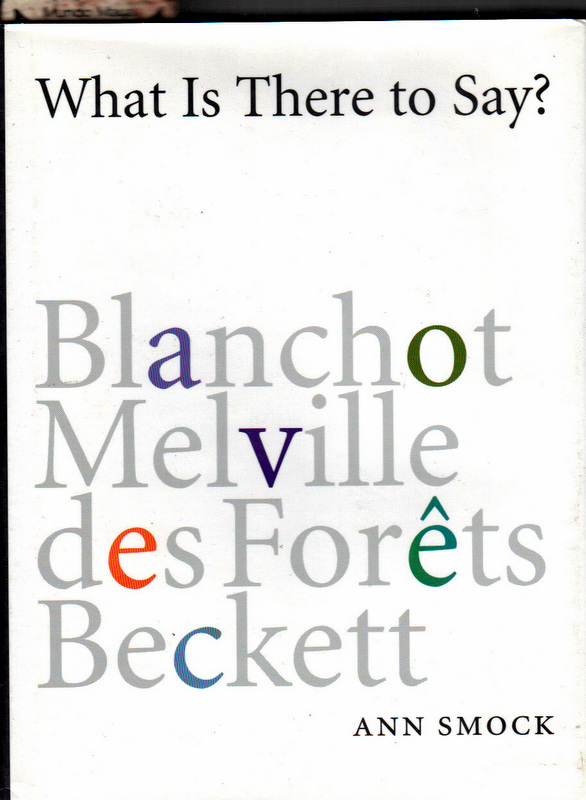
What is there to say?


A book I am reading asks, in its title, What is there to say?  Another, next to it on its anticipating shelf, states “very little…almost nothing.”  Are they in conversation?

In completing Dust by Arkadii Dragomoshchenko for perhaps the ninth time, I come across a phrase I’ve starred and underlined in three colors: “We talk only because of a persistent desire to understand what is it that we are saying.”

            If someone took the time to calculate how many times the word “other,” used to refer to a subjective entity, occurs in philosophical texts post-Heidegger.

What is being?


I often experience the anomalous reality of hoping wildly in the midst of despair, a fervent belief in oxymorons – things like “Poetic Influence” and “Romantic Love.”

How music crafts melancholy and joy.

Perhaps someday we will concoct a system of chaos.

The weather is large enough.


I say “I love you” because I’d like to understand it.


Edmond Jabes has it that “the words of the book were trying, in vain, to say Nothing” (writing of sacred texts) or, in other words, some persistent and extravagant Babeling into Derrida’s vast abysme of origins and effects.  What is impossible.  “Our persistent desire.”  So Jabes asks “Is our relation to the world first of all a relation…to an expectation, a hope of world pregnant with all possible beginnings?”

            I ask myself, then, what is it I have to say?  The echoing answer “very little…almost nothing.”  Persistent desire.

Some goods to get you through

Kozelek cover image

“Coincidences depend not so much on desire as on the density of existence”

-Arkadii Dragomoshchenko-

“The full meaning of the adage Humanum est errare, we have never woken up to”

-Charles Sanders Peirce-

“Act your heart.  There’s nothing else”

“The world is where we fling it”

Theodore Roethke-

“To live in the world but outside of existing conceptions of it”

Wallace Stevens-

“Action painting – action writing – the process is the same, with emphasis less on the finished product than on the author’s process of creation”

-Jerome Klinkowitz-

a personal p.s.: I love the poetic world of Mr. Scott Krieger, and the music of Mark Kozelek (ahhhh)

“The poet feels abundantly the poetry of everything”

-Wallace Stevens-

(for Scott)