To all we hope will come…
and all we do not know…
“Language is always focaled…
…it must be so since a word is a gigantic system of situation-changes
and other words”
-Eugene Gendlin-

To all we hope will come…
and all we do not know…
-Eugene Gendlin-
“Every reading act is an event, or a transaction involving a particular reader and a particular pattern of signs, a text, and occurring at a particular time in a particular context…the reader and the text are two aspects of a total dynamic situation”
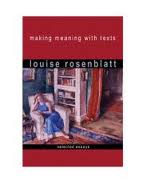
(click to read full article)
“Writing is always an event in time, occurring at a particular moment in the writer’s biography, in particular circumstances, under particular external as well as internal pressures…the writer is always transacting with a personal, social and cultural environment”
-Louise Rosenblatt
“the more than us in us that is at that moment irreducible to meaning or satisfaction”
“our repeated baffling by the trauma of a Real”
-Peter Schwenger-
“the ordinary is not ordinary; it is extra-ordinary, uncanny”
(read online for free!)
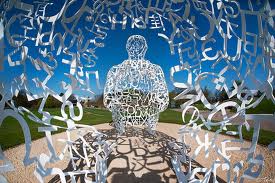
“What hope do I have of attaining the thing that I push away?
My hope lies in the materiality of language, in the fact that words are things too…A name ceases to be the ephemeral passing of nonexistence and becomes a concrete ball, a solid mass of existence; language, abandoning the sense, the meaning which was all it wanted to be, tries to become senseless”
Once more I have to thank readers for random-ing around in aged posts of mine – giving me a chance to read again writings that at one time emerged, only to be forgotten in the hurly-burly of life. It is a joy for me to encounter Leonhardt again, hope some of you enjoy him as well…
Leonhardt Conspiguous
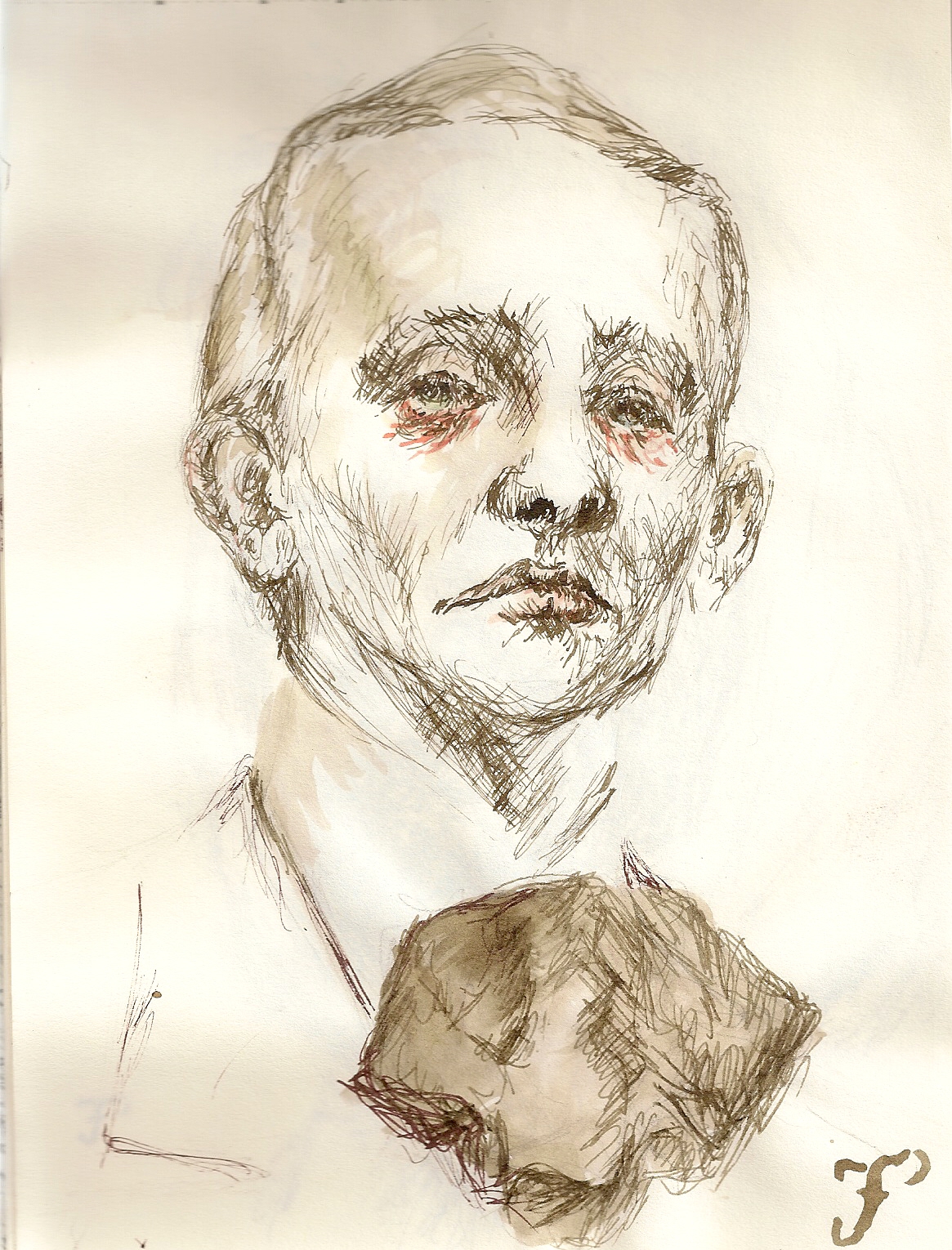
Leonhardt Conspiguous would have known the difference. Between, say, BWV 161 and BWV 173; or a trunk or tail if he’d been born a blind mouse. LC always knew the differences. But he found similarities difficult to trace.
In conversation Leonhardt once encountered a man who’d read the entirety of his library, (the titles so resembling his own as to appear indistinguishable), drawing the same conclusions as LC in the shared vocabulary. LC was unable to devise a category or designation for this phenomenon. It was like looking in Leona’s eyes.
A concave lens forms a sphere of reflection, and hers – of grey of green of blue – mimicked Leonhardt’s so completely both in color and tone, that he’d instantly felt something farther back, back behind, any place he’d ever felt before. In himself or another. As time went on and her desire gained in details…
View original post 431 more words
I noted that my 2nd anniversary with WordPress has just passed – bringing out an old, somewhat clunky and stuttered attempt at addressing essential transformative and reciprocal relations… Thanks all!
A Letter to Friends (far and near, now and future):
On Friendship, Dialogue and Conversation
(even those “silenced to pieces” – Paul Celan)
Addressing an interminable oath, a perhaps-always, perhaps-never, but surely an “only.” Friendship.
Either there runs an essential conversation, in the realm of the impossible, that is, the meaningless, or there does not. Meaningless, like infinity, like being, like love – each lying somewhere beyond rationality, or knots of multiplicity, that is, items we are capable of naming, or calling (calling-out toward) but which do not, ever, add up.
Things that are, that are unable to be explained. At times we call out to them as “paradoxes,” “mysteries,” “ideas,” “sensations,” “beliefs,” and so on, these “entities”(?) “concepts” (?) – “observable creations” that require one another to be, but cannot be identified in themselves (e.g. “same”/”different”; “self”/”other”; “silence”/”noise”; “presence”/”absence”; and so on). “Things” (?? – but what to…
View original post 488 more words
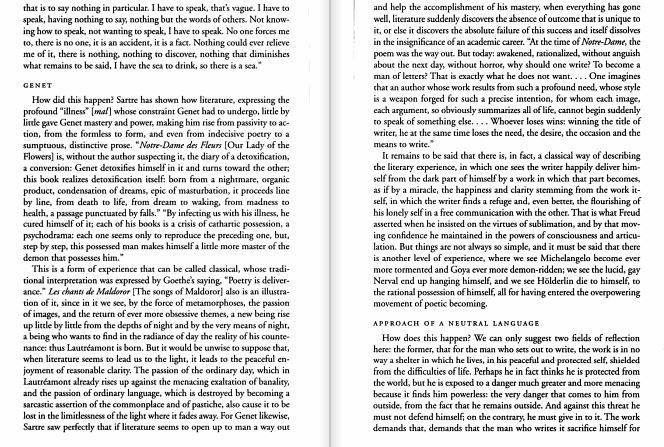
some more possible insight into the processes of “forming…” Through somewhere somehow recently I was alerted to the works of Eugene Gendlin – probably through the work of Mark Johnson, Andy Clark, or Don Tucker…but could be elsewise. Embedded experience, embodied minds, enminded bodies – the whole mess of entanglement our simply being consists of.
and how that might apply to “writer’s block” or that reaching we experience when creating –
that feeling that we can feel it – know more than we’re able to articulate or organize or perform…
This article helps elucidate some of that, perhaps. It has certainly stimulated my imagination and attention in attempting to write more than I seem to know how to….
“All thinking involves the bodily … to some degree. Take for example any ordinary sentence. In the middle of it you have an unfinished sense of how … You don’t know the end, and yet, all through it, as the sentence wends its way … “
Eugene T. Gendlin
PLEASE READ MORE TO FIND OUT!
 “I am in words, I am made of words, of the words of others, what others, this place too, the air too…”
As the semester’s projects begin to disintegrate into final clumps of submission…my innards yawn and stretch and struggle awake, expressing a yearning to search…spill forward instead of re-searching…explore and extend…
to construct and create without resources – to invent from the miscellaneous stockpiles of information and data accrued through intense weeks of devouring and ingesting…
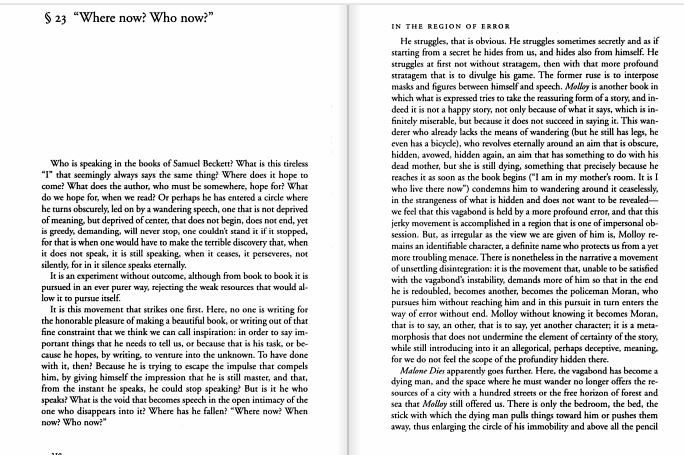
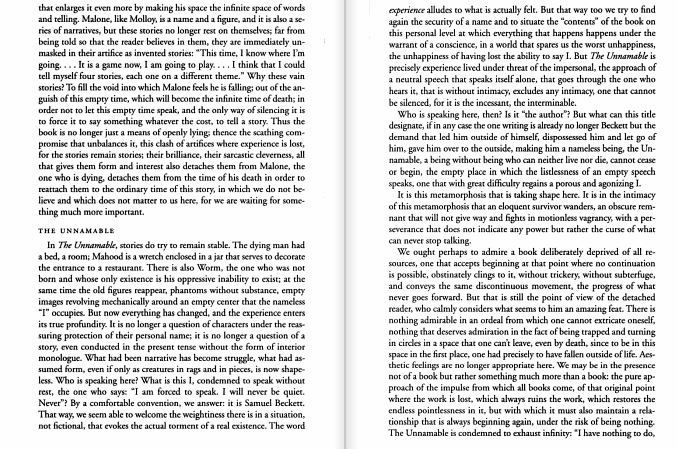
This essay, from Maurice Blanchot, regarding Samuel Beckett – “Where Now? Who Now?” – captures that no-place of beginning – amid a chaos of signs and sensations – knowledge and ignorance – words and emotions concocted from immersion in information sources and recorded knowledge that constitutes “higher learning”…
please engage!

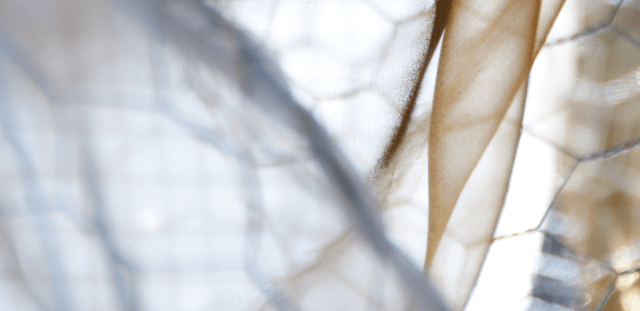
The above is a snapshot from a participatory art project entitled “Folds to Infinity” – you can further investigate here. The verbal link is to an article by Erin Manning that reflects on some possible interactions and responses participatory art and movement enable or frustrate. As I read this article, with its focus on space-time relations such as event-spaces, materials, sound, rooms, fields etc., I could not help but be curious about the shared space-time relational field of texts, pages, pixels, blogsites and wonder about the more-than that authors/designers/readers/viewers compose – co-create – in these pages we invent each day. The will toward participation that affects any work’s unfolding. The design of our syntax and placement of images, types of terms and content of pictures all go toward constraining our viewer/reader participations towards meanings prefigured in our compositions. And yet, I would wager that the majority of us hope for our creations to be participated-with, engaged, even co-created with the sensing minds of those these spaces open up. “Spacetimes of relation are never neutral. They are fiery, luminous, scary.” I am hoping for ways and words and ways with words that allow, perhaps even create, spacetimes of relation that facilitate the more-than possibilities each engagement with them have potential of.
erin and others certainly activate the seeming “folds to infinity” of the matter in my cranium.
My tireless partner inrelationtoartinrelationtolife and the processes that keep us moving, growing, learning…
For those of you intrigued by yesterday’s article about writing as a technology – here I’ll attempt to balance it with another fascinating article supposedly providing an “opposing view” to Walter Ong, et. al.
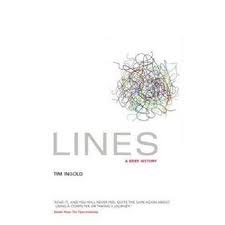
what do you think?
Is writing “technological” artifice natural or unnatural?
I’ll tell my thoughts in time…
Student Magazine of IISER Mohali
Music, Musicology, and related Matters
a photographic pilgrimage to Orthodox Christian monasteries across the continent
Meandering Through a Literary Life
Orthodox Christianity, Culture and Religion, Making the Journey of Faith
Erik Kwakkel blogging about medieval manuscripts
"That's the big what happened."
Networking the complexity community since 1999

 All my Words are Silent